 Vorschau anzeigen
 Versenden
 Teilen
 Details anzeigen

 Herunterladen
 Ähnliche Objekte
 Röntgenaufnahme
 Diashow
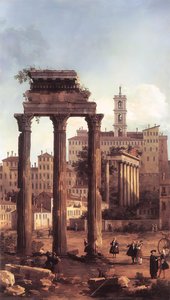
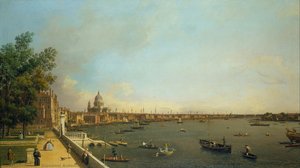
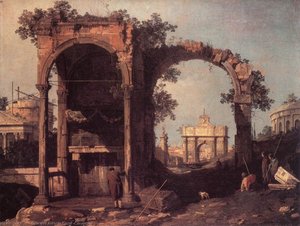
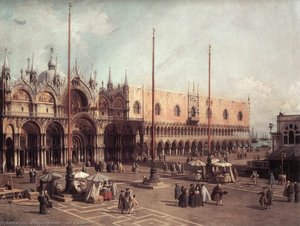
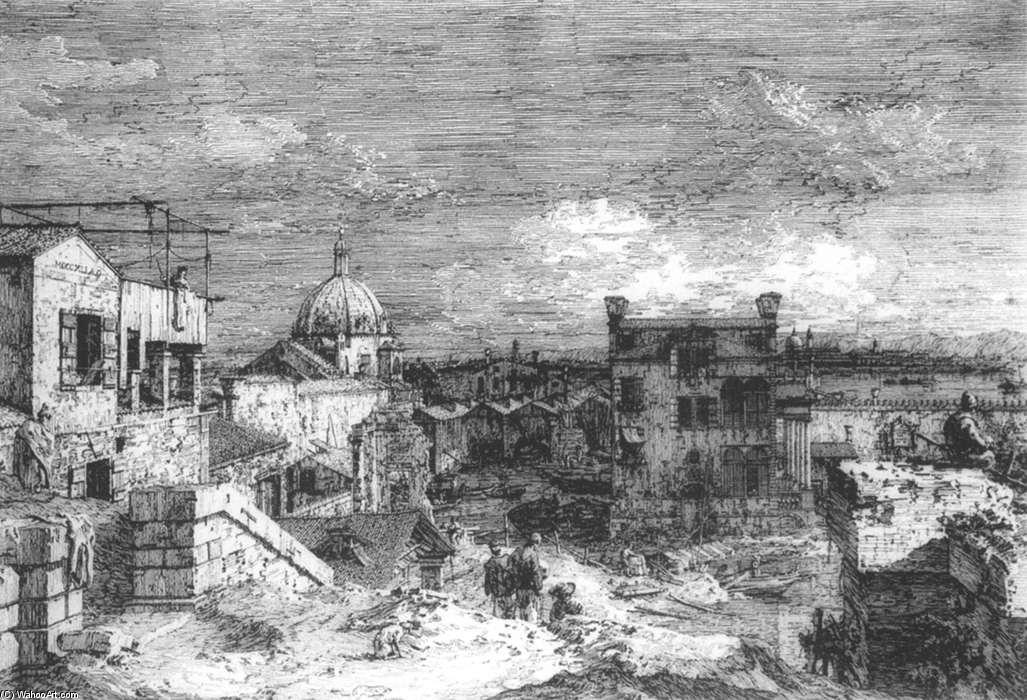
Imaginary View of Venice
 Acrylic On Canvas
- WallArt
- Venetian School
 1740
1740 295.0 x 425.0 cm
 British Museum
 Weiterlesen
Giclée / Kunstdruck
Giclée- oder Leinwanddruck in Museumsqualität mit schneller Produktion und flexiblen Veredelungsoptionen. ( Handgemalte Reproduktion bestellen Bild kaufen)




P118B $10

P118H $10

P118W $10

P438Z $10

P508JH $12

P508YH $12

P805H $10

P805Z $10

P919BZ $10

P919G $10

P919XJ $10

P959ZH $10

P968JZ $12

W106C $8

W218G $10

W218JH $8

W218Y $10

W307PJ $10

W316G $10

W316PJ $8

W316Y $10

W398PJ $8

W4111J $10

W500HY $15

W500JH $15

W692G $12

W849H $8

W940BG $15

W953PJ $8




Wählen Sie aus unseren vordefinierten Formaten, die den ursprünglichen Proportionen des Kunstwerks entsprechen.

Sie können Ihre eigenen Maße eingeben, um ein bestimmtes Format oder einen speziellen Platz einzupassen. Wenn das von Ihnen gewählte Format nicht den Proportionen des Originalbildes entspricht, werden wir das Kunstwerk entweder beschneiden oder das Bild mit einem gespiegelten oder einfarbigen Rand erweitern. Ein digitaler Entwurf wird Ihnen zur Genehmigung zugesandt, bevor die Produktion beginnt.
Bitte beachten Sie, dass die Vorschau auf dem Bildschirm nicht den tatsächlichen Zuschnitt oder die Erweiterung widerspiegelt. Nur der Entwurf zeigt die endgültige Komposition präzise an.
Obwohl Sondermaße verfügbar sind, empfehlen wir die Auswahl eines Maßes aus der vordefinierten Liste, um die ursprünglichen Proportionen zu bewahren.
Weltweiter Versand () innerhalb von 2 Wochen statt der üblichen 4/5 Wochen. (21 August)

Kostenloser weltweiter Expressversand

Hochwertige Leinenleinwand

Umfassender Versicherungsschutz beim Versand

Zollgebühren-Rückerstattungsgarantie

Garantie für exakte Farbtreue

60 Tage Rückgaberecht (nur bei Mängeln)

100% Geld-zurück-Garantie

Mengenrabatt verfügbar
 Die Glasoption ist nur für Größen unter 110 cm verfügbar.

Imaginary View of Venice
Giclée / Kunstdruck
Format der Reproduktion
-


Gesamtpreis
$ 62
Sammlerstück-Beschreibung
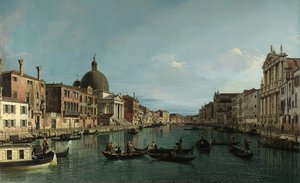
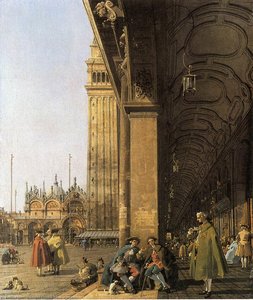
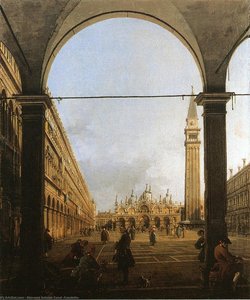
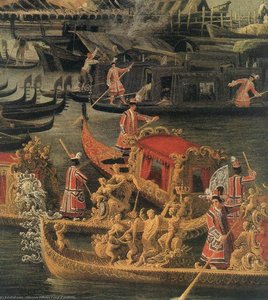
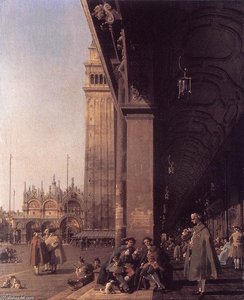
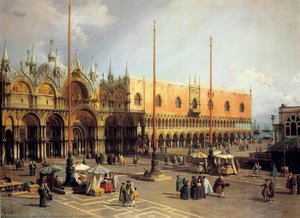
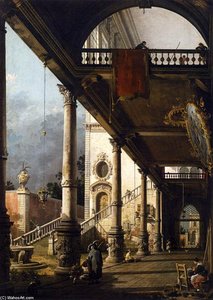
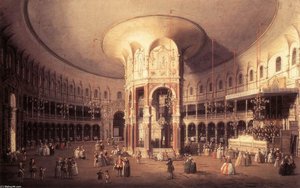
A Venetian Dream Frozen in Time: Imaginary View of Venice by Canaletto
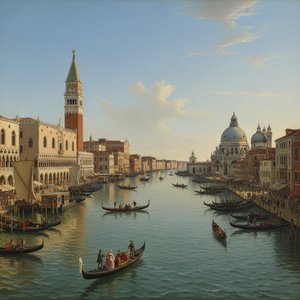
Giovanni Antonio Canal, universally known as Canaletto, possessed an extraordinary gift – the ability to capture not just the appearance of a city, but its very essence. His “Imaginary View of Venice,” painted around 1740, is a testament to this skill, offering a glimpse into a world where reality and artistic fancy intertwine seamlessly. More than simply a topographical depiction, it’s a carefully constructed tableau that invites the viewer to lose themselves in the bustling heart of the Serenissima, a city perpetually poised between tradition and innovation.
The painting immediately establishes a sense of vibrant urban life. Canaletto masterfully portrays the Grand Canal as a swirling artery of commerce and social interaction. A multitude of gondolas, laden with goods or ferrying passengers, navigate the waterway alongside elegant barges and smaller boats. The foreground is teeming with figures – merchants hawking their wares, citizens engaged in animated conversations, and children playing amidst the throng. This isn’t a static scene; it's a dynamic snapshot of Venetian daily life, brimming with energy and movement.
The Art of Illusion: Technique and Composition
Canaletto’s genius lies not only in his subject matter but also in his meticulous technique. Executed as an etching – a process he embraced later in his career – the artwork showcases his remarkable control over line and tone. The artist employed a complex system of hatching, cross-hatching, and fine lines to render the intricate details of the buildings lining the canal. Notice how the texture of the brickwork, the folds of the drapery, and the reflections on the water are all achieved through subtle variations in linework. The use of monochrome – shades of grey created by varying line density – lends a timeless quality to the image, reminiscent of classical engravings while simultaneously capturing the immediacy of a contemporary scene.
Compositionally, the painting is structured around a series of receding planes, creating an illusion of depth that draws the viewer into the heart of Venice. The buildings in the foreground are rendered with greater detail and sharpness, gradually softening as they recede into the distance. The prominent dome of St. Mark’s Basilica anchors the background, providing a focal point amidst the bustling activity below. Diagonal lines created by the architecture add dynamism to the scene, preventing it from feeling static or overly formal.
A Touch of Imagination: The “Capriccio” Style
What distinguishes this particular work is its inclusion of elements that are not strictly representational – a characteristic of Canaletto’s later style, often referred to as “capricci.” The presence of the imaginary Rialto Bridge, for instance, is a deliberate artistic choice. While undoubtedly inspired by the real bridge, it's an idealized version, imbued with a sense of grandeur and theatricality. This blending of reality and fantasy is a hallmark of Canaletto’s mature work, reflecting his growing confidence as an artist and his willingness to experiment with different approaches.
The inclusion of figures engaged in various activities – a man observing from a wall, boats laden with goods – further enhances the sense of life and movement within the scene. These figures aren't merely decorative; they contribute to the overall narrative, suggesting a thriving community deeply rooted in Venetian traditions. The painting subtly evokes a sense of history, tradition, and the vibrant spirit of the city.
A Window into Venice: Historical Context and Legacy
Created during Canaletto’s time in England (1746-1756), this “Imaginary View of Venice” reflects his profound admiration for the city. He had been commissioned to paint views of London, and his experience there undoubtedly influenced his approach to Venetian landscapes. The painting is a testament to Canaletto's enduring legacy as one of the greatest topographical artists of the 18th century. His meticulous attention to detail, combined with his masterful use of line and tone, continues to captivate viewers today, offering a timeless glimpse into the beauty and complexity of Venice.
Reproductions of this captivating artwork offer an exceptional opportunity to bring the spirit of Canaletto’s Venice into any interior space. The rich detail and evocative atmosphere will undoubtedly serve as a constant reminder of the city's enduring allure.
Ähnliche Kunstwerke
Über den Künstler
Giovanni Antonio Canal – Ein Meister der venezianischen Vedute
Giovanni Antonio Canal, besser bekannt als Canaletto (geboren 18. Oktober 1697 in Venedig; † 19. April 1768 ebenda), war ein bedeutender italienischer Vedutenmaler und eine zentrale Figur des venezianischen Kunstbetriebs im frühen XVIII. Jahrhundert. Seine außergewöhnliche Fähigkeit, die Schönheit und Komplexität seiner Heimatstadt Venedig einzufangen und diese mit beeindruckender Präzision auf Leinwand zu übertragen, machte ihn zu einem der erfolgreichsten Künstler seiner Zeit und beeinflusste zahlreiche andere Künstler weltweit.Leben und Ausbildung
Canaletto wurde als Sohn von Bernardo Canal geboren, einem Bühnenbildner für Theateraufführungen, und Artemisia Barbieri. Seine künstlerische Ausbildung begann früh mit seinem Vater, der ihm die Grundlagen der Malerei vermittelte und ihn insbesondere für die Herstellung von Bühnenbildern prägte – eine Tätigkeit, die auch sein späterer Stil maßgeblich beeinflusste. Er arbeitete zunächst in der Werkstatt seines Vaters und erlernte dort verschiedene Techniken und künstlerische Prinzipien. Sein außergewöhnliches Talent wurde früh erkannt und ermöglichte ihm einen Aufenthalt in Rom im Jahr 1718, wo er für zwei Opern von Alessandro Scarlatti Bühnenbilder gestaltete. Diese Erfahrung prägte seine Entwicklung als Künstler nachhaltig und führte ihn zu einem tiefen Verständnis für die Kunstgeschichte und künstlerische Traditionen seiner Zeit. Nach seinem Rückzug nach Venedig etablierte sich Canaletto schnell als angesehener Maler und arbeitete kontinuierlich an seinen Meisterwerken.Die Entwicklung eines Vedutenmalers
Canaletto entwickelte einen einzigartigen Stil, der sich durch außergewöhnliche Perspektivführung und detaillierte Vorzeichnungen auszeichnete. Er gilt als einer der ersten Künstler, der systematisch die sogenannte Kamera obscura zur Darstellung von Stadtansichten einsetzte – eine Methode, bei der ein kleines Fenster mit einem Spiegel verwendet wird, um ein Bild des Außenbereichs auf eine Oberfläche innerhalb eines dunklen Raum anzuprojektieren und somit eine äußerst präzise Zeichnung zu erstellen. Diese Technik ermöglichte ihm nicht nur eine außergewöhnliche Genauigkeit bei der Darstellung von Gebäuden und Räumen, sondern auch eine besondere künstlerische Freiheit bei der Gestaltung seiner Werke. Seine Kompositionen waren stets sorgfältig durchdacht und zielten darauf ab, die Schönheit und Dynamik der venezianischen Stadt auf beeindruckende Weise zu kommunizieren. Er wurde besonders für seine Fähigkeit gefeiert, die Atmosphäre einer Szene einzufangen und eine besondere Stimmung zu erzeugen – ein Stil, der ihn von anderen Künstlern seiner Zeit unterschied und ihm einen besonderen Platz in der Kunstgeschichte sicherte.Bekannte Werke und Zusammenarbeit
Canaletto hinterließ ein beeindruckendes Oeuvre, das zahlreiche Stadtansichten Venedigs umfasst und insbesondere für seine außergewöhnliche Detailtreue und künstlerische Schönheit bekannt ist. Zu seinen Meisterwerken zählen unter anderem „Der Steinmetzhof“ (ca. 1725), eine frühe Darstellung des venezianischen Lebens und der Architektur sowie „Regatta auf dem großen Kanal“ (ca. 1730), die eine beeindruckende Rekonstruktion einer öffentlichen Veranstaltung zeigt und einen wichtigen Beitrag zum Verständnis der venezianischen Gesellschaft im XVIII. Jahrhundert leistet. Besonders hervorzuheben ist seine Zusammenarbeit mit seinem Sohn Bernardo Bellotto, der ebenfalls ein erfolgreicher Landschaftsmaler wurde und Canaletto als Schüler und Mitarbeiter hatte. Gemeinsam entwickelten sie einen ähnlichen Stil und arbeiteten an zahlreichen Projekten zusammen, insbesondere in England, wo Canaletto eine besondere Anerkennung fand und zahlreiche Aufträge erhielt. Seine Werke fanden ihren Weg in die Sammlungen von Königen und Adeligen und trugen maßgeblich zur Verbreitung des Vedutenkunststils bei.Historische Bedeutung und Einfluss
Canaletto gilt als einer der wichtigsten Vertreter der venezianischen Vedute und prägte damit den Stil seiner Zeit nachhaltig. Seine Werke haben bis heute einen großen Einfluss auf die Kunstgeschichte und inspirieren Künstler weltweit. Er wird insbesondere für seine Darstellung von Venedig im frühen XVIII. Jahrhundert gefeiert und gilt als eine zentrale Figur des europäischen Stadtlandschaftsbilds. Sein Werk ist ein beeindruckendes Zeugnis der künstlerischen Entwicklung seiner Zeit und spiegelt die gesellschaftlichen und kulturellen Veränderungen dieses Jahrhunderts wider. Canaletto's Einfluss kann bis heute nachgewiesen werden, insbesondere in der Entwicklung der Landschaftsmalerei und der Darstellung von Städteleben. Er wird weiterhin als Vorbild für Künstler angesehen, die sich dem Herausforderungen der Perspektivführung und Detailtreue stellen wollen.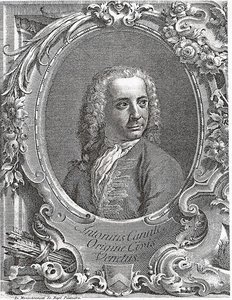
Giovanni Antonio Canaletto
1697 - 1768 , Italien
Kurzinfos
- Artistic Movement Or Style: Vedute Venezianisch
- Artists Or Movements Influenced By This Artist: ['Tintoretto']
- Artists Who Influenced This Artist:
- Bernardo Canal
- Giovanni Paolo Pannini
- Date Of Birth: 18. Oktober 1697
- Date Of Death: 19. April 1768
- Full Name: Giovanni Antonio Canal
- Nationality: Italienisch
- Notable Artworks:
- Der Steinmetzhof
- Regatta auf dem großen Kanal
- Eton College
- Place Of Birth: Venedig, Italien
Ähnliche Artikel
Giovanni Antonio Canal (Canaletto): Ein venezianischer Meister des Lichts und der Gesellschaftsdarstellung
Entdecken Sie das Werk von Giovanni Antonio Canal (Canaletto), dem Meister der venezianischen Vedutenmalerei. Erfahren Sie mehr über seinen Stil, seine Technik und seinen Einfluss auf die Kunstgeschichte – mit ArtsDot.

Die 10 legendärsten Radierungen: Meisterwerke, die Kunstgeschichte schrieben | ArtsDot
Entdecken Sie die 10 legendärsten Radierungen von Rembrandt, Dürer & Goya! Erfahren Sie die Geschichten hinter diesen Meisterwerken der Kunstgeschichte und lassen Sie sich für Ihre Wohnräume inspirieren. Hochwertige Kunstdrucke auf ArtsDot.com.

Etching: A Historical Survey of Technique, Aesthetic Qualities & Enduring Artistic Significance
Explore the rich history of etching, from its origins to Rembrandt's masterful innovations. Discover the technique, aesthetic qualities & enduring legacy of this captivating art form. Expert insights for collectors and enthusiasts.

The Intricate World of Etching: A Historical Survey of Technique, Aesthetic Evolution, and Enduring Artistic Impact
Explore the rich history of etching, from its origins to modern practice. Discover techniques, key artists like Rembrandt, and insights for collectors. A comprehensive guide by ArtsDot.

Barocke Pracht: Wie Sie Opulenz und Emotionen in zeitgenössische Innenräume bringen
Entdecken Sie die Pracht des Barock! Expertenratgeber für luxuriöse Innenräume mit barocken Elementen. Inspiration, Tipps & hochwertige Kunst bei .