

 Versenden
 Teilen
 Details anzeigen

 Herunterladen
 Ähnliche Objekte
 Diashow
Coronation of the Virgin Mary


 Weiterlesen
Giclée / Kunstdruck
Giclée- oder Leinwanddruck in Museumsqualität mit schneller Produktion und flexiblen Veredelungsoptionen. ( Handgemalte Reproduktion bestellen Bild kaufen)




































Wählen Sie aus unseren vordefinierten Formaten, die den ursprünglichen Proportionen des Kunstwerks entsprechen.

Sie können Ihre eigenen Maße eingeben, um ein bestimmtes Format oder einen speziellen Platz einzupassen. Wenn das von Ihnen gewählte Format nicht den Proportionen des Originalbildes entspricht, werden wir das Kunstwerk entweder beschneiden oder das Bild mit einem gespiegelten oder einfarbigen Rand erweitern. Ein digitaler Entwurf wird Ihnen zur Genehmigung zugesandt, bevor die Produktion beginnt.
Bitte beachten Sie, dass die Vorschau auf dem Bildschirm nicht den tatsächlichen Zuschnitt oder die Erweiterung widerspiegelt. Nur der Entwurf zeigt die endgültige Komposition präzise an.
Obwohl Sondermaße verfügbar sind, empfehlen wir die Auswahl eines Maßes aus der vordefinierten Liste, um die ursprünglichen Proportionen zu bewahren.
Weltweiter Versand () innerhalb von 2 Wochen statt der üblichen 4/5 Wochen. (28 August)

Kostenloser weltweiter Expressversand

Hochwertige Leinenleinwand

Umfassender Versicherungsschutz beim Versand

Zollgebühren-Rückerstattungsgarantie

Garantie für exakte Farbtreue

60 Tage Rückgaberecht (nur bei Mängeln)

100% Geld-zurück-Garantie

Mengenrabatt verfügbar
 Die Glasoption ist nur für Größen unter 110 cm verfügbar.

Coronation of the Virgin Mary
Giclée / Kunstdruck
Format der Reproduktion
-


Gesamtpreis
$ 62
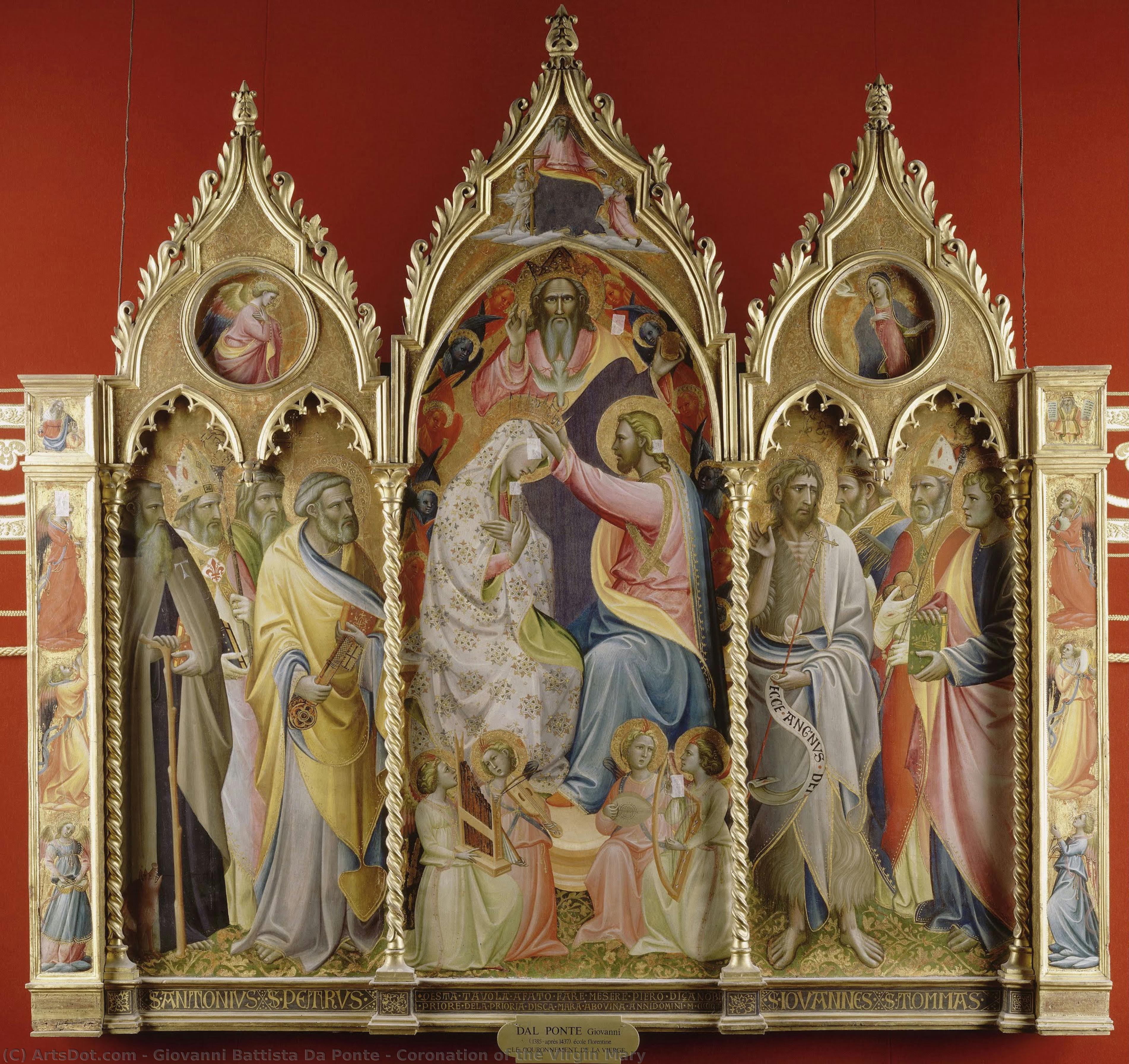
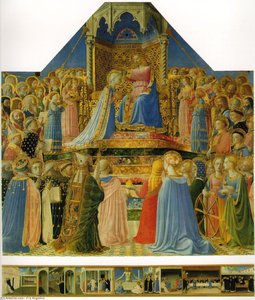
A Celestial Coronation: Exploring Giovanni Battista da Ponte's "Coronation of the Virgin Mary"
The fresco depicting the “Coronation of the Virgin Mary,” attributed to giovanni battista da ponte, stands as a testament to the fervent religious devotion and artistic flourishing of 15th-century Italy. Dating back to approximately 1425, this large-scale work offers a glimpse into the spiritual landscape of an era deeply rooted in faith, while simultaneously showcasing the evolving techniques and stylistic sensibilities of Renaissance painting. The scene itself is one steeped in symbolism – a visual representation of Mary’s ascension to divine queenship, a concept gaining increasing prominence within Catholic theology during this period. It's not merely a depiction of a heavenly event; it's an affirmation of Mary’s pivotal role as intercessor between humanity and the divine, a comforting image for worshippers seeking solace and guidance. The sheer scale of the fresco suggests its intended purpose: to inspire awe and reverence within a sacred space, drawing viewers into a contemplative experience of faith.The Artistic Landscape and Ponte's Place Within It
To fully appreciate this artwork, it’s crucial to understand the context in which it was created. The early 15th century witnessed a shift away from the stylized conventions of Gothic art towards a more naturalistic representation of the human form and the world around us – a hallmark of the burgeoning Renaissance. While giovanni battista da ponte worked within this evolving artistic climate, his style reflects a blend of late medieval traditions and emerging Renaissance ideals. He was the second son of Jacopo da Ponte, a renowned artist of the time, and much of his work is believed to have been influenced by, or even copied from, his father’s creations – a common practice in family workshops of the era. This connection highlights the importance of artistic lineage and apprenticeship within Renaissance society, where skills and techniques were passed down through generations. The fresco's composition, while grand, demonstrates a certain adherence to established iconographic conventions, yet it also hints at a growing interest in depicting figures with greater realism and emotional depth.Symbolism Woven into the Celestial Tapestry
Beyond its visual beauty, the "Coronation of the Virgin Mary" is rich in symbolic meaning. At the heart of the scene stands the Virgin Mary, resplendent in regal attire, receiving a crown from Jesus Christ – a clear declaration of her divine status and role as Queen of Heaven. The presence of other figures—angels, saints, and perhaps even representations of humanity—further enriches the narrative. Each element contributes to a complex tapestry of theological meaning. For instance, the book often depicted near Mary might symbolize her wisdom and knowledge, while the cup could allude to the Eucharist and her role in salvation. The musician angels, frequently featured in such depictions, are not merely decorative elements; they represent the heavenly choir celebrating this momentous occasion, their music a symbol of divine harmony and praise. These details invite viewers to engage with the artwork on multiple levels—appreciating its aesthetic qualities while simultaneously contemplating its profound spiritual message.A Legacy of Faith and Artistic Skill
The "Coronation of the Virgin Mary" by giovanni battista da ponte is more than just a beautiful painting; it’s a window into the religious beliefs, artistic practices, and cultural values of 15th-century Italy. While attribution and precise details about the fresco's original location remain somewhat elusive, its enduring power lies in its ability to evoke a sense of awe and reverence—a testament to the artist’s skill in capturing a pivotal moment in Christian iconography. The work serves as a reminder of the profound impact that art can have on shaping our understanding of faith, history, and the human experience, continuing to inspire contemplation and appreciation centuries after its creation. It stands as an excellent example of how Renaissance artists skillfully combined religious devotion with artistic innovation, creating works that resonate deeply with viewers across generations.Ähnliche Kunstwerke
Über den Künstler
biografischer Überblick
Giovanni Battista da Ponte, auch bekannt als Giovanni Battista Bassano, war ein italienischer Maler der Renaissance-Ära, geboren im Jahr 1553 in Bassano del Grappa, Italien. Er war der zweite Sohn von Jacopo da Ponte, einem der bedeutendsten Künstler seiner Zeit.künstlerischer Stil und Beiträge
Giovanni Battista da Ponte erlangte vor allem dadurch Berühmtheit, dass er die Werke seines Vaters meisterhaft kopierte, weshalb viele seiner Schöpfungen heute unter dem Namen Jacopos geführt werden. Sein Wirken erstreckte sich über Venedig bis hin zu seiner Geburtsstadt Bassano del Grappa, womit er die reiche kulturelle Landschaft Italiens während der Renaissance maßgeblich mitgestaltete.bedeutende Kunstwerke und Museen
Ein herausragendes Beispiel für die religiöse Meisterschaft jener Epoche ist Das Abendmahl in Emmaus (Hochrenaissance) – ein bemerkenswertes Gemälde von Jacopo Bassano (Jacopo da Ponte), das die tiefe Hingabe an sakrale Themen widerspiegelt. [https://ArtsDot.com/@@/8lj54h-jacopo-bassano-(jacopo-da-ponte)-supper-at-emmaus](https://ArtsDot.com/@@/8lj54h-jacopo-bassano-(jacopo-da-ponte)-supper-at-emmaus) Wer die Werke von Giovanni Battista da Ponte aus der Nähe betrachten möchte, findet im Museo Civico di Bassano del Grappa in der Region Venetien, Norditalien, eine bleibende Schatzkammer. Als eines der ältesten Museen der Gegend beherbergt es wertvolle Exponate seiner Hand. [https://ArtsDot.com/@@/a@d3atzm-museo-civico-di-bassano-del-grappa-italy](https://ArtsDot.com/@@/a@d3atzm-museo-civico-di-bassano-del-grappa-italy)Vermächtnis und Einfluss
Das Werk von Giovanni Battista da Ponte stellt, wenngleich es oft im Schatten der Leistungen seines Vaters steht, einen bedeutenden Beitrag zur italienischen Renaissance dar. Seine Treue zu traditionellen Techniken bei gleichzeitiger Erforschung neuer Themen spiegelt den transformativen Geist dieser Ära wider.- Giovanni Battista da Ponte - Wikipedia
- Entdecken Sie weitere Kunstwerke von Jacopo Bassano (Jacopo da Ponte) auf ArtsDot: [https://ArtsDot.com/@/jacopo-bassano-(jacopo-da-ponte)](https://ArtsDot.com/@/jacopo-bassno-(jacopo-da-ponte))
- Erkunden Sie die Sammlung des Museo Civico di Bassano del Grappa: [https://ArtsDot.com/@@/a@d3atzm-museo-civico-di-bassano-del-grappa-italy](https://ArtsDot.com/@@/a@d3atzm-museo-civico-di-bassano-del-grappa-italy)
Giovanni Battista Da Ponte
1553 - 1613 , Italien
Kurzinfos
- Artistic Movement Or Style: Renaissance, Druckgrafik
- Artists Or Movements Influenced By This Artist:
- Lucas Cranach der Jüngere
- Deutsche Renaissance
- Artists Who Influenced This Artist:
- Hans Maler
- Albrecht Dürer
- Date Of Birth: ca. 1472
- Date Of Death: 16. Oktober 1553
- Full Name: Lucas Cranach der Ältere
- Nationality: Deutsch
- Notable Artworks:
- Venus und Adonis
- Die Ruhe auf der Flucht nach Ägypten
- Porträt eines Mannes
- Luther als 'Junker Jörg'
- Place Of Birth: Kronach, Deutschland
Ähnliche Artikel
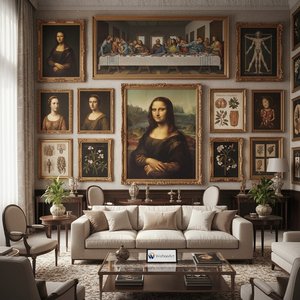
Leonardo da Vinci: Die 25 Meisterwerke für Ihr Zuhause | ArtsDot
Entdecken Sie die 25 Meisterwerke von Leonardo da Vinci! Erfahren Sie faszinierende Geschichten hinter Gemälden wie der Mona Lisa & Das letzte Abendmahl. Hochwertige Reproduktionen für Ihr Zuhause – jetzt bei ArtsDot entdecken!

Leonardo da Vinci: Synthese von Kunst, Wissenschaft und menschlicher Beobachtung – Eine Renaissance-Meisterleistung für den Kenner
Entdecken Sie Leonardo da Vincis revolutionäre Kunst und Wissenschaft! Expertenanalyse seiner Meisterwerke, Techniken wie Sfumato & Chiaroscuro. Für Kenner und Sammler.
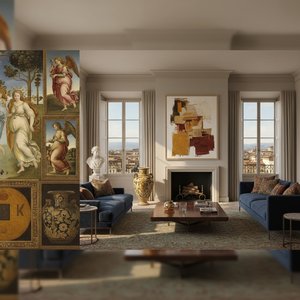
Die 25 Meisterwerke der Uffizien: Kunstgeschichte für Ihr Zuhause | ArtsDot
Entdecken Sie die 25 berühmtesten Meisterwerke der Uffizien, Florenz! Von Botticelli bis Leonardo da Vinci – Kunstgeschichte erleben. Hochwertige Reproduktionen & Inspiration für Ihr Zuhause auf ArtsDot.com.
Giovanni Giacometti: Sculpting Existentialism – A Study of Form, Space, and the Human Condition
Explore the profound artistic journey of Giovanni Giacometti, father to Alberto. Discover his unique transition from Surrealism to Existentialist sculpture and painting – a compelling study for elite collectors and art enthusiasts.
Giovanni Battista Piranesi: Visionary of Ruins & Architect of Imagination
Explore the life & work of Giovanni Battista Piranesi, master etcher of Roman views & creator of the haunting 'Carceri d'Invenzione'. Discover his architectural vision and lasting influence on art history.

