

 Vorschau anzeigen
 Versenden
 Teilen
 Details anzeigen

 Herunterladen
 Ähnliche Objekte
 Röntgenaufnahme
 Diashow
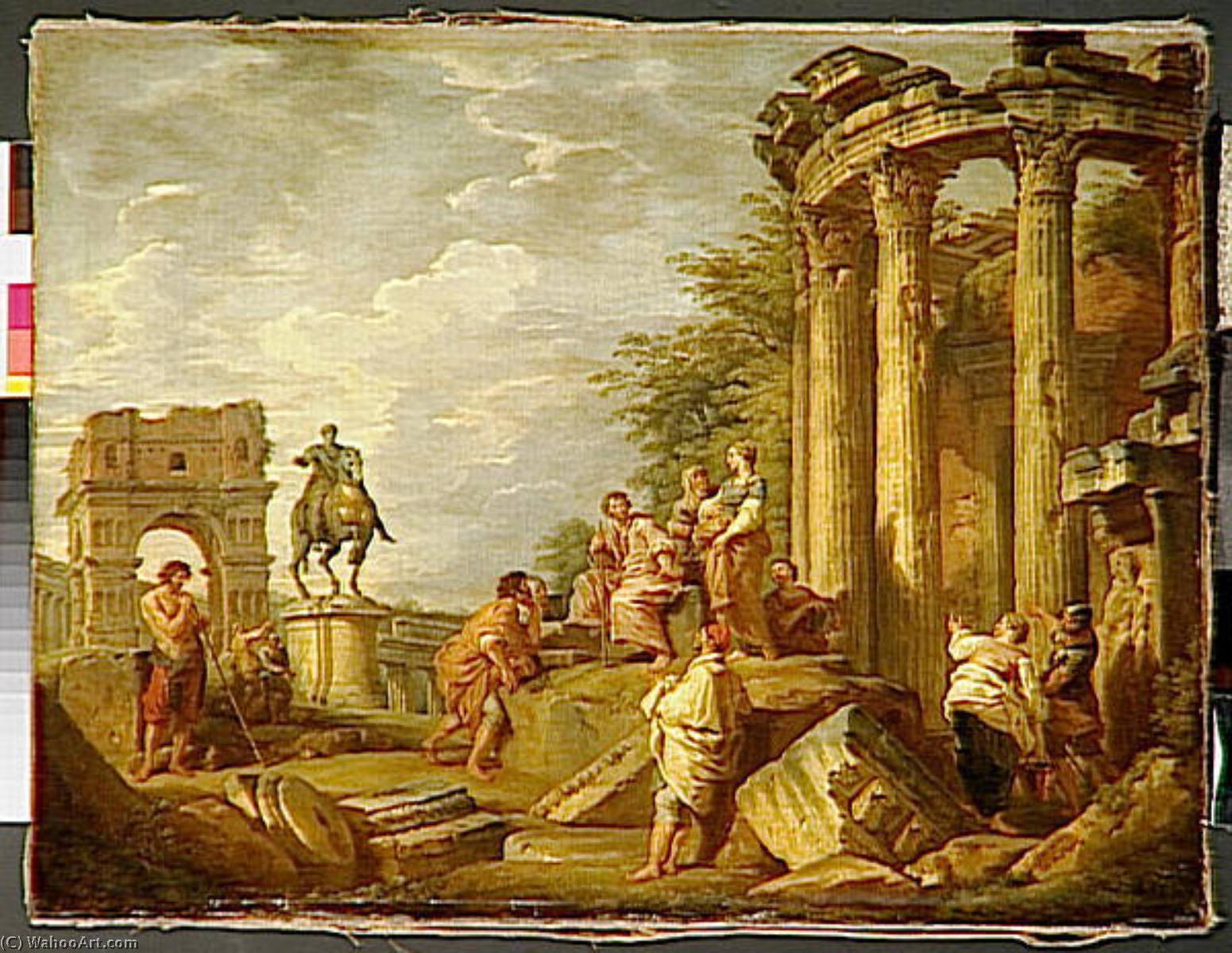
RUINES D'ARCHITECTURE AVEC L'ARC DE JANUS, LE TEMPLE DE VESTA ET LA STATUE EQUESTRE DE MARC AURELE


 Weiterlesen
Erwerben Sie ein hochauflösendes, optimiertes digitales Bild, das der Online-Vorschau weit überlegen ist.
Jede Datei wird von unseren hauseigenen Spezialisten mit modernsten Werkzeugen und fachmännischer manueller Retusche sorgfältig vorbereitet. Wir stellen sicher, dass jedes Bild eine außergewöhnliche Klarheit, präzise Farbgenauigkeit und feinste Details aufweist.
Die endgültige Datei wird innerhalb von 72 Stunden per E-Mail zugestellt und ist für den sofortigen Einsatz in professionellen, redaktionellen und Druckumgebungen optimiert. Es handelt sich um dieselbe Qualität, der führende Designstudios, Verlage und Galerien vertrauen.
Digitales Bild
Laden Sie eine hochauflösende Datei für die persönliche Präsentation, den Druck und kreative Projekte herunter. ( Druck bestellen Handgemalte Reproduktion bestellen)
In jeder Bestellung digitaler Bilder enthalten
Professionelle digitale Bereitstellung, garantiert
Wenn Sie sich für ArtsDot.com entscheiden, erhalten Sie nicht nur ein Bild – Sie erhalten ein professionell aufbereitetes digitales Kunstwerk, das mit höchster Präzision erstellt und durch eine Zufriedenheitsgarantie abgesichert wird. Hier ist alles, was automatisch mit Ihrer Bestellung geliefert wird:

Schnelle E-Mail-Zustellung
Ihre hochauflösende digitale Bilddatei wird Ihnen innerhalb von 72 Stunden nach der Bestellung per E-Mail zugestellt – bereit zur sofortigen Verwendung.

KI-optimierte digitale Datei
Ihre Kunstwerke werden professionell mithilfe fortschrittlicher KI-Tools und manueller Bearbeitung optimiert, um maximale Detailtreue, Klarheit und Farbgenauigkeit zu gewährleisten.

Lebenslanger kostenloser Neudruckservice
Datei versehentlich gelöscht oder verloren? Keine Sorge – wir senden sie Ihnen jederzeit kostenlos erneut zu.

Keine Einfuhrgebühren – jemals
Genießen Sie Ihr Kunstwerk sofort ohne Zollgebühren, Einfuhrabgaben oder Versandkosten – digitale Downloads sind immer steuerfrei.

Garantierte Farbtreue
Wir garantieren, dass Ihr digitales Bild mithilfe professioneller Werkzeuge und Farbmanagement die Originalfarben so präzise wie möglich wiedergibt.

60-Tage-Zufriedenheitsgarantie
Sollten Sie mit Ihrem digitalen Bild nicht zufrieden sein, werden wir es überarbeiten oder Ihnen innerhalb von 60 Tagen 100% erstatten – ohne Wenn und Aber.

100% Geld-zurück-Garantie
Nicht zufrieden? Erhalten Sie innerhalb von 60 Tagen nach Erhalt Ihrer digitalen Datei eine vollständige Rückerstattung – ohne Angabe von Gründen.

Rabatte bei Großbestellungen
3 Bilder kaufen, 10% sparen – 5 Bilder kaufen, 15% sparen – Ab 10 Bildern 20% sparen. Ideal für kreative Projekte, Galerien und Agenturen.
Details zum Sammlerstück
A Window into Roman Grandeur: Giovanni Paolo Panini’s Masterpiece
Giovanni Paolo Panini’s “Ruines d'Architecture avec l'Arc de Janus, le Temple de Vesta et la Statue Équestre de Marc Aurele” isn’t merely a painting; it’s a meticulously crafted portal into the heart of ancient Rome. Completed around 1743, this Baroque masterpiece transcends simple representation, offering instead a romanticized and profoundly evocative vision of a city both glorious and fading. The scene unfolds within a carefully constructed illusionistic space, drawing the viewer into a world where crumbling ruins whisper tales of empires past and figures – men, women, and children – engage in quiet contemplation amidst the vestiges of power.
The painting’s core is undeniably classical: the imposing archway leading to the temple complex, the remnants of the Temple of Vesta, and the majestic statue of Marcus Aurelius. However, Panini doesn't present a literal depiction. Instead, he employs a masterful manipulation of perspective and light – hallmarks of Baroque artistry – to create an atmosphere of dramatic intensity. Strong contrasts between illumination and shadow sculpt the architecture, highlighting its grandeur while simultaneously suggesting decay and the relentless passage of time. The figures are not merely incidental; they’re integrated into the scene, adding layers of narrative and inviting speculation about their thoughts and actions.
The Architect's Eye: Panini’s Unique Approach
What distinguishes Panini from many of his contemporaries is his deep understanding of architectural principles and his ability to translate them onto canvas. He wasn’t simply a painter; he was, in essence, an architect who used paint as his medium. This is evident in the incredibly precise rendering of the ruins – each column, each archway, meticulously detailed with a level of accuracy that borders on obsessive. Yet, this precision isn't cold or clinical. Panini deliberately introduces elements of fantasy and embellishment, characteristic of the “capriccio” genre, which he expertly mastered. These additions aren’t errors; they are deliberate choices designed to heighten the drama and create an idealized vision of Rome.
The painting's composition is layered and dynamic, drawing the eye through a complex network of lines and shapes. Geometric forms dominate the architectural elements, while organic shapes – particularly in the foliage – provide a sense of naturalism and contrast. The use of perspective creates a powerful illusion of depth, pulling the viewer into the scene and making them feel as though they are standing within this ancient Roman landscape. The color palette is dominated by warm earth tones—ochres, browns, and reds—evoking the weathered stone and sun-drenched atmosphere of the city.
Symbolism and Historical Context
“Ruines d'Architecture” is rich in symbolic meaning. The crumbling ruins themselves represent the transience of power and the inevitable decline of empires – a potent theme explored throughout Western art history. The statue of Marcus Aurelius, standing proudly amidst the decay, embodies imperial authority and enduring legacy. Yet, even this symbol is tempered by the surrounding ruin, suggesting that even the mightiest rulers are ultimately subject to time’s relentless march. The figures scattered throughout the scene add another layer of interpretation; they represent humanity's ongoing relationship with history, memory, and the beauty—and melancholy—of the past.
Panini’s work emerged during a period of intense fascination with classical antiquity in 18th-century Europe. The rediscovery of Roman ruins fueled a desire to reconstruct and romanticize the lost glories of the ancient world. Panini, working in Rome, became one of the leading artists of his time, capturing this spirit of revival through his meticulously rendered depictions of the city’s architectural heritage. His paintings served not only as artistic statements but also as valuable historical documents, offering a glimpse into how Romans envisioned and remembered their past.
Bringing Panini's Vision Home
Reproductions of “Ruines d'Architecture avec l'Arc de Janus, le Temple de Vesta et la Statue Équestre de Marc Aurele” offer a remarkable opportunity to bring this captivating Baroque masterpiece into your home or office. The intricate details and dramatic lighting are faithfully reproduced in high-quality prints, canvases, and framed artworks, allowing you to experience the artist’s vision firsthand. Whether you're an art enthusiast, a collector of classical art, or simply seeking a stunning piece for your interior design, this painting is sure to captivate and inspire.
Ähnliche Kunstwerke
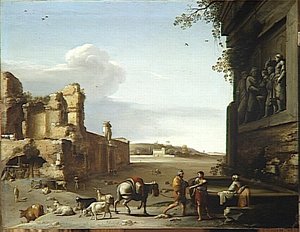
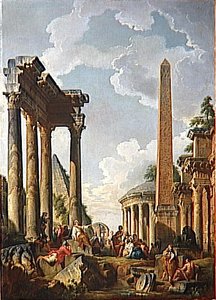
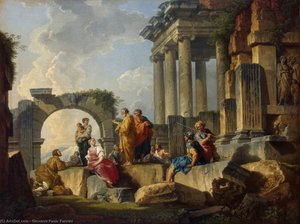
Biografie des Künstlers
Giovanni Paolo Panini (1691–1765): Master of Roman Vedute & Architectural Fantasies
Giovanni Paolo Panini, a name synonymous with the grandeur and romantic allure of 18th-century Rome, was more than just a painter; he was a visual architect of memory. Born in Piacenza in 1691, his artistic journey began under the tutelage of Giuseppe Natali and Andrea Galluzzi, but it was his exposure to the theatrical designs of Francesco Galli-Bibiena that truly ignited his imagination. This early immersion in stagecraft would profoundly influence his later work, imbuing it with a sense of dramatic composition and illusionistic space. In 1711, he relocated to Rome, a city already steeped in artistic history, where he honed his skills under the guidance of Benedetto Luti, mastering the art of drawing and laying the foundation for his future mastery of perspective.From Frescoes to Vedute: The Evolution of an Artistic Style
Panini’s initial success came not as a canvas painter but as a decorator of palaces. His frescoes adorned the walls of prominent Roman residences, including the Villa Patrizi (1719–1725), Palazzo de Carolis (1720) and Seminario Romano (1721–1722). These early commissions allowed him to develop his technical prowess and establish a reputation within Rome’s artistic circles. However, it was his embrace of the *veduta*, or view painting, that would ultimately define his legacy. Unlike earlier topographical artists who focused on precise documentation, Panini infused his depictions of Rome with a sense of imaginative reconstruction. He didn't merely record what he saw; he re-imagined it, blending existing structures with fragments of ancient ruins and fanciful architectural elements. This approach, often referred to as *capriccio*, allowed him to create scenes that were both recognizable and dreamlike, capturing the spirit of Rome’s layered history. His 1719 admission into the Congregazione dei Virtuosi al Pantheon signaled his growing recognition within the Roman art world, and he soon became a sought-after artist among Grand Tourists – wealthy young Europeans traveling Italy to complete their education.- Notable Techniques: Panini’s distinctive style was characterized by meticulous attention to detail—particularly in rendering perspective—combined with an expressive use of light and shadow. He skillfully employed the *Panini Projection*, a revolutionary technique that enabled him to accurately represent panoramic views, establishing himself as a pioneer in architectural painting.
- Influences: Panini’s artistic sensibilities were shaped by several prominent artists of his time, including Giuseppe Natali, Andrea Galluzzi and Jan van Goyen. Van Goyen's mastery of atmospheric perspective served as an inspiration for Panini’s own landscapes, while Francesco Galli-Bibiena’s theatrical stage designs instilled in him a sense of dramatic composition.
The Pantheon Interior View & Other Masterpieces
Panini achieved international renown through his monumental depiction of the Pantheon's interior—a masterpiece that exemplifies his artistic vision. Completed in 1747, this fresco captures the grandeur and solemn beauty of the temple with remarkable precision, utilizing subtle gradations of light to convey a sense of depth and atmosphere. Beyond the Pantheon, Panini produced numerous other celebrated works, including *Rome Views*, which showcase his ability to synthesize architectural elements and imaginative embellishments into captivating panoramas. His depictions of ancient ruins—particularly those found in Rome—were particularly innovative, reflecting a broader intellectual preoccupation with classical antiquity and its influence on artistic expression.- Iconic Paintings: Among Panini’s most enduring achievements are his views of the Roman Forum and Circus Maximus, which capture the dynamism of urban life while simultaneously conveying a sense of timelessness. These paintings demonstrate Panini's exceptional skill in capturing fleeting moments of light and color—a hallmark of Baroque painting.
- The Role of Imagination: Unlike many artists of his era who prioritized faithful representation, Panini deliberately manipulated perspective to heighten the emotional impact of his compositions. This imaginative approach—characteristic of *capriccio*—allowed him to transcend mere observation and create scenes that resonated with viewers on a deeper level.
A Legacy Enduring Through Time
Giovanni Paolo Panini’s influence extended far beyond his own lifetime. He was a respected teacher at both the Accademia di San Luca and the Académie de France in Rome, shaping the artistic sensibilities of a generation of artists. Among his pupils was Hubert Robert, who would become equally renowned for his depictions of ruins, though with a more overtly romantic sensibility. Panini’s style also resonated with other *vedutisti*, including Antonio Joli and Charles-Louis Clérisseau, inspiring them to explore the possibilities of architectural painting. His works are now held in prestigious collections worldwide, including the Prado Museum, the Louvre, and the Museo Nazionale di Capodimonte, testament to his enduring appeal. He remains a pivotal figure in art history—a testament to the transformative power of imagination and meticulous technique.- Rediscovery & Recognition: Panini’s reputation had waned considerably after his death, but he was revived by late 18th-century British collectors who championed his work. Today, Panini is celebrated as one of the foremost painters of Roman vedute—a genre that continues to fascinate art historians and viewers alike.
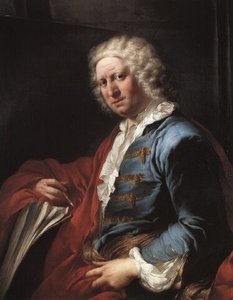
Giovanni Paolo Pannini
1691 - 1765 , Italien
Kurzinfos
- Artistic Movement Or Style: Barock, Vedutismo
- Artists Or Movements Influenced By This Artist: ['Hubert Robert']
- Artists Who Influenced This Artist:
- Giuseppe Natali
- Andrea Galluzzi
- F.Galli-Bibiena
- Date Of Birth: 1691
- Date Of Death: 1765
- Full Name: Giovanni Paolo Panini
- Nationality: Italienisch
- Notable Artworks:
- Pantheon Innenansicht
- Romische Ansichten
- Capricci
- Place Of Birth: Piacenza, Italien

