

 Vorschau anzeigen
 Versenden
 Teilen
 Details anzeigen

 Herunterladen
 Ähnliche Objekte
 Röntgenaufnahme
 Diashow
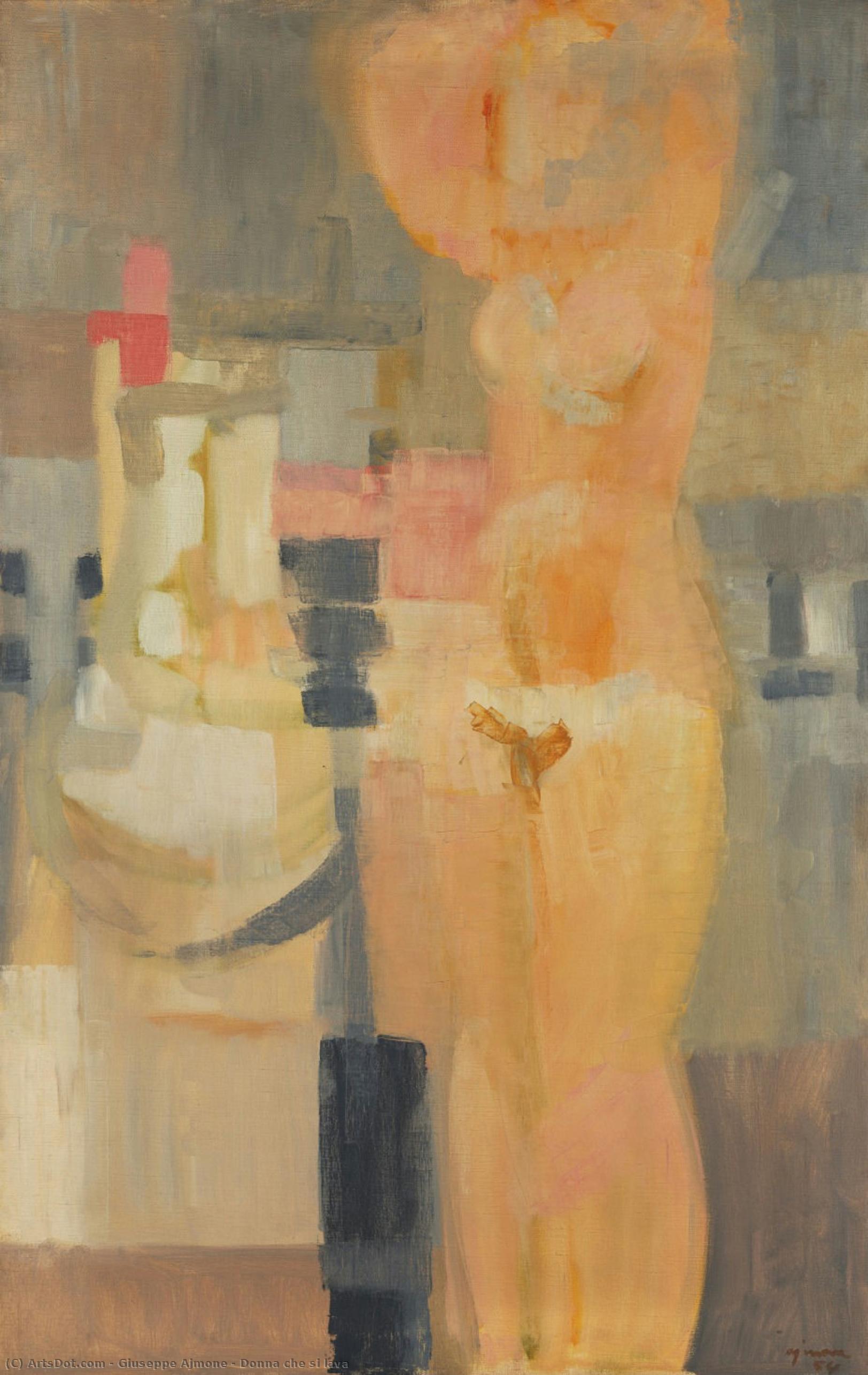
Donna che si lava
 Oil On Canvas
- WallArt
- Contemporary Realism
 1954
1954- Modern
 115.0 x 63.0 cm
 Museo del Novecento
 Weiterlesen
Giclée / Kunstdruck
Giclée- oder Leinwanddruck in Museumsqualität mit schneller Produktion und flexiblen Veredelungsoptionen. ( Handgemalte Reproduktion bestellen Bild kaufen)




P118B $10

P118H $10

P118W $10

P438Z $10

P508JH $12

P508YH $12

P805H $10

P805Z $10

P919BZ $10

P919G $10

P919XJ $10

P959ZH $10

P968JZ $12

W106C $8

W218G $10

W218JH $8

W218Y $10

W307PJ $10

W316G $10

W316PJ $8

W316Y $10

W398PJ $8

W4111J $10

W500HY $15

W500JH $15

W692G $12

W849H $8

W940BG $15

W953PJ $8




Wählen Sie aus unseren vordefinierten Formaten, die den ursprünglichen Proportionen des Kunstwerks entsprechen.

Sie können Ihre eigenen Maße eingeben, um ein bestimmtes Format oder einen speziellen Platz einzupassen. Wenn das von Ihnen gewählte Format nicht den Proportionen des Originalbildes entspricht, werden wir das Kunstwerk entweder beschneiden oder das Bild mit einem gespiegelten oder einfarbigen Rand erweitern. Ein digitaler Entwurf wird Ihnen zur Genehmigung zugesandt, bevor die Produktion beginnt.
Bitte beachten Sie, dass die Vorschau auf dem Bildschirm nicht den tatsächlichen Zuschnitt oder die Erweiterung widerspiegelt. Nur der Entwurf zeigt die endgültige Komposition präzise an.
Obwohl Sondermaße verfügbar sind, empfehlen wir die Auswahl eines Maßes aus der vordefinierten Liste, um die ursprünglichen Proportionen zu bewahren.
Weltweiter Versand () innerhalb von 2 Wochen statt der üblichen 4/5 Wochen. (19 August)

Kostenloser weltweiter Expressversand

Hochwertige Leinenleinwand

Umfassender Versicherungsschutz beim Versand

Zollgebühren-Rückerstattungsgarantie

Garantie für exakte Farbtreue

60 Tage Rückgaberecht (nur bei Mängeln)

100% Geld-zurück-Garantie

Mengenrabatt verfügbar
 Die Glasoption ist nur für Größen unter 110 cm verfügbar.

Donna che si lava
Giclée / Kunstdruck
Format der Reproduktion
-


Gesamtpreis
$ 62
Sammlerstück-Beschreibung
An Intimate Encounter with Light and Form
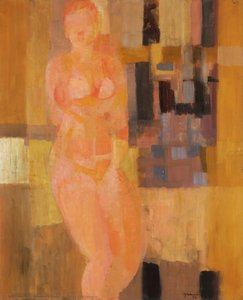
In the quiet, private moments of domestic life, there exists a profound beauty that often escapes the hurried gaze of the world. Giuseppe Ajmone, a master of capturing these ephemeral instances, invites us into such a moment with his 1954 masterpiece, Donna che si lava (Woman Washing). The painting presents us with a figure seen from behind, her back turned to the viewer as she engages in a ritual of cleansing. This perspective creates an immediate sense of voyeuristic intimacy, yet it remains deeply respectful, drawing the observer into a private sanctuary rather than intruding upon it. The composition is a delicate dance of light and shadow, where the warmth of pinks and yellows breathes life into the skin, transforming a mundane bathroom setting into a stage of vibrant, chromatic expression.
The technique employed by Ajmone reflects his deep connection to the post-war Italian tradition, blending elements of semi-abstraction with a palpable sense of reality. Influenced by the luminous palettes of Pierre Bonnard and the structural boldness of Picasso, Ajmone utilizes color not merely as a descriptive tool but as an emotional language. The way the light dances across the woman's form suggests a fluid, almost rhythmic movement, where the boundaries between the subject and her environment begin to soften. Scattered throughout the scene, objects such as a delicate cup, a bottle, and various bowls are rendered with a painterly touch that emphasizes texture and light over rigid detail, contributing to a dynamic composition that feels both grounded and dreamlike.
A Legacy of Italian Modernism
To understand the depth of Donna che lava, one must look toward the rich historical tapestry of Ajmone’s career. Emerging from the prestigious Brera Academy under the tutelage of masters like Achille Funi and Carlo Carrà, Ajmone was a central figure in the mid-century Italian art scene. His participation in landmark exhibitions, such as the Manifesto del Realismo and the prestigious Venice Biennale, places this work within a period of intense artistic exploration following World War II. This era was defined by a search for a new visual language—one that could reconcile the weight of tradition with the burgeoning freedom of modern abstraction. In this painting, we see that reconciliation perfectly realized; it is a work that honors the human figure while embracing the expressive potential of color and light.
For the discerning collector or interior designer, this piece offers more than just visual appeal; it provides an emotional anchor for a sophisticated space. The warmth of the palette makes it an ideal centerpiece for rooms designed to evoke tranquility and refinement. Whether placed in a sun-drenched morning room or a moody, contemporary study, the painting’s ability to command attention through subtle nuance ensures it remains a conversation piece for years to come. Owning a reproduction of such a significant work allows one to bring a fragment of Italian modernism into the home, fostering an environment of cultured contemplation and timeless elegance.
Ähnliche Kunstwerke
![Nude Figure [reverse] — Ernst Ludwig Kirchner](/media/artworks/images/thumbnails/17/5f/175f19e550a54833b904625b83218ba1.jpg)
Über den Künstler
Frühes Leben und Ausbildung
Giuseppe Ajmone, ein renommierter italienischer Maler, wurde 1923 in Carpignano Sesia, Italien, geboren. Im Jahr 1941 zog er nach Mailand, um an der Brera-Akademie unter der Anleitung von Achille Funi und Carlo Carrà zu studieren.Künstlerische Karriere
Die künstlerische Laufbahn von Ajmone war geprägt von seiner Teilnahme an verschiedenen Ausstellungen, darunter das Manifesto del Realismo (auch bekannt als Oltre Guernica) im Jahr 1946. Er erhielt eine Auszeichnung auf der ersten nationalen Malerausstellung in Bellagio. Im Jahr 1950 nahm er an der 25. Internationalen Ausstellung der Biennale von Venedig teil, gefolgt vom Premio Senatore Borletti für junge italienische Maler im Jahr 1951.Internationale Ausstellungen und Kollaborationen
Ajmones Werk wurde weltweit präsentiert, unter anderem in:- Biennale di San Paolo del Brasile (1951 und 1959)
- Biennale Internazionale di Tokyo (1959)
- Pittsburgh International Museum of Art (1955 und 1958)
- Kopenhagen, Dortmund, Nürnberg und Buenos Aires
Bedeutende Werke und Stil
Ajmones Gemälde zeigten oft Landschaften und halbabstrakte Figuren. Sein Stil war von bedeutenden Künstlern wie Bonnard, Picasso, Braque und Nicolas de Staël beeinflusst. Dennoch war Ajmones Werk durch seine Subtilität, Melancholie und Intimität gekennzeichnet.Späteres Leben und Vermächtnis
Ajmone ließ sich 1982 in Romagnano Sesia (Novara) nieder, wo er bis zu seinem Tod im Jahr 2005 lebte. Sein Erbe wird weiterhin durch verschiedene Ausstellungen und die Bewahrung seines Werkes gefeiert. Sehen Sie sich Giuseppe Ajmones Kunstwerke auf ArtsDot an:- Giuseppe Ajmone | 10 Kunstwerke
- Giuseppe Ajmone: Nudo alla finestra (Museo del Novecento, Mailand, Italien)
Giuseppe Ajmone
1923 - 2005 , Italien
Kurzinfos
- Bemerkenswerte Kunstwerke:
- Look Mickey
- Whaam!
- Drowning Girl
- Geburtsdatum: 27. Oktober 1923
- Geburtsort: New York City, USA
- Künstler Oder Bewegungen, Die Von Diesem Künstler Beeinflusst Wurden:
- Comic-Strips
- Werbung
- Künstler, Die Diesen Künstler Beeinflusst Haben:
- Rembrandt
- Daumier
- Picasso
- Künstlerische Bewegung Oder Stil: Pop Art
- Nationalität: Amerikanisch
- Sterbedatum: 29. September 2005
- Vollständiger Name: Roy Fox Lichtenstein
Ähnliche Artikel
Die zartesten Meisterwerke: Top 10 Gemälde in Lichtrosa & ihre Geschichte |
Entdecken Sie die Top 10 berühmter Gemälde in zarten Rosatönen! Von impressionistischen Meisterwerken bis hin zu romantischen Ikonen – erfahren Sie mehr über Künstler, Techniken & Geschichte. Hochwertige Kunstdrucke auf .
Chromgelb in der Kunstgeschichte: Die 10 berühmtesten Gemälde & ihre Meister
Entdecken Sie die 10 berühmtesten Gemälde, dominiert von der leuchtenden Farbe Chromgelb! Von Van Gogh bis Monet – erfahren Sie Geschichten hinter Meisterwerken & finden Sie Ihre perfekte Kunst-Reproduktion auf ArtsDot.com.
Die Top 10 berühmter Gemälde im Gelbocherton – Kunst für Ihr Zuhause |
Entdecken Sie die Top 10 berühmter Gemälde, dominiert von warmen Gelbochtönen! Von Van Gogh bis Monet – erfahren Sie die Geschichten hinter den Meisterwerken und lassen Sie sich für Ihre Wohnraumgestaltung inspirieren. Hochwertige Kunstdrucke auf
The Golden Hue: Exploring Symbolism & Emotion in Yellow Art
Explore the rich symbolism & emotional power of yellow in art history! From Van Gogh to Kandinsky, discover how artists used this vibrant hue. Expert analysis & high-quality reproductions at ArtsDot.

Angelo Chiacchio: A Mid-Century American Illustration Master & the Rise of Commercial Art
Explore the captivating world of Angelo Chiacchio, a master of mid-century American illustration. Discover his evolution, signature style, and lasting impact on commercial art & design. Learn about his legacy at the Museum of American Illustration.

