 Vorschau anzeigen
 Versenden
 Teilen
 Details anzeigen

 Herunterladen
 Ähnliche Objekte
 Röntgenaufnahme
 Diashow
Nature studies (11)


 Weiterlesen
Giclée / Kunstdruck
Giclée- oder Leinwanddruck in Museumsqualität mit schneller Produktion und flexiblen Veredelungsoptionen. ( Handgemalte Reproduktion bestellen Bild kaufen)




P118B $10

P118H $10

P118W $10

P438Z $10

P508JH $12

P508YH $12

P805H $10

P805Z $10

P919BZ $10

P919G $10

P919XJ $10

P959ZH $10

P968JZ $12

W106C $8

W218G $10

W218JH $8

W218Y $10

W307PJ $10

W316G $10

W316PJ $8

W316Y $10

W398PJ $8

W4111J $10

W500HY $15

W500JH $15

W692G $12

W849H $8

W940BG $15

W953PJ $8




Wählen Sie aus unseren vordefinierten Formaten, die den ursprünglichen Proportionen des Kunstwerks entsprechen.

Sie können Ihre eigenen Maße eingeben, um ein bestimmtes Format oder einen speziellen Platz einzupassen. Wenn das von Ihnen gewählte Format nicht den Proportionen des Originalbildes entspricht, werden wir das Kunstwerk entweder beschneiden oder das Bild mit einem gespiegelten oder einfarbigen Rand erweitern. Ein digitaler Entwurf wird Ihnen zur Genehmigung zugesandt, bevor die Produktion beginnt.
Bitte beachten Sie, dass die Vorschau auf dem Bildschirm nicht den tatsächlichen Zuschnitt oder die Erweiterung widerspiegelt. Nur der Entwurf zeigt die endgültige Komposition präzise an.
Obwohl Sondermaße verfügbar sind, empfehlen wir die Auswahl eines Maßes aus der vordefinierten Liste, um die ursprünglichen Proportionen zu bewahren.
Weltweiter Versand () innerhalb von 2 Wochen statt der üblichen 4/5 Wochen. (21 August)

Kostenloser weltweiter Expressversand

Hochwertige Leinenleinwand

Umfassender Versicherungsschutz beim Versand

Zollgebühren-Rückerstattungsgarantie

Garantie für exakte Farbtreue

60 Tage Rückgaberecht (nur bei Mängeln)

100% Geld-zurück-Garantie

Mengenrabatt verfügbar
 Die Glasoption ist nur für Größen unter 110 cm verfügbar.

Nature studies (11)
Giclée / Kunstdruck
Format der Reproduktion
-


Gesamtpreis
$ 62
Sammlerstück-Beschreibung
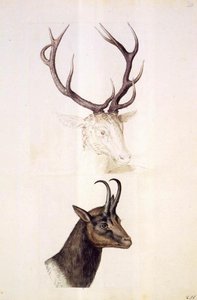
Giuseppe Arcimboldo’s “Nature Studies (11)” – A Renaissance Rhapsody of Form and Flora
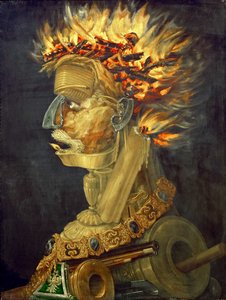
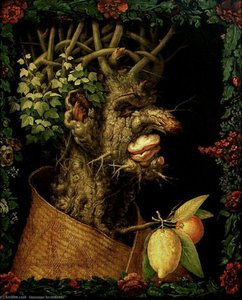
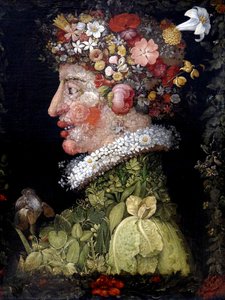
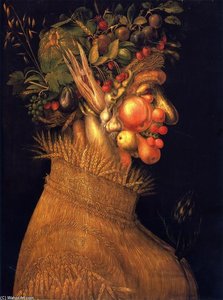
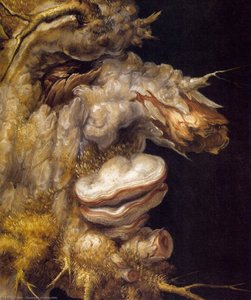
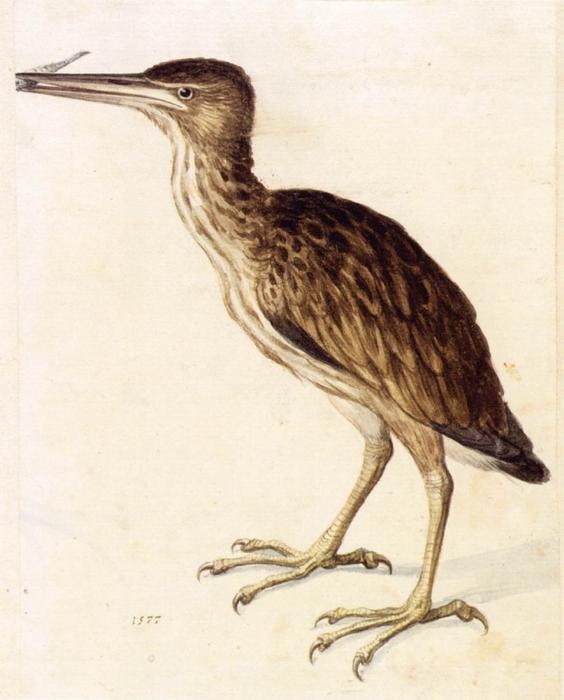
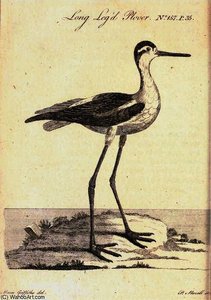
Within the hallowed halls of the Österreichische Nationalbibliothek in Vienna resides a captivating enigma, Giuseppe Arcimboldo's "Nature Studies (11)," a painting that transcends mere representation to become a profound meditation on life, death, and the cyclical rhythms of the natural world. Completed in 1577, this masterful work isn’t simply a portrait; it’s an elaborate, meticulously constructed allegory—a testament to Arcimboldo's singular genius and his deep understanding of Renaissance symbolism. The painting depicts a solitary heron standing proudly on one leg, its long neck extended forward with an almost contemplative stillness. Yet, the bird itself is merely the vehicle for a far grander narrative, woven from an astonishing array of organic elements: vibrant fruits, delicate flowers, verdant leaves, and meticulously arranged vegetables—a veritable still life brimming with symbolic weight.
Arcimboldo’s technique is nothing short of breathtaking. He employs a masterful blend of watercolor on parchment, creating textures that range from the smooth sheen of polished fruit to the delicate translucence of petals. The layering is incredibly precise; each element—a single cherry, a curled leaf, a miniature artichoke—is positioned with deliberate care, contributing to the overall composition and reinforcing its inherent symbolism. The color palette is rich and earthy, dominated by browns, greens, and reds, evoking the bounty of autumn and hinting at both abundance and decay – a key theme within the artwork. The lighting is soft and diffused, casting subtle shadows that enhance the three-dimensionality of the assembled forms, drawing the viewer’s eye into this intricate tableau.
The Hermeneutics of Objects: Decoding Arcimboldo's Symbolism
Arcimboldo was a master of visual language, and “Nature Studies (11)” is replete with layers of meaning. The heron itself has been interpreted as representing wisdom, vigilance, and the passage of time – qualities highly valued during the Renaissance. The inclusion of specific fruits and vegetables carries further symbolic weight. Apples, for instance, frequently symbolize knowledge and temptation, while pears represent fertility and abundance. The careful arrangement speaks to a deliberate attempt to create harmony between disparate elements, mirroring the ideal of balance sought after by Renaissance thinkers like Leonardo da Vinci.
Crucially, this painting was commissioned by Emperor Maximilian II, a renowned patron of the arts and a keen student of botany and natural history. Arcimboldo’s court was filled with leading botanists who provided him with an unparalleled wealth of knowledge about plants and their properties. This connection to the imperial court elevates the work beyond a simple artistic exercise; it becomes a visual representation of the emperor's power, his connection to nature, and his intellectual pursuits. The painting can be seen as a reflection of the Renaissance fascination with the interconnectedness of all things – a belief that humanity was an integral part of the natural world.
A Window into the Renaissance Mind
“Nature Studies (11)” offers a remarkable glimpse into the mindset of the late 16th century. The Renaissance witnessed a renewed interest in classical antiquity, alongside a burgeoning scientific curiosity and a profound appreciation for the beauty and complexity of the natural world. Arcimboldo’s work embodies these trends perfectly, blending artistic skill with intellectual inquiry. The painting reflects the era's fascination with metamorphosis—the idea that things are constantly changing and transforming – mirroring the cyclical nature of life, death, and rebirth.
Furthermore, it aligns with the broader context of “Vertumnus,” another iconic Arcimboldo work depicting the Roman god of fertility and seasons. Both paintings share a similar conceptual framework—the transformation of human form into natural elements—and demonstrate Arcimboldo’s consistent exploration of themes related to nature, power, and the passage of time. The painting's enduring appeal lies in its ability to simultaneously delight the eye with its intricate detail and stimulate the mind with its rich symbolism.
Bringing “Nature Studies (11)” Home: Reproduction Options
Reproductions of Arcimboldo’s "Nature Studies (11)" are available through various reputable art dealers, offering a beautiful way to bring this iconic masterpiece into your home or office. High-quality prints on archival paper ensure that the colors and details remain vibrant for generations to come. For those seeking an authentic experience, hand-painted reproductions meticulously recreate Arcimboldo’s original technique, capturing the nuances of his watercolor style with remarkable accuracy. Consider framing options that complement the painting's rich palette and evoke the atmosphere of a Renaissance studio – perhaps a simple wooden frame or a more ornate gilded design.
Whether you choose a print or a hand-painted reproduction, owning a piece inspired by “Nature Studies (11)” is an investment in art history, symbolism, and timeless beauty. It’s a reminder of the enduring power of visual storytelling and the genius of Giuseppe Arcimboldo – a true visionary who transformed ordinary objects into extraordinary works of art.
Ähnliche Kunstwerke
Über den Künstler
Frühe Jahre und Karriere
Giuseppe Arcimboldo, ein renommierter italienischer Maler, wurde 1527 in Mailand, Italien, geboren. Sein Vater, Biagio Arcimboldo, war ebenfalls Künstler, was wahrscheinlich Giuseppes frühes Interesse an der Kunst beeinflusste. Im Alter von 21 Jahren begann Giuseppe seine Karriere als Designer für Glasfenster und Fresken in lokalen Kathedralen.Hofmaler der Habsburger
1562 wurde Arcimboldo zum Hofporträtisten von Ferdinand I am habsburgischen Hof in Wien, Österreich, ernannt. Später diente er als Maler für Maximilian II. und seinen Sohn Rudolf II. am Hof in Prag. Diese Zeit seines Lebens ist geprägt von seiner Arbeit als Hofdekorateur und Kostümbildner.Das manieristische Meisterwerk: Portraits aus Objekten
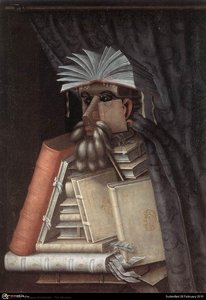
Arcimboldos konventionelle Arbeiten zu traditionellen religiösen Themen sind weitgehend in Vergessenheit geraten, aber seine Porträts, die aus Gegenständen wie Früchten, Gemüse, Blumen, Meeresfrüchten und Baumwurzeln bestehen, faszinieren Kunstliebhaber weiterhin. Diese Werke, die durch ihre Verwendung von Alltagsgegenständen zur Schaffung menschlicher anatomischer Formen gekennzeichnet sind, waren nicht nur dekorativ, sondern vermittelten auch eine tiefere Bedeutung.- "Der Bibliothekar", ein Porträt aus Objekten, die die Buchkultur der Zeit symbolisieren, war nicht nur eine skurrile Kreation, sondern auch eine Kritik an wohlhabenden Personen, die Bücher sammelten, ohne sie zu lesen.
- Diese Werke waren nicht zufällig; jeder Gegenstand wurde sorgfältig ausgewählt, um sich auf das Motiv zu beziehen.
Künstlerischer Stil und Vermächtnis
Arcimboldos künstlerischer Stil, der oft als skurril oder als Produkt eines verwirrten Geistes angesehen wird, wird von Wissenschaftlern größtenteils als eine Anpassung an den Geschmack der Renaissance für Rätsel, Puzzles und das Bizarre gewertet. Seine Verwendung von Objekten zur Schaffung menschlicher Formen war ein einzigartiger Aspekt seiner Arbeit, der ihn von anderen manieristischen Künstlern unterschied. Bemerkenswerte Werke:- "Floral Stillleben" (1590), ein Gemälde, das die italienische Manierismus-Bewegung verkörpert, ist ein ikonisches Beispiel für Arcimboldos einzigartigen Stil.
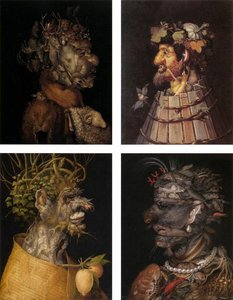
- "Die vier Jahreszeiten", ein zusammengesetztes Porträt von Rudolf II., zeigt Arcimboldos Meisterschaft in der manieristischen Kunst.
Museen und Sammlungen
Arcimboldos Werke finden sich in verschiedenen Museen, darunter das Kunsthistorische Museum in Wien und Schloss Ambras in Innsbruck.Vermächtnis und Einfluss
Arcimboldo starb nach seinem Rücktritt vom Prager Dienst in Mailand, Italien. Sein Vermächtnis wird durch Gedichte und Manuskripte gefeiert, die sein illustres Wirken ehren.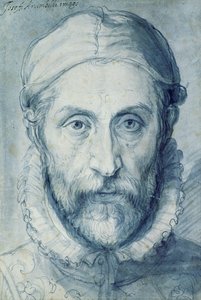
Giuseppe Arcimboldo
1527 - 1593 , Italien
Kurzinfos
- Bemerkenswerte Kunstwerke:
- Floral Stillleben
- Der Bibliothekar
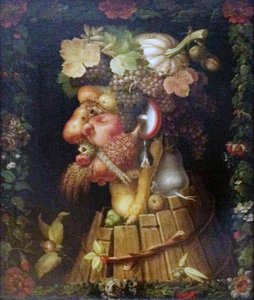
- Luft
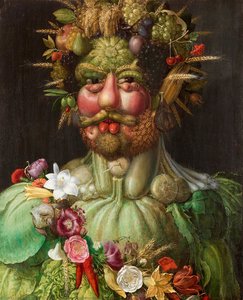
- Vertumnus (Vertumno)
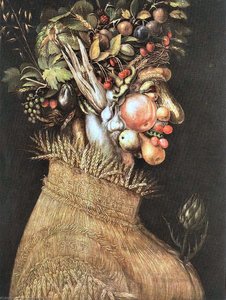
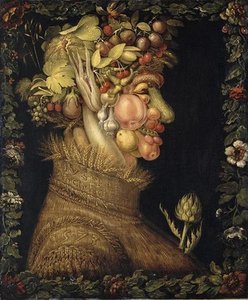
- Sommer 1
- Die vier Jahreszeiten
- Geburtsdatum: 5. April 1527
- Geburtsort (Stadt, Land): Mailand, Italien
- Künstlerische Bewegung/Stil: Manierismus
- Nationalität: Italiener
- Sterbedatum: 11. Juli 1593
- Vollständiger Name: Giuseppe Arcimboldo
Ähnliche Artikel

Die 10 legendärsten Aquarellwerke der Kunstgeschichte – Meisterwerke für Ihr Zuhause
Entdecken Sie die 10 legendärsten Aquarellwerke der Kunstgeschichte! Von Turner bis Monet – erleben Sie die Geschichten, Techniken & Farben dieser Meisterwerke. Finden Sie hochwertige Kunstdrucke auf ArtsDot.com und gestalten Sie Ihr Zuhause mit zeitloser Eleganz.

Ephemeral Visions: Exploring the Artistic Legacy & Contemporary Practice of Watercolor Painting
Explore the captivating world of watercolor painting! Discover its rich history, essential techniques, influential artists & collecting tips. A comprehensive guide for art enthusiasts from ArtsDot.

Flüchtige Visionen: Die Geschichte und emotionale Resonanz der Aquarellmalerei
Entdecken Sie die faszinierende Welt der Aquarellmalerei! Von historischen Ursprüngen bis zu modernen Techniken – wir bieten Expertenwissen, Inspiration und Tipps für Anfänger & Fortgeschrittene.

Ephemeral Visions: Exploring the Artistic Legacy & Nuances of Watercolor Painting
Explore the captivating world of watercolor painting! Discover its rich history, essential techniques, influential artists & collecting tips from art experts. A comprehensive guide for enthusiasts.
Die zeitlose Anziehungskraft der Aquarellmalerei: Geschichte, Techniken und zeitgenössische Praxis
Entdecken Sie die faszinierende Welt der Aquarellmalerei! Geschichte, Techniken & zeitgenössische Kunst – Expertenwissen von für Kunstliebhaber.