 Vorschau anzeigen
 Versenden
 Teilen
 Details anzeigen

 Herunterladen
 Ähnliche Objekte
 Röntgenaufnahme
 Diashow
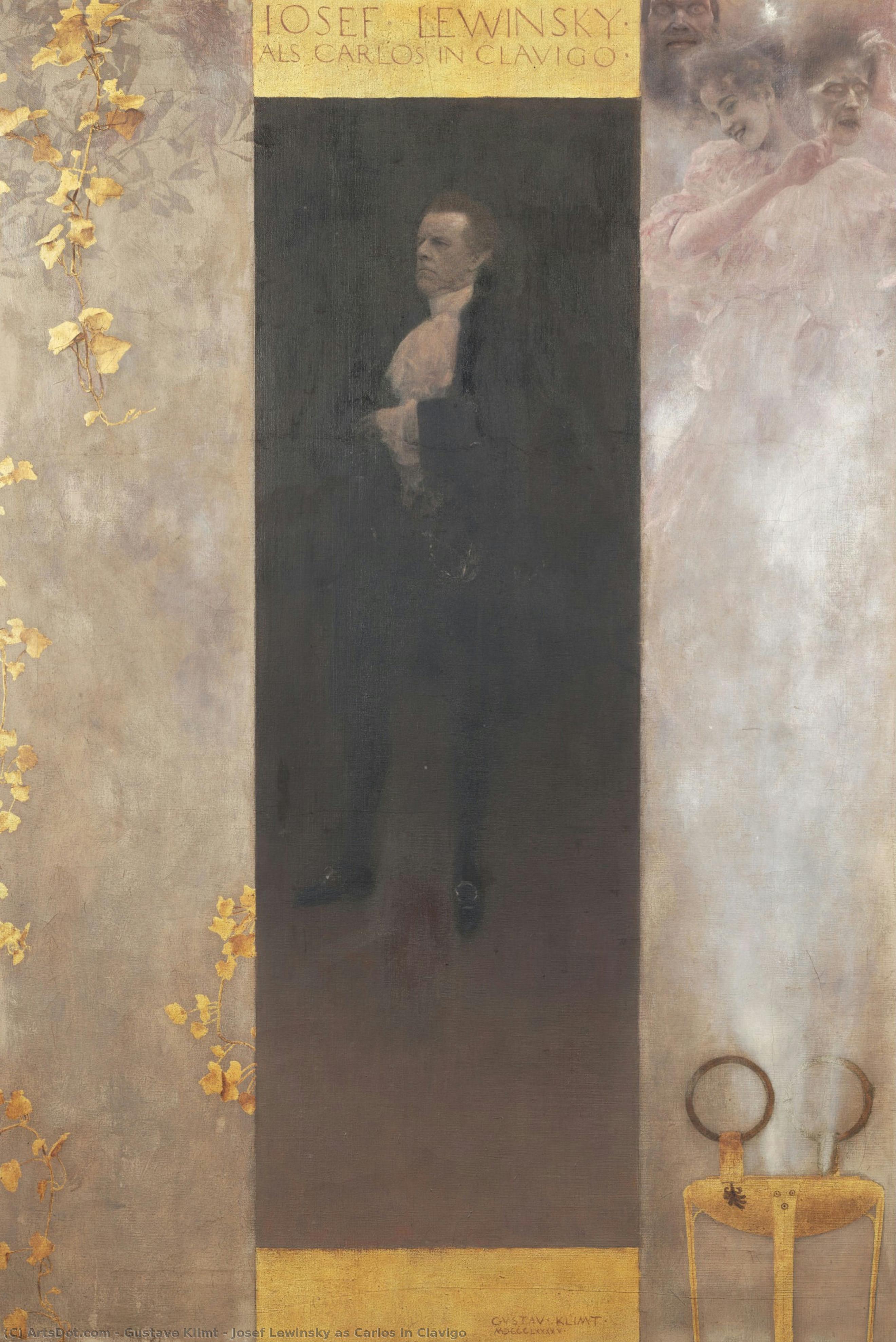
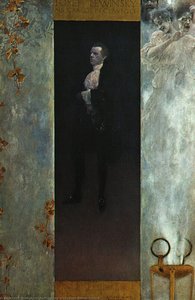
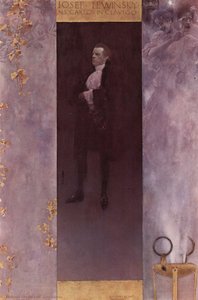
Josef Lewinsky als Carlos in Clavigo
 Acryl auf Leinwand
- Wandkunst
- Vienna Secession
 1895
1895- – Hochmittelalter
 60.0 x 44.0 cm
 Weiterlesen
Giclée / Kunstdruck
Giclée- oder Leinwanddruck in Museumsqualität mit schneller Produktion und flexiblen Veredelungsoptionen. ( Handgemalte Reproduktion bestellen Bild kaufen)




P118B $10

P118H $10

P118W $10

P438Z $10

P508JH $12

P508YH $12

P805H $10

P805Z $10

P919BZ $10

P919G $10

P919XJ $10

P959ZH $10

P968JZ $12

W106C $8

W218G $10

W218JH $8

W218Y $10

W307PJ $10

W316G $10

W316PJ $8

W316Y $10

W398PJ $8

W4111J $10

W500HY $15

W500JH $15

W692G $12

W849H $8

W940BG $15

W953PJ $8




Wählen Sie aus unseren vordefinierten Formaten, die den ursprünglichen Proportionen des Kunstwerks entsprechen.

Sie können Ihre eigenen Maße eingeben, um ein bestimmtes Format oder einen speziellen Platz einzupassen. Wenn das von Ihnen gewählte Format nicht den Proportionen des Originalbildes entspricht, werden wir das Kunstwerk entweder beschneiden oder das Bild mit einem gespiegelten oder einfarbigen Rand erweitern. Ein digitaler Entwurf wird Ihnen zur Genehmigung zugesandt, bevor die Produktion beginnt.
Bitte beachten Sie, dass die Vorschau auf dem Bildschirm nicht den tatsächlichen Zuschnitt oder die Erweiterung widerspiegelt. Nur der Entwurf zeigt die endgültige Komposition präzise an.
Obwohl Sondermaße verfügbar sind, empfehlen wir die Auswahl eines Maßes aus der vordefinierten Liste, um die ursprünglichen Proportionen zu bewahren.
Weltweiter Versand () innerhalb von 2 Wochen statt der üblichen 4/5 Wochen. (21 August)

Kostenloser weltweiter Expressversand

Hochwertige Leinenleinwand

Umfassender Versicherungsschutz beim Versand

Zollgebühren-Rückerstattungsgarantie

Garantie für exakte Farbtreue

60 Tage Rückgaberecht (nur bei Mängeln)

100% Geld-zurück-Garantie

Mengenrabatt verfügbar
 Die Glasoption ist nur für Größen unter 110 cm verfügbar.

Josef Lewinsky als Carlos in Clavigo
Giclée / Kunstdruck
Format der Reproduktion
-


Gesamtpreis
$ 62
Sammlerstück-Beschreibung
Gustav Klimt’s ‘Josef Lewinsky als Carlos in Clavigo’: A Portrait of Stagecraft and Symbolism
The Gesellschaft für Vervielfältigende Kunst commissioned Gustav Klimt to capture the essence of Josef Lewinsky, a celebrated actor at Vienna's Hofburgtheater, for their publication Die Theater Wien. This painting, completed in 1895, transcends a simple portrait; it’s a meticulously crafted tableau vivant, brimming with theatrical drama and layered symbolism that speaks volumes about Klimt’s artistic vision during the height of his “Golden Phase.” The image depicts Lewinsky as Carlos, a character from Goethe's dramatic poem Clavigo, a role that demanded both gravitas and a touch of melancholy. Klimt doesn’t simply render a likeness; he constructs an entire scene around his subject, inviting the viewer to become a silent observer within this intimate theatrical moment.
The painting's composition is immediately striking. Lewinsky stands confidently on a stage – though subtly implied rather than explicitly depicted – holding a book in his hand, a gesture suggesting intellectual engagement and perhaps even a touch of self-awareness. His attire—a dark suit with a crisp tie—is rendered with exquisite detail, highlighting the textures and folds of the fabric. Notably, he wears a top hat, an accessory that elevates the scene beyond mere portraiture, hinting at the formality and prestige associated with the stage. The background, though somewhat indistinct, contains two figures – likely members of the theater’s entourage – adding depth and suggesting a larger narrative unfolding around Lewinsky's performance. Klimt masterfully uses light and shadow to sculpt the figure, creating a sense of three-dimensionality that draws the eye directly to Lewinsky’s face.
The Golden Phase and Decorative Intensity
‘Josef Lewinsky als Carlos in Clavigo’ is quintessential Klimt during his most celebrated period. This work exemplifies the artist's signature style – a potent blend of Symbolism, Art Nouveau (or Jugendstil), and decorative intensity. The painting is awash in rich, opulent colors, dominated by gold leaf, a hallmark of this era and deeply rooted in Klimt’s family history through his father’s profession as a gold engraver. The application of gold isn't merely ornamental; it imbues the scene with a sense of sacredness, luxury, and timeless beauty. The meticulous layering of gold creates shimmering surfaces that seem to radiate light, transforming the mundane setting into something almost dreamlike.
Klimt’s technique is characterized by bold outlines, flattened perspectives, and an emphasis on decorative patterns. He employs a technique known as *Verlagsdruck* (publishing print), which involved applying gold leaf directly onto the canvas, creating a unique textural effect. This method contributed to the painting's luminous quality and its distinctive visual impact. The brushstrokes are visible yet controlled, contributing to the overall sense of richness and detail.
Symbolism and the Performance of Identity
Beyond its aesthetic qualities, ‘Josef Lewinsky als Carlos in Clavigo’ is rich in symbolic meaning. The choice of Carlos from Goethe's drama is significant. Carlos embodies a complex character – a man wrestling with his own desires and haunted by past regrets. Lewinsky’s portrayal captures this duality, suggesting a performance that masks deeper emotions. The book he holds could represent knowledge, experience, or perhaps even the weight of the role he’s embodying.
Furthermore, the theatrical setting itself is symbolic. The stage represents the constructed nature of identity – the roles we play in life and the masks we wear to conceal our true selves. Klimt invites us to contemplate the relationship between appearance and reality, performance and authenticity. The painting can be interpreted as a meditation on the ephemeral nature of fame, the burden of expectation, and the human condition itself.
A Timeless Masterpiece: Reproduction Possibilities
ArtsDot offers meticulously crafted hand-painted reproductions of Gustav Klimt’s ‘Josef Lewinsky als Carlos in Clavigo,’ allowing you to bring this extraordinary artwork into your home or office. Our skilled artists replicate Klimt's signature style, color palette, and textural nuances with exceptional accuracy. Available in a range of sizes, from 60 x 44 cm up to larger formats, our reproductions provide an authentic representation of this iconic masterpiece. Whether you’re an art collector, interior designer, or simply an admirer of Klimt's genius, a ArtsDot reproduction offers a beautiful and enduring way to experience the power and beauty of ‘Josef Lewinsky als Carlos in Clavigo.’
Ähnliche Kunstwerke
Über den Künstler
Gustav Klimt: Leben, Kunst und Vermächtnis
Frühes Leben und Ausbildung (1862-1883)
- Geboren am 14. Juli 1862 in Baumgarten, nahe Wien, Österreich.
- Sohn von Ernst Klimt, einem Goldschmied, und Anna Finster. Die Familie sah sich mit finanziellen Schwierigkeiten konfrontiert, was zu häufigen Umzügen innerhalb Wiens führte.
- Früben Talent: Zeigte schon früh zeichnerische Fähigkeiten, die durch den Beruf seines Vaters und familiäre künstlerische Neigungen gefördert wurden.
- Er studierte 1876 an der Wiener Kunstgewerbeschule (Schule für Angewandte Künste) Architekturmalerei bei Ferdinand Laufberger. Dies bot eine solide technische Ausbildung, aber auch die Exposition gegenüber traditionellen akademischen Stilen.
- Im Jahr 1877 gründete er mit seinem Bruder Ernst und Franz von Matsch die „Gesellschaft der Künstler“ und sichere Aufträge für dekorative Wandmalereien und Decken.
Die Gesellschaft der Künstler und Früher Erfolg (1883-1900)
- Arbeitete weiterhin mit der „Gesellschaft der Künstler“ nach dem Verlassen der Kunstgewerbeschule und erhielt Anerkennung für dekorative Projekte wie Wandmalereien im Theater von Karlsbad und Treppenhäuser im Burgtheater in Wien.
- Tragte zur Dekoration des Kunsthistorischen Museums in Wien bei, demonstrierte technische Fertigkeit, deutete aber auch auf ein Verlangen hin, künstlerische Zwänge zu brechen.
Die Decke der Universität Wien und Kontroversen (1900)
- Erfuhr um 1900 eine prestigeträchtige Beauftragung, Deckenmalereien für den Großen Saal der Universität Wien zu malen, die Philosophie, Jurisprudenz und Theologie darstellten.
- Kontroverse Werke: Die Wandmalereien, insbesondere *Philosophie*, wurden von Kritikern als provokativ und sogar pornografisch angesehen, was zu öffentlicher Empörung führte.
- Klimt lehnte nach der Kontroverse weitere öffentliche Aufträge ab und markierte damit einen Wendepunkt in seiner Karriere.
Die „Goldene Phase“ und künstlerische Reife (1901-1918)
- Betrat seine „goldene Phase“, die durch den luxuriösen Einsatz von Blattgold inspiriert vom byzantinischen Mosaik und mittelalterlichen illuminierten Handschriften gekennzeichnet war.
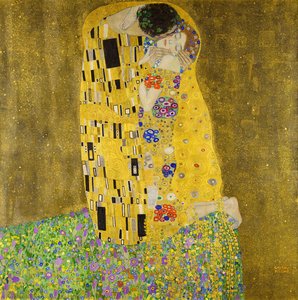
- Wichtige Werke: *Der Kuss* (1907-1908) veranschaulicht den opulenten Stil und die symbolische Fülle dieser Ära.
- *Porträts:* Porträts wie *Portrait of Adele Bloch-Bauer I* (1907) wurden sehr begehrt und zeigten seine Fähigkeit, sowohl physische Erscheinung als auch psychologische Tiefe einzufangen.
- Integriert zunehmend dekorative Elemente in Kompositionen und verwischte die Grenzen zwischen Malerei und Ornamentik.
Einflüsse und künstlerischer Stil
- Hans Makart: Frühe Bewunderung für den führenden Historienmaler Wiens beeinflusste seine anfängliche akademische Ausbildung.
- Japanische Kunst (Japonismus): Wurde tief von japanischen Holzschnitten beeinflusst, insbesondere durch ihre flache Perspektive, dekorative Muster und Betonung der Linie.
- Byzantinische Kunst: Der Einsatz von Blattgold und reicher Ornamentik in byzantinischen Mosaiken hatte einen tiefgreifenden Einfluss auf seine „goldene Phase.”
- Stilmerkmale: Ein einzigartiges Zusammenspiel von Symbolismus, Jugendstil und dekorativen Elementen; kräftige Farben, komplizierte Muster und sinnliche Darstellungen der weiblichen Form.
Späte Jahre und Vermächtnis (1918)
- Malte weiterhin produktiv bis zu seinem Tod am 6. Februar 1918 durch einen Schlaganfall.
- Seine späteren Werke erforschten abstraktere Formen und Landschaften und zeigten eine kontinuierliche künstlerische Entwicklung.
- Historische Bedeutung: Wird als eine der wichtigsten Figuren in der österreichischen Kunstgeschichte und als einer führenden Vertreter des Wiener Secessions anerkannt. Seine Gemälde erzielen hohe Preise auf Auktionen, und sein Einfluss ist in der zeitgenössischen Kunst und im Design zu sehen.
- Das Kunsthistorische Museum Wien beherbergt eine bedeutende Sammlung seiner Werke und sichert so das Vermächtnis, das weiterhin inspiriert.
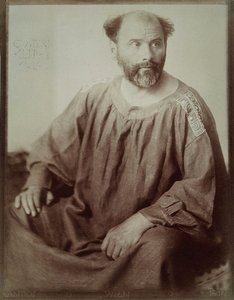
Gustav Klimt
1862 - 1918 , Österreich
Kurzinfos
- Beeinflusste Künstler: ['Egon Schiele']
- Bemerkenswerte Werke:
- Der Kuss
- Adele Bloch-Bauer I
- Geburtsdatum: 1862-07-14
- Geburtsort: Baumgarten, Österreich
- Künstlerische Einflüsse:
- Hans Makart
- Japanische Kunst
- Byzantinische Kunst
- Künstlerische Richtung: Wiener Secession
- Nationalität: Österreichisch
- Todatum: 1918-02-06
- Vollständiger Name: Gustav Klimt
Ähnliche Artikel
Gustav Klimt: Die 25 Meisterwerke des Wiener Jugendstils | ArtsDot
Entdecken Sie die 25 ikonischsten Gemälde von Gustav Klimt! Tauchen Sie ein in die Welt der Wiener Secession, des Jugendstils und der goldenen Phase. Hochwertige Reproduktionen & Inspiration für Ihr Zuhause auf ArtsDot.com.
Art Nouveau Meisterwerke: Die 10 prägendsten Kunstwerke für Ihr Zuhause |
Entdecken Sie die 10 prägendsten Art Nouveau Meisterwerke! Von Mucha bis Klimt – erfahren Sie die Geschichten hinter ikonischen Gemälde & dekorativer Kunst. Hochwertige Kunstdrucke online kaufen auf
Gustav Klimt: Eine goldene Ära der Sinnlichkeit und Symbolik in der Wiener Kunst
Entdecken Sie Gustav Klimts faszinierende Welt! Erfahren Sie mehr über die Wiener Secession, seine sinnlichen Porträts und die 'Goldene Phase'. Expertenwissen & hochwertige Reproduktionen auf ArtsDot.
The Vienna Secession: A Rebellion of Form & Spirit in Fin-de-Siècle Art
Discover the revolutionary Vienna Secession art movement! Explore Klimt, Olbrich & more. Learn about its history, characteristics & lasting influence on modern art. High-quality reproductions available.
Koloman Moser: Synthese von Jugendstil, Sezession und dem Ideal des Gesamtkunstwerks
Entdecken Sie das faszinierende Werk von Koloman Moser – Schlüsselfigur der Wiener Secession und des Jugendstils. Erfahren Sie mehr über seine Vision des Gesamtkunstwerks, die Wiener Werkstätte und seinen bleibenden Einfluss auf die angewandte Kunst.