 Vorschau anzeigen
 Versenden
 Teilen
 Details anzeigen

 Herunterladen
 Ähnliche Objekte
 Röntgenaufnahme
 Diashow
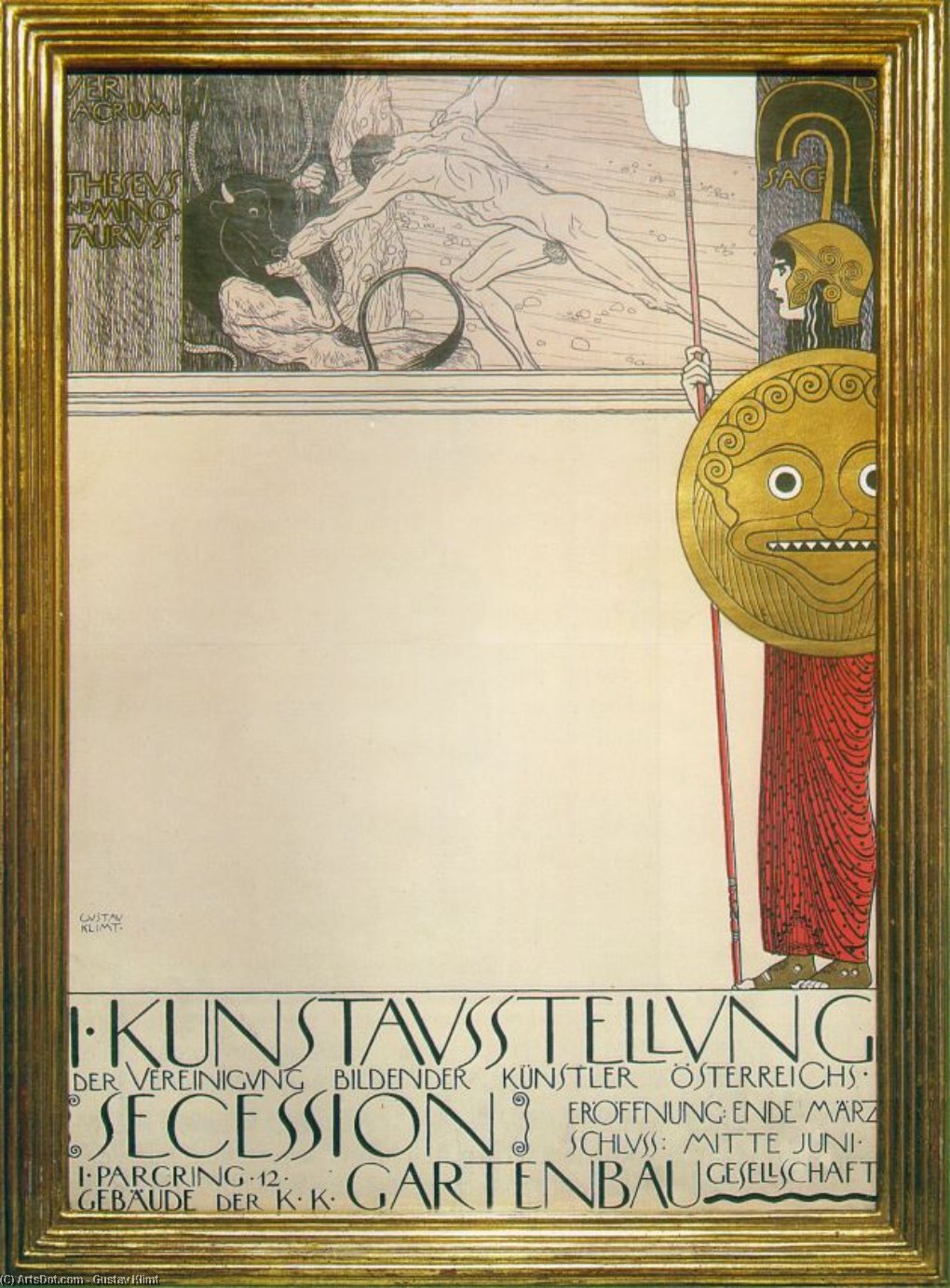
Plakat für die 1. Sezessionsausstellung


 Weiterlesen
Giclée / Kunstdruck
Giclée- oder Leinwanddruck in Museumsqualität mit schneller Produktion und flexiblen Veredelungsoptionen. ( Handgemalte Reproduktion bestellen Bild kaufen)




P118B $10

P118H $10

P118W $10

P438Z $10

P508JH $12

P508YH $12

P805H $10

P805Z $10

P919BZ $10

P919G $10

P919XJ $10

P959ZH $10

P968JZ $12

W106C $8

W218G $10

W218JH $8

W218Y $10

W307PJ $10

W316G $10

W316PJ $8

W316Y $10

W398PJ $8

W4111J $10

W500HY $15

W500JH $15

W692G $12

W849H $8

W940BG $15

W953PJ $8




Wählen Sie aus unseren vordefinierten Formaten, die den ursprünglichen Proportionen des Kunstwerks entsprechen.

Sie können Ihre eigenen Maße eingeben, um ein bestimmtes Format oder einen speziellen Platz einzupassen. Wenn das von Ihnen gewählte Format nicht den Proportionen des Originalbildes entspricht, werden wir das Kunstwerk entweder beschneiden oder das Bild mit einem gespiegelten oder einfarbigen Rand erweitern. Ein digitaler Entwurf wird Ihnen zur Genehmigung zugesandt, bevor die Produktion beginnt.
Bitte beachten Sie, dass die Vorschau auf dem Bildschirm nicht den tatsächlichen Zuschnitt oder die Erweiterung widerspiegelt. Nur der Entwurf zeigt die endgültige Komposition präzise an.
Obwohl Sondermaße verfügbar sind, empfehlen wir die Auswahl eines Maßes aus der vordefinierten Liste, um die ursprünglichen Proportionen zu bewahren.
Weltweiter Versand () innerhalb von 2 Wochen statt der üblichen 4/5 Wochen. (24 August)

Kostenloser weltweiter Expressversand

Hochwertige Leinenleinwand

Umfassender Versicherungsschutz beim Versand

Zollgebühren-Rückerstattungsgarantie

Garantie für exakte Farbtreue

60 Tage Rückgaberecht (nur bei Mängeln)

100% Geld-zurück-Garantie

Mengenrabatt verfügbar
 Die Glasoption ist nur für Größen unter 110 cm verfügbar.

Plakat für die 1. Sezessionsausstellung
Giclée / Kunstdruck
Format der Reproduktion
-


Gesamtpreis
$ 62
Sammlerstück-Beschreibung
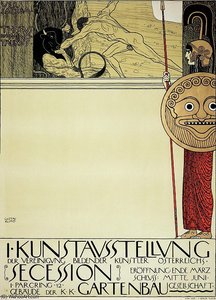
A Herald of Modernity: Unveiling Klimt’s 1st Secession Exhibition Poster
Gustav Klimt's ‘Poster for the First Secession Exhibition’, created in 1898, transcends mere advertising; it embodies a defiant proclamation of artistic liberty and remains an enduring emblem of Art Nouveau. This monumental artwork encapsulates the spirit of rebellion against academic tradition that defined the Vienna Secessionists—a movement determined to reshape the landscape of European art.The Vienna Secession: A Revolt Against Convention
To truly appreciate Klimt’s poster, one must grasp its profound historical context. Founded in 1897 by Klimt alongside fellow artists Emil Schiele, Josef Maria Olbrich and Viktor Münzberger, the Vienna Secession aimed to dismantle the rigid constraints imposed by the Akademie der Bildenden Künste (Vienna Academy of Fine Arts). Rejecting the prevailing stylistic dogma—characterized by meticulous realism and formal grandeur—the Secessionists embraced innovative artistic currents: Symbolism, Art Nouveau (known as Jugendstil in German-speaking countries), and a daring exploration of subject matter beyond traditional narratives. Their ambition was to forge *Gesamtkunstwerk* – a holistic artwork integrating painting, sculpture, architecture, and design into a unified sensory experience—a concept radically opposed to the compartmentalized aesthetic sensibilities of their predecessors.Decoding the Visual Language: Symbolism & Composition
The poster’s composition is strikingly bold and unconventional for its time. Rather than depicting finished artworks, Klimt presents allegorical figures representing diverse artistic disciplines. Three female personifications – Painting (holding a banner), Poetry (with a floral wreath), and Sculpture (bearing a sculpted head) – stand triumphantly atop a globe, symbolizing the universal reach and ambition of art itself. This pyramidal arrangement lends stability to the dynamic visual language, emphasizing the collective endeavor of artistic innovation.- The dominant golden background—a signature element of Klimt’s “Golden Phase”—elevates the figures to almost mythical status, imbuing them with an aura of divine splendor and signifying enlightenment.
- Swirling, organic lines characteristic of Art Nouveau permeate the entire composition, generating a palpable sense of movement and dynamism. These flowing forms deliberately contrast sharply with the rectilinear structures favored by academic art, rejecting rigidity in favor of fluidity and naturalistic grace.
- The inclusion of text – “Vienna Secession” and exhibition details – is seamlessly integrated into the design, demonstrating Klimt’s mastery of graphic arts and highlighting the importance of communication within the artistic realm.
- The globe itself isn't a literal depiction but rather a stylized representation—a deliberate allusion to humanist ideals and an assertion that art transcends national boundaries, fostering dialogue and understanding across cultures.
Technique and Artistic Influences
Klimt employed a mixed-media technique combining lithography with meticulous hand-coloring. Lithography ensured precise tonal gradations and allowed for the reproduction of intricate patterns—a crucial consideration given the Secession’s commitment to disseminating its artistic vision widely. Simultaneously, Klimt skillfully applied gold leaf—a technique borrowed from Byzantine iconography—to enrich the surface texture and imbue the artwork with an opulent luminosity. This painstaking process demanded considerable labor and skill, reflecting Klimt's dedication to elevating his craft to new heights of artistic expression. The design draws heavily upon Japanese woodblock prints – particularly in its flattened perspective and deliberate simplification of forms – mirroring the Secessionists’ fascination with Eastern aesthetics and their desire to challenge Western conventions.Emotional Impact & Lasting Legacy
This poster isn't merely aesthetically pleasing; it resonates deeply with an emotional core—a fervent belief in the transformative power of art to provoke contemplation, inspire creativity, and propel society toward progress. It embodies Klimt’s conviction that artistic innovation could reshape perceptions of beauty and challenge established hierarchies. The enduring appeal of ‘Poster for the First Secession Exhibition’ lies precisely in its ability to capture the spirit of a pivotal moment in European art history—a testament to Klimt's genius and an inspiration for generations of artists to come. Its reproduction offers a captivating glimpse into Vienna’s artistic fervor and serves as a timeless symbol of artistic rebellion and visionary ambition. Photo Description: --Overall Impression-- The artwork is a framed illustration in the style of Art Nouveau. It depicts a mythological scene featuring a central figure – likely a warrior or deity – engaged in battle with a monstrous, horned creature. The composition is complex and layered, utilizing strong vertical lines to emphasize height and movement. The background features swirling clouds and a stylized landscape suggesting a stormy or chaotic environment. The use of line is prominent, creating flowing, organic forms characteristic of the Art Nouveau style. Shapes are predominantly curvilinear and elongated, with sharp angles present in the warrior’s armor and the creature’s horns. Texture appears to be achieved through hatching and cross-hatching techniques, adding depth and a sense of roughness to the figures and background elements. Lighting is dramatic, casting strong shadows that highlight the forms and create a sense of dynamism. Perspective is somewhat flattened, prioritizing expressive line over strict realism. Depth is suggested through layering and overlapping of figures and elements, but it's not highly detailed. The subject matter draws upon mythological themes, likely referencing Norse or Germanic legends. Symbolic elements include the warrior’s armor representing strength and protection, while the monstrous creature embodies chaos and destruction. The style is distinctly Art Nouveau, characterized by its flowing lines, organic forms, and decorative motifs. The technique appears to be primarily drawing with pen and ink, possibly with some watercolor washes for shading and color. Materials used are likely paper and ink. The text at the bottom of the image indicates it's an exhibition announcement related to an art association in Austria-- Size: Unknown Date: UnknownÄhnliche Kunstwerke
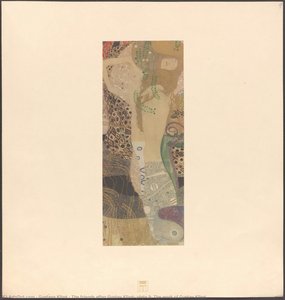
Über den Künstler
Gustav Klimt: Leben, Kunst und Vermächtnis
Frühes Leben und Ausbildung (1862-1883)
- Geboren am 14. Juli 1862 in Baumgarten, nahe Wien, Österreich.
- Sohn von Ernst Klimt, einem Goldschmied, und Anna Finster. Die Familie sah sich mit finanziellen Schwierigkeiten konfrontiert, was zu häufigen Umzügen innerhalb Wiens führte.
- Früben Talent: Zeigte schon früh zeichnerische Fähigkeiten, die durch den Beruf seines Vaters und familiäre künstlerische Neigungen gefördert wurden.
- Er studierte 1876 an der Wiener Kunstgewerbeschule (Schule für Angewandte Künste) Architekturmalerei bei Ferdinand Laufberger. Dies bot eine solide technische Ausbildung, aber auch die Exposition gegenüber traditionellen akademischen Stilen.
- Im Jahr 1877 gründete er mit seinem Bruder Ernst und Franz von Matsch die „Gesellschaft der Künstler“ und sichere Aufträge für dekorative Wandmalereien und Decken.
Die Gesellschaft der Künstler und Früher Erfolg (1883-1900)
- Arbeitete weiterhin mit der „Gesellschaft der Künstler“ nach dem Verlassen der Kunstgewerbeschule und erhielt Anerkennung für dekorative Projekte wie Wandmalereien im Theater von Karlsbad und Treppenhäuser im Burgtheater in Wien.
- Tragte zur Dekoration des Kunsthistorischen Museums in Wien bei, demonstrierte technische Fertigkeit, deutete aber auch auf ein Verlangen hin, künstlerische Zwänge zu brechen.
Die Decke der Universität Wien und Kontroversen (1900)
- Erfuhr um 1900 eine prestigeträchtige Beauftragung, Deckenmalereien für den Großen Saal der Universität Wien zu malen, die Philosophie, Jurisprudenz und Theologie darstellten.
- Kontroverse Werke: Die Wandmalereien, insbesondere *Philosophie*, wurden von Kritikern als provokativ und sogar pornografisch angesehen, was zu öffentlicher Empörung führte.
- Klimt lehnte nach der Kontroverse weitere öffentliche Aufträge ab und markierte damit einen Wendepunkt in seiner Karriere.
Die „Goldene Phase“ und künstlerische Reife (1901-1918)
- Betrat seine „goldene Phase“, die durch den luxuriösen Einsatz von Blattgold inspiriert vom byzantinischen Mosaik und mittelalterlichen illuminierten Handschriften gekennzeichnet war.
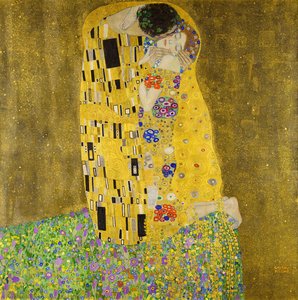
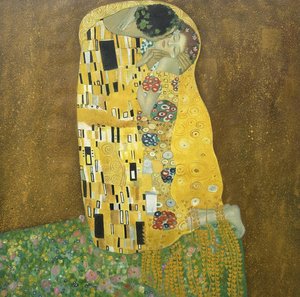
- Wichtige Werke: *Der Kuss* (1907-1908) veranschaulicht den opulenten Stil und die symbolische Fülle dieser Ära.
- *Porträts:* Porträts wie *Portrait of Adele Bloch-Bauer I* (1907) wurden sehr begehrt und zeigten seine Fähigkeit, sowohl physische Erscheinung als auch psychologische Tiefe einzufangen.
- Integriert zunehmend dekorative Elemente in Kompositionen und verwischte die Grenzen zwischen Malerei und Ornamentik.
Einflüsse und künstlerischer Stil
- Hans Makart: Frühe Bewunderung für den führenden Historienmaler Wiens beeinflusste seine anfängliche akademische Ausbildung.
- Japanische Kunst (Japonismus): Wurde tief von japanischen Holzschnitten beeinflusst, insbesondere durch ihre flache Perspektive, dekorative Muster und Betonung der Linie.
- Byzantinische Kunst: Der Einsatz von Blattgold und reicher Ornamentik in byzantinischen Mosaiken hatte einen tiefgreifenden Einfluss auf seine „goldene Phase.”
- Stilmerkmale: Ein einzigartiges Zusammenspiel von Symbolismus, Jugendstil und dekorativen Elementen; kräftige Farben, komplizierte Muster und sinnliche Darstellungen der weiblichen Form.
Späte Jahre und Vermächtnis (1918)
- Malte weiterhin produktiv bis zu seinem Tod am 6. Februar 1918 durch einen Schlaganfall.
- Seine späteren Werke erforschten abstraktere Formen und Landschaften und zeigten eine kontinuierliche künstlerische Entwicklung.
- Historische Bedeutung: Wird als eine der wichtigsten Figuren in der österreichischen Kunstgeschichte und als einer führenden Vertreter des Wiener Secessions anerkannt. Seine Gemälde erzielen hohe Preise auf Auktionen, und sein Einfluss ist in der zeitgenössischen Kunst und im Design zu sehen.
- Das Kunsthistorische Museum Wien beherbergt eine bedeutende Sammlung seiner Werke und sichert so das Vermächtnis, das weiterhin inspiriert.
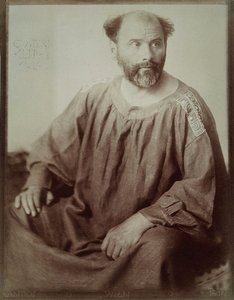
Gustav Klimt
1862 - 1918 , Österreich
Kurzinfos
- Beeinflusste Künstler: ['Egon Schiele']
- Bemerkenswerte Werke:
- Der Kuss
- Adele Bloch-Bauer I
- Geburtsdatum: 1862-07-14
- Geburtsort: Baumgarten, Österreich
- Künstlerische Einflüsse:
- Hans Makart
- Japanische Kunst
- Byzantinische Kunst
- Künstlerische Richtung: Wiener Secession
- Nationalität: Österreichisch
- Todatum: 1918-02-06
- Vollständiger Name: Gustav Klimt
Ähnliche Artikel

Gustav Klimt: Die 25 Meisterwerke des Wiener Jugendstils | ArtsDot
Entdecken Sie die 25 ikonischsten Gemälde von Gustav Klimt! Tauchen Sie ein in die Welt der Wiener Secession, des Jugendstils und der goldenen Phase. Hochwertige Reproduktionen & Inspiration für Ihr Zuhause auf ArtsDot.com.
Art Nouveau Meisterwerke: Die 10 prägendsten Kunstwerke für Ihr Zuhause |
Entdecken Sie die 10 prägendsten Art Nouveau Meisterwerke! Von Mucha bis Klimt – erfahren Sie die Geschichten hinter ikonischen Gemälde & dekorativer Kunst. Hochwertige Kunstdrucke online kaufen auf
The Vienna Secession: A Rebellion of Form & Spirit in Fin-de-Siècle Art
Discover the revolutionary Vienna Secession art movement! Explore Klimt, Olbrich & more. Learn about its history, characteristics & lasting influence on modern art. High-quality reproductions available.
Gustav Klimt: Eine goldene Ära der Sinnlichkeit und Symbolik in der Wiener Kunst
Entdecken Sie Gustav Klimts faszinierende Welt! Erfahren Sie mehr über die Wiener Secession, seine sinnlichen Porträts und die 'Goldene Phase'. Expertenwissen & hochwertige Reproduktionen auf ArtsDot.
Koloman Moser: Synthese von Jugendstil, Sezession und dem Ideal des Gesamtkunstwerks
Entdecken Sie das faszinierende Werk von Koloman Moser – Schlüsselfigur der Wiener Secession und des Jugendstils. Erfahren Sie mehr über seine Vision des Gesamtkunstwerks, die Wiener Werkstätte und seinen bleibenden Einfluss auf die angewandte Kunst.