 Vorschau anzeigen
 Versenden
 Teilen
 Details anzeigen

 Herunterladen
 Ähnliche Objekte
 Röntgenaufnahme
 Diashow
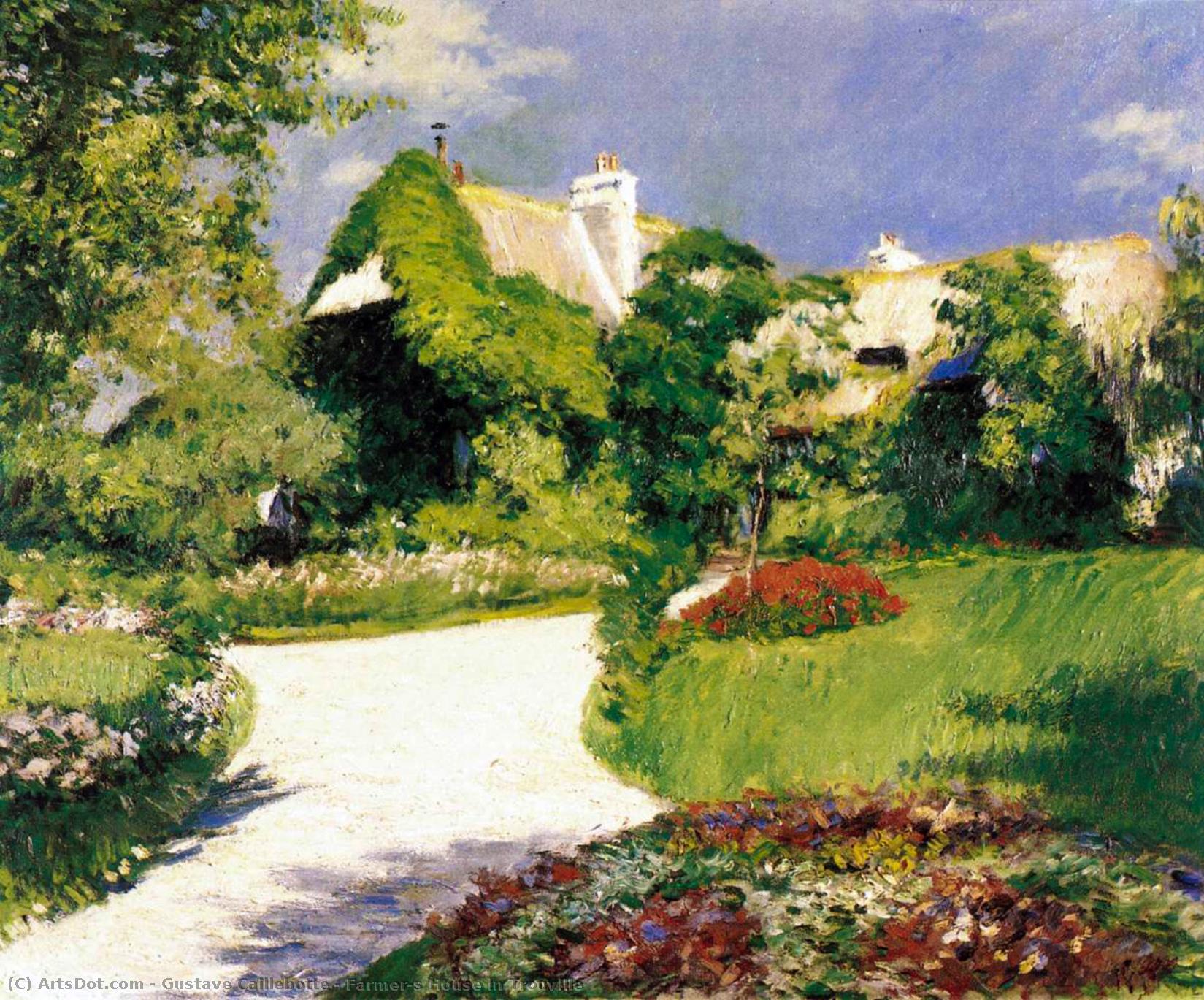
Farmer's House in Trouville
 Oil On Canvas
- WallArt
- Impressionism
 1882
1882 54.0 x 65.0 cm
 Weiterlesen
Giclée / Kunstdruck
Giclée- oder Leinwanddruck in Museumsqualität mit schneller Produktion und flexiblen Veredelungsoptionen. ( Handgemalte Reproduktion bestellen Bild kaufen)




P118B $10

P118H $10

P118W $10

P438Z $10

P508JH $12

P508YH $12

P805H $10

P805Z $10

P919BZ $10

P919G $10

P919XJ $10

P959ZH $10

P968JZ $12

W106C $8

W218G $10

W218JH $8

W218Y $10

W307PJ $10

W316G $10

W316PJ $8

W316Y $10

W398PJ $8

W4111J $10

W500HY $15

W500JH $15

W692G $12

W849H $8

W940BG $15

W953PJ $8




Wählen Sie aus unseren vordefinierten Formaten, die den ursprünglichen Proportionen des Kunstwerks entsprechen.

Sie können Ihre eigenen Maße eingeben, um ein bestimmtes Format oder einen speziellen Platz einzupassen. Wenn das von Ihnen gewählte Format nicht den Proportionen des Originalbildes entspricht, werden wir das Kunstwerk entweder beschneiden oder das Bild mit einem gespiegelten oder einfarbigen Rand erweitern. Ein digitaler Entwurf wird Ihnen zur Genehmigung zugesandt, bevor die Produktion beginnt.
Bitte beachten Sie, dass die Vorschau auf dem Bildschirm nicht den tatsächlichen Zuschnitt oder die Erweiterung widerspiegelt. Nur der Entwurf zeigt die endgültige Komposition präzise an.
Obwohl Sondermaße verfügbar sind, empfehlen wir die Auswahl eines Maßes aus der vordefinierten Liste, um die ursprünglichen Proportionen zu bewahren.
Weltweiter Versand () innerhalb von 2 Wochen statt der üblichen 4/5 Wochen. (23 August)

Kostenloser weltweiter Expressversand

Hochwertige Leinenleinwand

Umfassender Versicherungsschutz beim Versand

Zollgebühren-Rückerstattungsgarantie

Garantie für exakte Farbtreue

60 Tage Rückgaberecht (nur bei Mängeln)

100% Geld-zurück-Garantie

Mengenrabatt verfügbar
 Die Glasoption ist nur für Größen unter 110 cm verfügbar.

Farmer's House in Trouville
Giclée / Kunstdruck
Format der Reproduktion
-


Gesamtpreis
$ 62
Sammlerstück-Beschreibung
A Moment of Rural Tranquility: Caillebotte’s *Farmer's House in Trouville*
Gustave Caillebotte’s *Farmer’s House in Trouville*, completed in 1882, is more than just a picturesque depiction of a French countryside scene; it’s a carefully constructed meditation on modernity and the evolving relationship between urban life and the vestiges of rural tradition. Measuring 54 x 65 cm, this oil-on-canvas painting offers a glimpse into a world where the burgeoning Impressionist movement was beginning to challenge traditional academic approaches to art, seeking instead to capture fleeting moments of light and atmosphere with unprecedented sensitivity.
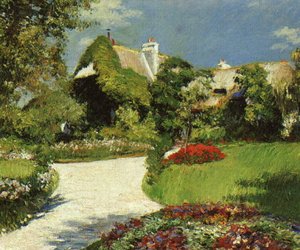
- Subject Matter: The scene centers around a modest farmhouse – a ‘trouville’ – nestled within a vibrant garden. This wasn't simply a record of a local dwelling; Caillebotte elevates the ordinary, transforming a commonplace subject into something imbued with quiet dignity and charm.
- Impressionist Technique: Noticeable are Caillebotte’s loose brushstrokes and his masterful use of color. He avoids precise detail in favor of capturing the *impression* of light and shadow, creating a shimmering effect that is characteristic of the Impressionist style. The greens of the foliage aren't uniform; they shift and change with the play of sunlight, contributing to the painting’s vibrant energy.
- Photography’s Influence: Caillebotte’s early fascination with photography profoundly shaped his artistic process. Like a photographer composing a shot, he carefully considered perspective, framing, and the way light interacts with surfaces – elements that would later become central to the Impressionist aesthetic.
The Artist's Vision: Caillebotte and the New Aesthetic
Born in Paris in 1848 into a wealthy family, Gustave Caillebotte’s life was one of fortunate circumstance and intellectual curiosity. His father’s textile business provided financial stability, while his own legal studies – completed in 1868 and 1870 – were ultimately secondary to his burgeoning artistic ambitions. Caillebotte's training under Léon Bonnat instilled a foundational understanding of traditional painting techniques, but it was his engagement with photography that truly liberated his vision. He recognized the potential for capturing reality with unprecedented accuracy and immediacy, a concept that directly informed his approach to depicting everyday scenes.
Unlike many of his contemporaries who focused solely on fleeting moments of light, Caillebotte sought to render a more enduring representation of the scene. The inclusion of several figures – men and women tending the garden – adds a layer of narrative complexity, suggesting a connection between human activity and the natural world. The two dogs, strategically placed within the composition, further enhance the sense of tranquility and domesticity.
Symbolism and Emotional Impact
*Farmer’s House in Trouville* is not merely a visual record; it evokes a powerful emotional response. The painting's serene atmosphere invites contemplation, offering a respite from the hustle and bustle of Parisian life. The bright colors and soft light contribute to this feeling of peace and harmony. The composition itself – with its balanced arrangement of elements and careful attention to detail – creates a sense of order and stability.
The white path leading to the house is particularly significant, drawing the viewer’s eye into the scene and creating an illusion of depth. It symbolizes access, invitation, and perhaps even a longing for simpler times. The painting's overall effect is one of quiet beauty and understated elegance – a testament to Caillebotte’s artistic skill and his ability to capture the essence of a moment in time.
Historical Context and Significance
Completed in 1882, *Farmer’s House in Trouville* represents a pivotal moment in the development of Impressionism. Caillebotte's work aligns with the broader movement's desire to break away from academic conventions and explore new ways of seeing and representing the world. This painting is held within the Musée de Region Auguste Chabaud (France), alongside works by Auguste Chabaud, a fellow artist born in Nimes in 1882, further solidifying Caillebotte’s place within the artistic landscape of his time.
Ähnliche Kunstwerke
Über den Künstler
Frühes Leben und Ausbildung
Gustave Caillebotte, ein französischer Maler, wurde am 19. August 1848 in Paris aus einer wohlhabenden Familie geboren. Sein Vater, Martial Caillebotte, war Erbe der Familienfirma für Militärtuchstoffe und diente auch als Richter am Tribunal de Commerce des Départements Seine. Gustave’s frühes Interesse an Fotografie als Kunstform beeinflusste später seinen Malstil.Künstlerische Karriere
Gustave erwarb 1868 einen Jurabachelor und 1870 eine Zulassung zur Rechtsausübung, doch seine wahre Leidenschaft galt der Kunst. Er begann, das Atelier des Malers Léon Bonnat zu besuchen, wo er ernsthaft Malerei studierte. Caillebotte’s Stil, der durch seinen Realismus gekennzeichnet ist, wurde von seinen impressionistischen Kollegen beeinflusst, darunter Edgar Degas und Giuseppe de Nittis.Bemerkenswerte Werke und Stil
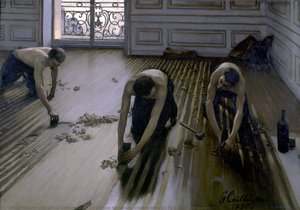
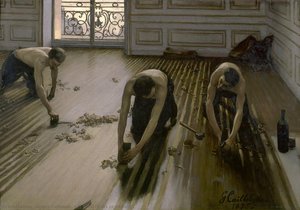
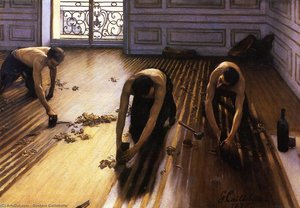
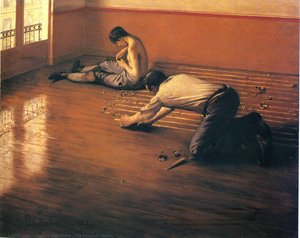
- Les Raboteurs de Parquet (Die Bodenabroller) (1875): Dieses frühe Meisterwerk, das sich heute im Musée d'Orsay befindet, zeigt Caillebotte’s einzigartige Mischung aus Realismus und impressionistischen Einflüssen.
- Vue de toits (Effet de neige) (Aussicht auf Dächer (Schneeeffekt)) (1878): Demonstriert seine Verwendung von erhöhten Perspektiven, eine Technik, die möglicherweise durch japanische Drucke und Fotografie beeinflusst wurde.
Vermächtnis und Einfluss
Caillebotte’s Stil, obwohl Teil der Schule des Realismus, wurde stark von seinen impressionistischen Kollegen beeinflusst. Seine Werke zeichnen sich durch eine präzise Beobachtungsgabe und eine detailgetreue Wiedergabe der Wirklichkeit aus. Er trug dazu bei, die Wahrnehmung des Alltagslebens in der Kunst zu verändern und neue Wege der Darstellung urbaner Szenen aufzuzeigen. Obwohl er zu Lebzeiten nicht immer Anerkennung fand, wird Caillebotte heute als ein bedeutender Vertreter des Impressionismus und Realismus gewürdigt.Weitere Werke
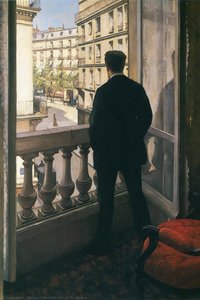
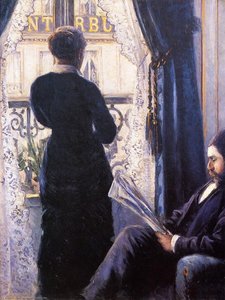
- Mann am Fenster (1875)
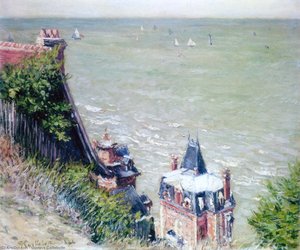
- Pink Villas at Trouville (1884)
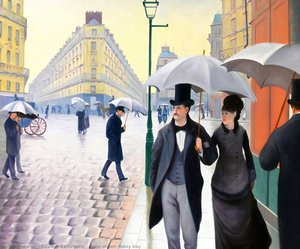
- Pariser Straße, Regentag
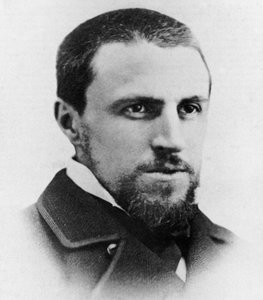
Gustave Caillebotte
1848 - 1894 , Frankreich
Kurzinfos
- Beeinflusste Künstler:
- Edgar Degas
- Giuseppe De Nittis
- Bemerkenswerte Werke:
- Les Raboteurs de Parquet
- Vue de toits (Effet de neige)
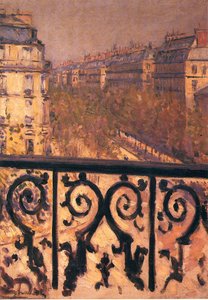
- Boulevard vu d'en haut
- Geburtsdatum: 19. August 1848
- Geburtsort: Paris, Frankreich
- Künstlerische Richtung: Realismus, Impressionismus
- Nationalität: Französisch
- Sterbedatum: 1894
- Vollständiger Name: Gustave Caillebotte
Ähnliche Artikel
Verdant Visions: Exploring the Symbolism & Aesthetic Impact of Green in Art History
Explore the rich history & symbolism of green in art! Discover iconic paintings, techniques, and how to bring verdant harmony into your home with ArtsDot's expert guide.

Paul Cézanne: Die 25 Meisterwerke des Impressionismus | ArtsDot
Entdecken Sie die 25 Meisterwerke von Paul Cézanne! Tauchen Sie ein in die Welt des Impressionismus und Postimpressionismus. Erfahren Sie mehr über seine Stillleben, Landschaften & berühmten Gemälde – jetzt hochwertige Kunstdrucke auf ArtsDot.com.
Impressionismus Meisterwerke: Die Top 10 Kunstwerke für Ihr Zuhause | ArtsDot
Entdecken Sie die Top 10 Meisterwerke des Impressionismus! Von Monet bis Renoir – erfahren Sie die Geschichten hinter berühmten Gemälden, Techniken & Farben. Hochwertige Kunstdrucke auf ArtsDot.com.
Chromgrüne Meisterwerke: Die Top 10 berühmtesten Gemälde & ihre Geschichte |
Entdecken Sie die Top 10 berühmter Gemälde, dominiert von faszinierendem Chromgrün! Von Monet bis Van Gogh – erfahren Sie die Geschichten hinter den Meisterwerken und lassen Sie sich für Ihre Wohnraumgestaltung inspirieren. Kunstdrucke in Museumsqualiät auf
Top 10 berühmte Gemälde in Meergrün – Kunst für Ihr Zuhause | ArtsDot.com
Entdecken Sie die Top 10 berühmter Gemälde in faszinierenden Meergrüntönen! Von Monet bis Renoir – erleben Sie Kunstgeschichte und lassen Sie sich von grünen Farbpaletten inspirieren. Kunstreproduktionen in Museumsqualiät auf ArtsDot.com.