 Vorschau anzeigen
 Versenden
 Teilen
 Details anzeigen

 Herunterladen
 Ähnliche Objekte
 Röntgenaufnahme
 Diashow
 Statistiken
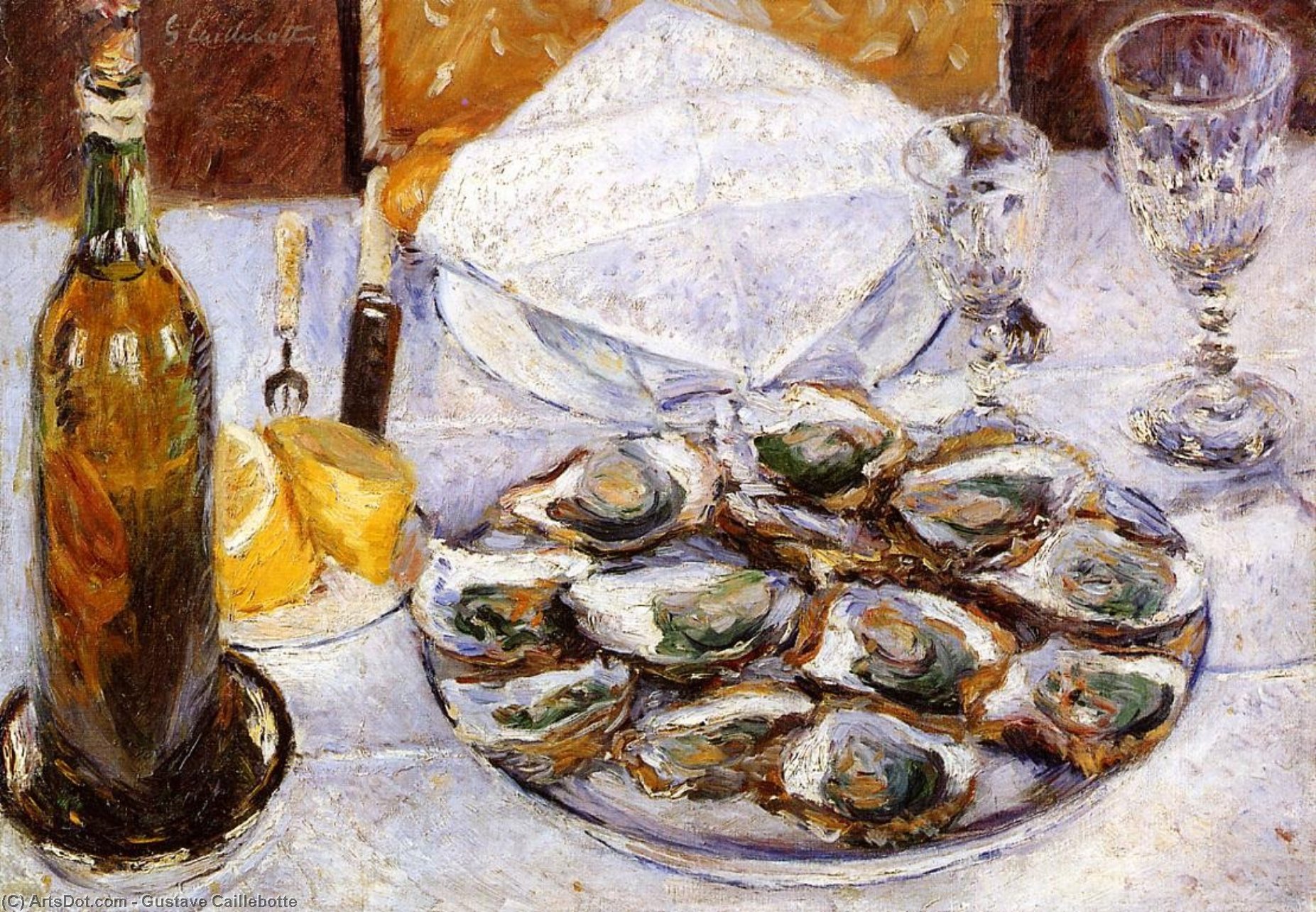
Still Life with Oysters
 Oil On Canvas
- WallArt
- Impressionism
 1881
1881- 19th Century
 38.0 x 55.0 cm
 Weiterlesen
Giclée / Kunstdruck
Giclée- oder Leinwanddruck in Museumsqualität mit schneller Produktion und flexiblen Veredelungsoptionen. ( Handgemalte Reproduktion bestellen Zum digitalen Bild wechseln)




P118B $10

P118H $10

P118W $10

P438Z $10

P508JH $12

P508YH $12

P805H $10

P805Z $10

P919BZ $10

P919G $10

P919XJ $10

P959ZH $10

P968JZ $12

W106C $8

W218G $10

W218JH $8

W218Y $10

W307PJ $10

W316G $10

W316PJ $8

W316Y $10

W398PJ $8

W4111J $10

W500HY $15

W500JH $15

W692G $12

W849H $8

W940BG $15

W953PJ $8




Wählen Sie aus unseren vordefinierten Formaten, die den ursprünglichen Proportionen des Kunstwerks entsprechen.

Sie können Ihre eigenen Maße eingeben, um ein bestimmtes Format oder einen speziellen Platz einzupassen. Wenn das von Ihnen gewählte Format nicht den Proportionen des Originalbildes entspricht, werden wir das Kunstwerk entweder beschneiden oder das Bild mit einem gespiegelten oder einfarbigen Rand erweitern. Ein digitaler Entwurf wird Ihnen zur Genehmigung zugesandt, bevor die Produktion beginnt.
Bitte beachten Sie, dass die Vorschau auf dem Bildschirm nicht den tatsächlichen Zuschnitt oder die Erweiterung widerspiegelt. Nur der Entwurf zeigt die endgültige Komposition präzise an.
Obwohl Sondermaße verfügbar sind, empfehlen wir die Auswahl eines Maßes aus der vordefinierten Liste, um die ursprünglichen Proportionen zu bewahren.
Weltweiter Versand () innerhalb von 2 Wochen statt der üblichen 4/5 Wochen. (9 September)

Kostenloser weltweiter Expressversand

Hochwertige Leinenleinwand

Umfassender Versicherungsschutz beim Versand

Zollgebühren-Rückerstattungsgarantie

Garantie für exakte Farbtreue

100-Tage-Rückgaberecht (nur bei Mängeln)

100% Geld-zurück-Garantie

Mengenrabatt verfügbar
 Die Glasoption ist nur für Größen unter 110 cm verfügbar.

Still Life with Oysters
Giclée / Kunstdruck
Format der Reproduktion
-


Gesamtpreis
$ 62
A Sensory Feast on Canvas
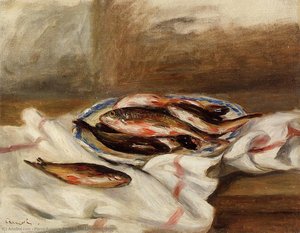
In the quiet intimacy of Gustave Caillebotte’s Still Life with Oysters, we are invited to a table that feels both timeless and profoundly immediate. Painted in 1881, this masterpiece transcends the mere depiction of food, offering instead a sensory journey through texture, light, and the quiet luxury of Parisian life. The composition centers on a bountiful plate of oysters, their glistening, pearlesmecent shells scattered with an organic grace that suggests they have only just been shucked. Surrounding this centerpiece is a carefully curated arrangement of nature’s bounty: the vibrant, sun-kissed hues of oranges and apples, the deep shadows of glass bottles, and the delicate transparency of a wine glass catching the light in the upper corner. It is a scene that breathes with the vitality of a lived moment, capturing the essence of a leisurely, opulent afternoon.
Caillebotte, a master who navigated the intersection of Realism and Impressionism, employs a technique that is as much about atmosphere as it is about precision. While his contemporaries often chased the fleeting movement of light in landscapes, Caillebotte brought a unique, almost photographic eye to the stationary objects of the domestic sphere. In this work, one can observe his profound ability to manipulate light to create volume and depth. The way the light dances across the moist surfaces of the oysters and reflects off the curved glass of the bottles demonstrates a sophisticated command of chiaroscuro. His brushwork, though controlled, possesses a tactile quality that allows the viewer to almost feel the coolness of the seafood and the smooth skin of the fruit, making the painting an immersive experience for the eyes.
Symbolism and the Art of Living
Beyond its aesthetic brilliance, Still Life with Oysters serves as a window into the social fabric of late 19th-century France. During this era, the still life genre often functioned as a celebration of abundance and the burgeoning middle-class prosperity. The presence of delicacies like oysters—once a luxury—symbolizes a refined way of life, an appreciation for the finer things that defined the Parisian bourgeois experience. There is a subtle tension between the permanence of the objects and the ephemeral nature of the feast; the fruit will ripen and decay, the wine will be consumed, yet Caillebotte freezes this moment in a state of eternal freshness. This creates a poignant emotional resonance, reminding the viewer to find beauty and presence in the fleeting pleasures of the everyday.
For the discerning collector or interior designer, this painting offers more than just visual splendor; it provides a focal point of sophisticated warmth. The rich, earthy palette and the balanced composition make it an ideal piece for spaces that demand elegance and character. Whether placed in a contemporary dining room to evoke a sense of classical grandeur or integrated into a modern study to add a layer of historical depth, a high-quality reproduction of this work brings with it the prestige of the Impressionist era. It is an invitation to slow down, to appreciate the artistry of the mundane, and to surround oneself with a piece that celebrates the enduring beauty of life’s most delicious moments.
Ähnliche Kunstwerke
Über den Künstler
Frühes Leben und Ausbildung
Gustave Caillebotte, ein französischer Maler, wurde am 19. August 1848 in Paris aus einer wohlhabenden Familie geboren. Sein Vater, Martial Caillebotte, war Erbe der Familienfirma für Militärtuchstoffe und diente auch als Richter am Tribunal de Commerce des Départements Seine. Gustave’s frühes Interesse an Fotografie als Kunstform beeinflusste später seinen Malstil.Künstlerische Karriere
Gustave erwarb 1868 einen Jurabachelor und 1870 eine Zulassung zur Rechtsausübung, doch seine wahre Leidenschaft galt der Kunst. Er begann, das Atelier des Malers Léon Bonnat zu besuchen, wo er ernsthaft Malerei studierte. Caillebotte’s Stil, der durch seinen Realismus gekennzeichnet ist, wurde von seinen impressionistischen Kollegen beeinflusst, darunter Edgar Degas und Giuseppe de Nittis.Bemerkenswerte Werke und Stil
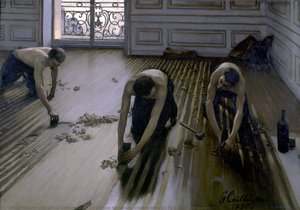
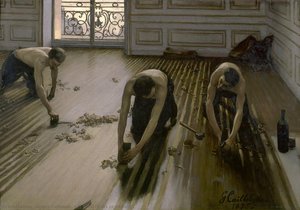
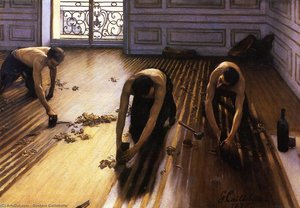
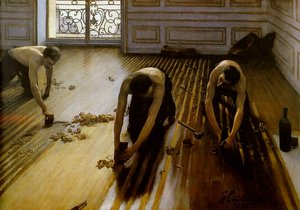
- Les Raboteurs de Parquet (Die Bodenabroller) (1875): Dieses frühe Meisterwerk, das sich heute im Musée d'Orsay befindet, zeigt Caillebotte’s einzigartige Mischung aus Realismus und impressionistischen Einflüssen.
- Vue de toits (Effet de neige) (Aussicht auf Dächer (Schneeeffekt)) (1878): Demonstriert seine Verwendung von erhöhten Perspektiven, eine Technik, die möglicherweise durch japanische Drucke und Fotografie beeinflusst wurde.
Vermächtnis und Einfluss
Caillebotte’s Stil, obwohl Teil der Schule des Realismus, wurde stark von seinen impressionistischen Kollegen beeinflusst. Seine Werke zeichnen sich durch eine präzise Beobachtungsgabe und eine detailgetreue Wiedergabe der Wirklichkeit aus. Er trug dazu bei, die Wahrnehmung des Alltagslebens in der Kunst zu verändern und neue Wege der Darstellung urbaner Szenen aufzuzeigen. Obwohl er zu Lebzeiten nicht immer Anerkennung fand, wird Caillebotte heute als ein bedeutender Vertreter des Impressionismus und Realismus gewürdigt.Weitere Werke
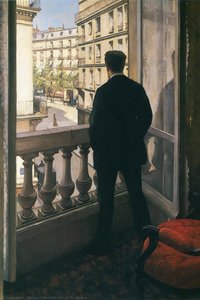
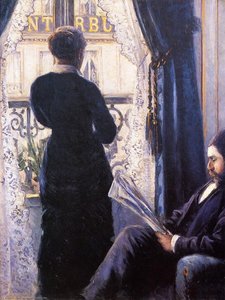
- Mann am Fenster (1875)
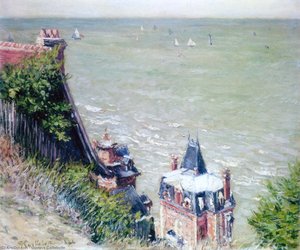
- Pink Villas at Trouville (1884)
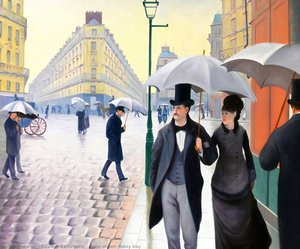
- Pariser Straße, Regentag
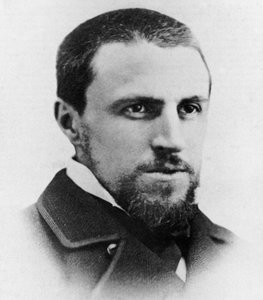
Gustave Caillebotte
1848 - 1894 , Frankreich
Kurzinfos
- Beeinflusste Künstler:
- Edgar Degas
- Giuseppe De Nittis
- Bemerkenswerte Werke:
- Les Raboteurs de Parquet
- Vue de toits (Effet de neige)
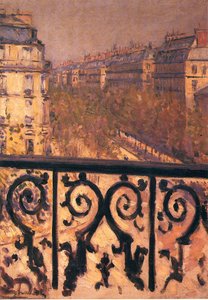
- Boulevard vu d'en haut
- Geburtsdatum: 19. August 1848
- Geburtsort: Paris, Frankreich
- Künstlerische Richtung: Realismus, Impressionismus
- Nationalität: Französisch
- Sterbedatum: 1894
- Vollständiger Name: Gustave Caillebotte
Ähnliche Artikel
The Bountiful Still Life: Symbolism & Artistic Representation of Fruit Across Art History
Explore the rich history of still life painting & the symbolism of fruit across art movements. Discover masterpieces from Caravaggio to Cézanne with ArtsDot – expert guidance & museum-quality reproductions.

Paul Cézanne: Die 25 Meisterwerke des Impressionismus | ArtsDot
Entdecken Sie die 25 Meisterwerke von Paul Cézanne! Tauchen Sie ein in die Welt des Impressionismus und Postimpressionismus. Erfahren Sie mehr über seine Stillleben, Landschaften & berühmten Gemälde – jetzt hochwertige Kunstdrucke auf ArtsDot.com.
Gustav Klimt: Die 25 Meisterwerke des Wiener Jugendstils | ArtsDot
Entdecken Sie die 25 ikonischsten Gemälde von Gustav Klimt! Tauchen Sie ein in die Welt der Wiener Secession, des Jugendstils und der goldenen Phase. Hochwertige Reproduktionen & Inspiration für Ihr Zuhause auf ArtsDot.com.
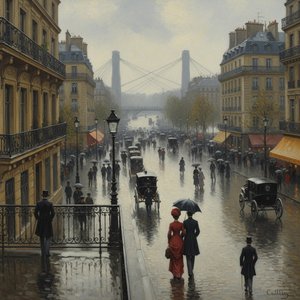
Gustave Caillebotte: Zwischen Realismus und Moderne – Eine Pariser Lebensstudie
Entdecken Sie Gustave Caillebottes faszinierende Werke – zwischen Realismus und Impressionismus! Expertenwissen, hochwertige Reproduktionen & individuelle Kunstberatung bei ArtsDot.

Impressionismus Meisterwerke: Die Top 10 Kunstwerke für Ihr Zuhause | ArtsDot
Entdecken Sie die Top 10 Meisterwerke des Impressionismus! Von Monet bis Renoir – erfahren Sie die Geschichten hinter berühmten Gemälden, Techniken & Farben. Hochwertige Kunstdrucke auf ArtsDot.com.