 Vorschau anzeigen
 Versenden
 Teilen
 Details anzeigen

 Herunterladen
 Ähnliche Objekte
 Röntgenaufnahme
 Diashow
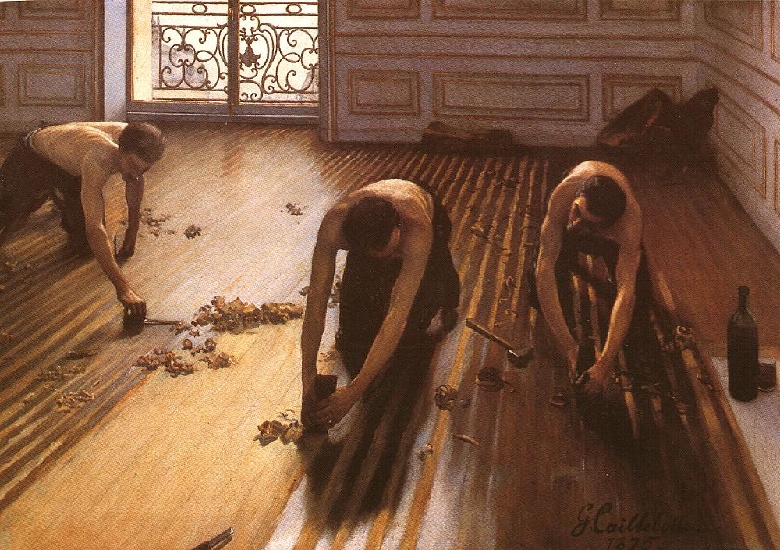
The Floor Scrapers aka The Floor Strippers


 Weiterlesen
Handgefertigte Ölreproduktion
Handgemaltes Ölgemälde auf Leinwand in Ihrer Wunschgröße und mit Rahmen, auf Bestellung von unseren Künstlern angefertigt. ( Druck bestellen Bild kaufen)




P118B $10

P118H $10

P118W $10

P438Z $10

P508JH $12

P508YH $12

P805H $10

P805Z $10

P919BZ $10

P919G $10

P919XJ $10

P959ZH $10

P968JZ $12

W106C $8

W218G $10

W218JH $8

W218Y $10

W307PJ $10

W316G $10

W316PJ $8

W316Y $10

W398PJ $8

W4111J $10

W500HY $15

W500JH $15

W692G $12

W849H $8

W940BG $15

W953PJ $8




Wählen Sie aus unseren vordefinierten Formaten, die den ursprünglichen Proportionen des Kunstwerks entsprechen.

Sie können Ihre eigenen Maße eingeben, um einen bestimmten Rahmen oder Platz auszufüllen. Wenn die gewählte Größe nicht den Proportionen des Originalbildes entspricht, werden wir das Kunstwerk entweder beschneiden oder das Gemälde durch zusätzliche, handgemalte Elemente erweitern. Ein digitales Mockup wird Ihnen zur Genehmigung zugesandt, bevor die Produktion beginnt.
Bitte beachten Sie, dass die Bildschirmvorschau nicht die tatsächliche Beschneidung oder Erweiterung widerspiegelt. Nur das Mockup zeigt die endgültige Komposition exakt an.
Obwohl Sondermaße verfügbar sind, empfehlen wir, eine Größe aus der vordefinierten Liste zu wählen, um die ursprünglichen Proportionen beizubehalten.
Nach der Bestellung wird das ArtsDot.com-Team dem Kunden Anweisungen per E-Mail zusenden und eine Mockup-Vorschau bereitstellen.
Weltweiter Versand () in nur 3 bis 4 Wochen statt der üblichen 5 Wochen. (22 August). Keine Kompromisse bei der Qualität.

Kostenloser weltweiter Expressversand

Hochwertige Leinenleinwand

Umfassender Versicherungsschutz beim Versand

Zollgebühren-Rückerstattungsgarantie

Garantie für exakte Farbtreue

60 Tage Rückgaberecht (nur bei Mängeln)

100% Geld-zurück-Garantie

Mengenrabatt verfügbar
 Die Glasoption ist nur für Größen unter 110 cm verfügbar.

The Floor Scrapers aka The Floor Strippers
Art der Reproduktion
Format der Reproduktion
-


Gesamtpreis
$ 263
Beschreibung des Kunstwerks
A Glimpse into Parisian Labor: Gustave Caillebotte’s “The Floor Scrapers”
Gustave Caillebotte's "The Floor Scrapers," also known as "The Floor Strippers," is more than just a depiction of three men diligently working on a parquet floor; it’s a meticulously observed snapshot of Parisian life in the late 19th century, imbued with a quiet dignity and subtle social commentary. Painted around 1876-77, this oil on canvas work represents a pivotal moment in Caillebotte's artistic journey, bridging the gap between Realism and Impressionism while simultaneously incorporating elements of his fascination with photography – a burgeoning technology that was radically altering how artists perceived and represented the world.
Caillebotte’s background as a lawyer and his early exposure to photographic techniques profoundly shaped his approach. He wasn't simply aiming for a realistic portrayal; he sought to capture fleeting moments of everyday life with an almost clinical precision, mirroring the directness of photography. This is evident in the careful arrangement of figures, the sharp delineation of forms, and the slightly flattened perspective – all hallmarks of Caillebotte’s distinctive style. The scene unfolds within a modestly furnished dining room, suggesting a working-class household, yet the composition avoids sentimentality or overt judgment.
Composition and Technique: A Study in Light and Detail
The painting's strength lies not just in its subject matter but also in Caillebotte’s masterful technique. He employs a muted palette of browns, grays, and ochres, creating a sense of atmospheric depth and emphasizing the textures of the floorboards and the men’s clothing. The lighting is particularly noteworthy – a diffused light source casts subtle shadows, highlighting the contours of the figures and adding to the painting's overall realism. Caillebotte meticulously rendered each detail, from the worn leather boots to the dust motes suspended in the air, demonstrating an almost obsessive attention to accuracy.
Notably, Caillebotte utilizes a technique reminiscent of Japanese woodblock prints – particularly Ukiyo-e – in his composition. The figures are arranged within a shallow space, creating a sense of intimacy and drawing the viewer into the scene. This compositional choice, combined with the slightly asymmetrical arrangement of the men, contributes to the painting’s dynamic energy.
Symbolism and Social Context
“The Floor Scrapers” offers a poignant glimpse into the realities of working-class life in Paris during the Second Empire. The task depicted – scraping up old parquet flooring – was arduous and physically demanding, representing a significant portion of the labor force’s daily existence. While the painting doesn't explicitly address social inequality, it subtly highlights the dignity and perseverance of these men. Their focused attention and quiet diligence suggest a sense of pride in their work, despite the challenging conditions.
The scattered wine glasses and bottles on the table hint at moments of respite after a long day’s labor – a small indulgence amidst the demands of daily life. This detail adds a layer of human warmth to the otherwise austere scene, reminding us that even in the midst of hard work, there is always room for simple pleasures.
A Timeless Masterpiece: Resonance and Reproduction
"The Floor Scrapers" remains a powerful and evocative work of art, offering a rare insight into the social fabric of 19th-century Paris. Caillebotte’s ability to capture both the physical details and the emotional essence of his subjects is truly remarkable. Today, owning a high-quality reproduction of this painting allows you to bring this captivating scene into your home or office, serving as a reminder of the enduring spirit of labor and the beauty found in everyday life. ArtsDot offers meticulously crafted reproductions that faithfully capture the nuances of Caillebotte’s original masterpiece, ensuring that its timeless appeal continues to inspire for generations to come.
Ähnliche Kunstwerke
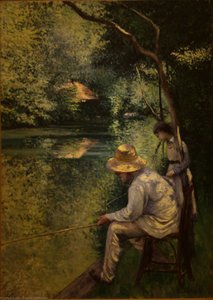
Über den Künstler
Frühes Leben und Ausbildung
Gustave Caillebotte, ein französischer Maler, wurde am 19. August 1848 in Paris aus einer wohlhabenden Familie geboren. Sein Vater, Martial Caillebotte, war Erbe der Familienfirma für Militärtuchstoffe und diente auch als Richter am Tribunal de Commerce des Départements Seine. Gustave’s frühes Interesse an Fotografie als Kunstform beeinflusste später seinen Malstil.Künstlerische Karriere
Gustave erwarb 1868 einen Jurabachelor und 1870 eine Zulassung zur Rechtsausübung, doch seine wahre Leidenschaft galt der Kunst. Er begann, das Atelier des Malers Léon Bonnat zu besuchen, wo er ernsthaft Malerei studierte. Caillebotte’s Stil, der durch seinen Realismus gekennzeichnet ist, wurde von seinen impressionistischen Kollegen beeinflusst, darunter Edgar Degas und Giuseppe de Nittis.Bemerkenswerte Werke und Stil
- Les Raboteurs de Parquet (Die Bodenabroller) (1875): Dieses frühe Meisterwerk, das sich heute im Musée d'Orsay befindet, zeigt Caillebotte’s einzigartige Mischung aus Realismus und impressionistischen Einflüssen.
- Vue de toits (Effet de neige) (Aussicht auf Dächer (Schneeeffekt)) (1878): Demonstriert seine Verwendung von erhöhten Perspektiven, eine Technik, die möglicherweise durch japanische Drucke und Fotografie beeinflusst wurde.
Vermächtnis und Einfluss
Caillebotte’s Stil, obwohl Teil der Schule des Realismus, wurde stark von seinen impressionistischen Kollegen beeinflusst. Seine Werke zeichnen sich durch eine präzise Beobachtungsgabe und eine detailgetreue Wiedergabe der Wirklichkeit aus. Er trug dazu bei, die Wahrnehmung des Alltagslebens in der Kunst zu verändern und neue Wege der Darstellung urbaner Szenen aufzuzeigen. Obwohl er zu Lebzeiten nicht immer Anerkennung fand, wird Caillebotte heute als ein bedeutender Vertreter des Impressionismus und Realismus gewürdigt.Weitere Werke
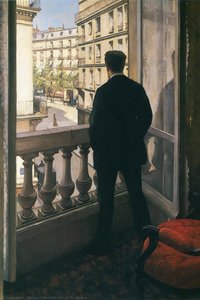
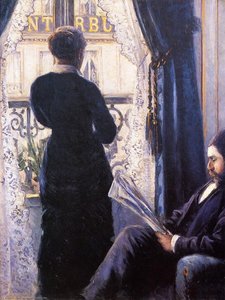
- Mann am Fenster (1875)
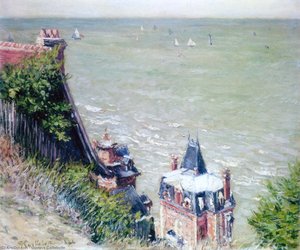
- Pink Villas at Trouville (1884)
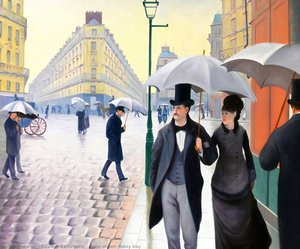
- Pariser Straße, Regentag

Gustave Caillebotte
1848 - 1894 , Frankreich
Kurzinfos
- Beeinflusste Künstler:
- Edgar Degas
- Giuseppe De Nittis
- Bemerkenswerte Werke:
- Les Raboteurs de Parquet
- Vue de toits (Effet de neige)
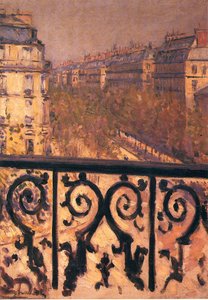
- Boulevard vu d'en haut
- Geburtsdatum: 19. August 1848
- Geburtsort: Paris, Frankreich
- Künstlerische Richtung: Realismus, Impressionismus
- Nationalität: Französisch
- Sterbedatum: 1894
- Vollständiger Name: Gustave Caillebotte
Ähnliche Artikel
Gustave Caillebotte: Zwischen Realismus und Moderne – Eine Pariser Lebensstudie
Entdecken Sie Gustave Caillebottes faszinierende Werke – zwischen Realismus und Impressionismus! Expertenwissen, hochwertige Reproduktionen & individuelle Kunstberatung bei ArtsDot.
Gustav Klimt: Die 25 Meisterwerke des Wiener Jugendstils | ArtsDot
Entdecken Sie die 25 ikonischsten Gemälde von Gustav Klimt! Tauchen Sie ein in die Welt der Wiener Secession, des Jugendstils und der goldenen Phase. Hochwertige Reproduktionen & Inspiration für Ihr Zuhause auf ArtsDot.com.

Romantic Realism's Finest: 10 Masterpieces for Your Home | ArtsDot
Explore 10 defining masterpieces of Romantic Realism! Discover Courbet, Millet & Daumier's powerful paintings—capturing emotion and social realities. Find museum-quality reproductions for your home at ArtsDot.com.

Realismus in der Kunst: Die 10 Meisterwerke, die eine Ära prägten |
Entdecken Sie die 10 Meisterwerke des Realismus! Courbet, Millet & Daumier prägten eine Ära. Erfahren Sie die Geschichten hinter ikonischen Gemälden und finden Sie hochwertige Art Reproduktionen für Ihr Zuhause auf
Akademischer Realismus: Die 10 Meisterwerke, die eine Epoche prägten | ArtsDot
Entdecken Sie die 10 prägendsten Meisterwerke des Akademischen Realismus! Erfahren Sie die Geschichten hinter berühmten Gemälden, Künstlern & Techniken. Hochwertige Reproduktionen für Ihr Zuhause – jetzt auf ArtsDot.com!