 Vorschau anzeigen
 Versenden
 Teilen
 Details anzeigen

 Herunterladen
 Ähnliche Objekte
 Röntgenaufnahme
 Diashow
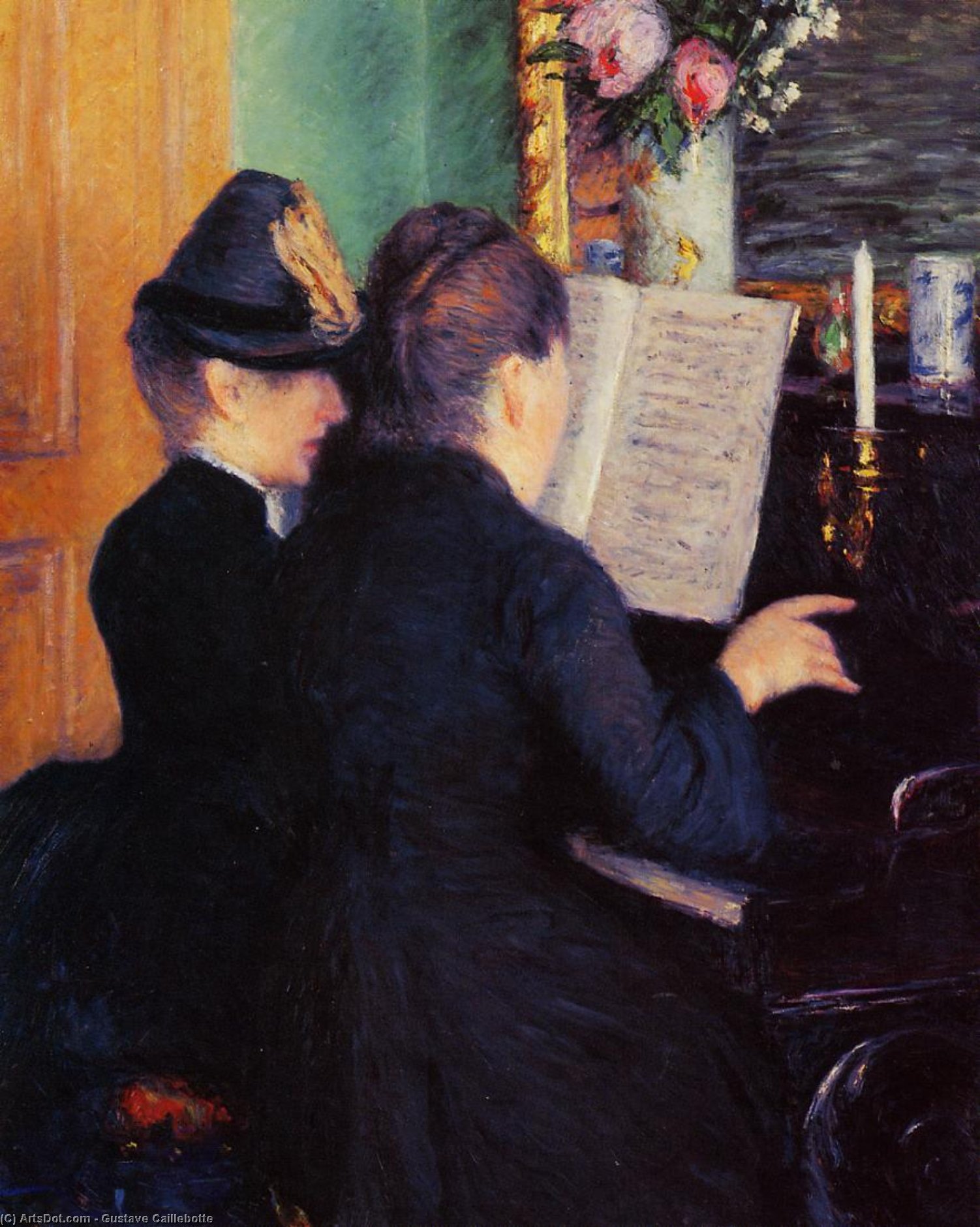
The Piano Lesson


 Weiterlesen
Handgefertigte Ölreproduktion
Handgemaltes Ölgemälde auf Leinwand in Ihrer Wunschgröße und mit Rahmen, auf Bestellung von unseren Künstlern angefertigt. ( Druck bestellen Bild kaufen)




P118B $10

P118H $10

P118W $10

P438Z $10

P508JH $12

P508YH $12

P805H $10

P805Z $10

P919BZ $10

P919G $10

P919XJ $10

P959ZH $10

P968JZ $12

W106C $8

W218G $10

W218JH $8

W218Y $10

W307PJ $10

W316G $10

W316PJ $8

W316Y $10

W398PJ $8

W4111J $10

W500HY $15

W500JH $15

W692G $12

W849H $8

W940BG $15

W953PJ $8




Wählen Sie aus unseren vordefinierten Formaten, die den ursprünglichen Proportionen des Kunstwerks entsprechen.

Sie können Ihre eigenen Maße eingeben, um einen bestimmten Rahmen oder Platz auszufüllen. Wenn die gewählte Größe nicht den Proportionen des Originalbildes entspricht, werden wir das Kunstwerk entweder beschneiden oder das Gemälde durch zusätzliche, handgemalte Elemente erweitern. Ein digitales Mockup wird Ihnen zur Genehmigung zugesandt, bevor die Produktion beginnt.
Bitte beachten Sie, dass die Bildschirmvorschau nicht die tatsächliche Beschneidung oder Erweiterung widerspiegelt. Nur das Mockup zeigt die endgültige Komposition exakt an.
Obwohl Sondermaße verfügbar sind, empfehlen wir, eine Größe aus der vordefinierten Liste zu wählen, um die ursprünglichen Proportionen beizubehalten.
Nach der Bestellung wird das ArtsDot.com-Team dem Kunden Anweisungen per E-Mail zusenden und eine Mockup-Vorschau bereitstellen.
Weltweiter Versand () in nur 3 bis 4 Wochen statt der üblichen 5 Wochen. (22 August). Keine Kompromisse bei der Qualität.

Kostenloser weltweiter Expressversand

Hochwertige Leinenleinwand

Umfassender Versicherungsschutz beim Versand

Zollgebühren-Rückerstattungsgarantie

Garantie für exakte Farbtreue

60 Tage Rückgaberecht (nur bei Mängeln)

100% Geld-zurück-Garantie

Mengenrabatt verfügbar
 Die Glasoption ist nur für Größen unter 110 cm verfügbar.

The Piano Lesson
Art der Reproduktion
Format der Reproduktion
-


Gesamtpreis
$ 263
Beschreibung des Kunstwerks
The Piano Lesson: A Snapshot of Parisian Modernity
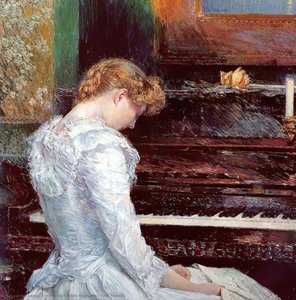
Gustave Caillebotte’s “The Piano Lesson,” painted in 1881, stands as a quintessential example of Impressionism—a movement that sought to capture the fleeting beauty of everyday life and the transformative effects of industrialization on French society. More than just a depiction of two women seated at a piano, it's an emblem of a burgeoning intellectual landscape grappling with questions of tradition versus progress.
Caillebotte’s artistic vision was profoundly shaped by his exposure to photography, which encouraged him to experiment with innovative compositional strategies and perspectives. Unlike academic painters who prioritized idealized representations, Caillebotte embraced realism—albeit filtered through an Impressionistic lens—to portray scenes from the bourgeois world of Paris during Belle Époque. The muted palette—dominated by earthy tones—reflects this preoccupation with capturing atmospheric conditions rather than striving for dramatic visual impact.
Composition and Technique: Embracing Light and Texture
- The painting’s central focus is undeniably the piano itself, positioned prominently in the room. Caillebotte skillfully utilizes chiaroscuro—the interplay of light and shadow—to sculpt the piano’s form and create a sense of depth. Notice how the light illuminates the pianist's hands as they delicately touch the keys.
- Caillebotte’s brushstrokes are loose, broken, and blended, characteristic of Impressionist technique. These marks convey not only the visual appearance of surfaces but also their tactile qualities—the warmth of the wood, the softness of the fabric draped over the piano bench.
Symbolism Within Domestic Tranquility
Beyond its technical prowess, “The Piano Lesson” resonates with symbolic significance. The piano represents both musical artistry and familial heritage – a connection to tradition amidst the rapid changes sweeping through Paris. The presence of the vase and potted plant adds visual interest and subtly reinforces themes of domestic harmony and natural beauty—values that contrasted sharply with the grime and noise of the industrial city.
The inclusion of books suggests intellectual pursuits and contemplation, hinting at a deeper exploration of ideas beyond mere sensory experience. It’s as if Caillebotte invites us to consider not just what we see but also what lies beneath—the unspoken narratives that shape our lives.
Emotional Resonance: A Moment Frozen in Time
"The Piano Lesson" transcends its formal elements to evoke a feeling of quiet contemplation and understated elegance. The scene captures a fleeting moment of connection between two women, conveying warmth, intimacy, and perhaps even melancholy—a poignant reminder that beauty can be found in the simplest gestures and surroundings. It remains an enduring testament to Caillebotte’s ability to transform ordinary domestic life into a profound artistic statement.
This artwork is particularly appealing for interior designers seeking to infuse their spaces with warmth, sophistication, and a subtle nod to artistic heritage. Reproductions of “The Piano Lesson” can serve as striking focal points in living rooms or bedrooms—bringing the spirit of Impressionism and Parisian culture into modern homes.
Ähnliche Kunstwerke
Über den Künstler
Frühes Leben und Ausbildung
Gustave Caillebotte, ein französischer Maler, wurde am 19. August 1848 in Paris aus einer wohlhabenden Familie geboren. Sein Vater, Martial Caillebotte, war Erbe der Familienfirma für Militärtuchstoffe und diente auch als Richter am Tribunal de Commerce des Départements Seine. Gustave’s frühes Interesse an Fotografie als Kunstform beeinflusste später seinen Malstil.Künstlerische Karriere
Gustave erwarb 1868 einen Jurabachelor und 1870 eine Zulassung zur Rechtsausübung, doch seine wahre Leidenschaft galt der Kunst. Er begann, das Atelier des Malers Léon Bonnat zu besuchen, wo er ernsthaft Malerei studierte. Caillebotte’s Stil, der durch seinen Realismus gekennzeichnet ist, wurde von seinen impressionistischen Kollegen beeinflusst, darunter Edgar Degas und Giuseppe de Nittis.Bemerkenswerte Werke und Stil
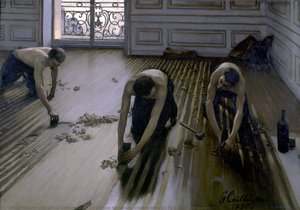
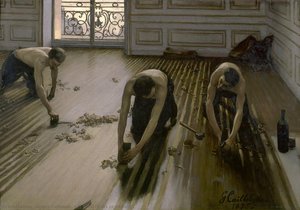
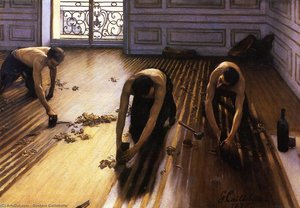
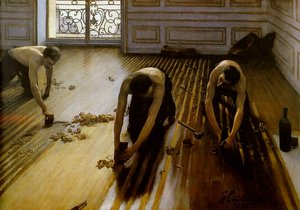
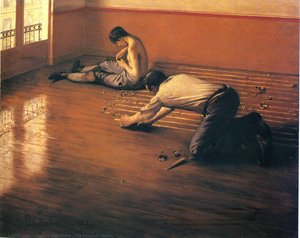
- Les Raboteurs de Parquet (Die Bodenabroller) (1875): Dieses frühe Meisterwerk, das sich heute im Musée d'Orsay befindet, zeigt Caillebotte’s einzigartige Mischung aus Realismus und impressionistischen Einflüssen.
- Vue de toits (Effet de neige) (Aussicht auf Dächer (Schneeeffekt)) (1878): Demonstriert seine Verwendung von erhöhten Perspektiven, eine Technik, die möglicherweise durch japanische Drucke und Fotografie beeinflusst wurde.
Vermächtnis und Einfluss
Caillebotte’s Stil, obwohl Teil der Schule des Realismus, wurde stark von seinen impressionistischen Kollegen beeinflusst. Seine Werke zeichnen sich durch eine präzise Beobachtungsgabe und eine detailgetreue Wiedergabe der Wirklichkeit aus. Er trug dazu bei, die Wahrnehmung des Alltagslebens in der Kunst zu verändern und neue Wege der Darstellung urbaner Szenen aufzuzeigen. Obwohl er zu Lebzeiten nicht immer Anerkennung fand, wird Caillebotte heute als ein bedeutender Vertreter des Impressionismus und Realismus gewürdigt.Weitere Werke
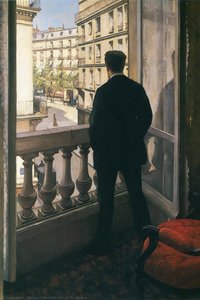
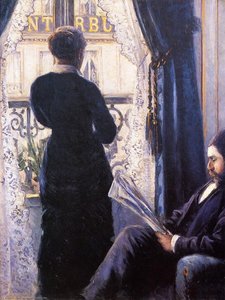
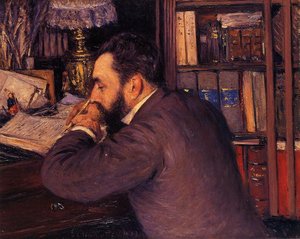
- Mann am Fenster (1875)
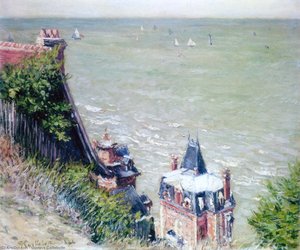
- Pink Villas at Trouville (1884)
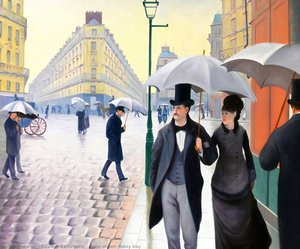
- Pariser Straße, Regentag
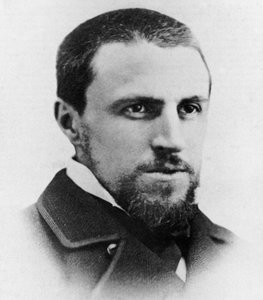
Gustave Caillebotte
1848 - 1894 , Frankreich
Kurzinfos
- Beeinflusste Künstler:
- Edgar Degas
- Giuseppe De Nittis
- Bemerkenswerte Werke:
- Les Raboteurs de Parquet
- Vue de toits (Effet de neige)
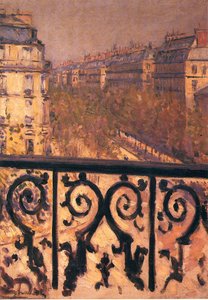
- Boulevard vu d'en haut
- Geburtsdatum: 19. August 1848
- Geburtsort: Paris, Frankreich
- Künstlerische Richtung: Realismus, Impressionismus
- Nationalität: Französisch
- Sterbedatum: 1894
- Vollständiger Name: Gustave Caillebotte
Ähnliche Artikel
Gustav Klimt: Die 25 Meisterwerke des Wiener Jugendstils | ArtsDot
Entdecken Sie die 25 ikonischsten Gemälde von Gustav Klimt! Tauchen Sie ein in die Welt der Wiener Secession, des Jugendstils und der goldenen Phase. Hochwertige Reproduktionen & Inspiration für Ihr Zuhause auf ArtsDot.com.
Gustave Caillebotte: Zwischen Realismus und Moderne – Eine Pariser Lebensstudie
Entdecken Sie Gustave Caillebottes faszinierende Werke – zwischen Realismus und Impressionismus! Expertenwissen, hochwertige Reproduktionen & individuelle Kunstberatung bei ArtsDot.

Impressionismus Meisterwerke: Die Top 10 Kunstwerke für Ihr Zuhause | ArtsDot
Entdecken Sie die Top 10 Meisterwerke des Impressionismus! Von Monet bis Renoir – erfahren Sie die Geschichten hinter berühmten Gemälden, Techniken & Farben. Hochwertige Kunstdrucke auf ArtsDot.com.
Impressionismus: Die 10 Meisterwerke, die eine Kunstbewegung prägten |
Entdecken Sie die 10 Meisterwerke des Impressionismus! Von Monet bis Renoir – erfahren Sie die Geschichten hinter berühmten Gemälden & ihre einzigartigen Techniken. Kunstdrucke in Museumsqualiät auf .
Impressionismus und Postimpressionismus: Eine vergleichende Analyse
Entdecken Sie die Welt des Impressionismus und Postimpressionismus! Expertenwissen über Künstler wie Monet, Van Gogh & Cézanne. Jetzt lesen!