

 Vorschau anzeigen
 Versenden
 Teilen
 Details anzeigen

 Herunterladen
 Ähnliche Objekte
 Röntgenaufnahme
 Diashow
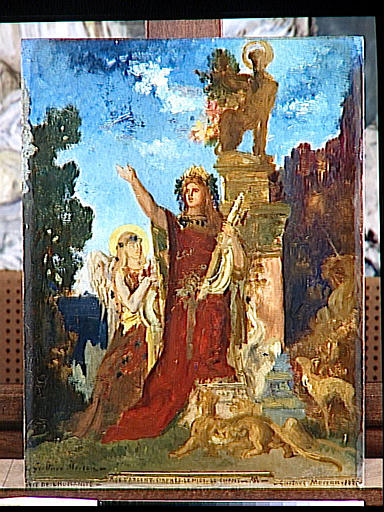
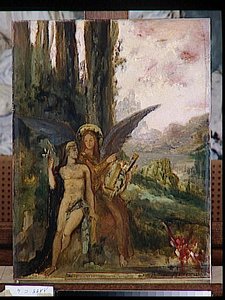
La Vie de l'Humanité l'Age d'argent. Hésiode et Orphée. Orphée. Le Midi. Le Chant


 Weiterlesen
Erwerben Sie ein hochauflösendes, optimiertes digitales Bild, das der Online-Vorschau weit überlegen ist.
Jede Datei wird von unseren hauseigenen Spezialisten mit modernsten Werkzeugen und fachmännischer manueller Retusche sorgfältig vorbereitet. Wir stellen sicher, dass jedes Bild eine außergewöhnliche Klarheit, präzise Farbgenauigkeit und feinste Details aufweist.
Die endgültige Datei wird innerhalb von 72 Stunden per E-Mail zugestellt und ist für den sofortigen Einsatz in professionellen, redaktionellen und Druckumgebungen optimiert. Es handelt sich um dieselbe Qualität, der führende Designstudios, Verlage und Galerien vertrauen.
Digitales Bild
Laden Sie eine hochauflösende Datei für die persönliche Präsentation, den Druck und kreative Projekte herunter. ( Druck bestellen Handgemalte Reproduktion bestellen)
In jeder Bestellung digitaler Bilder enthalten
Professionelle digitale Bereitstellung, garantiert
Wenn Sie sich für ArtsDot.com entscheiden, erhalten Sie nicht nur ein Bild – Sie erhalten ein professionell aufbereitetes digitales Kunstwerk, das mit höchster Präzision erstellt und durch eine Zufriedenheitsgarantie abgesichert wird. Hier ist alles, was automatisch mit Ihrer Bestellung geliefert wird:

Schnelle E-Mail-Zustellung
Ihre hochauflösende digitale Bilddatei wird Ihnen innerhalb von 72 Stunden nach der Bestellung per E-Mail zugestellt – bereit zur sofortigen Verwendung.

KI-optimierte digitale Datei
Ihre Kunstwerke werden professionell mithilfe fortschrittlicher KI-Tools und manueller Bearbeitung optimiert, um maximale Detailtreue, Klarheit und Farbgenauigkeit zu gewährleisten.

Lebenslanger kostenloser Neudruckservice
Datei versehentlich gelöscht oder verloren? Keine Sorge – wir senden sie Ihnen jederzeit kostenlos erneut zu.

Keine Einfuhrgebühren – jemals
Genießen Sie Ihr Kunstwerk sofort ohne Zollgebühren, Einfuhrabgaben oder Versandkosten – digitale Downloads sind immer steuerfrei.

Garantierte Farbtreue
Wir garantieren, dass Ihr digitales Bild mithilfe professioneller Werkzeuge und Farbmanagement die Originalfarben so präzise wie möglich wiedergibt.

60-Tage-Zufriedenheitsgarantie
Sollten Sie mit Ihrem digitalen Bild nicht zufrieden sein, werden wir es überarbeiten oder Ihnen innerhalb von 60 Tagen 100% erstatten – ohne Wenn und Aber.

100% Geld-zurück-Garantie
Nicht zufrieden? Erhalten Sie innerhalb von 60 Tagen nach Erhalt Ihrer digitalen Datei eine vollständige Rückerstattung – ohne Angabe von Gründen.

Rabatte bei Großbestellungen
3 Bilder kaufen, 10% sparen – 5 Bilder kaufen, 15% sparen – Ab 10 Bildern 20% sparen. Ideal für kreative Projekte, Galerien und Agenturen.
La Vie de l'Humanité l’Age d'argent. Hésiode et Orphée. Orphée. Le Midi. Le Chant – A Symphony of Myth and Emotion
Gustave Moreau’s “Orphée. Le Midi. Le Chant” is not merely a depiction; it’s an immersion into the opulent, dreamlike world he meticulously crafted within the Symbolist movement. Painted during his most intensely creative period – from 1884 to 1886 – this work exemplifies Moreau's profound engagement with classical mythology and his desire to evoke powerful emotional responses through carefully constructed symbolism. The painting’s subject, a woman elevated upon a stone dais, immediately draws the viewer into a realm of heightened beauty and mystery, echoing the artistic traditions of antiquity while simultaneously forging a distinctly modern aesthetic.
- Subject Matter: The central figure represents Orpheus, the legendary musician of Greek mythology, renowned for his ability to charm both gods and mortals with his lyre. Moreau’s interpretation transcends a literal portrait; instead, he presents Orpheus as an embodiment of artistic inspiration and transcendent longing.
- Composition & Technique: Moreau's meticulous brushwork is immediately apparent – layers upon layers of pigment create a shimmering surface that seems to vibrate with light. The use of rich, jewel-toned colors—particularly the vibrant red of the woman’s dress—contrasts dramatically with the muted tones of the background, intensifying the sense of drama and otherworldly beauty. His technique relies heavily on glazing, building up translucent layers of color to achieve depth and luminosity, a hallmark of his style.
Symbolism and the Language of Dreams
Moreau’s work is saturated with symbolism, reflecting his belief that art should operate on a deeper, psychological level rather than simply mirroring reality. The woman herself embodies several potent symbols. Her raised hands suggest an invocation, a plea for inspiration or solace. The pedestal upon which she stands elevates her to a position of divine status, associating her with the creative power of Orpheus. The surrounding elements – the sky filled with clouds, the scattered birds, and even the dogs—further contribute to the painting’s symbolic richness. These aren't accidental details; they are carefully chosen components of a complex visual narrative designed to resonate with the viewer’s subconscious.
- Mythological Allusions: The presence of Hésiode (Hesiod), the Greek poet, subtly reinforces the painting’s themes of storytelling and artistic creation.
- Color Symbolism: Red, a dominant color in the composition, traditionally symbolizes passion, love, and divine power – all qualities associated with Orpheus's music.
Historical Context & The Rise of Symbolism
“Orphée. Le Midi. Le Chant” was created during a pivotal moment in the history of art. The Symbolist movement, emerging in late 19th-century France, reacted against the perceived materialism and superficiality of Realism and Impressionism. Artists like Moreau sought to explore subjective experience, delve into the realms of dreams and mythology, and evoke powerful emotions through symbolic imagery. Moreau’s work aligns perfectly with this artistic rebellion, demonstrating a desire to create art that was not merely beautiful but also profound and spiritually resonant.
Moreau's association with the Société des Artistes Indépendants further cemented his position as a leading figure in the Symbolist movement, advocating for independent artistic expression and challenging established aesthetic norms. His work reflects a deep engagement with the philosophical currents of his time, particularly those influenced by Nietzsche’s ideas about the will to power and the importance of subjective interpretation.
Emotional Impact & Artistic Legacy
"Orphée. Le Midi. Le Chant" continues to captivate viewers with its haunting beauty and evocative atmosphere. Moreau's masterful use of color, composition, and symbolism creates a sense of timelessness, inviting the viewer to contemplate profound questions about art, mythology, and the human condition. This painting stands as a testament to Moreau’s artistic genius and his enduring legacy within the Symbolist movement. A hand-painted reproduction offers an unparalleled opportunity to experience the full impact of this extraordinary work of art.
Ähnliche Kunstwerke
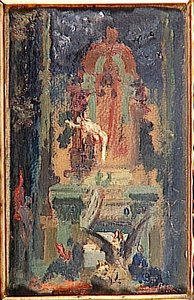
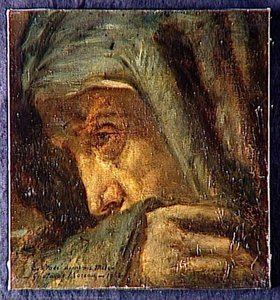
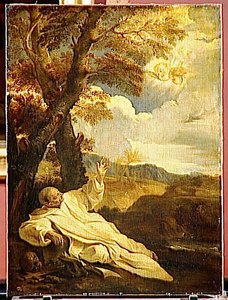
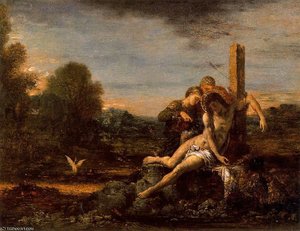
Biografie des Künstlers
**frühes Leben und Ausbildung**
Gustav Moreau, ein französischer Künstler, wurde am 6. April 1826 in Paris geboren. Er erhielt eine traditionelle akademische Ausbildung in der Malerei an der École des Beaux-Arts und zeigte von frühester Kindheit eine Begabung für Zeichnen.**Die Symbolismusbewegung**
Moreaus Werk, das durch allegorische und mythologische Themen geprägt ist, machte ihn zu einem führenden Symbolistenmaler, insbesondere in den 1890er Jahren. Seine Kunst (und der Symbolismus im Allgemeinen) verlor an Beliebtheit, wurde aber seit den 1960er Jahren neu bewertet und Moreau gilt heute als einer der wichtigsten Symbolistenmaler.**Bekannte Werke und Ausstellungen**
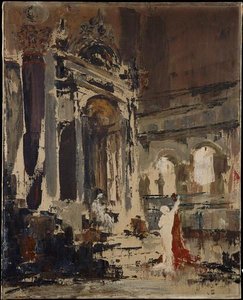
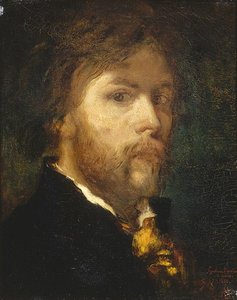
* Salomé im Gefängnis (Gemälde von 'Gustav Moreau') ist ein bemerkenswertes Beispiel für seine Arbeit und zeigt seine Meisterschaft im Symbolismus. * Das Selbstporträt (Gemälde von 'Gustav Moreau') ist eine weitere kraftvolle Darstellung des Künstlers selbst.**Musée Gustave Moreau**
Das Nationalmuseum Gustave Moreau (Musée Gustave Moreau Paris, Frankreich) in Paris ist dem Werk Moreaus gewidmet und beherbergt über 1.200 Gemälde, Aquarelle und Zeichnungen. Das Museum ist ein Zeugnis seines künstlerischen Erbes.**Vermächtnis und Einfluss**
Moreaus Einfluss auf die Symbolismusbewegung ist unbestreitbar. Er lehrte an der École des Beaux-Arts und beeinflusste namhafte Künstler wie Henri Matisse und Georges Rouault. Seine zurückgezogene Art hat seinen Einfluss auf die Kunstwelt nicht gemindert.- Entdecken Sie mehr über das Leben und Werk von Gustav Moreau auf ArtsDot.com
- Erkunden Sie das Nationalmuseum Gustave Moreau und seine beeindruckende Sammlung von Kunstwerken auf Musée Gustave Moreau Paris, Frankreich
- Erfahren Sie mehr über die Symbolismusbewegung und ihre Bedeutung für die Kunstgeschichte auf die Symbolismus-Kunstbewegung
Gustave Moreau
1826 - 1898 , Frankreich
Kurzinfos
- Beeinflusste Künstler:
- Henri Matisse
- Georges Rouault
- Bemerkenswerte Werke:
- Salomé im Gefängnis
- Selbstporträt
- Jupiter und Semele
- Orpheus
- Die Erscheinung
- Geburtsdatum: 6. April 1826
- Geburtsort: Paris, Frankreich
- Künstlerische Einflüsse:
- Eugène Delacroix
- Michelangelo
- Leonardo da Vinci
- Künstlerischer Stil: Symbolismus
- Nationalität: Französisch
- Sterbedatum: 1898
- Vollständiger Name: Gustave Moreau

