

 Vorschau anzeigen
 Versenden
 Teilen
 Details anzeigen

 Herunterladen
 Ähnliche Objekte
 Röntgenaufnahme
 Diashow
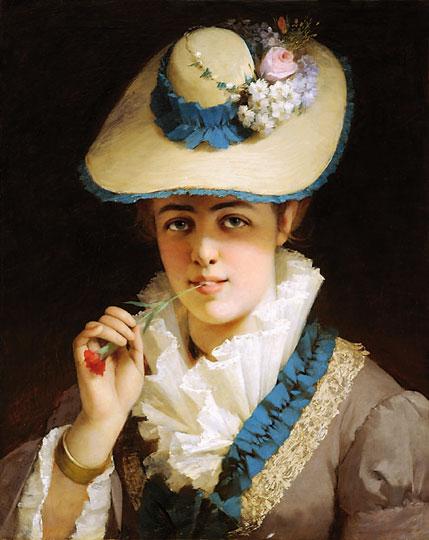
Young Girl with Carnation
 57.0 x 46.0 cm
 Weiterlesen
Handgefertigte Ölreproduktion
Handgemaltes Ölgemälde auf Leinwand in Ihrer Wunschgröße und mit Rahmen, auf Bestellung von unseren Künstlern angefertigt. ( Druck bestellen Bild kaufen)




































Wählen Sie aus unseren vordefinierten Formaten, die den ursprünglichen Proportionen des Kunstwerks entsprechen.

Sie können Ihre eigenen Maße eingeben, um einen bestimmten Rahmen oder Platz auszufüllen. Wenn die gewählte Größe nicht den Proportionen des Originalbildes entspricht, werden wir das Kunstwerk entweder beschneiden oder das Gemälde durch zusätzliche, handgemalte Elemente erweitern. Ein digitales Mockup wird Ihnen zur Genehmigung zugesandt, bevor die Produktion beginnt.
Bitte beachten Sie, dass die Bildschirmvorschau nicht die tatsächliche Beschneidung oder Erweiterung widerspiegelt. Nur das Mockup zeigt die endgültige Komposition exakt an.
Obwohl Sondermaße verfügbar sind, empfehlen wir, eine Größe aus der vordefinierten Liste zu wählen, um die ursprünglichen Proportionen beizubehalten.
Nach der Bestellung wird das ArtsDot.com-Team dem Kunden Anweisungen per E-Mail zusenden und eine Mockup-Vorschau bereitstellen.
Weltweiter Versand () in nur 3 bis 4 Wochen statt der üblichen 5 Wochen. (7 September). Keine Kompromisse bei der Qualität.

Kostenloser weltweiter Expressversand

Hochwertige Leinenleinwand

Umfassender Versicherungsschutz beim Versand

Zollgebühren-Rückerstattungsgarantie

Garantie für exakte Farbtreue

100 Tage Rückgaberecht (nur bei Mängeln)

100% Geld-zurück-Garantie

Mengenrabatt verfügbar
 Die Glasoption ist nur für Größen unter 110 cm verfügbar.

Young Girl with Carnation
Art der Reproduktion
Format der Reproduktion
-


Gesamtpreis
$ 263
Ähnliche Kunstwerke
Über den Künstler
György Vastagh: A Chronicle of Hungarian Life and Portraiture
György Vastagh (1834-1922) stands as a pivotal figure in 19th-century Hungarian art, renowned for his evocative portrayals of aristocratic society alongside intimate glimpses into rural life. Born in Szeged to a shipping administrator with an appreciation for the arts, Vastagh’s early exposure to artistic principles laid the foundation for a career marked by both technical skill and a deep understanding of the human condition. His journey from a young boy sketching landscapes to becoming a court painter reflects not only his personal talent but also the evolving cultural landscape of Hungary during a period of significant social and political change.
Vastagh’s formative years were spent in Vienna, where he honed his artistic abilities at the Academy of Fine Arts. Under the tutelage of influential figures like Carl Rahl and Friedrich von Amerling, he initially focused on portraiture and religiously themed works – a stylistic influence readily apparent in many of his early pieces. These initial studies provided him with a solid technical base and an understanding of classical composition, which would later inform his approach to depicting Hungarian nobility and the everyday lives of its people.
Settling in Kolozsvár and Embracing Genre Painting
Returning to Hungary in 1857, Vastagh established himself in Kolozsvár (now Cluj-Napoca), a vibrant cultural center. He quickly found a collaborative spirit with the local photographer Ferenc Veress, sharing a studio space and forging a friendship that likely influenced his artistic perspective. A turning point in Vastagh’s career came as he transitioned from primarily commissioned portraits to exploring genre scenes depicting rural life. This shift reflected a growing interest in documenting the realities of Hungarian society beyond the confines of the court and aristocracy.
His decision to decline two offers of government scholarships – one from József Eötvös – reveals a commitment to artistic independence, resisting the potential constraints of official patronage. During this period, frequent visits to Vienna allowed him to maintain connections with the Viennese art scene and participate in exhibitions, further expanding his visibility and reputation.
The Court Painter and Budapest’s Artistic Heart
In 1876, Vastagh moved to Budapest, a city rapidly becoming the cultural epicenter of Hungary. Here, he established a portrait studio catering to the aristocratic clientele, securing commissions from prominent figures such as Lajos Kossuth, Emperor Franz Joseph I, and his wife, Elisabeth. This period marked a significant elevation in his career, solidifying his position as one of Hungary’s leading court painters. His portraits captured the dignity and power of these individuals while subtly revealing their personalities through nuanced expressions and carefully chosen attire.
Beyond portraiture, Vastagh contributed significantly to the artistic life of Budapest. In 1883, he undertook a monumental fresco project in the foyer of the Hungarian State Opera, showcasing his mastery of scale and color. He also created altarpieces for churches across Hungary – in Budapest, Szeged, Arad, and Temesvár – demonstrating his versatility and ability to adapt his style to diverse religious contexts.
Legacy and Artistic Family
Vastagh’s influence extended beyond his own artistic output. He played a crucial role in the establishment of the “Magyar Művészek és Műpártolók Egyesülete” (Hungarian Association of Artists and Patrons) in 1894, fostering a sense of community among Hungarian artists and patrons. His dedication to nurturing the next generation is evident in his family – his eldest son, Géza, followed in his footsteps as a painter specializing in animal subjects, while his namesake son, György, pursued a career as a sculptor. His grandchildren, Éva and László, also embraced the artistic profession, continuing the Vastagh legacy of creativity.
György Vastagh’s work offers a rich tapestry of Hungarian life during the 19th century. His portraits provide intimate glimpses into the world of aristocracy, while his genre scenes capture the spirit and traditions of rural Hungary. His enduring appeal lies in his ability to convey both technical brilliance and profound human understanding, cementing his place as one of Hungary’s most celebrated artists.
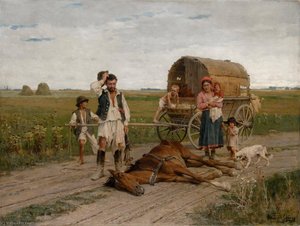
györgy vastagh
1834 - 1922
Kurzinfos
- Artistic Movement Or Style: Portraiture, Genre
- Artists Or Movements Influenced By This Artist:
- Géza Vastagh (son)
- László Vastagh (grandson)
- Artists Who Influenced This Artist:
- Carl Rahl
- Friedrich von Amerling
- Date Of Birth: April 12, 1834
- Date Of Death: February 21, 1922
- Full Name: György Vastagh
- Nationality: Hungarian
- Notable Artworks:
- Spring Feast
- Portrait of a Girl
- Girl with a Jar
- Place Of Birth: Szeged, Hungary