

 Vorschau anzeigen
 Versenden
 Teilen
 Details anzeigen

 Herunterladen
 Ähnliche Objekte
 Röntgenaufnahme
 Diashow
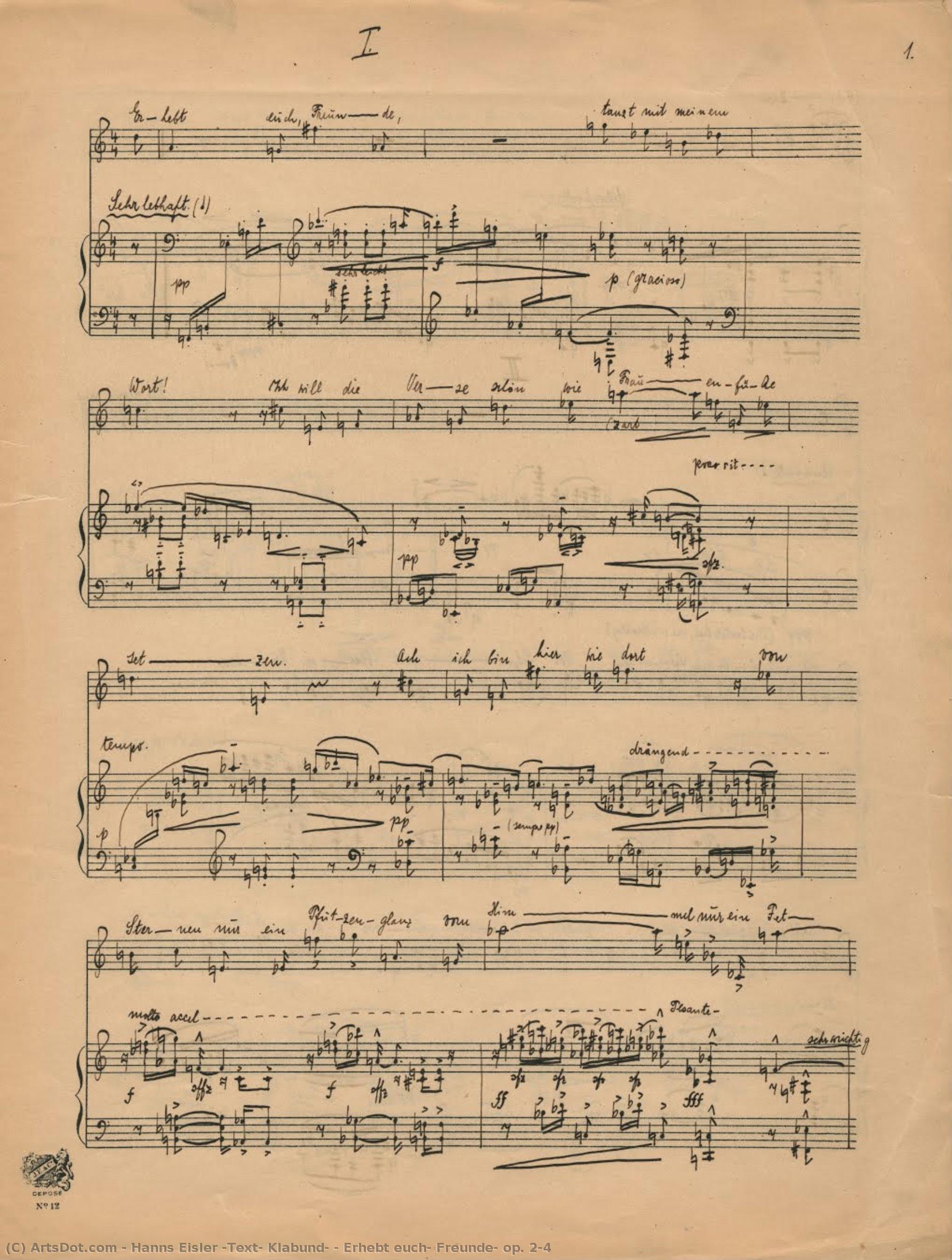
Erhebt euch, Freunde, op. 2/4
 Ink On Paper
- Expressionism
 1922
1922- Modern
 26.0 x 34.0 cm
 Arnold Schönberg Zentrum
 Weiterlesen
Giclée / Kunstdruck
Giclée- oder Leinwanddruck in Museumsqualität mit schneller Produktion und flexiblen Veredelungsoptionen. ( Handgemalte Reproduktion bestellen Bild kaufen)




P118B $10

P118H $10

P118W $10

P438Z $10

P508JH $12

P508YH $12

P805H $10

P805Z $10

P919BZ $10

P919G $10

P919XJ $10

P959ZH $10

P968JZ $12

W106C $8

W218G $10

W218JH $8

W218Y $10

W307PJ $10

W316G $10

W316PJ $8

W316Y $10

W398PJ $8

W4111J $10

W500HY $15

W500JH $15

W692G $12

W849H $8

W940BG $15

W953PJ $8




Wählen Sie aus unseren vordefinierten Formaten, die den ursprünglichen Proportionen des Kunstwerks entsprechen.

Sie können Ihre eigenen Maße eingeben, um ein bestimmtes Format oder einen speziellen Platz einzupassen. Wenn das von Ihnen gewählte Format nicht den Proportionen des Originalbildes entspricht, werden wir das Kunstwerk entweder beschneiden oder das Bild mit einem gespiegelten oder einfarbigen Rand erweitern. Ein digitaler Entwurf wird Ihnen zur Genehmigung zugesandt, bevor die Produktion beginnt.
Bitte beachten Sie, dass die Vorschau auf dem Bildschirm nicht den tatsächlichen Zuschnitt oder die Erweiterung widerspiegelt. Nur der Entwurf zeigt die endgültige Komposition präzise an.
Obwohl Sondermaße verfügbar sind, empfehlen wir die Auswahl eines Maßes aus der vordefinierten Liste, um die ursprünglichen Proportionen zu bewahren.
Weltweiter Versand () innerhalb von 2 Wochen statt der üblichen 4/5 Wochen. (21 August)

Kostenloser weltweiter Expressversand

Hochwertige Leinenleinwand

Umfassender Versicherungsschutz beim Versand

Zollgebühren-Rückerstattungsgarantie

Garantie für exakte Farbtreue

60 Tage Rückgaberecht (nur bei Mängeln)

100% Geld-zurück-Garantie

Mengenrabatt verfügbar
 Die Glasoption ist nur für Größen unter 110 cm verfügbar.

Erhebt euch, Freunde, op. 2/4
Giclée / Kunstdruck
Format der Reproduktion
-


Gesamtpreis
$ 62
Sammlerstück-Beschreibung
A Symphony of Ink and History
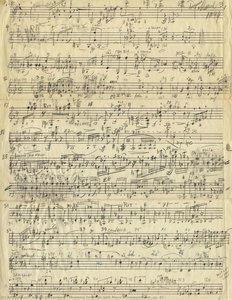
In the delicate, aged fibers of the musical score Erhebt euch, Freunde, op. 2/4, one finds more than mere notation; one encounters a profound dialogue between two titans of twentieth-century modernism. Created in the winter of 1922, this piece serves as a poignant intersection where the lyrical text of Klabund meets the burgeoning musical language of Hanns Eisler. The visual presentation of the score—rendered on paper that has mellowed into a warm, nostalgic tan—evokes the atmosphere of a lost era of European intellectualism. As the eye wanders across the dense, vertical arrangement of black ink, it encounters a rhythmic landscape of clefs, rests, and notes that pulse with the quiet intensity of a composer finding his voice amidst the political and social tremors of post-war Germany.
The aesthetic of this work is defined by its structural elegance and the raw, tactile quality of its medium. The composition is dominated by the meticulous geometry of the musical staff, where every horizontal line acts as a stage for the circular dance of notes. There is a striking contrast between the stark, black precision of the engraving and the organic, weathered texture of the parchment. This interplay creates a sense of depth that belies its two-dimensional nature, inviting the viewer to feel the weight of history held within each measure. The lighting, soft and diffused as if captured in a quiet study, highlights the slight wrinkles and imperfections of the aged paper, lending the piece an authentic, archival soul that resonates with those who appreciate the beauty of antiquity.
The Resonance of Modernist Spirit
To understand this work is to understand the tension between tradition and revolution. During this period, the musical world was grappling with the radical shifts introduced by figures like Arnold Schönberg, whom Eisler famously defended as a true master rather than a mere destroyer of convention. The score itself embodies this duality; while it utilizes the established language of musical notation, the very existence of such a piece in 1922 speaks to a period of intense creative reconfiguration. The symbols on the page are not merely instructions for performance but are artifacts of a movement seeking to create a new material for music—one that could achieve the unity of the classics while embracing the complexities of the modern psyche.
For the discerning collector or interior designer, Erhebt euch, Freunde offers a sophisticated focal point that transcends simple decoration. It brings an air of academic prestige and contemplative calm to any space, whether it be a private library, a contemporary studio, or a refined living area. The piece does not demand attention through loud colors or aggressive forms; instead, it commands respect through its subtle complexity and historical gravity. As a high-quality reproduction, it serves as a window into the heart of the twentieth century, offering an emotional connection to the era of profound musical evolution and providing a timeless element of intellectual elegance to any curated environment.
Ähnliche Kunstwerke
Über den Künstler
Hanns Eisler (Text: Klabund)
Hanns Eisler (1898-1962), a German-Austrian composer, stands as an emblem of artistic defiance and intellectual integrity—a figure whose music continues to resonate with audiences worldwide. Born in Leipzig, saxony, his formative years were marked by familial constraints that spurred him toward self-education in music despite considerable obstacles. This innate musical talent propelled him towards a lifelong pursuit of expressive artistry, shaping his oeuvre into a testament to social conscience and avant-garde innovation.Early Life and Musical Beginnings
Johannes Eisler was born in Leipzig in Saxony, the third child of Rudolf Eisler, a professor of philosophy, and Marie Ida Fischer. His father adhered to atheistic beliefs rooted in jewish descent, while his mother practiced lutheran faith originating from swabian heritage. The family’s relocation to vienna in 1901 exposed him to diverse cultural currents—a pivotal moment that irrevocably influenced his artistic sensibilities. From a young age, Eisler immersed himself in music, nurtured by the encouragement of his parents and fueled by an unwavering passion for creative expression. His musical education commenced with private instruction under arnold schoenberg from 1919 to 1923, establishing him as one of Schoenberg’s earliest disciples to embrace the twelve-tone or serial technique—a revolutionary harmonic approach that profoundly shaped his compositional style and cemented his position at the vanguard of avant-garde music.Musical Education and Influences
The influence of Schoenberg extended beyond mere stylistic imitation; it instilled in Eisler a conceptual framework for confronting musical challenges with intellectual rigor. He diligently studied Schoenberg’s treatises on harmony, mastering the principles of serialism and applying them to his own compositions—a deliberate decision that underscored his commitment to pushing artistic boundaries. Furthermore, Eisler's engagement with socialist youth groups during adolescence instilled in him a deep conviction regarding social justice—a sentiment that permeated his musical endeavors and motivated him to engage with pressing societal issues through his art. His formative experiences solidified his belief that music could serve as a catalyst for transformative change.Collaborations and Notable Works
Eisler’s artistic trajectory gained momentum through his partnership with bertolt brecht, commencing in 1928—a collaboration that yielded iconic theatrical productions reflecting the turbulent spirit of Weimar Germany. Together, they crafted protest songs that captured the zeitgeist of the era—anthems for social reform and expressions of unwavering moral conviction. Their magnum opus, “The Mother,” powerfully portrays the plight of a woman grappling with grief and societal oppression—a poignant narrative underscored by Eisler’s masterful musical orchestration. Similarly, “Schweik in the Second World War” deftly satirizes nazism through humor and irony—demonstrating Eisler's ability to engage audiences on multiple levels. Beyond Brecht, Eisler collaborated extensively with david Weber, crafting lyrical songs that explored themes of love, loss, and human resilience. His compositions for film—particularly “Schweik in the Second World War”—earned him international acclaim while showcasing his versatility in adapting musical styles to cinematic narratives.Legacy
Hanns Eisler’s contribution to music transcends mere stylistic innovation; it embodies a steadfast dedication to artistic integrity amidst turbulent historical circumstances. He endured persecution during the Nazi era, safeguarding his creative vision despite facing censorship and repression—a courageous stance that exemplifies the spirit of resistance against oppressive ideologies. His enduring legacy resides not only in his groundbreaking musical techniques but also in his unwavering advocacy for human rights—a conviction that resonated throughout his life and continues to inspire musicians worldwide. Eisler’s influence extends beyond his own compositions, shaping generations of artists who strive to confront societal injustices through artistic expression. He remains a symbol of intellectual courage and moral fortitude—a figure whose music will forever endure as a testament to the transformative power of art.
Hanns Eisler
1898 - 1962 , Deutschland
Kurzinfos
- Artistic Movement Or Style: Zwölftonmusik
- Artists Or Movements Influenced By This Artist: ['Expressionismus']
- Artists Who Influenced This Artist: ['Arnold Schoenberg']
- Date Of Birth: 6 Juli 1898
- Date Of Death: 6 Sept. 1962
- Full Name: Hanns Eisler
- Nationality: Deutsch-Österreichisch
- Notable Artworks: ['Erhebt euch, Freunde']
- Place Of Birth: Leipzig, Deutschland
Ähnliche Artikel
Harmonies on Canvas: Exploring the Visual Representation of Music in Art History
Explore the fascinating history of music's visual representation in art! From ancient symbolism to modern abstraction, discover how artists have captured sound and emotion on canvas. Expert insights & stunning examples.

Jenseits der Symbolik: Die spirituellen Landschaften der Kunst von Mikalojus Konstantinas Čiurlionis
Entdecken Sie die faszinierende Welt von Mikalojus Konstantinas Čiurlionis! Erfahren Sie mehr über den Pionier der abstrakten Kunst, seine spirituellen Werke und seinen einzigartigen Einfluss auf die moderne Malerei. Jetzt lesen!
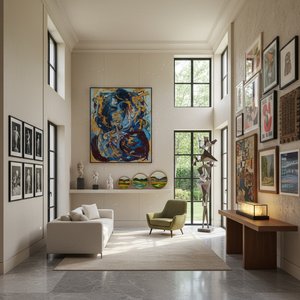
Top 25 Kunstwerke der Biennale Venedig: Meisterwerke für Ihr Zuhause | ArtsDot
Entdecken Sie die 25 bedeutendsten Kunstwerke der Biennale Venedig! Erfahren Sie die Geschichten hinter berühmten Gemälden, Künstlern und Stilen. Hochwertige Kunstdrucke & Reproduktionen für Ihr Zuhause – jetzt auf ArtsDot.com!

