 Vorschau anzeigen
 Versenden
 Teilen
 Details anzeigen

 Herunterladen
 Ähnliche Objekte
 Röntgenaufnahme
 Diashow
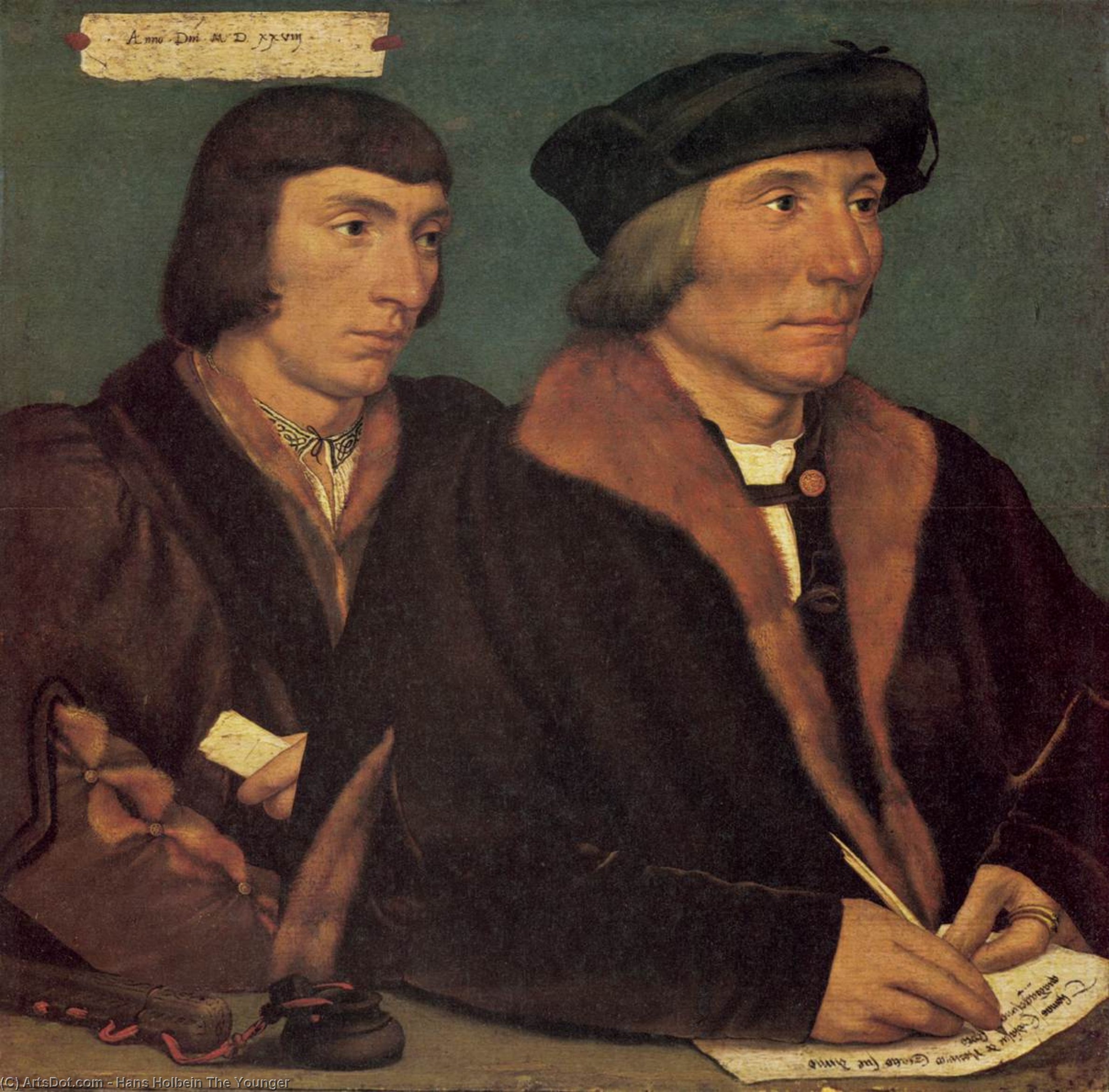
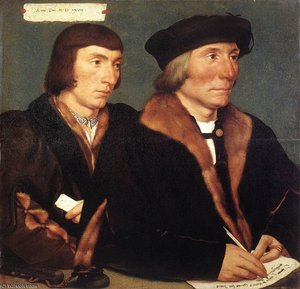
Doppelporträt von Sir Thomas Godsalve und seinem Sohn John


 Weiterlesen
Giclée / Kunstdruck
Giclée- oder Leinwanddruck in Museumsqualität mit schneller Produktion und flexiblen Veredelungsoptionen. ( Handgemalte Reproduktion bestellen Bild kaufen)




P118B $10

P118H $10

P118W $10

P438Z $10

P508JH $12

P508YH $12

P805H $10

P805Z $10

P919BZ $10

P919G $10

P919XJ $10

P959ZH $10

P968JZ $12

W106C $8

W218G $10

W218JH $8

W218Y $10

W307PJ $10

W316G $10

W316PJ $8

W316Y $10

W398PJ $8

W4111J $10

W500HY $15

W500JH $15

W692G $12

W849H $8

W940BG $15

W953PJ $8




Wählen Sie aus unseren vordefinierten Formaten, die den ursprünglichen Proportionen des Kunstwerks entsprechen.

Sie können Ihre eigenen Maße eingeben, um ein bestimmtes Format oder einen speziellen Platz einzupassen. Wenn das von Ihnen gewählte Format nicht den Proportionen des Originalbildes entspricht, werden wir das Kunstwerk entweder beschneiden oder das Bild mit einem gespiegelten oder einfarbigen Rand erweitern. Ein digitaler Entwurf wird Ihnen zur Genehmigung zugesandt, bevor die Produktion beginnt.
Bitte beachten Sie, dass die Vorschau auf dem Bildschirm nicht den tatsächlichen Zuschnitt oder die Erweiterung widerspiegelt. Nur der Entwurf zeigt die endgültige Komposition präzise an.
Obwohl Sondermaße verfügbar sind, empfehlen wir die Auswahl eines Maßes aus der vordefinierten Liste, um die ursprünglichen Proportionen zu bewahren.
Weltweiter Versand () innerhalb von 2 Wochen statt der üblichen 4/5 Wochen. (2 September)

Kostenloser weltweiter Expressversand

Hochwertige Leinenleinwand

Umfassender Versicherungsschutz beim Versand

Zollgebühren-Rückerstattungsgarantie

Garantie für exakte Farbtreue

60 Tage Rückgaberecht (nur bei Mängeln)

100% Geld-zurück-Garantie

Mengenrabatt verfügbar
 Die Glasoption ist nur für Größen unter 110 cm verfügbar.

Doppelporträt von Sir Thomas Godsalve und seinem Sohn John
Giclée / Kunstdruck
Format der Reproduktion
-


Gesamtpreis
$ 62
A Portrait of Status and Lineage: Hans Holbein the Younger’s Double Portrait of Sir Thomas Godsalve and His Son John
This captivating double portrait, created in 1528 by the masterful hand of Hans Holbein the Younger, offers a compelling glimpse into the world of Tudor England. Currently residing at the Gemäldegalerie Alte Meister in Dresden, this oil and tempera on oak panel (35 × 36 cm) is a testament to Holbein’s exceptional skill in capturing not just likeness, but also character and social standing. It stands as one of the most iconic images from the Renaissance period, embodying the ideals of humanist portraiture and reflecting the anxieties surrounding religious reformation.The Subjects: A Father's Legacy
The painting depicts Sir Thomas Godsalve, a prominent Norwich lawyer and notary, alongside his son, John. Sir Thomas, positioned to the left, exudes an air of authority and experience. His gaze is direct, unwavering—a hallmark of Holbein’s approach to portraiture—and conveys a sense of quiet dignity. He wears richly embroidered robes, indicative of his noble status, reflecting the opulent tastes of Tudor aristocracy. John, placed slightly behind him, appears younger and more reserved, suggesting a future unfolding under his father’s guidance. John Godsalve himself became a Member of Parliament and was knighted, demonstrating the family's continued ascent in English society. The composition subtly emphasizes the passing of knowledge and status from one generation to the next—a theme central to Renaissance humanist thought.Northern Renaissance Realism & Technique
Holbein’s style is immediately recognizable for its meticulous detail and unwavering realism – hallmarks of the Northern Renaissance. He wasn't merely painting *what* he saw, but *how* things felt—the texture of fabrics, the subtle play of light on skin, the weight of intellect in a gaze. The artist employed layers of oil and tempera to achieve rich colors and incredibly fine gradations in tone. Notice the precision with which he renders the intricate patterns of their clothing and the delicate details of their hands. The artist’s masterful use of chiaroscuro—the dramatic interplay between light and shadow—creates a palpable sense of depth and dimensionality, drawing the viewer's eye into the scene. The shallow depth of field focuses attention squarely on the figures, enhancing their presence and conveying an impression of solemn contemplation.Symbolism & Intellectual Pursuits
The painting is rich in symbolic elements that speak to the subjects’ lives and values. Books are prominently featured near both men, signifying their intellectual pursuits, legal profession (in Sir Thomas's case), and commitment to learning. These aren’t merely props; they represent a core aspect of their identity within Renaissance society—a reflection of humanist ideals emphasizing education and reason. The dark background serves not as emptiness but as a foil that accentuates the figures and directs our gaze toward their faces and hands. This deliberate framing underscores the importance of contemplation and introspection, mirroring the philosophical concerns of the era.Historical Context: A Pivotal Moment in English History
Created during a period of significant upheaval – the early years of Henry VIII’s reign and the English Reformation – this portrait offers a window into the lives of those navigating these changing times. Holbein, having established himself as a sought-after artist at the English court, was uniquely positioned to document the era's prominent figures. His portraits became visual records of power, status, and intellectual life during this transformative period—a testament to his artistic genius and a lasting symbol of Tudor England’s cultural achievements. The painting captures a moment frozen in time, reflecting both the grandeur of aristocratic patronage and the anxieties surrounding religious reform.For Collectors & Interior Designers
A reproduction of this masterpiece brings a touch of Renaissance elegance and intellectual gravitas to any space. Its muted color palette complements a variety of interior styles, from traditional to contemporary. The painting’s focus on human connection and refined detail makes it a captivating focal point for living rooms, libraries, or studies.- Style: Northern Renaissance Portraiture
- Color Palette: Earth tones – browns, reds, ochres with dark accents.
- Mood: Dignified, contemplative, and refined.
A Life Etched in Detail: The World of Hans Holbein the Younger
Born around 1497 in the vibrant artistic hub of Augsburg, Germany, Hans Holbein the Younger emerged as a defining figure of the Northern Renaissance—a master portraitist whose work continues to resonate with breathtaking realism and psychological depth. His upbringing within an artistically gifted family laid the foundation for his exceptional talent; his father, Michael Holbein, was a respected painter and printmaker who instilled in young Hans a meticulous approach to observation and technique. This early training wasn’t merely about mastering brushstrokes or mixing pigments—it was about learning to *see*, to capture not just likeness but the very essence of a subject. Holbein's initial artistic explorations occurred within his father’s workshop, where he honed his skills before embarking on a journey that would lead him through Switzerland and ultimately to the heart of the EngliÄhnliche Kunstwerke
![Doppelporträt Von Jean De Dinteville Und Georges De Selve (auch Bekannt Als Die Gesandten) [detail] — Hans Holbein Der Jüngere, Northern Renaissance](/media/artworks/images-thumb/bb/ab/bbab7ce77b7dd15d23d21114a63b51a4.jpg)
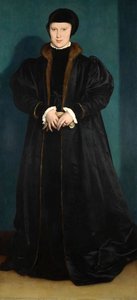
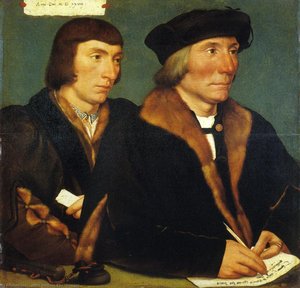
Über den Künstler
frühes Leben und Ausbildung
Hans Holbein der Jüngere, eine bedeutende Figur in der Nordischen Renaissance, wurde 1497 in Augsburg, Deutschland, geboren. Obwohl er oft mit seinem Vater, Hans Holbein dem Älteren, einem renommierten Künstler und Grafiker verwechselt wird, ist Holbeins Werk der Jüngeren eigenständig und herausragend.Künstlerische Karriere
Holbeins künstlerische Karriere begann unter der Anleitung seines Vaters. Später reiste er nach England, wo er Hofmaler für König Heinrich VIII. wurde. Diese Position ermöglichte es ihm, die Essenz der königlichen Familie und des aufkommenden englischen Adels einzufangen. Sein Werk ist durch folgende Merkmale gekennzeichnet:- Außergewöhnliche Realismus: Holbeins Porträts sind für ihre lebensechte Qualität bekannt, wie in Portrait einer unbekannten Dame (Nordische Renaissance).
- Innovative Komposition: Seine Verwendung von Kompositionen ist in Sir William Butts (37 x 46 cm, Nordische Renaissance, Öl auf Holzpanel) erkennbar.
- Studie für das Familienporträt von Thomas More (38 x 52 cm, Nordische Renaissance) zeigt seine Fähigkeit, die Essenz einer Familie einzufangen.
Bekannte Werke und Vermächtnis
Holbeins Werk befindet sich in verschiedenen Museen, darunter die Staatlichen Museen zu Berlin (Deutschland), wo sein unbekannter Gelehrter mit Musikbüchern und Laute (Öl auf Holzpanel) ausgestellt ist. Sein Einfluss auf die Nordische Renaissance ist unbestreitbar, und sein Werk inspiriert bis heute Künstler. Holbein der Jüngere starb 1543, aber sein Vermächtnis lebt durch seine fesselnden Porträts und detaillierten Studien weiter. Weitere Werke von Hans Holbein dem Jüngeren ansehen auf ArtsDot.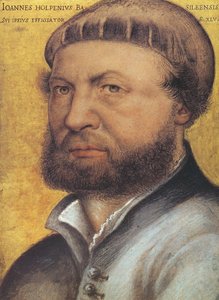
Hans Holbein der Jüngere
1497 - 1543 , Italien
Kurzinfos
- Bemerkenswerte Werke:
- Porträt einer Unbekannten
- Sir William Butts
- Studie zum Familienschloss More
- Die Familie des Bürgermeisters Meyer
- Das Grab Jesu
- Porträt Heinrichs VIII.
- Geburtsdatum: 1497
- Geburtsort: Augsburg, Italien
- Künstlerische Bewegung: Nordische Renaissance
- Künstlerische Einflüsse:
- Hans Holbein der Ältere
- Albrecht Dürer
- Nationalität: Deutsch
- Sterbedatum: 1543
- Vollständiger Name: Hans Holbein der Jüngere
Ähnliche Artikel
Sir Joshua Reynolds: Die 25 Meisterwerke des Porträtmalers | ArtsDot
Entdecken Sie die 25 Meisterwerke von Sir Joshua Reynolds! Erleben Sie Rokoko & Klassizismus durch ikonische Porträts. Hochwertige Reproduktionen für Ihr Interieur auf ArtsDot.com – jetzt entdecken!

Sir Alfred James Munnings: Die 25 Meisterwerke des Pferdebildes | ArtsDot
Entdecken Sie die 25 Meisterwerke von Sir Alfred James Munnings! Erleben Sie seine beeindruckenden Pferdebilder, geprägt vom Impressionismus und Realismus. Hochwertige Kunstdrucke & Reproduktionen auf ArtsDot.com – für elegante Wandkunst & stilvolles Interieurdesign.
Hans Holbein der Jüngere: Realismus, Psychologie und die Meisterschaft des Renaissance-Porträts
Entdecken Sie das Werk von Hans Holbein dem Jüngeren! Erfahren Sie mehr über seinen revolutionären Realismus, die psychologische Tiefe seiner Porträts und seine Meistertechnik. Jetzt lesen!
Thomas Lawrence: Porträtkunst, Macht und Ästhetik der Regency-Gesellschaft
Entdecken Sie das Werk von Thomas Lawrence, dem führenden Porträtmaler der Regency-Zeit. Analysieren Sie Machtinszenierung, innovative Technik und seinen Einfluss auf die britische Kunstgeschichte. Für Kenner und Sammler.
Thomas Barker of Bath: Landscape Painting & Societal Reflection in Early 19th-Century England
Explore the life & work of Thomas Barker of Bath, a key figure in 19th-century English Romanticism. Discover his Parisian success, iconic paintings like 'The Bride of Death', and lasting artistic legacy. Learn more at ArtsDot.