

 Vorschau anzeigen
 Versenden
 Teilen
 Details anzeigen

 Herunterladen
 Ähnliche Objekte
 Röntgenaufnahme
 Diashow
 Statistiken
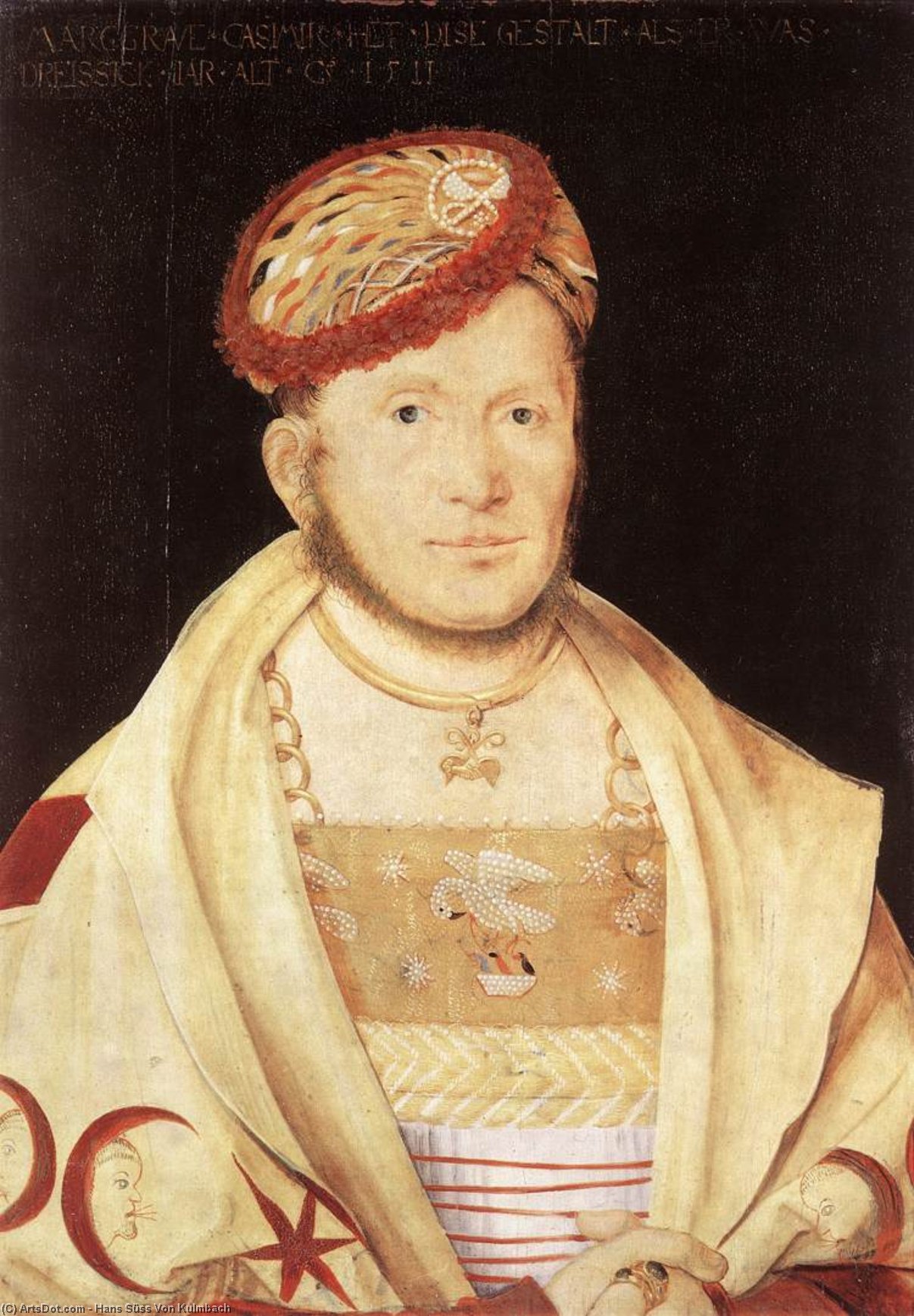
Portrait of the Margrave Casimir of Brandenburg
 Oil
Oil- WallArt
- German Renaissance
 1511
1511- Renaissance
 43.0 x 31.0 cm
 Alte Pinakothek
 Weiterlesen
Handgefertigte Ölreproduktion
Handgemaltes Ölgemälde auf Leinwand in Ihrer Wunschgröße und mit Rahmen, auf Bestellung von unseren Künstlern angefertigt. ( Zu Druck wechseln Zum digitalen Bild wechseln)




P118B $10

P118H $10

P118W $10

P438Z $10

P508JH $12

P508YH $12

P805H $10

P805Z $10

P919BZ $10

P919G $10

P919XJ $10

P959ZH $10

P968JZ $12

W106C $8

W218G $10

W218JH $8

W218Y $10

W307PJ $10

W316G $10

W316PJ $8

W316Y $10

W398PJ $8

W4111J $10

W500HY $15

W500JH $15

W692G $12

W849H $8

W940BG $15

W953PJ $8




Wählen Sie aus unseren vordefinierten Formaten, die den ursprünglichen Proportionen des Kunstwerks entsprechen.

Sie können Ihre eigenen Maße eingeben, um einen bestimmten Rahmen oder Platz auszufüllen. Wenn die gewählte Größe nicht den Proportionen des Originalbildes entspricht, werden wir das Kunstwerk entweder beschneiden oder das Gemälde durch zusätzliche, handgemalte Elemente erweitern. Ein digitales Mockup wird Ihnen zur Genehmigung zugesandt, bevor die Produktion beginnt.
Bitte beachten Sie, dass die Bildschirmvorschau nicht die tatsächliche Beschneidung oder Erweiterung widerspiegelt. Nur das Mockup zeigt die endgültige Komposition exakt an.
Obwohl Sondermaße verfügbar sind, empfehlen wir, eine Größe aus der vordefinierten Liste zu wählen, um die ursprünglichen Proportionen beizubehalten.
Nach der Bestellung wird das ArtsDot.com-Team dem Kunden Anweisungen per E-Mail zusenden und eine Mockup-Vorschau bereitstellen.
Weltweiter Versand () in nur 3 bis 4 Wochen statt der üblichen 5 Wochen. (9 September). Keine Kompromisse bei der Qualität.

Kostenloser weltweiter Expressversand

Hochwertige Leinenleinwand

Umfassender Versicherungsschutz beim Versand

Zollgebühren-Rückerstattungsgarantie

Garantie für exakte Farbtreue

100-Tage-Rückgaberecht (nur bei Mängeln)

100% Geld-zurück-Garantie

Mengenrabatt verfügbar
 Die Glasoption ist nur für Größen unter 110 cm verfügbar.

Portrait of the Margrave Casimir of Brandenburg
Art der Reproduktion
Format der Reproduktion
-


Gesamtpreis
$ 263
A Vision of Renaissance Majesty
In the quiet depths of the early sixteenth century, a period defined by the profound transition from medieval tradition to humanist enlightenment, Hans Süss von Kulmbach captured a moment of singular dignity. His Portrait of the Margrave Casimir of Brandenburg is not merely a likeness of a nobleman; it is an evocative window into the soul of the German Renaissance. The subject, positioned with a commanding presence against a shadowy, atmospheric backdrop, radiates an aura of quiet authority. Clad in a striking red hat adorned with delicate gold trim and draped in a pristine white robe, the Margrave stands as a testament to the era's fascination with status, texture, and the interplay of light. The heavy gold chain encircling his neck serves as a brilliant focal point, catching the imagined light and anchoring the viewer's gaze to the symbols of his high-ranking station.
The technical mastery displayed in this work speaks to Kulmbach’s prestigious lineage. Having honed his craft under the legendary Albrecht Dürer, the artist brings a meticulous, almost surgical precision to the rendering of textures. One can almost feel the weight of the velvet, the crispness of the linen, and the metallic coldness of the gold ornamentation. This mastery of detail is paired with a sophisticated use of chiaroscroll, where the deep, dark background allows the illuminated features of the Margrave—his distinguished beard, his thoughtful eyes, and the subtle contours of his face—to emerge with startling clarity. Such technique creates a three-dimensional presence that breathes life into the canvas, making the portrait feel less like a static image and more like a living encounter.
Symbolism and the Art of Presence
Beyond the surface beauty lies a complex layer of symbolic meaning intended to communicate power and lineage. The choice of red and gold is far from accidental; these are colors of sovereignty, passion, and divine right. By presenting the Margrave with his arms crossed over his chest, Kulmbach employs a pose of resolute stability and self-possession. This gesture, common in high-status portraiture of the 1510s, suggests a man who is both a protector of his lands and a pillar of the social order. The subtle interplay between the soft shadows and the brilliant highlights on his attire creates an emotional resonance that oscillates between intimacy and awe, inviting the observer to contemplate the weight of leadership during a transformative era in European history.
For the discerning collector or interior designer, this masterpiece offers an unparalleled opportunity to introduce a sense of historical gravity and timeless elegance into a curated space. A high-quality reproduction of this work serves as more than just decoration; it acts as a conversation piece that anchors a room with its rich color palette and profound narrative depth. Whether placed in a formal study, a grand hallway, or a contemporary gallery setting, the Portrait of the Margrave Casimir of Brandenburg brings with it the prestige of the German Renaissance, offering an enduring connection to the artistry of the masters.
Ähnliche Kunstwerke



Über den Künstler
Hans von Kulmbach: A Master of Stained Glass and Altarpiece Decoration
Hans von Kulmbach (c. 1480 – December 3, 1522) stands as a pivotal figure in German Renaissance art, primarily recognized for his breathtaking stained glass windows and monumental altar paintings that adorn churches across Bavaria and Kraków. Born around 1480 in Kulmbach, Franconia—a region steeped in medieval tradition yet embracing the burgeoning humanist spirit of the era—Kulmbach’s artistic journey unfolded against a backdrop of significant cultural transformation. His formative years were spent honing his craft under the tutelage of Albrecht Dürer, arguably Germany's most celebrated artist of the time, an association that profoundly shaped his stylistic sensibilities and technical prowess. This apprenticeship instilled in him a meticulous attention to detail and a masterful command of perspective—elements characteristic of Dürer’s groundbreaking achievements.Early Influences: The Seeds of Renaissance Vision
Kulmbach's artistic vision was undeniably influenced by the prevailing aesthetic trends of the Renaissance, particularly those championed by artists like Filippo Brunelleschi and Piero della Francesca. These masters emphasized geometric precision and idealized proportions—concepts that resonated deeply within Kulmbach’s creative process. They rejected the stylized conventions of Gothic art in favor of a more rational and harmonious approach to representation, reflecting a broader intellectual shift toward humanism. Observing Dürer's innovative techniques and compositional strategies undoubtedly broadened Kulmbach’s artistic horizons and solidified his commitment to mastering the principles of classical art.Training Under Dürer: An Artistic Partnership
The collaboration with Dürer proved invaluable, extending beyond mere instruction in painting techniques. Dürer imparted a profound understanding of artistic philosophy—a belief in the power of art to elevate the human spirit and convey moral truths—which would permeate Kulmbach’s subsequent works. Furthermore, Dürer's insistence on meticulous observation and anatomical accuracy honed Kulmbach’s technical skills and instilled in him a disciplined approach to artistic practice. This mentorship fostered not only mastery of technique but also a deep appreciation for the ethical dimensions of artmaking—a legacy that would endure throughout Kulmbach’s career.Establishing His Workshop: Nuremberg's Artistic Crucible
Around 1505, Kulmbach established his workshop in Nuremberg, attracting talented assistants and fostering a vibrant artistic environment. This period witnessed a prolific output of commissions, cementing his reputation as one of the foremost artists of his generation. Nuremberg’s burgeoning merchant class—particularly Hans Boner—provided Kulmbach with crucial patronage and stimulated demand for elaborate artworks reflecting humanist ideals. The workshop became a hub of innovation, experimenting with new materials and techniques while upholding the highest standards of craftsmanship—a testament to Kulmbach's leadership and artistic vision.Notable Achievements: Stained Glass Windows – A Legacy of Light and Color
Kulmbach’s fame rests largely upon his extraordinary stained glass windows—a testament to his unparalleled skill in manipulating color and light. He achieved particular renown for the Maximilian Stained Glass at St. Sebald Cathedral in Nuremberg, a monumental undertaking that showcased his mastery of compositional design and chromatic harmony. This ambitious project involved painstaking planning and execution, reflecting Kulmbach’s dedication to artistic excellence. The resulting windows—featuring vibrant hues and intricate geometric patterns—transformed the cathedral's interior into an immersive experience of divine beauty. Similarly impressive were the Welser Stained Glass at St. Lorenz Church and the Nikolaus Altar at St. Lorenz Kirche—each window depicting biblical narratives with exquisite detail and vibrant hues. These windows weren’t merely decorative; they served as conduits for spiritual contemplation, reflecting the humanist preoccupation with moral virtue and aesthetic harmony.- The Maximilian Stained Glass: This ambitious project involved painstaking planning and execution, reflecting Kulmbach’s dedication to artistic excellence.
- St Lorenz Windows: The Welser Stained Glass at St Lorenz Church exemplifies Kulmbach’s ability to create impactful visual narratives.
The Kraków Altarpiece – A Collaborative Triumph
Perhaps Kulmbach's most celebrated achievement was the Kraków Altarpiece, a collaborative effort undertaken alongside Johann Georg Andreas Stein—a pioneering piano maker who brought his expertise in craftsmanship to bear on the project. This monumental artwork, housed in St. Catherine’s Church in Kraków, represents a pinnacle of Renaissance art and embodies the spirit of humanist patronage. The altarpiece's intricate iconography—featuring depictions of Saint Catherine and Saint John—demonstrates Kulmbach’s meticulous attention to detail and his ability to convey profound theological themes. Stein’s contribution ensured that the altar was not only aesthetically stunning but also structurally sound, a remarkable feat considering the scale of the undertaking.Historical Significance
Hans von Kulmbach died prematurely in Nuremberg in 1522, leaving behind an enduring legacy as one of Germany’s most influential artists of the Renaissance. His stylistic innovations—particularly his masterful use of stained glass and altar painting—established him as a leader among his contemporaries and continue to inspire admiration today. More importantly, Kulmbach's work embodies the humanist ideals that characterized the era—a belief in human reason and artistic creativity as instruments for spiritual enrichment. He remains an exemplar of artistic excellence and a symbol of Nuremberg’s cultural heritage.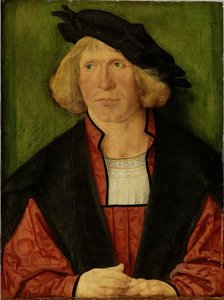
Hans von Kulmbach
1480 - 1522 , Deutschland
Kurzinfos
- Artistic Movement Or Style: Renaissance Kunst
- Artists Who Influenced This Artist: ['Albrecht Dürer']
- Date Of Birth: Um 1480
- Full Name: Hans Süß von Kulmbach
- Nationality: Deutsch
- Notable Artworks:
- Nikolaus Altar
- Maximilian Stained Glass
- Dreikönigsaltar
- Place Of Birth: Kulmbach, Deutschland
Ähnliche Artikel
Golden Glow: How to Use Metallic Gold Artworks to Elevate Your Home Decor with Timeless Luxury
Discover how to elevate your home with the timeless elegance of metallic gold artworks. From sculptural metal pieces to gilded oil paintings, learn expert interior design tips for integrating luxurious gold accents into your space with sophistication and grace.
The Allure of Gold in Art History: Symbolism, Technique & Cultural Significance
Explore the rich history of gold in art! Discover symbolism, techniques & cultural significance from ancient civilizations to Klimt's masterpieces. Expert insights for collectors at ArtsDot.

Deutsche Expressionismus Meisterwerke: Die 10 wichtigsten Kunstwerke für Ihr Zuhause
Entdecken Sie die 10 bedeutendsten Werke des Deutschen Expressionismus! Kirchner, Nolde & Co. – ihre Geschichten, Techniken und zeitlose Schönheit. Hochwertige Kunstdrucke auf ArtsDot.com kaufen und Ihr Zuhause mit emotionaler Kunst bereichern. Jetzt entdecken!

Crimson Threads of Narrative: Exploring Symbolism & Representation in Artworks Featuring the Red Dress
Explore the rich symbolism of the red dress in art history! From ancient power displays to iconic portraits like Cézanne’s 'Madame Cezanne', discover the cultural and artistic significance behind this captivating color. Expert analysis & insights.

Goldene Meisterwerke: Die Top 10 berühmtesten Gemälde mit Blattgold – ArtsDot
Entdecken Sie die Top 10 Gemälde, die von Blattgold verzaubern! Von Klimt bis zur Renaissance – erfahren Sie die Geschichten hinter ikonischen Kunstwerke & lassen Sie sich für Ihre Wohnraumgestaltung inspirieren. Hochwertige Reproduktionen auf ArtsDot.com.