

 Vorschau anzeigen
 Versenden
 Teilen
 Details anzeigen

 Herunterladen
 Ähnliche Objekte
 Röntgenaufnahme
 Diashow
 Statistiken
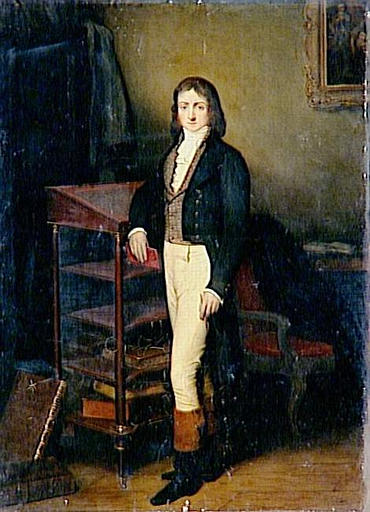
PORTRAIT DE JEUNE HOMME


 Weiterlesen
Erwerben Sie ein hochauflösendes, optimiertes digitales Bild, das der Online-Vorschau weit überlegen ist.
Jede Datei wird von unseren hauseigenen Spezialisten mit modernsten Werkzeugen und fachmännischer manueller Retusche sorgfältig vorbereitet. Wir stellen sicher, dass jedes Bild eine außergewöhnliche Klarheit, präzise Farbgenauigkeit und feinste Details aufweist.
Die endgültige Datei wird innerhalb von 72 Stunden per E-Mail zugestellt und ist für den sofortigen Einsatz in professionellen, redaktionellen und Druckumgebungen optimiert. Es handelt sich um dieselbe Qualität, der führende Designstudios, Verlage und Galerien vertrauen.
Digitales Bild
Laden Sie eine hochauflösende Datei für die persönliche Präsentation, den Druck und kreative Projekte herunter. ( Zu Druck wechseln Handgemalte Reproduktion bestellen)
In jeder Bestellung digitaler Bilder enthalten
Professionelle digitale Bereitstellung, garantiert
Wenn Sie sich für ArtsDot.com entscheiden, erhalten Sie nicht nur ein Bild – Sie erhalten ein professionell aufbereitetes digitales Kunstwerk, das mit höchster Präzision erstellt und durch eine Zufriedenheitsgarantie abgesichert wird. Hier ist alles, was automatisch mit Ihrer Bestellung geliefert wird:

Schnelle E-Mail-Zustellung
Ihre hochauflösende digitale Bilddatei wird Ihnen innerhalb von 72 Stunden nach der Bestellung per E-Mail zugestellt – bereit zur sofortigen Verwendung.

KI-optimierte digitale Datei
Ihre Kunstwerke werden professionell mithilfe fortschrittlicher KI-Tools und manueller Bearbeitung optimiert, um maximale Detailtreue, Klarheit und Farbgenauigkeit zu gewährleisten.

Lebenslanger kostenloser Neudruckservice
Datei versehentlich gelöscht oder verloren? Keine Sorge – wir senden sie Ihnen jederzeit kostenlos erneut zu.

Keine Einfuhrgebühren – jemals
Genießen Sie Ihr Kunstwerk sofort ohne Zollgebühren, Einfuhrabgaben oder Versandkosten – digitale Downloads sind immer steuerfrei.

Garantierte Farbtreue
Wir garantieren, dass Ihr digitales Bild mithilfe professioneller Werkzeuge und Farbmanagement die Originalfarben so präzise wie möglich wiedergibt.

100-Tage-Zufriedenheitsgarantie
Wenn Sie mit Ihrem digitalen Bild nicht zufrieden sind, werden wir es überarbeiten oder 100% innerhalb von 100 Tagen erstatten – ohne Wenn und Aber.

100% Geld-zurück-Garantie
Nicht zufrieden? Erhalten Sie innerhalb von 100 Tagen nach Erhalt Ihrer digitalen Datei eine vollständige Rückerstattung – ohne Wenn und Aber.

Rabatte bei Großbestellungen
3 Bilder kaufen, 10% sparen – 5 Bilder kaufen, 15% sparen – Ab 10 Bildern 20% sparen. Ideal für kreative Projekte, Galerien und Agenturen.
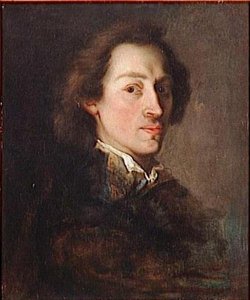
A Glimpse into Contemplation: The Allure of Portrait de Jeune Homme
To stand before this portrait is to step into a moment suspended in time—a quiet chamber where thought seems more palpable than the dust motes dancing in the soft light. Henry Scheffer’s Portrait de Jeune Homme captures not merely a likeness, but an entire state of being: one of profound, introspective contemplation. The young man gazes outward, yet his eyes seem fixed on some distant horizon visible only to him. It is a study in quiet dignity, rendered with the masterful touch of an artist navigating the delicate transition between the fervent emotion of Romanticism and the emerging clarity of modern vision.
Mastery of Light and Shadow: Technical Brilliance
Scheffer’s technique here speaks volumes about his skill as an observer. The painting is executed in oil on canvas, allowing for a rich interplay of texture that rewards close inspection. Notice how the light, seemingly entering from an unseen window to the left, does not illuminate uniformly but rather caresses the contours of the subject's face and hands. This soft, diffused illumination creates subtle gradations of shadow across the muted palette of browns, grays, and deep blues. The brushwork itself is visible—a testament to his hand—offering a slightly loose handling that prevents the portrait from feeling overly academic. Instead, it breathes with an organic vitality, suggesting the very act of painting in progress.
The Language of Objects: Symbolism and Intellect
The surrounding elements are not mere props; they are carefully chosen signifiers. The inclusion of books resting on nearby shelves and perhaps a small mirror suggests a life steeped in intellectual pursuit and self-examination. These objects anchor the sitter within an environment conducive to deep thought, inviting the viewer to ponder the nature of knowledge and self-reflection. The composition balances the organic curves of the figure’s hair and drapery against the more rigid, geometric forms of the furniture, creating a visual tension that mirrors the internal dialogue suggested by the subject's thoughtful repose.
Historical Echoes: Bridging Eras in Art
Henry Scheffer himself stands as an artist bridging epochs. His career saw him move from the grand emotional sweep of Romanticism toward the observational precision that would characterize later movements. This portrait embodies that pivotal moment—it possesses the psychological depth and narrative weight associated with Romantic ideals, yet it grounds itself in a tangible realism. For the modern collector or designer, this piece offers an unparalleled connection to 19th-century European artistic currents, providing an atmosphere of cultured melancholy perfect for a distinguished study or drawing-room.
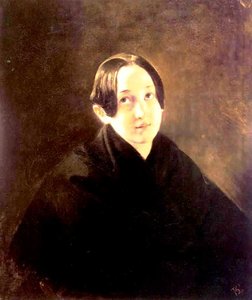
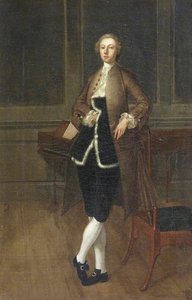
Ähnliche Kunstwerke
Biografie des Künstlers
The Soul of Romanticism: The Life and Legacy of Henry Scheffer
In the vibrant, turbulent landscape of nineteenth-century European art, few figures embody the transition from the fervent idealism of Romanticism to the burgeoning clarity of modern vision as gracefully as Henry Scheffer. Born Hendrik Scheffer in The Hague in 1798, this Dutch master spent much of his life in France, where he became known as Henri Scheffer. His journey was one of profound connection, not only to the shifting tides of art history but to a lineage of creative brilliance. As the younger brother of the celebrated painter Ary Scheffer and the grandson of Arie Lamme, Henry was immersed in an environment where the brush and canvas were the primary languages of expression. This familial heritage provided him with more than just technical foundations; it instilled a deep-seated understanding of compositional balance and the psychological weight that a single stroke can carry.
Scheffer’s artistic formation was marked by rigorous academic discipline, beginning at the Academy for Industrial Design in Eindhoven and progressing to the prestigious “Vrije Academie” Art College in The Hague. Under the mentorship of Pierre-Narcisse Guérin, a teacher renowned for championing expressive painting, Scheffer learned to navigate the delicate interplay between structure and emotion. This training allowed him to master the dramatic aesthetic that would define his career—a style characterized by intense emotionality, vivid color palettes, and dynamic brushwork. His work often sought to capture the very essence of a moment, whether through the monumental scale of historical narratives or the quiet, introspective depths of a portrait.
A Master of Drama and Introspection
The oeuvre of Henry Scheffer is a testament to his ability to breathe life into both the grand stage of history and the intimate corners of the human psyche. He was particularly adept at depicting biblical narratives and historical milestones, using chiaroscuro to create a sense of theatrical tension. His masterpiece, “The Arrest of Charlotte Corday,” remains one of his most arresting achievements. In this work, the chaotic energy of the French Revolution is palpable; through a masterful use of impasto technique, Scheffer captures the frantic movement and the heavy atmosphere of a pivotal historical tragedy. This ability to render history not merely as a record of events, but as a visceral experience, cemented his reputation among the luminaries of his era.
Yet, beyond the sweeping drama of his historical canvases, Scheffer possessed a remarkable sensitivity for portraiture and genre painting. In works such as “Portrait de Jeune Homme,” the viewer is invited into a state of profound contemplation. Here, the artist moves away from the external chaos of revolution to explore the internal landscape of the subject. The soft, diffused light that caresses the sitter’s features suggests a moment suspended in time, where thought becomes as tangible as the dust motes dancing in a sunbeam. Through his portraits, Scheffer demonstrated that greatness could be found in the subtle gradations of shadow and the quiet dignity of a single, searching gaze.
Historical Significance and Artistic Transition
While his work was celebrated by many, Scheffer’s career also navigated the sharp critiques of contemporary literary giants like Charles Baudelaire and Théophile Gautier. This tension between traditional Romanticism and the emerging modern sensibilities reflects the very era in which he lived. He stood at a crossroads, bridging the gap between the grand, emotive traditions of the past and the nascent explorations of what would eventually become Impressionism. His technical brilliance—seen in his ability to manipulate light and texture—provided a foundation upon which future generations could build.
The enduring legacy of Henry Scheffer is found in his versatility and his commitment to the emotional truth of his subjects. His contributions to the art world include:
- Technical Innovation: The masterful use of impasto and chiaroscuro to evoke atmosphere and movement.
- Historical Preservation: Capturing the spirit of the French Revolution and significant historical figures like the Marquis de Lafayette.
- Psychological Depth: Elevating portraiture from mere likeness to a study of human introspection and intellect.
- Artistic Lineage: Serving as a pivotal link in the evolution of European painting, connecting the academic traditions of Guérin to the modern era.
Though he passed away in Paris in 1862, Scheffer’s influence remains etched in the canvases that continue to captivate audiences. He remains a painter of transitions, an artist who could command the roar of a battlefield and the silence of a library with equal, breathtaking mastery.
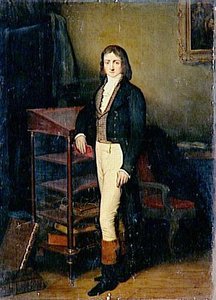
henry scheffer
1798 - 1862
Kurzinfos
- Artistic Movement Or Style: Romanticism
- Artists Or Movements Influenced By This Artist: ['Romanticism']
- Artists Who Influenced This Artist: ['Pierre-Narcisse Guérin']
- Date Of Birth: September 25, 1798
- Date Of Death: March 15, 1862
- Full Name: Hendrik Scheffer
- Nationality: Dutch
- Notable Artworks:
- L’arrestation de Charlotte Corday
- Joan of Arc entering Orléans
- Place Of Birth: The Hague, Netherlands