


 In echtem Maßstab anzeigen
 Versenden als Grußkarte
 Teilen
 Details anzeigen

 Herunterladen
 Ähnliche Objekte
 Röntgenaufnahme
 Diashow
 Besucherstatistiken
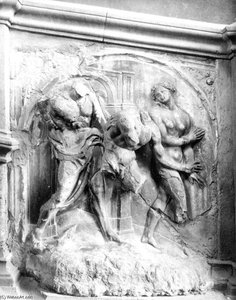
Soldiers Burying their Dead


 Mehr anzeigen
Erwerben Sie ein hochauflösendes, optimiertes digitales Bild, das der Online-Vorschau weit überlegen ist.
Jede Datei wird von unseren hauseigenen Spezialisten mit modernsten Werkzeugen und fachmännischer manueller Retusche sorgfältig vorbereitet. Wir stellen sicher, dass jedes Bild eine außergewöhnliche Klarheit, präzise Farbgenauigkeit und feinste Details aufweist.
Die endgültige Datei wird innerhalb von 72 Stunden per E-Mail zugestellt und ist für den sofortigen Einsatz in professionellen, redaktionellen und Druckumgebungen optimiert. Es handelt sich um dieselbe Qualität, der führende Designstudios, Verlage und Galerien vertrauen.
Digitales Bild
Laden Sie eine hochauflösende Datei für die persönliche Präsentation, den Druck und kreative Projekte herunter. ( Zum Druck wechseln Handgemalte Reproduktion kaufen)
In jeder Bestellung digitaler Bilder enthalten
Professionelle digitale Bereitstellung, garantiert
Wenn Sie sich für ArtsDot.com entscheiden, erhalten Sie nicht nur ein Bild – Sie erhalten ein professionell aufbereitetes digitales Kunstwerk, das mit höchster Präzision erstellt und durch eine Zufriedenheitsgarantie abgesichert wird. Hier ist alles, was automatisch mit Ihrer Bestellung geliefert wird:

Schnelle E-Mail-Zustellung
Ihre hochauflösende digitale Bilddatei wird Ihnen innerhalb von 72 Stunden nach der Bestellung per E-Mail zugestellt – bereit zur sofortigen Verwendung.

KI-optimierte digitale Datei
Ihre Kunstwerke werden professionell mithilfe fortschrittlicher KI-Tools und manueller Bearbeitung optimiert, um maximale Detailtreue, Klarheit und Farbgenauigkeit zu gewährleisten.

Kostenloser lebenslanger Neudruckservice
Datei versehentlich gelöscht oder verloren? Keine Sorge – wir senden sie Ihnen jederzeit kostenlos erneut zu.

Keine Einfuhrgebühren – jemals
Genießen Sie Ihr Kunstwerk sofort ohne Zollgebühren, Einfuhrabgaben oder Versandkosten – digitale Downloads sind immer steuerfrei.

Garantierte Farbtreue
Wir garantieren, dass Ihr digitales Bild mithilfe professioneller Werkzeuge und Farbmanagement die Originalfarben so präzise wie möglich wiedergibt.

100-Tage-Zufriedenheitsgarantie
Sollten Sie mit Ihrem digitalen Bild nicht zufrieden sein, werden wir es überarbeiten oder 100% innerhalb von 100 Tagen erstatten – ohne Wenn und Aber.

100% Geld-zurück-Garantie
Nicht zufrieden? Erhalten Sie innerhalb von 100 Tagen nach Erhalt Ihrer digitalen Datei eine vollständige Rückerstattung – ohne Wenn und Aber.

Rabatte bei Großbestellungen
3 Bilder kaufen, 10% sparen – 5 Bilder kaufen, 15% sparen – Ab 10 Bildern 20% sparen. Ideal für kreative Projekte, Galerien und Agenturen.
Ähnliche Kunstwerke
![[geschnitzte Steinfigur, Klosterquadrat, Uxmal] — Octavio Medellín, Mexican Abstract Sculpture](/media/artworks/images-thumb/cd/72/cd72ede773e8f67633d88d21707b2444.jpg)
![[relief Carving, Mayan Ruins, Chichen Itza] — Octavio Medellín, Other](/media/artworks/images-thumb/ae/af/aeaf0973d6fcf2dc314ffa5073a98171.jpg)
Künstlerbiografie
Herman Wilhelm Bissen: Sculptor of Dignity and Remembrance
Herman Wilhelm Bissen (1798-1868) stands as a cornerstone of Danish sculpture during the Romantic and Neoclassicism eras, leaving an indelible mark on the artistic landscape of his time. Born in Flensburg, Schleswig, he descended from a family rooted in farming traditions—his father, Christian Gottlieb Wilhelm Bissen, was a respected landowner—and received a rigorous education at the Royal Danish Academy of Fine Arts in Copenhagen, shaping him into a disciplined artist with an unwavering dedication to craft. From 1824 onwards, Bissen embarked on a transformative journey fueled by a prestigious travel scholarship, propelling him to Rome where he spent over ten years immersed in the artistic fervor of the Italian Renaissance. This formative period witnessed his stylistic evolution away from Romantic idealism towards the elegant precision and idealized forms characteristic of Neoclassicism—a profound influence stemming directly from the tutelage of Bertel Thorvaldsen, Denmark’s foremost sculptor of the era. Thorvaldsen instilled in Bissen a commitment to classical ideals and anatomical accuracy, shaping his artistic vision for decades to come. The encounter with Thorvaldsen proved pivotal, establishing a stylistic trajectory that would define Bissen's entire oeuvre. Returning to Copenhagen in 1834, Bissen ascended to the professorship at the Academy following Thorvaldsen’s passing—a testament to his burgeoning reputation and scholarly prowess. His tenure as Director of the Academy from 1850-53 solidified his position as a leading figure in Danish artistic education, fostering generations of sculptors and shaping the future direction of Danish art. During this period, he championed innovation while upholding traditional values, ensuring that the Academy remained at the forefront of artistic development. Beyond academia, Bissen undertook significant public commissions, crafting monumental sculptures that honored national pride and commemorated pivotal moments in Danish history. Notably, the colossal ‘Soldiers Burying their Dead’ (1849), a poignant stone relief commemorating fallen soldiers during the Schleswig War, exemplifies his masterful realism and emotional depth—a powerful statement reflecting the anxieties of the time and embodying the spirit of Romanticism's preoccupation with mortality and heroism. Bissen’s artistic output spanned diverse projects, ranging from intimate portraits to grand public monuments. Among his most celebrated works are ‘Venus Tying up her Hair,’ a graceful depiction of mythological beauty that showcases Bissen’s mastery of sculptural form; ‘The Merchant and Politician Alfred Hage,’ a dignified bust capturing the likeness of a prominent figure in Danish society; and, of course, the monumental Isted Lion (1862), erected on Flensburg Cathedral Square to commemorate victory in the Battle of Idstedt—a symbol of Danish resilience and artistic achievement. This lion stands as a testament to Bissen’s ability to translate historical narratives into enduring sculptural representations. Furthermore, he created sculptures honoring Frederik VII., King of Denmark, demonstrating his commitment to commemorating royal figures and upholding national traditions. His legacy extends beyond individual artworks; Bissen profoundly influenced the training of Danish sculptors for decades after his death. He established a rigorous curriculum at the Academy that emphasized anatomical accuracy and classical principles—values that would continue to shape the artistic sensibilities of subsequent generations. Herman Wilhelm Bissen died peacefully in 1868 from pneumonia, leaving behind a rich artistic legacy that continues to inspire admiration for its beauty, craftsmanship, and profound engagement with the spirit of his time – cementing his place as one of Denmark’s most influential sculptors.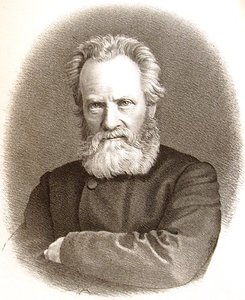
hermann wilhelm bissen
1798 - 1868 , Dänemark
Kurzprofil
- Artistic Movement Or Style: Neoklassizismus & Realismus
- Artists Who Influenced This Artist: ['Bertel Thorvaldsen']
- Date Of Birth: 13. Oktober 1798
- Date Of Death: 10. März 1868
- Full Name: Herman Wilhelm Bissen
- Nationality: Dänisch
- Notable Artworks:
- Soldiers Burying their Dead
- Venus Tying up her Hair
- Bust of Alfred Hage
- Isted Löwe
- Adam Oehlenschläger
- Place Of Birth: Flensburg, Deutschland