 Vorschau anzeigen
 Versenden
 Teilen
 Details anzeigen

 Herunterladen
 Ähnliche Objekte
 Röntgenaufnahme
 Diashow
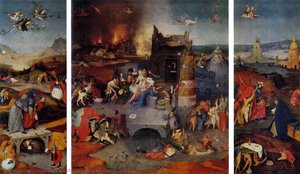
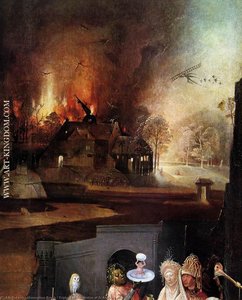
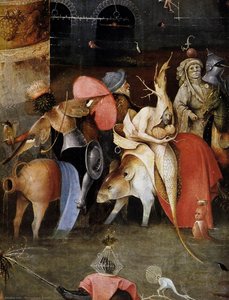
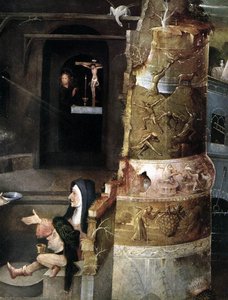
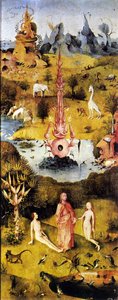
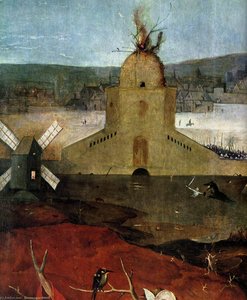
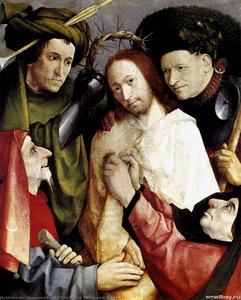
Triptych der Versuchung des Heiligen Antonius (Detail) (33)


 Weiterlesen
Handgefertigte Ölreproduktion
Handgemaltes Ölgemälde auf Leinwand in Ihrer Wunschgröße und mit Rahmen, auf Bestellung von unseren Künstlern angefertigt. ( Druck bestellen Bild kaufen)




P118B $10

P118H $10

P118W $10

P438Z $10

P508JH $12

P508YH $12

P805H $10

P805Z $10

P919BZ $10

P919G $10

P919XJ $10

P959ZH $10

P968JZ $12

W106C $8

W218G $10

W218JH $8

W218Y $10

W307PJ $10

W316G $10

W316PJ $8

W316Y $10

W398PJ $8

W4111J $10

W500HY $15

W500JH $15

W692G $12

W849H $8

W940BG $15

W953PJ $8




Wählen Sie aus unseren vordefinierten Formaten, die den ursprünglichen Proportionen des Kunstwerks entsprechen.

Sie können Ihre eigenen Maße eingeben, um einen bestimmten Rahmen oder Platz auszufüllen. Wenn die gewählte Größe nicht den Proportionen des Originalbildes entspricht, werden wir das Kunstwerk entweder beschneiden oder das Gemälde durch zusätzliche, handgemalte Elemente erweitern. Ein digitales Mockup wird Ihnen zur Genehmigung zugesandt, bevor die Produktion beginnt.
Bitte beachten Sie, dass die Bildschirmvorschau nicht die tatsächliche Beschneidung oder Erweiterung widerspiegelt. Nur das Mockup zeigt die endgültige Komposition exakt an.
Obwohl Sondermaße verfügbar sind, empfehlen wir, eine Größe aus der vordefinierten Liste zu wählen, um die ursprünglichen Proportionen beizubehalten.
Nach der Bestellung wird das ArtsDot.com-Team dem Kunden Anweisungen per E-Mail zusenden und eine Mockup-Vorschau bereitstellen.
Weltweiter Versand () in nur 3 bis 4 Wochen statt der üblichen 5 Wochen. (3 September). Keine Kompromisse bei der Qualität.

Kostenloser weltweiter Expressversand

Hochwertige Leinenleinwand

Umfassender Versicherungsschutz beim Versand

Zollgebühren-Rückerstattungsgarantie

Garantie für exakte Farbtreue

60 Tage Rückgaberecht (nur bei Mängeln)

100% Geld-zurück-Garantie

Mengenrabatt verfügbar
 Die Glasoption ist nur für Größen unter 110 cm verfügbar.

Triptych der Versuchung des Heiligen Antonius (Detail) (33)
Art der Reproduktion
Format der Reproduktion
-


Gesamtpreis
$ 263
Das Mystische Spiel der Versuchung: Ein Detail aus Boschs Triptychon
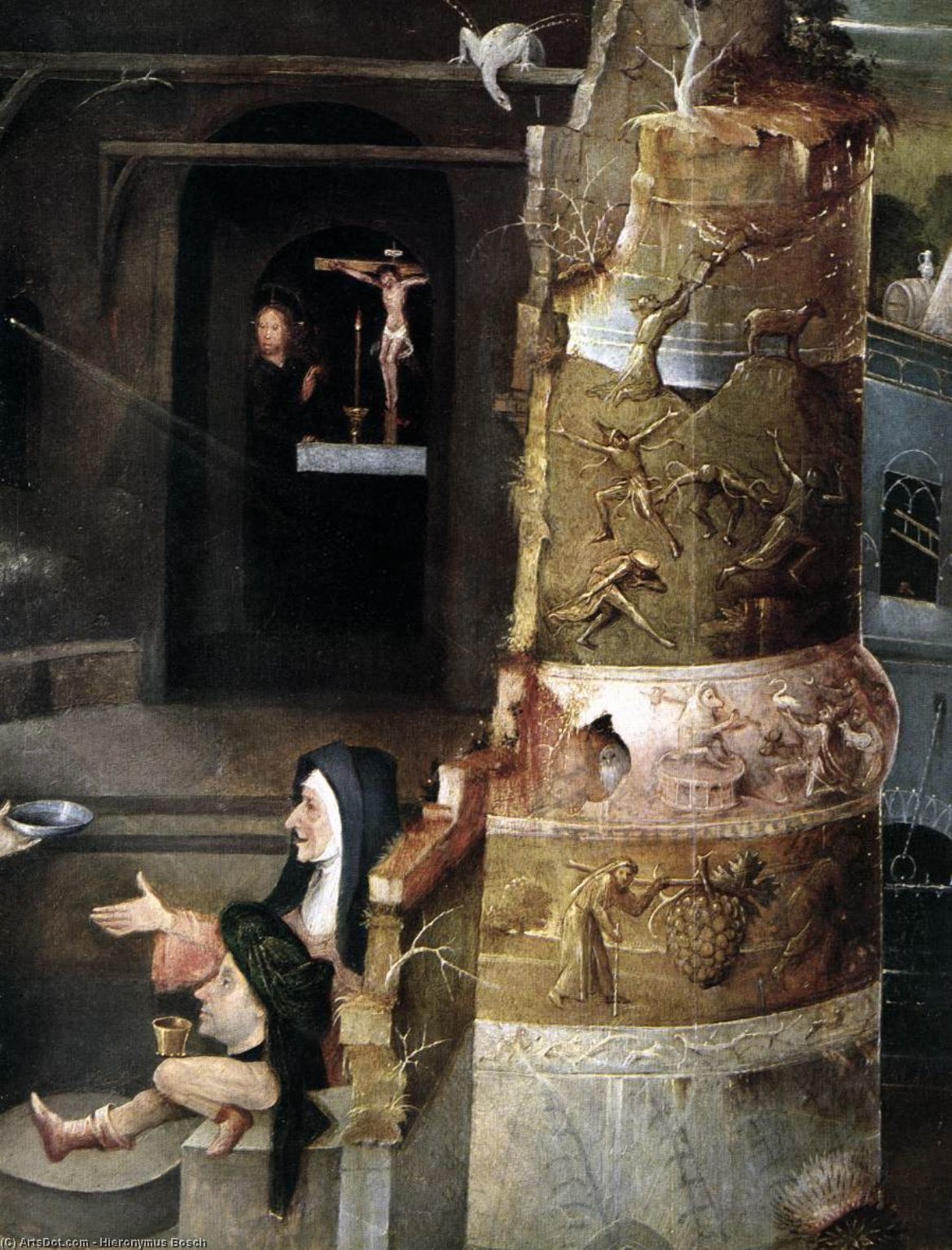
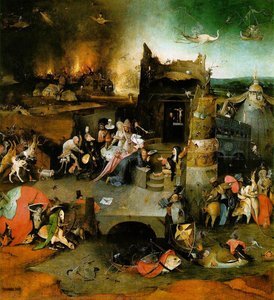
Hieronymus Bosch’s “Triptych of Temptation of St Anthony” – specifically this captivating detail – is not merely a painting; it's an immersion into a world teeming with anxieties, desires, and the unsettling beauty of the late Middle Ages. Painted around 1505 in his workshop in ’s-Hertogenbosch, Bosch’s work remains one of art history’s most enduring enigmas, a testament to his singular vision and profound understanding of human psychology. This particular section offers a glimpse into the heart of this complex narrative – a man seated on the ground, seemingly lost in contemplation, surrounded by a chaotic yet strangely ordered landscape.
The figure at the center is immediately arresting. His posture suggests weariness, perhaps even despair, while his hand rests upon a cup—a potent symbol of earthly pleasures and temptations. Notice the meticulous detail in his clothing; the heavy fabrics, the intricate patterns – they speak to a world of material wealth and social status, yet simultaneously hint at the burden of those possessions. Around him swirl an array of fantastical creatures: birds, some soaring freely, others perched precariously, all contributing to the painting’s unsettling atmosphere. These aren't simply decorative elements; they are integral to Bosch’s symbolic language, representing fleeting desires, anxieties, and the constant struggle between earthly and spiritual realms.
Die Technik und der Einfluss des Netzherlandish Malers
Bosch’s technique is instantly recognizable – a masterful blend of meticulous realism and fantastical invention. He employed oil paints on panel, a medium that allowed for incredible detail and layering of color. Observe the subtle gradations in tone, particularly in the rendering of the figures' skin and clothing. This realism serves as a foundation upon which he builds his elaborate, dreamlike scenes. His use of perspective is deliberately skewed, creating a sense of disorientation and drawing the viewer into the painting’s unsettling space. Bosch was deeply influenced by the traditions of Netherlandish painting, particularly the work of Jan van Aken (his grandfather) and Anthonius van Aken (his father), both skilled artists who instilled in him a strong foundation in technique. However, Bosch quickly surpassed these influences, developing his own unique style characterized by its grotesque imagery, complex symbolism, and profound psychological depth.
Symbolik und die Interpretation der Versuchung
The “Temptation of St Anthony” is not simply a depiction of a biblical story; it’s an allegory for the human condition. The saint's temptation isn’t by demonic figures in the traditional sense, but rather by the distractions and pleasures of earthly life – represented here by the cup, the surrounding animals, and the bizarre landscape. The birds, often associated with folly and fleeting desires, are a key element. They represent the transient nature of worldly possessions and the constant pull towards indulgence. The setting itself—a desolate, almost lunar landscape—reflects the saint’s inner turmoil and his struggle to maintain spiritual purity. Bosch masterfully uses symbolism to explore themes of sin, redemption, and the eternal battle between good and evil.
Emotionale Wirkung und die Bedeutung für die Kunstgeschichte
Bosch's work continues to resonate with viewers centuries after its creation because it taps into fundamental human anxieties and desires. The painting’s unsettling atmosphere, combined with its complex symbolism, creates a powerful emotional response – a sense of unease, curiosity, and perhaps even fear. It is this potent combination that has cemented Bosch’s place as one of the most important and influential artists in Western art history. A reproduction of this detail offers an opportunity to bring this extraordinary vision into your home, allowing you to contemplate its layers of meaning and appreciate the genius of a truly unique artist. ArtsDot's hand-painted reproductions capture not only the visual details but also the emotional intensity of Bosch’s masterpiece, ensuring that his unsettling yet beautiful world continues to captivate audiences today.
Ähnliche Kunstwerke
Über den Künstler
Leben und Karriere
Hieronymus Bosch, ein bedeutender niederländischer/niederländischer Maler aus Brabant, wurde um 1450 in 's-Hertogenbosch, Niederlande, geboren. Sein Leben bleibt einem Mysterium geweiht, mit nur wenigen Aufzeichnungen über seine Existenz. Trotz des Mangels an biografischen Informationen hat sich Boschs Kunst einen tiefgreifenden Einfluss auf die nordeuropäische Kunst erarbeitet, insbesondere im 16. Jahrhundert.Künstlerischer Stil und Einflüsse
Boschs einzigartiger Stil, der durch **surreale und fantasievolle Darstellungen religiöser Themen** gekennzeichnet ist, hat weitreichende Einflüsse ausgeübt. Seine Ölgemälde auf Eichenholz, oft mit **düsteren und traumhaften Visionen der Hölle** ausgestattet, wurden zahlreichen Interpretationen unterzogen. Das Triptychon des letzten Gerichts (ca. 1480-1490) und das Garten der sinnlichen Freuden (ca. 1490-1510) sind zwei seiner bekanntesten Werke, die seine Meisterschaft in der Technik demonstrieren.Bekannte Werke und Sammlungen
* Aufstieg der Seligen (Nordische Renaissance, Öl auf Holzplatte): Ein seltenes Beispiel von Boschs Werk, das eine traumhafte, andereweltliche Szene zeigt. * Epifanie (ca. 1495, Prado Museum, Madrid): Ein Triptychon, das Boschs innovative Verwendung von Öl auf Holz demonstriert. * Kopf eines Halberdiers (Prado Museum, Madrid): Ein feines Beispiel für Boschs Porträtkunst, das seine Detailgenauigkeit zeigt.Museen und Sammlungen mit Boschs Werken
* Das Prado Museum, Madrid: Beherbergt einige seiner berühmtesten Werke, darunter Epifanie und das Triptychon des letzten Gerichts. * Das Philadelphia Museum of Art, Philadelphia: Präsentiert eine Version der Epifanie und bietet so einen einzigartigen Blick auf Boschs künstlerischen Stil.- Erfahren Sie mehr über die Werke von Hieronymus Bosch unter https://ArtsDot.com/@/hieronymus-bosch
- Entdecken Sie die frühe niederländische Kunstbewegung und ihre wichtigsten Figuren, darunter Jan van Eyck und Pieter Bruegel der Ältere, unter https://ArtsDot.com/@@/a@d3cpaf-the-erly-netherlandish-art-movement
- Erfahren Sie mehr über das Leben und Werk von Pieter Bruegel dem Älteren unter https://en.wikipedia.org/wiki/pieter_bruegel_the_elder
Vermächtnis
Hieronymus Boschs rätselhafter Stil hat Kunstliebhaber seit Jahrhunderten in seinen Bann gezogen, und sein Einfluss ist auch heute noch bei zahlreichen Künstlern zu sehen. Seine einzigartige Kombination aus **Surrealismus und tiefgründigen Einsichten in die menschliche Natur** hat seine Position als Meister der niederländischen Malerei gefestigt.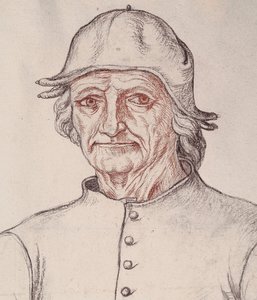
Hieronymus Bosch
1450 - 1516 , Niederlande
Kurzinfos
- Beeinflusste Künstler: ['Pieter Bruegel d.Ä.']
- Bemerkenswerte Werke:
- Garten der Lüste
- Letztes Gericht Triptychon
- Aufstieg der Seligen
- Epiphanias
- Geburtsdatum: ca. 1450
- Geburtsort: 's-Hertogenbosch, Niederlande
- Künstlerische Einflüsse:
- Jan van Eyck
- Pieter Bruegel d.Ä.
- Künstlerischer Stil: Frühflämische Malerei
- Nationalität: Niederländisch
- Sterbedatum: 1516
- Vollständiger Name: Hieronymus Bosch
Ähnliche Artikel
Hieronymus Bosch: Die 25 Meisterwerke des düsteren Genies – Kunst für Ihr Zuhause | ArtsDot
Entdecken Sie die 25 faszinierendsten Meisterwerke von Hieronymus Bosch! Tauchen Sie ein in die düstere Schönheit niederländischer Malerei, religiöse Symbolik und fantastische Welten. Hochwertige Kunstdrucke & Inspiration für Ihr Zuhause auf ArtsDot.com.
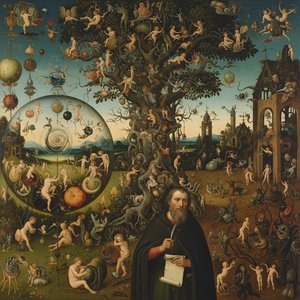
Hieronymus Bosch: Die Entschlüsselung einer visionären Meisterwerk und seiner tiefgründigen Symbolik
Entdecken Sie die faszinierende Welt des Hieronymus Bosch! Unsere Expertenanalyse enthüllt die tiefgründige Symbolik seiner Meisterwerke, von 'Der Garten der Lüste' bis zum Triptychon des Heiligen Antonius. Erfahren Sie mehr über Leben, Werk und bleibenden Einfluss dieses einzigartigen Künstlers.
Museo del Prado: Die 25 Meisterwerke – Kunst für Ihr Zuhause | ArtsDot
Entdecken Sie die 25 Meisterwerke des Museo del Prado! Von Velázquez bis Goya – Kunstgeschichte, Techniken & Geschichten berühmter Gemälde. Finden Sie hochwertige Reproduktionen für Ihr Zuhause auf ArtsDot.com.
Meisterwerke Berlins: Die Top 25 Kunstwerke der Staatlichen Museen | ArtsDot
Entdecken Sie die 25 bedeutendsten Kunstwerke der Staatlichen Museen Berlin! Von Nefertiti bis zur Romantik – erfahren Sie faszinierende Geschichten über Künstler, Stile & Techniken. Kunstreproduktionen in Museumsqualiät auf ArtsDot.com.

El Greco: Die 25 Meisterwerke – Kunst für Ihr Zuhause | ArtsDot
Entdecken Sie die 25 bedeutendsten Meisterwerke von El Greco! Erleben Sie die spirituelle Tiefe und den dramatischen Stil des griechischen Malers. Hochwertige Kunstdrucke & Inspiration für Ihr Zuhause auf ArtsDot.com.