

 Vorschau anzeigen
 Versenden
 Teilen
 Details anzeigen

 Herunterladen
 Ähnliche Objekte
 Röntgenaufnahme
 Diashow
Amelita Galli-Curci


 Weiterlesen
Erwerben Sie ein hochauflösendes, optimiertes digitales Bild, das der Online-Vorschau weit überlegen ist.
Jede Datei wird von unseren hauseigenen Spezialisten mit modernsten Werkzeugen und fachmännischer manueller Retusche sorgfältig vorbereitet. Wir stellen sicher, dass jedes Bild eine außergewöhnliche Klarheit, präzise Farbgenauigkeit und feinste Details aufweist.
Die endgültige Datei wird innerhalb von 72 Stunden per E-Mail zugestellt und ist für den sofortigen Einsatz in professionellen, redaktionellen und Druckumgebungen optimiert. Es handelt sich um dieselbe Qualität, der führende Designstudios, Verlage und Galerien vertrauen.
Digitales Bild
Laden Sie eine hochauflösende Datei für die persönliche Präsentation, den Druck und kreative Projekte herunter. ( Druck bestellen Handgemalte Reproduktion bestellen)
In jeder Bestellung digitaler Bilder enthalten
Professionelle digitale Bereitstellung, garantiert
Wenn Sie sich für ArtsDot.com entscheiden, erhalten Sie nicht nur ein Bild – Sie erhalten ein professionell aufbereitetes digitales Kunstwerk, das mit höchster Präzision erstellt und durch eine Zufriedenheitsgarantie abgesichert wird. Hier ist alles, was automatisch mit Ihrer Bestellung geliefert wird:

Schnelle E-Mail-Zustellung
Ihre hochauflösende digitale Bilddatei wird Ihnen innerhalb von 72 Stunden nach der Bestellung per E-Mail zugestellt – bereit zur sofortigen Verwendung.

KI-optimierte digitale Datei
Ihre Kunstwerke werden professionell mithilfe fortschrittlicher KI-Tools und manueller Bearbeitung optimiert, um maximale Detailtreue, Klarheit und Farbgenauigkeit zu gewährleisten.

Lebenslanger kostenloser Neudruckservice
Datei versehentlich gelöscht oder verloren? Keine Sorge – wir senden sie Ihnen jederzeit kostenlos erneut zu.

Keine Einfuhrgebühren – jemals
Genießen Sie Ihr Kunstwerk sofort ohne Zollgebühren, Einfuhrabgaben oder Versandkosten – digitale Downloads sind immer steuerfrei.

Garantierte Farbtreue
Wir garantieren, dass Ihr digitales Bild mithilfe professioneller Werkzeuge und Farbmanagement die Originalfarben so präzise wie möglich wiedergibt.

60-Tage-Zufriedenheitsgarantie
Sollten Sie mit Ihrem digitalen Bild nicht zufrieden sein, werden wir es überarbeiten oder Ihnen innerhalb von 60 Tagen 100% erstatten – ohne Wenn und Aber.

100% Geld-zurück-Garantie
Nicht zufrieden? Erhalten Sie innerhalb von 60 Tagen nach Erhalt Ihrer digitalen Datei eine vollständige Rückerstattung – ohne Angabe von Gründen.

Rabatte bei Großbestellungen
3 Bilder kaufen, 10% sparen – 5 Bilder kaufen, 15% sparen – Ab 10 Bildern 20% sparen. Ideal für kreative Projekte, Galerien und Agenturen.
A Moment of Creation: Unveiling Hilla Rebay’s Sketch for Amelita Galli-Curci
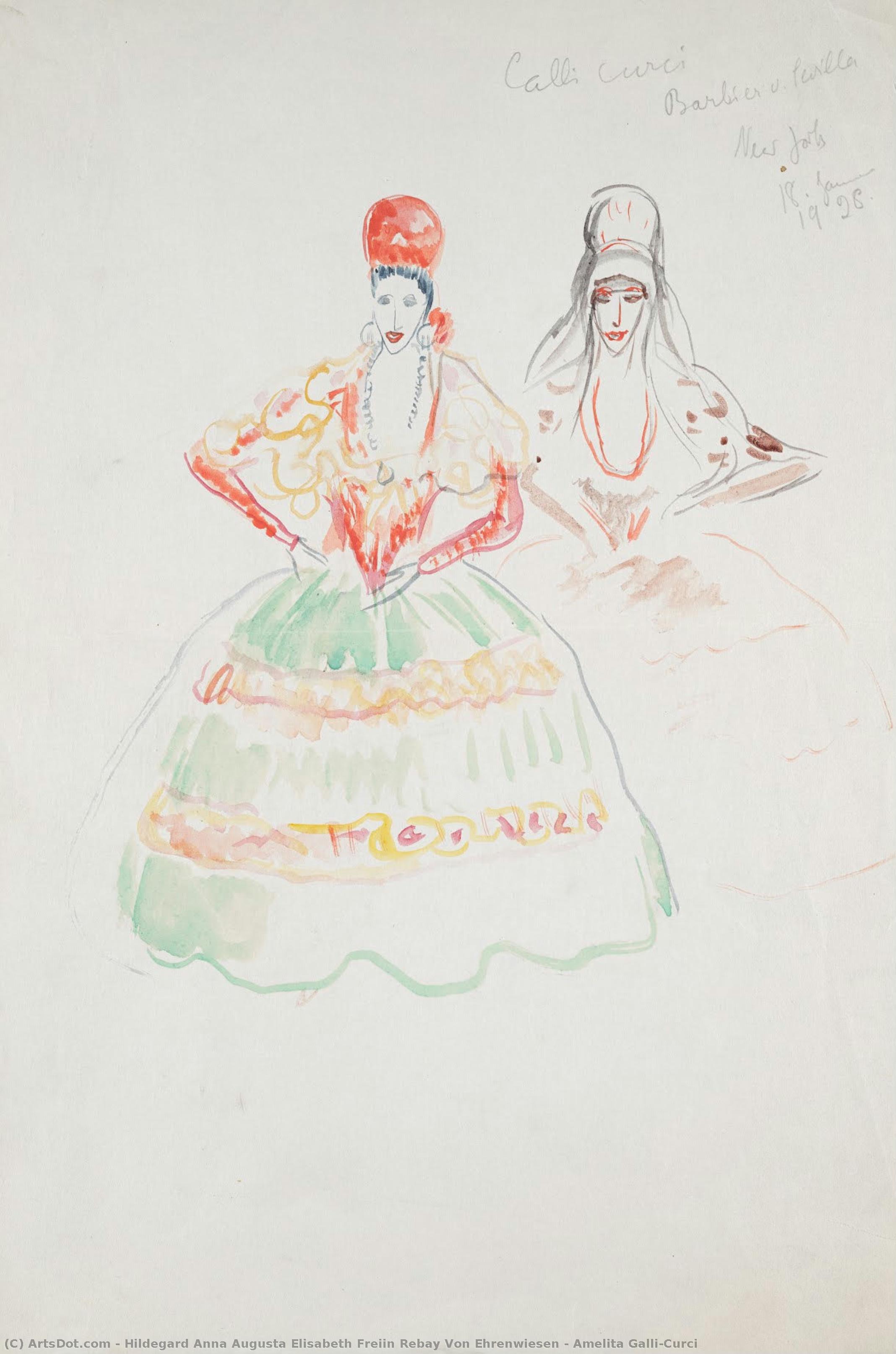
This captivating sketch, a preliminary study executed by Hildegard Anna Augusta Elisabeth Freiin Rebay von Ehrenwiesen in 1928, offers a rare glimpse into the creative process behind one of opera's most celebrated sopranos, Amelita Galli-Curci. More than just a portrait, it’s a distillation of movement, theatricality, and the very essence of vocal performance – a fleeting moment captured on paper before blossoming into a grand stage presence. Rebay, a pioneering figure in abstraction and a key advisor to Solomon R. Guggenheim, wasn't merely documenting a singer; she was translating the dynamism of Galli-Curci’s voice and stage persona into visual form.
The artwork immediately draws the eye with its loose, gestural quality. Visible pencil strokes mingle with delicate watercolor washes in shades of pink, green, red, and creamy beige – a palette that evokes both the opulence of opera costumes and the subtle nuances of vocal coloratura. The composition is deliberately asymmetrical, with the figures slightly offset, suggesting an immediacy and spontaneity characteristic of a preliminary design. There’s no striving for photographic realism; instead, Rebay prioritizes capturing the *feeling* of Galli-Curci – her poised elegance, her inherent grace, and the captivating energy she brought to every performance.
Technique and Materials: A Dance of Watercolor and Graphite
The artwork’s textured surface speaks volumes about Rebay's technique. The watercolor washes are applied with a remarkable fluidity, creating soft transitions and blended areas that suggest movement and breath. Scribbled pencil lines add layers of detail – outlining the flowing drapery of the gowns, indicating folds in fabric, and subtly defining the contours of the figures’ faces and hands. This layering of materials—watercolor and graphite—creates a rich visual tapestry, hinting at an iterative process; a sketch that evolved through multiple revisions.
The choice of paper is also significant. Its slightly rough texture adds to the artwork's tactile quality, grounding the ethereal watercolor in a tangible reality. The limited color palette, combined with the expressive use of line and wash, firmly establishes this piece as a preliminary study—a vital step in Rebay’s creative journey, offering insight into her artistic thinking before the final, polished product.
Symbolism and Emotional Resonance: Theatricality Captured
Beyond its technical merits, the sketch resonates with powerful symbolic meaning. It embodies the very spirit of opera – a world of heightened emotion, dramatic spectacle, and captivating vocal performance. The flowing lines of the costumes suggest movement and grace, mirroring the soaring melodies that defined Galli-Curci’s repertoire. The lack of precise anatomical detail reinforces this sense of theatricality; Rebay isn't concerned with rendering a perfect likeness but rather capturing the *impression* of the singer – her presence on stage.
Furthermore, the placement of handwritten text in the upper right corner hints at the creative process itself. It’s as if Rebay is documenting her thoughts and ideas as she works, inviting the viewer to witness a moment of artistic exploration. The sketch evokes a sense of anticipation—a glimpse into the creation of something beautiful and transformative.
Historical Context: A Pioneer's Vision
Hildegard Rebay’s work is deeply rooted in the early 20th-century avant-garde, particularly the rise of abstraction and non-objective art. Her collaboration with Solomon R. Guggenheim was instrumental in shaping the museum’s collection, championing artists like Kandinsky and Mondrian. This sketch provides a tangible link to that pivotal moment in art history, revealing Rebay's role as a visionary who helped redefine the boundaries of artistic expression. The study itself is a testament to her keen eye for capturing not just likeness but also the spirit and essence of her subject – Amelita Galli-Curci, a true icon of operatic artistry.
Ähnliche Kunstwerke



Biografie des Künstlers
A Pioneer of Abstraction: The Life and Legacy of Hilla Rebay
Hilla Rebay (1890-1967) was a German abstract artist who profoundly shaped the trajectory of modern art, primarily through her unwavering advocacy for non-objective aesthetics and her pivotal role in establishing the Solomon R. Guggenheim Museum as a global center for avant-garde expression. Born Hildegard Anna Augusta Elisabeth Freiin Rebay von Ehrenwiesen in Strasbourg, Germany, she emerged from a noble lineage—her father, Franz Josef Rebay von Ehrenwiesen, served as an officer in the Prussian Army—and received an upbringing steeped in cultural refinement. Yet it was not merely societal expectations but an innate fascination with artistic exploration that propelled her toward a life dedicated to challenging conventional artistic boundaries and championing radical new visions. From early childhood, Rebay demonstrated exceptional talent for drawing and painting, foreshadowing the transformative journey she would undertake into the realm of abstract art—a path that would ultimately redefine perceptions of beauty and artistic innovation.From Traditional Roots to Avant-Garde Visions
Her formative years in Munich (1910) marked a crucial turning point, exposing her to the burgeoning influence of German Jugendstil painter Fritz Erler. This encounter ignited an appreciation for stylistic experimentation and spurred her toward questioning established artistic conventions—a characteristic that would define her entire artistic career. Participation in exhibitions at the Cologne Kunstverein in 1912 and the Salon des Indépendants in Paris in 1913 brought Rebay into contact with a constellation of avant-garde artists—including Archipenko, Brâncuși, Chagall, Delaunay, Gleizes, Rivera, and van Rees—who dared to abandon representational form altogether. This immersion in the radical ideas circulating within the artistic circles of Paris profoundly impacted her worldview, inspiring her to explore the expressive potential inherent in pure abstraction. The conviction that mastering black and white was essential before venturing into color guided her initial artistic endeavors; she meticulously studied drawing manuals and diligently practiced rendering landscapes with exacting precision—skills honed during her formative years that would serve as bedrock for her subsequent explorations of non-objective art.The Influence of Kandinsky and Bauer: Embracing Non-Objective Expression
A watershed moment arrived with her encounter in Zurich with Hans (Jean) Arp, who introduced Rebay to the groundbreaking works of Wassily Kandinsky and Rudolf Bauer—artists who championed a revolutionary aesthetic approach centered on rejecting visual illusion. This exposure galvanized her artistic vision, propelling her toward experimentation and fostering an unwavering belief in the transformative power of pure abstraction. Her involvement in Der Krater—a collective dedicated to pushing artistic boundaries—solidified her commitment to avant-garde expression and underscored her conviction that art should transcend conventional limitations. The group’s members actively sought new visual languages and challenged prevailing aesthetic norms, reflecting Rebay’s own pioneering spirit. During this period, she meticulously studied the techniques of Impressionist painters like Monet and Seurat, absorbing their mastery of light and color—skills that would inform her subsequent artistic creations.A Patronage Forged in Vision: Rebay and Solomon Guggenheim
Her life took an extraordinary turn when she immigrated to New York City (1927), establishing a connection with Solomon R. Guggenheim that would reshape the landscape of American art history. Rebay swiftly became Guggenheim’s trusted confidante, guiding his collecting endeavors and shaping what would become one of the world’s most influential collections dedicated to non-objective painting—a testament to her discerning taste and unwavering dedication to artistic innovation. She tirelessly championed artists like Bauer and Kandinsky, recognizing their genius and advocating for their inclusion in Guggenheim’s holdings—demonstrating a profound understanding of artistic merit and furthering the recognition of avant-garde aesthetics. Her influence extended beyond mere patronage; she actively collaborated with Frank Lloyd Wright on the design of the Guggenheim Museum building—resulting in an architectural masterpiece that embodies modernist principles and serves as a beacon for contemporary art.Legacy and Historical Significance
Hilla Rebay’s enduring legacy resides not only in her own artistic output but also in her transformative role as director of the Museum of Non-Objective Painting (later renamed the Solomon R. Guggenheim Museum)—a position she held from 1939 until her departure in 1967. During this period, she spearheaded the museum’s mission to promote non-objective art and foster dialogue around its aesthetic values—establishing it as a cornerstone of modern art history and ensuring that its vision continued to inspire generations of artists and scholars. Her unwavering advocacy for abstract expression solidified Guggenheim’s reputation as a champion of avant-garde innovation and cemented Rebay's place among the most influential figures in shaping the cultural landscape of the twentieth century. Hilla Rebay remains an indelible symbol of artistic courage, visionary leadership, and a profound conviction that art possesses the capacity to reshape our understanding of beauty and reality—a testament to her enduring contribution to the history of modern art.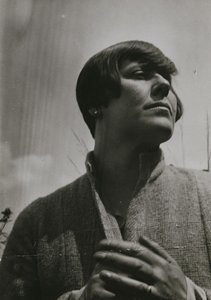
hildegard anna augusta elisabeth freiin rebay von ehrenwiesen
1890 - 1967 , Deutschland
Kurzinfos
- Artistic Movement Or Style: Abstraktes Kunstwerk
- Artists Or Movements Influenced By This Artist: ['Der Krater']
- Artists Who Influenced This Artist:
- Hans Arp
- Kandinsky
- Rudolf Bauer
- Date Of Birth: 31. Mai 1890
- Date Of Death: 27. Sep. 1967
- Full Name: Hildegard Anna Augusta Elisabeth Freiin Rebay von Ehrenwiesen
- Nationality: Deutsch
- Notable Artworks:
- Unbeschriftetes Bleistiftskizze
- Amelita Galli-Curci
- Unbeschriftete Selbstporträt
- Place Of Birth: Strasbourg, Deutschland

