

 Versenden
 Teilen
 Details anzeigen

 Herunterladen
 Ähnliche Objekte
 Diashow
 Stats
StatsLast of the Tribe


 Weiterlesen
Giclée / Kunstdruck
Giclée- oder Leinwanddruck in Museumsqualität mit schneller Produktion und flexiblen Veredelungsoptionen. ( Handgemalte Reproduktion bestellen Switch to Digital Image)




































Wählen Sie aus unseren vordefinierten Formaten, die den ursprünglichen Proportionen des Kunstwerks entsprechen.

Sie können Ihre eigenen Maße eingeben, um ein bestimmtes Format oder einen speziellen Platz einzupassen. Wenn das von Ihnen gewählte Format nicht den Proportionen des Originalbildes entspricht, werden wir das Kunstwerk entweder beschneiden oder das Bild mit einem gespiegelten oder einfarbigen Rand erweitern. Ein digitaler Entwurf wird Ihnen zur Genehmigung zugesandt, bevor die Produktion beginnt.
Bitte beachten Sie, dass die Vorschau auf dem Bildschirm nicht den tatsächlichen Zuschnitt oder die Erweiterung widerspiegelt. Nur der Entwurf zeigt die endgültige Komposition präzise an.
Obwohl Sondermaße verfügbar sind, empfehlen wir die Auswahl eines Maßes aus der vordefinierten Liste, um die ursprünglichen Proportionen zu bewahren.
Weltweiter Versand () innerhalb von 2 Wochen statt der üblichen 4/5 Wochen. (8 September)

Kostenloser weltweiter Expressversand

Hochwertige Leinenleinwand

Umfassender Versicherungsschutz beim Versand

Zollgebühren-Rückerstattungsgarantie

Garantie für exakte Farbtreue

100-Tage-Rückgaberecht (nur bei Mängeln)

100% Geld-zurück-Garantie

Mengenrabatt verfügbar
 Die Glasoption ist nur für Größen unter 110 cm verfügbar.

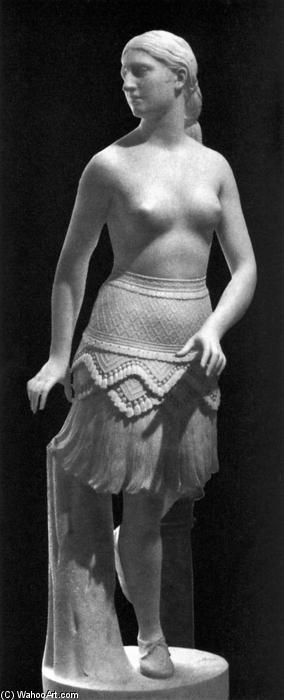
Last of the Tribe
Giclée / Kunstdruck
Format der Reproduktion
-


Gesamtpreis
$ 62
A Silent Sentinel: Hiram Powers’ “Last of the Tribe”
Hiram Powers' "Last of the Tribe," sculpted in marble between 1867 and 1877, isn’t merely a representation of an Indigenous woman; it’s a poignant embodiment of a nation grappling with its identity and legacy. This powerful work transcends simple portraiture, offering a complex meditation on displacement, loss, and the enduring spirit of a vanishing culture within the context of America's westward expansion. Powers, one of the first American sculptors to achieve international acclaim, masterfully blended classical ideals with a distinctly American subject matter, creating an artwork that continues to resonate deeply today.
The sculpture depicts a young Native American woman, her posture conveying both vulnerability and resolute strength. She stands poised on a slight incline, gazing backward over her shoulder as if contemplating a lost homeland. Her clothing—a meticulously detailed skirt adorned with diamond patterns and tassels—is an intriguing blend of realism and artistic license; while undoubtedly inspired by the garments of certain tribes, it’s clear that Powers imbued it with a romanticized aesthetic, reflecting the prevailing, often problematic, narratives surrounding Indigenous peoples at the time. The sculpture's placement within the broader context of 19th-century America—a period marked by rapid industrialization, westward expansion, and increasing tensions between settlers and Native American tribes—is crucial to understanding its emotional weight.
The Classical Foundation & Innovative Technique
Powers’ artistic journey began in Woodstock, Vermont, where he honed his skills under the tutelage of Frederick Eckstein, a Cincinnati clockmaker and sculptor. This early training instilled within him a deep appreciation for craftsmanship and observation—qualities that would become hallmarks of his work. He later moved to Florence, Italy, immersing himself in the traditions of classical sculpture while simultaneously developing his own distinctive style. “Last of the Tribe” exemplifies this synthesis; it’s rooted in the principles of Neoclassicism – a movement emphasizing idealized form, anatomical accuracy, and a return to the artistic values of ancient Greece and Rome – yet imbued with a distinctly American sensibility.
The sculpture's creation involved a sophisticated combination of techniques. Powers utilized a “pointing machine,” a revolutionary device developed by French sculptor Jean-Baptiste Carpeaux, which allowed him to accurately transfer sketches onto the marble block. This mechanized process ensured precision and facilitated the creation of intricate details, particularly in the figure’s flowing drapery and expressive face. Furthermore, Powers' mastery of carving techniques is evident in the subtle gradations of tone and texture that bring the sculpture to life—the smooth polish of the torso contrasts with the rougher surface of the skirt, creating a dynamic interplay of visual elements.
Symbolism & Historical Context
The title itself, “Last of the Tribe,” carries immense symbolic weight. It speaks directly to the devastating consequences of westward expansion and the systematic displacement of Native American populations. Powers’ statement—“the time is not distant when the last Indian will pass away”—reveals a profound awareness of the impending tragedy. The sculpture can be interpreted as both a lament for lost cultures and a critique of the policies that led to their demise. It's important to acknowledge that this interpretation must be considered within the context of 1867-1877, when Powers created the work; prevailing attitudes toward Native Americans were often shaped by romanticized notions of savagery and a belief in their inevitable extinction.
Interestingly, Powers drew inspiration from James Fenimore Cooper’s *Last of the Mohicans*, a popular novel that perpetuated similar narratives. By aligning his sculpture with this literary work, Powers tapped into a widespread cultural fascination with Indigenous peoples—a fascination often intertwined with both admiration and exploitation. The woman's gaze backward is particularly evocative, suggesting a longing for a past that can never be reclaimed and a poignant awareness of the irreversible changes sweeping across her land.
A Timeless Masterpiece & Reproduction Possibilities
"Last of the Tribe" remains a powerful and enduring work of art. Its combination of classical form, emotional depth, and historical significance ensures its continued relevance in contemporary discourse. The sculpture’s themes—loss, displacement, cultural identity—are as pertinent today as they were over a century ago. For those seeking to incorporate this artwork into their homes or collections, high-quality reproductions offer an accessible way to experience the beauty and emotional resonance of Powers' masterpiece. These reproductions faithfully capture the sculpture’s intricate details and evocative atmosphere, allowing viewers to connect with its profound message.
Ähnliche Kunstwerke
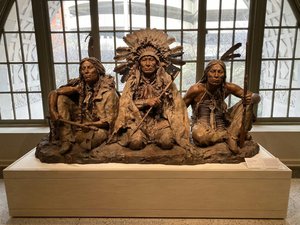
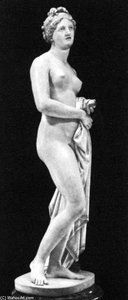
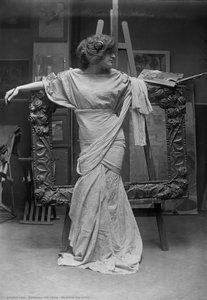
Über den Künstler
Hiram Powers: Der Bildhauer, der Griechen nach Amerika brachte
Hiram Powers (1805 – 1873) steht als eine zentrale Figur in der Geschichte amerikanischer Kunst und markiert einen frühen Fall eines Künstlers, dessen Ruhm auf bildhauerischem Können basiert und ihm internationale Anerkennung verschaffte. Geboren in Woodstock, Vermont, verkörperte seine Reise von bescheidenen Anfängen bis hin zu einem gefeierten Bildhauer den Geist von Selbstständigkeit und künstlerischer Ambition, der die junge Nation prägte. Sein Erbe liegt nicht nur in einzelnen Meisterwerken sondern auch darin, einen Präzedenzfall für amerikanische Künstler zu schaffen, dass sie sich über ihre Grenzen hinaus für Exzellenz einsetzen. Seine frühe Ausbildung vermittelte ihm eine tiefgreifende Wertschätzung für Handwerkskunst und Beobachtung – Fähigkeiten, die er während seines kurzen Aufenthalts als Buchhalter in Cincinnati's General Store entwickelte. Doch sein Begegnung mit Frederick Eckstein, Cincinnati’s Pionieruhrmacher und Bildhauer, entzündete seine künstlerische Leidenschaft wirklich. Eckstein erkannte Powers Talent und ermutigte ihn, sich intensiv mit Modellieren und Gussverfahren auseinanderzusetzen, wodurch er sich der Meisterhaftigkeit des Steinmetzarbeiten und Bronzegießen zugewandt wurde. Diese Hingabe würde entscheidend zur Gestaltung seines unverwechselbaren Stils beitragen – gekennzeichnet durch idealisierte Figuren, die klassische Eleganz ausstrahlen und sich von römischen Bildhauertraditionen inspirieren lassen. Ein bedeutender Wendepunkt gelang ihm, als Powers eine Stelle als Gesamtassistent und Künstler im Westenmuseum von Joseph Dorfeuille erhielt und Kontakte zu dem einflussreichen Naturforscher Louis Agassiz knüpfte. Hier setzte er sich ambitionierte Projekte auf Dante’s Inferno ein und produzierte beeindruckende Marmorrepräsentationen von Szenen aus diesem Epos, die das Publikum begeisterten und seinen Ruf als visionärer Bildhauer festigten. Besonders Fanny Trollope förderte Powers Karriere indem sie ihn beauftragte, Dantes „Kommedia“ zu schaffen und ihm damit große Anerkennung innerhalb der literarischen Kreise sicherte. Im Jahr 1834 zog sich Powers nach Washington, D.C., wo er schnell durch Porträts von wichtigen Persönlichkeiten wie Andrew Jackson bekannt wurde – wobei er seine Fähigkeit demonstrierte, die Essenz eines Charakters einzufangen und Emotionen mit außergewöhnlicher Sensibilität auszudrücken. Sein weiteres Reisen nach Italien im Jahr 1837 stellte ihn auf den Via Fornace in Florenz dar – eine Lage, die Zugang zu hochwertigen Marmorsteingruben ermöglichte und die Traditionen der florentinischen Steinmetzkunst förderte. Er blieb dort bis zu seinem Tod im Jahr 1873 und perfektionierte sein Handwerk weiterhin und pflegte Zusammenarbeit mit dem Künstler Horatio Greenough. Powers’ größte Leistung bleibt zweifellos „Die griechische Sklavin“, eine monumentale Marmorskulptur, die Spartacus darstellt – ein Symbol des Widerstands gegen Unterdrückung –, die sich bei ihrer Enthüllung im Jahr 1856 in London große öffentliche Aufmerksamkeit verschaffte. Die Statue’s dramatische Pose, die sowohl Stärke als auch Verletzlichkeit ausdrückt, erfasste den Geist romantischer Idealismus und festigte Powers’ Platz als Verteidiger klassischer Ideale innerhalb amerikanischer Kunst. Neben „Die griechische Sklavin“ schuf Powers zahlreiche weitere bedeutende Werke, darunter „Der Fischerjunge“, „Proserpine“ und „Eva Enttäuschung“, wobei jedes seine unerschütterliche Hingabe daran widerspiegelte, Schönheit und tiefgreifende Emotionen durch sorgfältig ausgearbeitete Steinformen einzufangen. Sein Werk inspiriert weiterhin Bewunderung für seine Eleganz, technische Virtuosität und dauerhafte Relevanz als Zeugnis der transformativen Kraft künstlerischer Vision.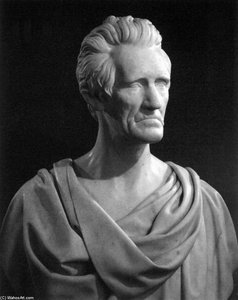
Hiram Powers
1805 - 1873 , Vereinigte Staaten von Amerika
Kurzinfos
- Artistic Movement Or Style: Neoklassizismus
- Artists Or Movements Influenced By This Artist: ['Horatio Greenough']
- Artists Who Influenced This Artist: ['Frederick Eckstein']
- Date Of Birth: 1805
- Date Of Death: 1873
- Full Name: Hiram Powers
- Nationality: Amerikanisch
- Notable Artworks:
- Die griechische Sklavin
- Der Fischerjunge
- Proserpine
- Place Of Birth: Woodstock, Vermont
Ähnliche Artikel
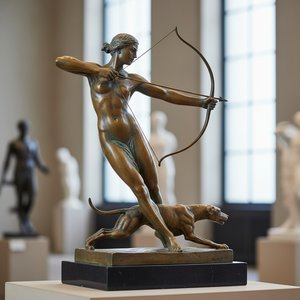
Paul Manship: Eine Neubewertung des Meisters der amerikanischen Art Déco-Skulptur
Entdecken Sie das faszinierende Werk von Paul Manship, dem Meister der amerikanischen Art Déco-Skulptur! Erfahren Sie mehr über seine ikonischen Werke, Einflüsse und sein bleibendes Vermächtnis. Jetzt lesen!
The Enduring Allure of Marble in Art History: From Classical Sculpture to Modern Abstraction
Explore the captivating history of marble sculpture from ancient Greece to modern art. Discover renowned artists like Canova & Michelangelo, carving techniques, and investment insights at ArtsDot.

The Enduring Form: Exploring Themes & Techniques in Sculpture Across Historical Periods
Explore the rich history of sculpture from ancient masterpieces to contemporary innovations. Discover key techniques, influential artists & investment potential for discerning art collectors.

Bronze-Meisterwerke: Die 10 Skulpturen, die Kunstgeschichte schrieben | ArtsDot
Entdecken Sie die 10 legendärsten Bronze Skulpturen der Kunstgeschichte! Von Michelangelo bis Rodin – erfahren Sie die Geschichten hinter den Meisterwerken und lassen Sie sich von Wanddeko-Ideen inspirieren. Hochwertige Kunstdrucke auf ArtsDot.com.

The Enduring Form: Sculpture Across History, Technique & Emotional Resonance
Explore the rich history of sculpture with ArtsDot. Discover key techniques, influential artists & investment potential for discerning collectors. Expert insights into valuing and collecting timeless masterpieces.