

 Vorschau anzeigen
 Versenden
 Teilen
 Details anzeigen

 Herunterladen
 Ähnliche Objekte
 Röntgenaufnahme
 Diashow
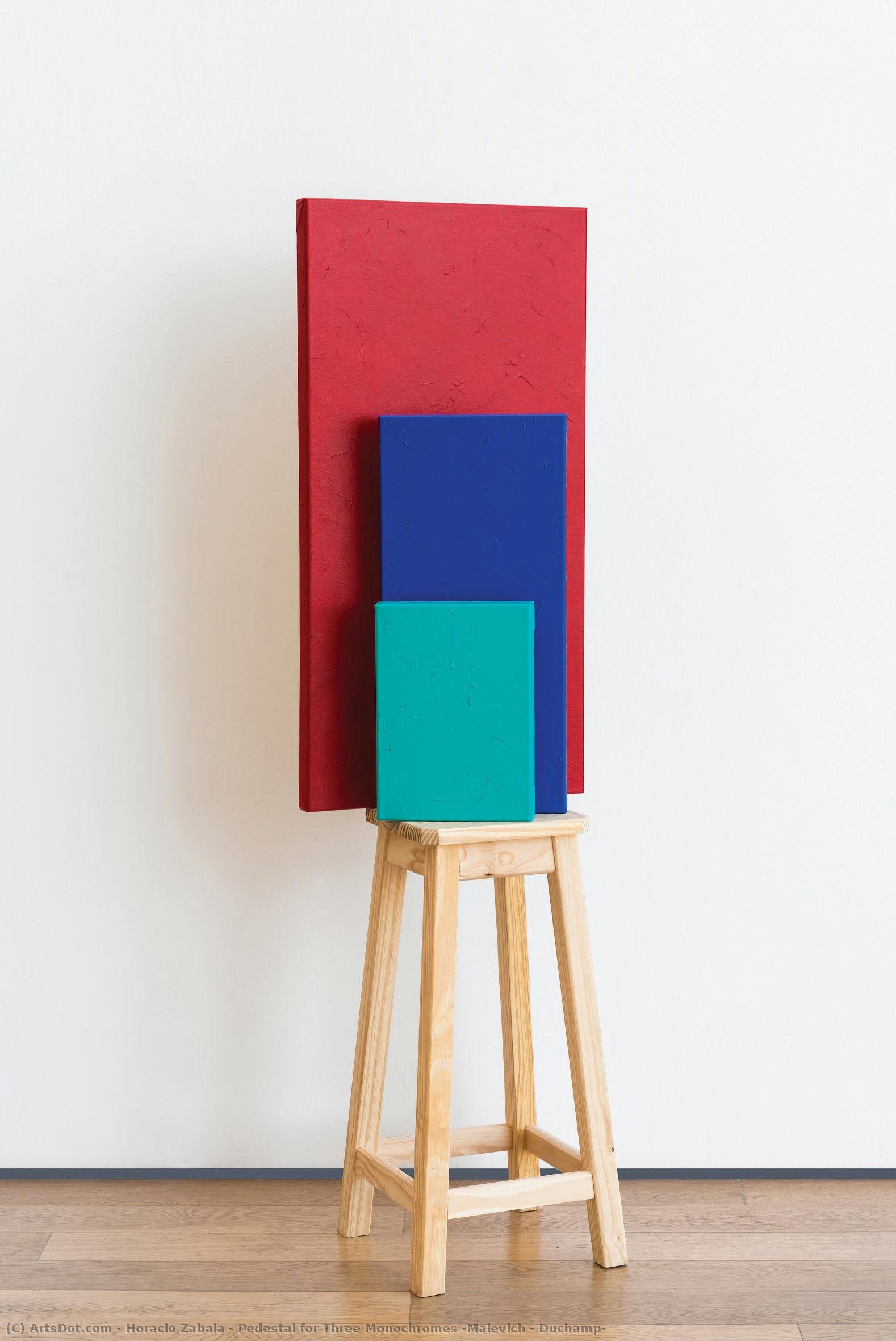
Pedestal for Three Monochromes (Malevich & Duchamp)
 Painting
- Contemporary Abstract
 2015
2015- Contemporary
 134.0 x 100.0 cm
 Colección de Arte Amalia Lacroze de Fortabat
 Weiterlesen
Handgefertigte Ölreproduktion
Handgemaltes Ölgemälde auf Leinwand in Ihrer Wunschgröße und mit Rahmen, auf Bestellung von unseren Künstlern angefertigt. ( Druck bestellen Bild kaufen)




































Wählen Sie aus unseren vordefinierten Formaten, die den ursprünglichen Proportionen des Kunstwerks entsprechen.

Sie können Ihre eigenen Maße eingeben, um einen bestimmten Rahmen oder Platz auszufüllen. Wenn die gewählte Größe nicht den Proportionen des Originalbildes entspricht, werden wir das Kunstwerk entweder beschneiden oder das Gemälde durch zusätzliche, handgemalte Elemente erweitern. Ein digitales Mockup wird Ihnen zur Genehmigung zugesandt, bevor die Produktion beginnt.
Bitte beachten Sie, dass die Bildschirmvorschau nicht die tatsächliche Beschneidung oder Erweiterung widerspiegelt. Nur das Mockup zeigt die endgültige Komposition exakt an.
Obwohl Sondermaße verfügbar sind, empfehlen wir, eine Größe aus der vordefinierten Liste zu wählen, um die ursprünglichen Proportionen beizubehalten.
Nach der Bestellung wird das ArtsDot.com-Team dem Kunden Anweisungen per E-Mail zusenden und eine Mockup-Vorschau bereitstellen.
Weltweiter Versand () in nur 3 bis 4 Wochen statt der üblichen 5 Wochen. (22 August). Keine Kompromisse bei der Qualität.

Kostenloser weltweiter Expressversand

Hochwertige Leinenleinwand

Umfassender Versicherungsschutz beim Versand

Zollgebühren-Rückerstattungsgarantie

Garantie für exakte Farbtreue

60 Tage Rückgaberecht (nur bei Mängeln)

100% Geld-zurück-Garantie

Mengenrabatt verfügbar
 Die Glasoption ist nur für Größen unter 110 cm verfügbar.

Pedestal for Three Monochromes (Malevich & Duchamp)
Art der Reproduktion
Format der Reproduktion
-


Gesamtpreis
$ 263
Beschreibung des Kunstwerks
A Dialogue of Pure Form and Color
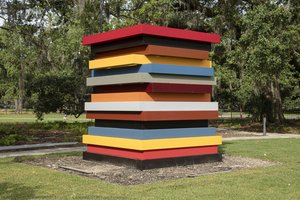
In the quiet intersection of architectural precision and abstract emotion, Pedestal for Three Monochromes (Malevich & Duchamp) stands as a profound meditation on the essence of visual language. Created in 2015 by the Argentine master Horacio Zabala, this installation-style work transcends the boundaries of traditional painting to engage directly with the space it inhabits. The piece presents three rectangular canvases, stacked with deliberate, rhythmic intent upon a simple wooden stool. Each canvas serves as a window into a singular, unadulterated chromatic experience: a vibrant red, a deep, stabilizing blue, and a lush, organic green. Through this arrangement, Zabala invites the viewer to strip away the noise of the modern world and confront the raw power of primary perception.
The technique employed here is one of disciplined minimalism, where the artist’s architectural background shines through every edge and boundary. There is no decorative flourish to distract the eye; instead, the focus remains entirely on the interplay of color, shape, and weight. The application of paint appears smooth and deliberate, creating solid blocks of pigment that seem to vibrate against one another. By utilizing a flat, geometric style, Zabala achieves a sense of timelessness. The way the light interacts with these surfaces—softly diffusing across the red, blue, and green—creates subtle shadows that lend a sculptural dimension to the two-dimensional planes, making the work feel less like an object on display and more like a living presence within the room.
Historical Echoes and Symbolic Resonance
The title of the work serves as a sophisticated homage to the titans of the avant-garde, specifically referencing the Suprematist rigor of Kazimir Malevich and the conceptual provocations of Marcel Duchamp. By invoking these names, Zabala places his contemporary creation within a grand historical lineage of radical abstraction. The "pedestal" concept suggests that these colors are not merely pigments on cloth, but sacred objects of contemplation, elevated for our scrutiny. This intellectual depth provides a rich layer of meaning for the collector; the work is not just an aesthetic choice, but a scholarly nod to the moment when art moved away from representation and toward the pure expression of thought.
Symbolically, the trio of colors offers a balanced emotional spectrum that can transform the atmosphere of any interior. The red canvas pulses with an inherent energy and passion, acting as a focal point of vitality. In contrast, the blue provides a sense of profound calm and structural stability, grounding the composition. The green introduces a subtle connection to the natural world, evoking growth and renewal. Together, they form a complete cycle of existence—fire, water, and earth—rendered through the lens of modern geometric abstraction. For the interior designer, this piece offers a versatile yet commanding presence, capable of anchoring a minimalist gallery space or adding a sophisticated, intellectual pulse to a contemporary residential setting.
An Essential Addition for the Discerning Collector
For those seeking to curate a collection defined by depth and clarity, Pedestal for Three Monochromes represents an unparalleled opportunity. It is a work that demands attention without overwhelming its surroundings, making it an ideal centerpiece for high-end decor. Whether placed in a sunlit studio or a moody, dimly lit study, the piece interacts dynamically with its environment, reflecting the changing light and the architectural lines of the room. Owning a reproduction of such a significant contemporary work allows one to inhabit a space defined by the same principles of purity and structural beauty that Zabala so masterfully captures in his original vision.
Ähnliche Kunstwerke
![Abstract Composition [triptych] — Vaclav Vytlacil, Abstract Expressionism](/media/artworks/images-thumb/08/3c/083c0675045645fd42d4e6c6d63f1ced.jpg)
Über den Künstler
Einführung
Horacio Zabala ist ein renommierter argentinischer Künstler, der 1943 in Buenos Aires geboren wurde. Nach seinem Architekturstudium an der Universidad de Buenos Aires zog es ihn im Jahr 1976 nach Europa, wo er bedeutende Lebensstationen in Rom und Wien durchlief, bevor er 1998 nach Buenos Aires zurückkehrte.Künstlerische Laufbahn
Die künstlerische Laufbahn von Horacio Zabala zeichnet sich durch eine einzigartige Symbiose aus Architektur und bildender Kunst aus. Seine Werke sind berühmt für ihre tiefgründigen Themen, ihre eindrucksvollen Kompositionen und den innovativen Einsatz verschiedenster Materialien. Zu seinen bemerkenswertesten Schöpfungen zählt Monochrome of Adobe: Purity is in the Mix, ein 2014 entstandenes Werk, bei dem Draht als primäres Medium diente, sowie The Essential is in the Mix, eine meisterhafte Malerei auf Papier.Einflüsse und Stil
Geprägt durch seinen architektonischen Hintergrund, spiegelt sich in Zabalas Stil die Präzision geometrischer Formen und klarer Linien wider. Seine Arbeiten erforschen intensiv das Zusammenspiel von Textur, Farbe und Komposition und offenbaren dabei eine ganz eigene Perspektive auf die Wechselwirkung dieser elementaren Bestandteile.Museen und Sammlungen
Die Werke von Horacio Zabala sind in bedeutenden Museen und privaten Sammlungen zu finden, darunter die renommierte Colección de Arte Amalia Lacroze de Fortabat in Buenos Aires, Argentinien. Zudem sind seine Gemälde auf ArtsDot.com präsent, wo Kunstliebhaber sein Schaffen vertieft erkunden können.Weitere bedeutende Künstler
Argentinien beheimatet weitere herausragende Talente wie Federico Brook, der für seine strukturellen Untersuchungen des Raumes bekannt ist, sowie Oscar Agustín Alejandro Schulz Solari, einen Aquarellmaler, dessen Werk „Logs“ große Aufmerksamkeit erregte. Diese Künstler haben das reiche kulturelle Erbe Argentiniens maßgeblich mitgestaltet und das Land zu einem Zentrum für innovative und zum Nachdenken anregende Kunst gemacht.- Bedeutende Werke: Monochrome of Adobe: Purity is in the Mix, The Essential is in the Mix
- Einflüsse: Architektur, geometrische Formen und klare Linienführung
- Museen und Sammlungen: Colección de Arte Amalia Lacroze de Fortabat, ArtsDot.com
- Weitere namhafte Künstler: Federico Brook, Oscar Agustín Alejandro Schulz Solari
Fazit
Die künstlerische Laufbahn von Horacio Zabala ist ein eindrucksvolles Zeugnis für die Kraft von Innovation und Kreativität. Seine Werke fordern Kunstbegeisterte immer wieder neu heraus und festigen seine Position als eine der prägenden Figuren der argentinischen Kunstszene. Mit seinem unverwechselbaren Stil und seinen tiefgründigen Themen hat Horacio Zabala seinen Platz als Meister der argentinischen Kunst unwiderruflich gesichert.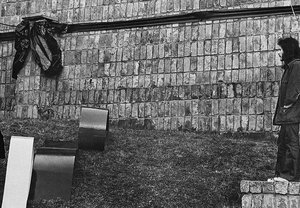
Horacio Zabala
1943 - , Argentinien
Ähnliche Artikel

Geometrische Abstraktion: Die 10 Meisterwerke, die Kunstgeschichte prägten | ArtsDot.com
Entdecken Sie die 10 Meisterwerke der geometrischen Abstraktion! Von Kandinsky bis Mondrian – erleben Sie die Geschichte, Farben & Formen dieser revolutionären Kunstrichtung. Hochwertige Kunstreproduktionen auf ArtsDot.com
Beyond Form & Color: Geometric Abstraction's Enduring Legacy in Art History
Explore the captivating world of geometric abstraction! Discover its origins, key artists like Malevich & Mondrian, and why this movement remains highly valued by art collectors today. Expert insights at ArtsDot.
Fernand Léger: Die 25 Meisterwerke des Kubismus für Ihr Zuhause | ArtsDot
Entdecken Sie die 25 Meisterwerke von Fernand Léger! Tauchen Sie ein in die Welt des Kubismus, Tubismus & der Avantgarde. Hochwertige Kunstreproduktionen für Ihr Zuhause – jetzt auf ArtsDot.com!
Beyond Form & Color: Geometric Abstraction's Evolution in 20th/21st Century Art
Explore the evolution of geometric abstraction from Cubism to contemporary art. Discover key artists like Malevich & Mondrian, investment insights, and expert collecting advice at ArtsDot.
Kandinsky: Die 25 Meisterwerke des Abstrakten – Kunst für Ihr Zuhause | ArtsDot
Entdecken Sie die 25 bedeutendsten Gemälde von Wassily Kandinsky! Tauchen Sie ein in die Welt der abstrakten Kunst, des Expressionismus und der Farbkomposition. Hochwertige Kunstdrucke & Inspiration für Ihr Zuhause auf ArtsDot.com.

