

 Vorschau anzeigen
 Versenden
 Teilen
 Details anzeigen

 Herunterladen
 Ähnliche Objekte
 Röntgenaufnahme
 Diashow
 Statistiken
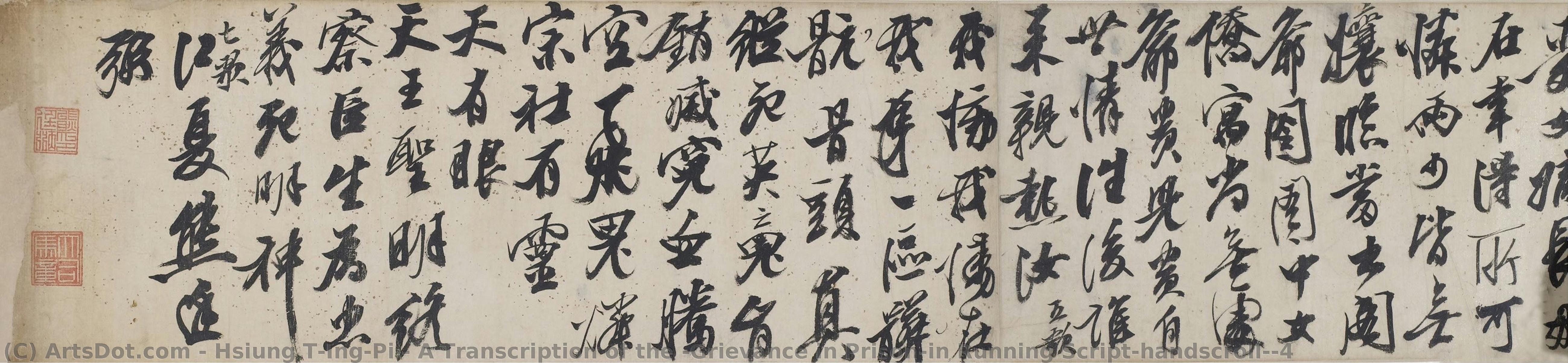
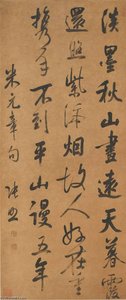
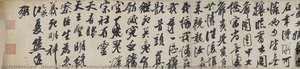
A Transcription of the “Grievance in Prison”in Running Script(handscroll)-4

 Weiterlesen
Erwerben Sie ein hochauflösendes, optimiertes digitales Bild, das der Online-Vorschau weit überlegen ist.
Jede Datei wird von unseren hauseigenen Spezialisten mit modernsten Werkzeugen und fachmännischer manueller Retusche sorgfältig vorbereitet. Wir stellen sicher, dass jedes Bild eine außergewöhnliche Klarheit, präzise Farbgenauigkeit und feinste Details aufweist.
Die endgültige Datei wird innerhalb von 72 Stunden per E-Mail zugestellt und ist für den sofortigen Einsatz in professionellen, redaktionellen und Druckumgebungen optimiert. Es handelt sich um dieselbe Qualität, der führende Designstudios, Verlage und Galerien vertrauen.
Digitales Bild
Laden Sie eine hochauflösende Datei für die persönliche Präsentation, den Druck und kreative Projekte herunter. ( Zu Druck wechseln Handgemalte Reproduktion bestellen)
In jeder Bestellung digitaler Bilder enthalten
Professionelle digitale Bereitstellung, garantiert
Wenn Sie sich für ArtsDot.com entscheiden, erhalten Sie nicht nur ein Bild – Sie erhalten ein professionell aufbereitetes digitales Kunstwerk, das mit höchster Präzision erstellt und durch eine Zufriedenheitsgarantie abgesichert wird. Hier ist alles, was automatisch mit Ihrer Bestellung geliefert wird:

Schnelle E-Mail-Zustellung
Ihre hochauflösende digitale Bilddatei wird Ihnen innerhalb von 72 Stunden nach der Bestellung per E-Mail zugestellt – bereit zur sofortigen Verwendung.

KI-optimierte digitale Datei
Ihre Kunstwerke werden professionell mithilfe fortschrittlicher KI-Tools und manueller Bearbeitung optimiert, um maximale Detailtreue, Klarheit und Farbgenauigkeit zu gewährleisten.

Lebenslanger kostenloser Neudruckservice
Datei versehentlich gelöscht oder verloren? Keine Sorge – wir senden sie Ihnen jederzeit kostenlos erneut zu.

Keine Einfuhrgebühren – jemals
Genießen Sie Ihr Kunstwerk sofort ohne Zollgebühren, Einfuhrabgaben oder Versandkosten – digitale Downloads sind immer steuerfrei.

Garantierte Farbtreue
Wir garantieren, dass Ihr digitales Bild mithilfe professioneller Werkzeuge und Farbmanagement die Originalfarben so präzise wie möglich wiedergibt.

100-Tage-Zufriedenheitsgarantie
Wenn Sie mit Ihrem digitalen Bild nicht zufrieden sind, werden wir es überarbeiten oder 100% innerhalb von 100 Tagen erstatten – ohne Wenn und Aber.

100% Geld-zurück-Garantie
Nicht zufrieden? Erhalten Sie innerhalb von 100 Tagen nach Erhalt Ihrer digitalen Datei eine vollständige Rückerstattung – ohne Wenn und Aber.

Rabatte bei Großbestellungen
3 Bilder kaufen, 10% sparen – 5 Bilder kaufen, 15% sparen – Ab 10 Bildern 20% sparen. Ideal für kreative Projekte, Galerien und Agenturen.
Ähnliche Kunstwerke




Biografie des Künstlers
A Legacy of Ink and Iron: The Dual Life of Hsiung Ting-Pi
In the turbulent twilight of the Ming dynasty, few figures embodied the intersection of scholarly grace and martial fortitude as profoundly as Hsiung Ting-Pi. A man whose life was defined by both the delicate tip of a calligraphy brush and the heavy weight of imperial command, he remains a singular icon in Chinese history. Born around 1583, his existence was a constant dance between the quiet contemplation of the literati and the high-stakes strategy of the battlefield. While many of his contemporaries sought refuge in the purely aesthetic or the strictly political, Ting-Pi navigated a path that demanded excellence in both, carving out a legacy that is as much about the strength of character as it is about the elegance of line.
His early years were steeped in the rigorous traditions of Confucian scholarship. Raised with an appreciation for moral philosophy and social order, his education provided the intellectual scaffolding upon which his artistic vision was built. This foundation allowed him to master the complexities of calligraphy and poetry, disciplines that require not just technical skill, but a deep understanding of symbolism and emotional resonance. To Ting-Pi, a single brushstroke was never merely an aesthetic choice; it was an expression of cosmic balance and ethical clarity. This scholarly upbringing ensured that even when he transitioned into the brutal realities of military governance, his perspective remained infused with the poetic sensitivity of a true master.
The Strategist’s Brush: Artistry Amidst Conflict
The trajectory of Ting-Pi’s life took a dramatic turn as he rose through the imperial ranks to become a vital defender of China's borders. Appointed as a military governor tasked with bolstering defenses against Mongol incursions along the Great Wall, his life became a whirlwind of mobilization and strategic innovation. As the Junior Vice-President of the Ministry of War and later the Chief Military Director of the Liaodong area, he faced the daunting task of securing the empire against the encroaching Later Jin forces. It was during this period of immense pressure that his artistic and military identities merged into a singular, powerful expression of resilience.
His most poignant works often emerged from the shadows of political strife and personal hardship. The famous “Grievance in Prison” handscroll serves as a haunting testament to his turbulent later years. This work, rendered in a masterful running script, transcends simple transcription; it is a visceral outpouring of the soul, capturing the profound injustice he faced when powerful factions sought to dismantle his career. Through the fluid, energetic movements of his calligraphy, one can sense the tension between his disciplined military mind and the raw, unyielding spirit of a man facing wrongful execution. His art became a vessel for truth in an era of political deception.
Historical Significance and the End of an Era
The tragedy of Hsiung Ting-Pi’s life lies in its conclusion, yet his impact on Chinese art and history remains indelible. Despite his successes in stabilizing the Liaodong region and his ability to command respect even from formidable adversaries, he fell victim to the machinations of the powerful eunuch Wei Zhongxian. In 1622, during the second year of the Tianqi period, Ting-Pi was executed for crimes he did not commit, a loss that signaled a dark chapter for the Ming administration. However, the death of the man did not silence the voice of the artist.
Today, we remember Hsiung Ting-Pi not merely as a fallen commander, but as a pioneer who bridged the gap between the martial and the lyrical. His contributions to calligraphy and his ability to infuse ink with the gravity of historical struggle continue to inspire. His life serves as a powerful reminder that true artistry is often forged in the crucible of adversity, and that the most enduring legacies are those written with both courage and grace.
hsiung t’ing-pi
1625 , China
Kurzinfos
- Artistic Movement Or Style: Ming Dynasty Art
- Date Of Death: 1625
- Full Name: hsiung t’ing-pi
- Nationality: Chinese
- Notable Artworks: ['Grievance in Prison Scroll']
- Place Of Birth: China