 Vorschau anzeigen
 Versenden
 Teilen
 Details anzeigen

 Herunterladen
 Ähnliche Objekte
 Röntgenaufnahme
 Diashow
Untitled (belongs to the series of studies conducted in André Lhote


 Weiterlesen
Giclée / Kunstdruck
Giclée- oder Leinwanddruck in Museumsqualität mit schneller Produktion und flexiblen Veredelungsoptionen. ( Handgemalte Reproduktion bestellen Bild kaufen)




P118B $10

P118H $10

P118W $10

P438Z $10

P508JH $12

P508YH $12

P805H $10

P805Z $10

P919BZ $10

P919G $10

P919XJ $10

P959ZH $10

P968JZ $12

W106C $8

W218G $10

W218JH $8

W218Y $10

W307PJ $10

W316G $10

W316PJ $8

W316Y $10

W398PJ $8

W4111J $10

W500HY $15

W500JH $15

W692G $12

W849H $8

W940BG $15

W953PJ $8




Wählen Sie aus unseren vordefinierten Formaten, die den ursprünglichen Proportionen des Kunstwerks entsprechen.

Sie können Ihre eigenen Maße eingeben, um ein bestimmtes Format oder einen speziellen Platz einzupassen. Wenn das von Ihnen gewählte Format nicht den Proportionen des Originalbildes entspricht, werden wir das Kunstwerk entweder beschneiden oder das Bild mit einem gespiegelten oder einfarbigen Rand erweitern. Ein digitaler Entwurf wird Ihnen zur Genehmigung zugesandt, bevor die Produktion beginnt.
Bitte beachten Sie, dass die Vorschau auf dem Bildschirm nicht den tatsächlichen Zuschnitt oder die Erweiterung widerspiegelt. Nur der Entwurf zeigt die endgültige Komposition präzise an.
Obwohl Sondermaße verfügbar sind, empfehlen wir die Auswahl eines Maßes aus der vordefinierten Liste, um die ursprünglichen Proportionen zu bewahren.
Weltweiter Versand () innerhalb von 2 Wochen statt der üblichen 4/5 Wochen. (6 September)

Kostenloser weltweiter Expressversand

Hochwertige Leinenleinwand

Umfassender Versicherungsschutz beim Versand

Zollgebühren-Rückerstattungsgarantie

Garantie für exakte Farbtreue

60 Tage Rückgaberecht (nur bei Mängeln)

100% Geld-zurück-Garantie

Mengenrabatt verfügbar
 Die Glasoption ist nur für Größen unter 110 cm verfügbar.

Untitled (belongs to the series of studies conducted in André Lhote
Giclée / Kunstdruck
Format der Reproduktion
-


Gesamtpreis
$ 62
A Study in Shadow and Form
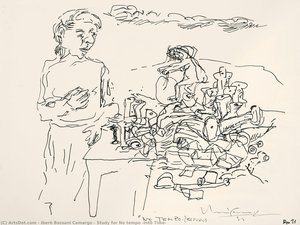
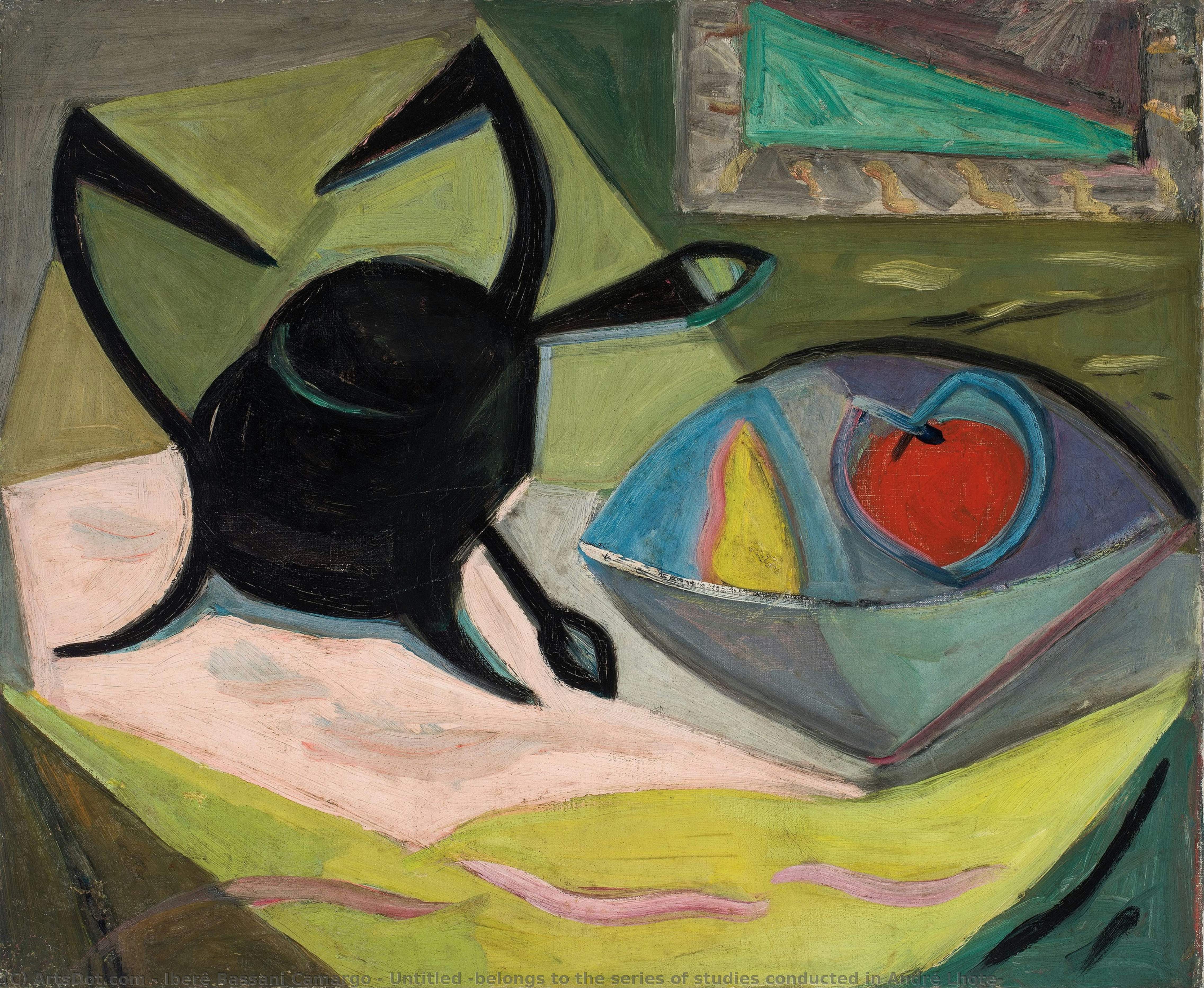
In this evocative monochrome study from 1949, the legendary Brazilian master Iberê Camargo invites us into a quiet, introspective corner of his early career. Part of a series of studies conducted under the influence of André Lhote, this untitled work transcends a simple arrangement of objects to become a profound meditation on light and volume. The composition centers around a substantial, handled pot that anchors the scene, its dark silhouette commanding the viewer's attention against a subtly textured backdrop. As our eyes wander through the frame, we encounter the soft curves of apples—one nestled in the foreground, others drifting into the mid-ground—and the gentle presence of a bowl, all arranged in a way that suggests a moment of stillness captured in time.
The absence of color serves not as a limitation, but as a powerful tool for emotional depth. By stripping away the distractions of hue, Camargo forces us to confront the raw architecture of the still life. The interplay between deep blacks and luminous greys creates a tactile sensation, where one can almost feel the weight of the ceramic pot and the smooth skin of the fruit. This technique, rooted in the structural lessons of Lhote, emphasizes the geometric essence of each object, transforming a mundane kitchen scene into a sophisticated dance of light and shadow that resonates with the quiet intensity of Expressionism.
The Legacy of an Expressionist Vision
To behold this piece is to witness the formative stages of an artist who would go on to define Brazilian Expressionism. Created during a period of intense artistic exploration, this work reflects the tension between classical structure and the burgeoning emotional freedom that characterized Camargo's later masterpieces. The starkness of the black and white palette evokes a sense of nostalgia and permanence, making it an ideal centerpiece for those seeking to add intellectual depth and a timeless, sophisticated atmosphere to a curated interior. For collectors and designers alike, this reproduction offers more than just decoration; it provides a window into the soul of a movement.
Integrating such a work into a modern living space or a professional gallery setting allows for a dialogue between historical gravity and contemporary elegance. The piece possesses a unique ability to anchor a room, providing a focal point that encourages contemplation. Whether paired with minimalist modern furniture or nestled within a more classical collection, the stark beauty of Camargo's 1949 study remains an enduring testament to the power of simplicity and the profound impact of the unadorned line.
Ähnliche Kunstwerke
Über den Künstler
Leben und Werk
Iberê Bassani Camargo, eine herausragende Gestalt der brasilianischen Kunst, wurde am 18. November 1914 in Restinga Seca, Brasilien, geboren. Mit seinen expressionistischen Meisterwerken hinterließ er einen unvergänglichen Eindruck in der Kunstwelt, bevor er am 8. August 1994 in Porto Alegre, Brasilien, verstarb.Künstlerisches Erbe und die Iberê Camargo Stiftung
Nach seinem Tod gründete seine Witwe, Maria Coussirat Camargo, die Iberê Camargo Stiftung, die eine entscheidende Rolle bei der Bewahrung und Förderung seines Werkes spielt. Seit 2008 beherbergen der Hauptsitz und das Museum der Stiftung, die vom renommierten portugiesischen Architekten Álvaro Siza entworfen wurden, Tausende von Camargos Gemälden.Bedeutende Werke und Sammlungen
Zu den bemerkenswerten Werken von Iberê Bassani Camargo gehören unter anderem:- Ciclista 3 (Radfahrer 3), ein Werk, das seinen einzigartigen expressionistischen Stil zur Schau stellt, ist Teil der Sammlung der Iberê Camargo Stiftung in Porto Alegre, Brasilien. [https://ArtsDot.com/@@/d7b6up-ibere-bassani-camargo-ciclista-3-(cyclist-3)]
- Missa do Pedido (Messe auf Bestellung), ein weiteres bedeutendes Stück, das Camargos Vielseitigkeit demonstriert und ebenfalls in der Iberê Camargo Stiftung untergebracht ist. [https://ArtsDot.com/@@/d7b5uj-ibere-bassani-camargo-missa-do-pedido-(mess-to-order-)]
- Study for No Tempo (Studie zu No Tempo), ein Beispiel seiner Vorarbeiten, ist ein Zeugnis seines akribischen Ansatzes. [https://ArtsDot.com/@@/d7b6ln-ibere-bassani-camargo-study-for-no-tempo-(into-time)]
- Study for Mesa com Espelho (Studie zu Tisch und Spiegel), ein Graphitwerk, unterstreicht seine experimentelle Natur. [https://AllArtsDot.com/@@/d7b63k-ibere-bassani-camargo-study-for-mesa-com-espelho-(table-and-mirror)]
- Ein unbetiteltes Werk, ein Ölgemälde auf Papier, zeigt seine abstrakt-expressionistische Seite. [https://ArtsDot.com/@@/d9hd9u-ibere-bassani-camargo-untitled]
Fazit
Das Vermächtnis von Iberê Bassani Camargo ist ein Zeugnis für die dauerhafte Kraft der expressionistischen Kunst. Durch sein Werk und die Iberê Camargo Stiftung inspiriert er weiterhin neue Generationen von Künstlern und Kunstliebhabern gleichermaßen.
Iberê Camargo
1914 - 1994 , Brasil
Kurzinfos
- Artistic Movement Or Style: Expressionism
- Artists Who Influenced This Artist:
- Franz Marc
- Henri Matisse
- Date Of Birth: November 18, 1914
- Date Of Death: August 8, 1994
- Full Name: Iberê Bassani Camargo
- Nationality: Brazilian
- Notable Artworks:
- Ciclista 3
- Missa do pedido
- Study for No tempo
- Study for Mesa com espelho
- Untitled
- Place Of Birth: Restinga Seca, Brazil
Ähnliche Artikel

Weiße Meisterwerke: Die Top 10 berühmtesten Gemälde und ihre zeitlose Eleganz
Entdecken Sie die Top 10 berühmter Gemälde, dominiert von Weiß! Von Malewitsch bis Rothko – erfahren Sie Geschichten hinter ikonischen Kunstwerke und lassen Sie sich für Ihre Wohnraumgestaltung inspirieren. Kunstreproduktionen in Museumsqualiät auf

Die Top 10 berühmter Gemälde im Reich der dunklen Töne |
Entdecken Sie die Top 10 berühmter Gemälde, beherrscht von dunklen Tönen! Von Caravaggio bis Manet – erfahren Sie die Geschichten hinter Meisterwerken der Kunstgeschichte. Finden Sie Ihre perfekte Reproduktion auf .

Monochrome Visions: Exploring the Aesthetic & Historical Significance of Black & White Photography
Explore the rich history & artistic power of black and white photography. From early techniques to iconic masters like Ansel Adams, discover why monochrome continues to captivate art lovers today. Expert insights for collectors.
Clyfford Still's Abstract Expressionism: A Study of Color, Form & the Existential Landscape
Explore the profound world of Clyfford Still's Abstract Expressionism with ArtsDot. Discover his unique style, existential themes & investment potential. Expert analysis for discerning collectors.
Silent Narratives: Exploring the Enduring Appeal of Still Life Painting Across Centuries
Explore the rich history of still life painting with ArtsDot. Discover Dutch Masters, decode vanitas symbolism & learn about collecting timeless art. Expert insights and museum-quality reproductions.