 Vorschau anzeigen
 Versenden
 Teilen
 Details anzeigen

 Herunterladen
 Ähnliche Objekte
 Röntgenaufnahme
 Diashow
 Stats
StatsIn the North
 Oil
Oil- WallArt
- Realism with Impressionistic tendencies
 1896
1896 106.0 x 77.0 cm
 Tretyjakow-Galerie
 Weiterlesen
Handgefertigte Ölreproduktion
Handgemaltes Ölgemälde auf Leinwand in Ihrer Wunschgröße und mit Rahmen, auf Bestellung von unseren Künstlern angefertigt. ( Switch to Print Switch to Digital Image)




P118B $10

P118H $10

P118W $10

P438Z $10

P508JH $12

P508YH $12

P805H $10

P805Z $10

P919BZ $10

P919G $10

P919XJ $10

P959ZH $10

P968JZ $12

W106C $8

W218G $10

W218JH $8

W218Y $10

W307PJ $10

W316G $10

W316PJ $8

W316Y $10

W398PJ $8

W4111J $10

W500HY $15

W500JH $15

W692G $12

W849H $8

W940BG $15

W953PJ $8




Wählen Sie aus unseren vordefinierten Formaten, die den ursprünglichen Proportionen des Kunstwerks entsprechen.

Sie können Ihre eigenen Maße eingeben, um einen bestimmten Rahmen oder Platz auszufüllen. Wenn die gewählte Größe nicht den Proportionen des Originalbildes entspricht, werden wir das Kunstwerk entweder beschneiden oder das Gemälde durch zusätzliche, handgemalte Elemente erweitern. Ein digitales Mockup wird Ihnen zur Genehmigung zugesandt, bevor die Produktion beginnt.
Bitte beachten Sie, dass die Bildschirmvorschau nicht die tatsächliche Beschneidung oder Erweiterung widerspiegelt. Nur das Mockup zeigt die endgültige Komposition exakt an.
Obwohl Sondermaße verfügbar sind, empfehlen wir, eine Größe aus der vordefinierten Liste zu wählen, um die ursprünglichen Proportionen beizubehalten.
Nach der Bestellung wird das ArtsDot.com-Team dem Kunden Anweisungen per E-Mail zusenden und eine Mockup-Vorschau bereitstellen.
Weltweiter Versand () in nur 3 bis 4 Wochen statt der üblichen 5 Wochen. (8 September). Keine Kompromisse bei der Qualität.

Kostenloser weltweiter Expressversand

Hochwertige Leinenleinwand

Umfassender Versicherungsschutz beim Versand

Zollgebühren-Rückerstattungsgarantie

Garantie für exakte Farbtreue

100-Tage-Rückgaberecht (nur bei Mängeln)

100% Geld-zurück-Garantie

Mengenrabatt verfügbar
 Die Glasoption ist nur für Größen unter 110 cm verfügbar.

In the North
Art der Reproduktion
Format der Reproduktion
-


Gesamtpreis
$ 263
The Soul of the Frozen Land: Isaak Levitan’s “In the North”
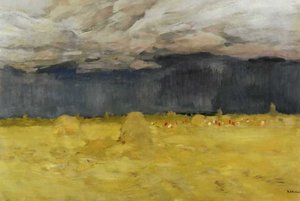
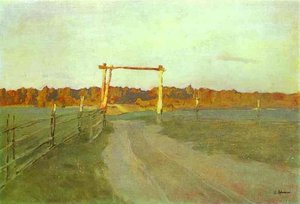
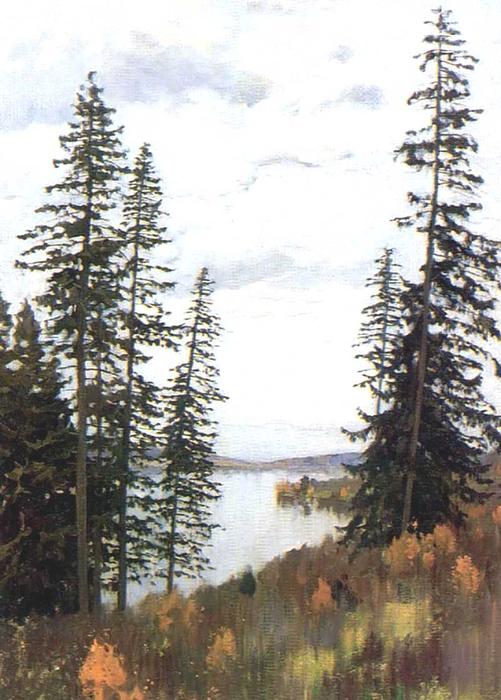
Isaak Ilyich Levitan's "In the North" (1896) isn’t merely a landscape painting; it’s a profound distillation of the Russian soul, a poignant exploration of solitude and the sublime beauty found within the austere embrace of the Arctic wilderness. Painted during a period of intense introspection for the artist – marked by personal loss and a deep connection to the natural world – this work transcends simple representation, becoming a visual poem about resilience, melancholy, and the enduring power of nature.
Levitan, a master of what he termed “mood landscapes,” eschewed the bright, idealized depictions favored by some of his contemporaries. Instead, he sought to capture not just the appearance of a place, but its very essence – the feeling it evokes within the viewer. "In the North" achieves this with remarkable skill, utilizing a muted palette dominated by cool greens, browns, and blues that evoke the perpetual twilight of the high latitudes. The sky, heavy with clouds, presses down upon the scene, creating an atmosphere of quiet contemplation and subtle foreboding.
A Symphony of Verticality: Composition and Technique
The painting’s composition is strikingly vertical, dominated by the towering pine trees that punctuate the foreground. These aren't individual trees, but rather a unified mass, their dark forms rising like silent sentinels against the hazy horizon. This deliberate emphasis on verticality draws the eye upwards, creating a sense of scale and emphasizing the immensity of the landscape. Levitan’s technique is characterized by loose, expressive brushstrokes – a hallmark of Impressionism blended with a distinctly Russian sensibility. He employs *alla prima* painting, working directly onto the canvas without extensive underpainting, resulting in a vibrant, almost luminous quality to the colors.
Notice how he subtly renders the water’s surface; it's not a mirror reflecting the sky, but rather an active element, imbued with movement and depth. The use of atmospheric perspective – softening distant objects and reducing their detail – further enhances the sense of vastness and distance. The subtle gradations of tone, achieved through layering thin washes of paint, create a remarkable illusion of light and shadow, capturing the diffused quality of sunlight filtering through the clouds.
Symbolism in the Silence: Interpreting the Arctic
“In the North” is rich with symbolic meaning. The dominant pine trees, deeply rooted in the harsh northern soil, represent resilience, endurance, and a connection to ancient traditions. They are not merely trees; they are witnesses to centuries of solitude and hardship. The muted colors evoke feelings of melancholy and introspection – a reflection of Levitan’s own emotional state during this period of his life. The absence of human figures reinforces the painting's theme of isolation, inviting the viewer to contemplate their place within the vastness of nature.
Furthermore, the painting can be interpreted as an allegory for Russia itself – a land of immense beauty and profound melancholy, grappling with its own history and identity. The northern landscape, often associated with hardship and remoteness, mirrors the challenges faced by the Russian people during the late 19th century.
A Legacy of Mood: Levitan’s Enduring Influence
Isaak Levitan's "In the North" stands as a testament to his mastery of capturing the emotional essence of the Russian landscape. It is a painting that continues to resonate with viewers today, offering a glimpse into a world of quiet contemplation and profound beauty. His work profoundly influenced generations of Russian landscape painters, establishing a tradition of “mood landscapes” that prioritized atmosphere and emotion over mere topographical accuracy. Reproductions of this iconic piece offer a powerful way to bring the spirit of the Arctic into any space, evoking feelings of peace, solitude, and a deep connection to the natural world.
Ähnliche Kunstwerke
Über den Künstler
Isaak Iljitsch Lewitan: Ein Leben in der Landschaft
Isaak Iljitsch Lewitan (1860-1900) war ein renommierter russischer Landschaftsmaler, der zu einer entscheidenden Figur bei der Entwicklung von stimmungsvollen Landschaften wurde. Seine Werke fingen die Essenz der russischen Landschaft ein und waren von lyrischem Charme und emotionaler Tiefe geprägt.
Frühes Leben und Ausbildung
- Geboren am 30. August 1860 in Kibarty (heute Litauen), in einer jüdischen Familie, die später nach Moskau zog.
- Zeigte früh künstlerisches Talent und erhielt Privatunterricht, bevor er sich formell dem Kunststudium widmete.
- Im Jahr 1873 trat er in die Moskauer Schule für Malerei, Bildhauerei und Architektur ein, wo er unter einflussreichen Künstlern wie Alexei Sawrassow, Wassili Perow und Wassili Polenow studierte.
- Sawrassows Einfluss war besonders bedeutsam und förderte Lewitans Liebe zum Darstellen der subtilen Nuancen der russischen Natur.
Künstlerische Entwicklung und Stil
- Lewitan unterschied sich schnell durch seine Fähigkeit, Atmosphäre und Emotionen durch Landschaftsmalerei zu vermitteln.
- Er begründete das Genre der „Stimmungslandschaft“ und ging über die bloße topografische Darstellung hinaus, um menschliche Gefühle und spirituelle Verbindungen zur Natur auszudrücken.
- Seine Palette war oft gedämpft und konzentrierte sich auf naturalistische Farben und poetische Elemente anstelle von lebhaften Farbtönen.
- Obwohl seine späteren Arbeiten eine Vertrautheit mit dem Impressionismus zeigten, bewahrte er ein einzigartig russisches Gefühl.
Wichtige Werke und Errungenschaften
- Zu seinen bekanntesten Werken gehören: Herbsttag in Sokolniki (1879), Die Vladimirka Straße (1892) und Ewiger Frieden (1894). Diese Gemälde sind prominent in der Tretjakow-Galerie ausgestellt.
- Weitere bemerkenswerte Werke sind „Frühlingsflut“, „Stürmischer Tag“, „Vesperglocken“ und „Stillfriedhof“.
- Im Jahr 1897 wurde Lewitan in die Akademie der Künste aufgenommen, was ein Beweis für seine wachsende Anerkennung war.
- Er wurde 1898 Leiter des Landschaftsstudios an seiner Alma Mater und förderte so die nächste Generation russischer Landschaftsmaler.
Einflüsse und Zusammenarbeit
- Lewitan wurde tief von den Werken Alexei Sawrassows beeinflusst, dessen melancholische Landschaften mit seiner eigenen künstlerischen Vision in Resonanz standen.
- Er arbeitete mit anderen Künstlern wie Konstantin Korovin, Michail Nesterow und Nikolai Tschechow zusammen.
- Er steuerte Illustrationen für die Zeitschrift „Moskau“ bei und entwarf Bühnenbilder für die private Russische Oper von Sawwa Mamontow.
Historische Bedeutung und Vermächtnis
- Lewitans Werk spielte eine entscheidende Rolle bei der Gestaltung der Entwicklung der russischen Landschaftsmalerei.
- Er erweiterte das Genre über die bloße Darstellung hinaus und verlieh ihm emotionale Tiefe und spirituelle Resonanz.
- Seine Gemälde berufen weiterhin ein starkes Gefühl nationaler Identität und Wertschätzung für die Schönheit der russischen Landschaft hervor.
- Im Jahr 1941 wurden seine Überreste auf den Nowodewitschi-Friedhof in Moskau umgebettet, wo er neben seinem engen Freund Anton Tschechow begraben liegt, was ihre künstlerische Verbundenheit symbolisiert.
Lewitans Vermächtnis lebt als Meister der atmosphärischen Landschaftsmalerei und als tiefgründiger Interpret der russischen Seele fort.
Isaak Ilyich Levitan
1860 - 1900 , Russland
Kurzinfos
- Bemerkenswerte Werke:
- Herbsttag in Sokolniki
- Die Vladimirka Straße
- Ewige Ruhe
- Frühlingsflut
- Geburtsdatum: 30. August 1860
- Künstlerische Einflüsse: ['Alexei Savrasov']
- Künstlerische Richtung: Landschaftsmalerei, Stimmungslandschaft
- Nationalität: Russisch
- Vollständiger Name: Isaak Iljitsch Lewitan
Ähnliche Artikel
Evoking Tranquility: A Study of Serene Beauty in Visual Art Across Historical Movements
Explore the history of serene art & discover how landscape paintings evoke tranquility across movements. Find inspiration for calming home decor & museum-quality reproductions at ArtsDot.

Evoking Tranquility: A Comprehensive Exploration of Serene Landscapes in Art History
Explore the history of serene landscapes in art! Discover renowned artists like Monet & Munch, movements from Impressionism to Tonalism, and find the perfect piece to bring tranquility to your home. Expert insights at ArtsDot.
Ruhe und Harmonie: Die 10 ikonischsten Kunstwerke für Ihr Zuhause
Entdecken Sie die 10 ikonischsten Kunstwerke, die Ruhe und Harmonie verkörpern – von Monets Seerosen bis Van Goghs Sternennacht. Erfahren Sie mehr über Künstler & Techniken! Museum-Qualität bei ArtsDot.com
Serene Visions: Exploring Themes of Tranquility in Art History & Contemporary Practice
Explore the history of serene landscape art & discover artists who evoke tranquility. Find the perfect calming artwork for your home with expert guidance from ArtsDot.

John Constable: Die 25 Meisterwerke des englischen Landschaftsgenies – ArtsDot
Entdecken Sie die 25 Meisterwerke von John Constable! Erleben Sie englische Landschaftsmalerei vom Hay Wain bis zur Stour Valley. Hochwertige Reproduktionen & Kunst für Ihr Zuhause auf ArtsDot.com.