 Vorschau anzeigen
 Versenden
 Teilen
 Details anzeigen

 Herunterladen
 Ähnliche Objekte
 Röntgenaufnahme
 Diashow
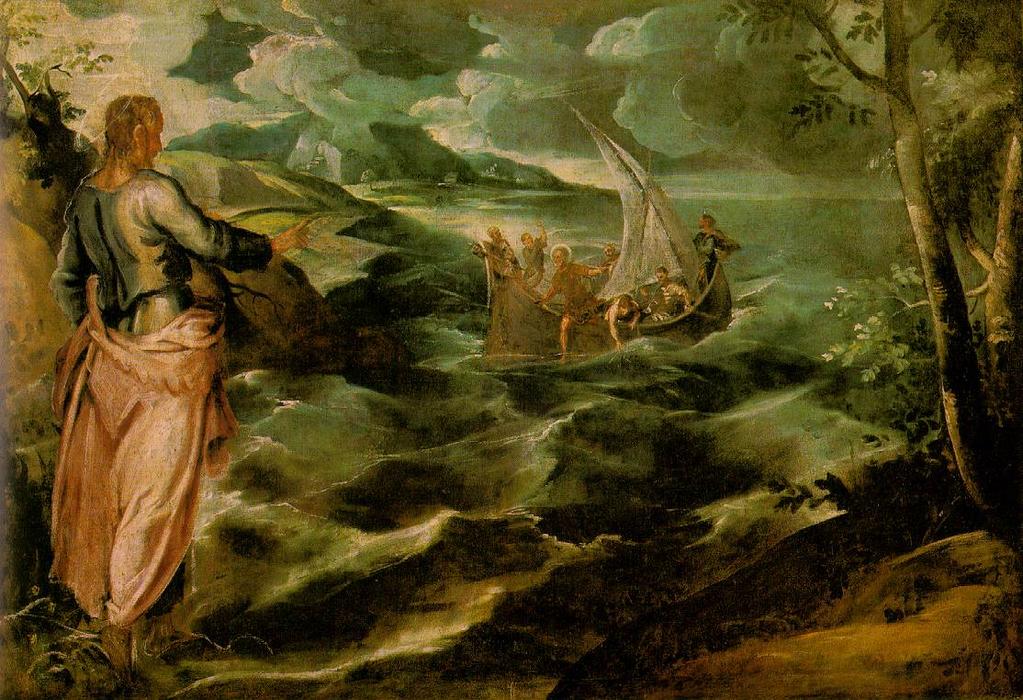
Christ on the Sea of Galilee
 Oil On Canvas
- WallArt
- Italian Baroque
 1580
1580- Renaissance
 117.0 x 169.0 cm
 Weiterlesen
Handgefertigte Ölreproduktion
Handgemaltes Ölgemälde auf Leinwand in Ihrer Wunschgröße und mit Rahmen, auf Bestellung von unseren Künstlern angefertigt. ( Druck bestellen Bild kaufen)




P118B $10

P118H $10

P118W $10

P438Z $10

P508JH $12

P508YH $12

P805H $10

P805Z $10

P919BZ $10

P919G $10

P919XJ $10

P959ZH $10

P968JZ $12

W106C $8

W218G $10

W218JH $8

W218Y $10

W307PJ $10

W316G $10

W316PJ $8

W316Y $10

W398PJ $8

W4111J $10

W500HY $15

W500JH $15

W692G $12

W849H $8

W940BG $15

W953PJ $8




Wählen Sie aus unseren vordefinierten Formaten, die den ursprünglichen Proportionen des Kunstwerks entsprechen.

Sie können Ihre eigenen Maße eingeben, um einen bestimmten Rahmen oder Platz auszufüllen. Wenn die gewählte Größe nicht den Proportionen des Originalbildes entspricht, werden wir das Kunstwerk entweder beschneiden oder das Gemälde durch zusätzliche, handgemalte Elemente erweitern. Ein digitales Mockup wird Ihnen zur Genehmigung zugesandt, bevor die Produktion beginnt.
Bitte beachten Sie, dass die Bildschirmvorschau nicht die tatsächliche Beschneidung oder Erweiterung widerspiegelt. Nur das Mockup zeigt die endgültige Komposition exakt an.
Obwohl Sondermaße verfügbar sind, empfehlen wir, eine Größe aus der vordefinierten Liste zu wählen, um die ursprünglichen Proportionen beizubehalten.
Nach der Bestellung wird das ArtsDot.com-Team dem Kunden Anweisungen per E-Mail zusenden und eine Mockup-Vorschau bereitstellen.
Weltweiter Versand () in nur 3 bis 4 Wochen statt der üblichen 5 Wochen. (25 August). Keine Kompromisse bei der Qualität.

Kostenloser weltweiter Expressversand

Hochwertige Leinenleinwand

Umfassender Versicherungsschutz beim Versand

Zollgebühren-Rückerstattungsgarantie

Garantie für exakte Farbtreue

60 Tage Rückgaberecht (nur bei Mängeln)

100% Geld-zurück-Garantie

Mengenrabatt verfügbar
 Die Glasoption ist nur für Größen unter 110 cm verfügbar.

Christ on the Sea of Galilee
Art der Reproduktion
Format der Reproduktion
-


Gesamtpreis
$ 263
Beschreibung des Kunstwerks
A Tempest of Faith: The Divine Drama of Tintoretto
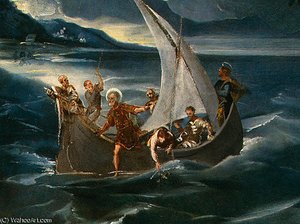
In the turbulent waters of the late Renaissance, few artists could command the elements with as much ferocity and spiritual depth as Jacopo Tintoretto. His masterpiece, “Christ on the Sea of Galilee,” completed around 1580, is not merely a depiction of a biblical miracle; it is a visceral encounter with the divine. As the viewer gazes upon this monumental oil on canvas, they are immediately swept into a world where the boundaries between the earthly and the celestial dissolve. The scene captures the harrowing moment from the Gospel of John when Christ walks upon the churning waves to reach his disciples, transforming a moment of mortal terror into a profound testament of unwavering faith.
The composition is a masterclass in orchestrated chaos. Tintoretto utilizes a dynamic, diagonal arrangement that pulls the eye through the spray and shadow of the storm. In the foreground, small vessels struggle against the mounting swells, their occupants caught in a state of breathless awe and desperation. The artist’s ability to render the weight of the water and the frantic energy of the wind creates an immersive atmosphere that feels almost tactile. Amidst this swirling tempest, Christ emerges as a beacon of supernatural stillness. His presence provides the essential emotional anchor for the piece, offering a sense of serene authority that contrasts sharply with the surrounding upheaval.
The Mastery of Light and Shadow
What truly elevates this work to the pantheon of Venetian greatness is Tintoretto’s revolutionary use of chiaroscuro. Known as il Furioso for his energetic and often rapid execution, Tintoretto employed a technique that favored dramatic light over static form. In “Christ on the Sea of Galilee,” light does not simply illuminate; it pierces. Sudden flashes of brilliance break through heavy, brooding clouds, catching the crest of a wave or the startled face of a fisherman, only to be swallowed again by deep, velvety shadows. This interplay creates a rhythmic tension that mimics the very heartbeat of a storm.
For the discerning collector or interior designer, this painting offers an unparalleled sense of movement and depth. The artist’s alla prima approach—painting with immediacy and directness—imbues the canvas with a raw, spontaneous energy that more traditional, meticulously underdrawn works often lack. This technique allows the light to feel as though it is flickering in real-time, making the artwork feel less like a frozen historical moment and more like a living, breathing event. It is this very quality of motion that makes a high-quality reproduction of this piece such a commanding presence in any curated space.
A Timeless Inspiration for the Modern Space
Beyond its technical brilliance, the painting serves as a profound symbol of resilience and spiritual triumph. The struggle of the disciples against the sea is a universal metaphor for the human condition—the navigation of life's inevitable storms through the strength of belief. This layer of psychological depth ensures that the artwork resonates on an emotional level long after the initial visual impact has faded.
Integrating a reproduction of such a significant historical work into a contemporary interior provides more than just decoration; it introduces a narrative soul to the room. Whether placed in a grand library, a sophisticated study, or as a focal point in a minimalist gallery-style living area, “Christ on the Sea of Galilee” commands attention. It invites contemplation, sparks conversation, and brings the dramatic legacy of the Venetian school into the modern era, offering a window into a time when art was used to bridge the gap between the human spirit and the infinite.
Ähnliche Kunstwerke
Über den Künstler
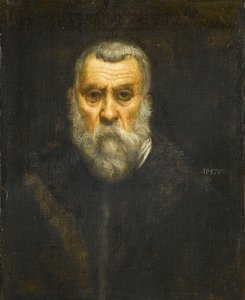
Jacopo Tintoretto (1518–1594)
Frühes Leben und Ausbildung
- Geboren Jacopo Robusti in Venedig um Ende September oder Anfang Oktober 1518.
- Sein Vater, Battista Robusti, war Färber – daher der Spitzname „Tintoretto“ („kleiner Färber“).
- Details seiner formellen Ausbildung sind spärlich; Berichte deuten auf ein kurzes und erfolgloses Lehrverhältnis mit Tizian hin.
- Er lernte wahrscheinlich autodidaktisch, indem er sich durch Sektionen und Zeichnungen aus Gips- und Reliefskulpturen mit Anatomie beschäftigte.
Künstlerische Entwicklung & Stil
- Tintorettos Stil ist durch dramatische Kompositionen, energiegeladene Figuren und eine mutige Verwendung der Perspektive gekennzeichnet.
- Seine frühen Werke zeigen eine Mischung aus Einflüssen, darunter Tizian, Michelangelo und andere venezianische Meister.
- Er entwickelte eine besondere Technik mit schnellem Pinselstrich und innovativen Lichteffekten – wodurch er den Spitznamen „Il Furioso“ („der Wütende“) erhielt.
- Seine Arbeit entwickelte sich hin zu immer dynamischeren und emotional aufgeladenen Szenen, oft mit komplexen räumlichen Anordnungen.
Wichtige Werke & Leistungen
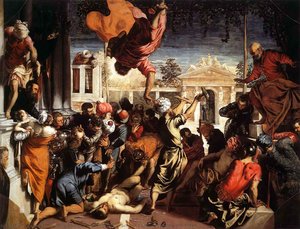
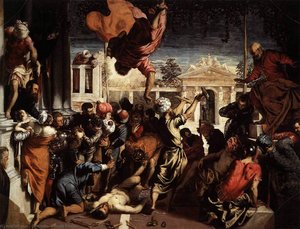
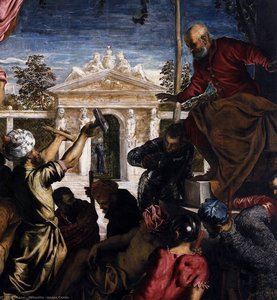
- Das Wunder des Heiligen Markus, der Sklaven befreit (1548): Ein kraftvolles Beispiel für seine dramatische Komposition und Perspektivkünste.
- Arbeiten an der Scuola Grande di San Rocco, Venedig: Dazu gehören „Die Unbefleckte Empfängnis“ und zahlreiche andere Gemälde, die seine Meisterschaft in Erzählung und Maßstab demonstrieren.
- Das letzte Abendmahl (1592–1594): Ein monumentales Werk, das seinen innovativen Ansatz für ein traditionelles Thema demonstriert.
- Zahlreiche religiöse und historische Gemälde für venezianische Kirchen und Paläste.
Einflüsse & Vermächtnis
- Er wurde von Tizians Farbgebung und Michelangelos dynamischer Figurentechnik beeinflusst.
- Tintorettos Werk schloss die Lücke zwischen der Renaissance und dem Barock, indem es spätere Künstler mit seinen dramatischen Kompositionen und ausdrucksstarken Pinselstrichen beeinflusste.
- Seine innovative Verwendung von Licht und Schatten warnt vor Techniken, die von Caravaggio und anderen Barockmeistern verwendet wurden.
- Er hinterließ ein umfangreiches Werk, das bis heute inspiriert und fesselt.
Historische Bedeutung
- Tintoretto war einer der drei großen venezianischen Maler des 16. Jahrhunderts, neben Tizian und Paolo Veronese.
- Er spielte eine entscheidende Rolle bei der Gestaltung der künstlerischen Landschaft Venedigs im späten Renaisanz.
- Sein Werk spiegelt den religiösen Eifer und die politischen Spannungen seiner Zeit wider.
- Tintorettos Vermächtnis als Meister der dramatischen Komposition und des ausdrucksstarken Gemäldes hält an, wodurch er seinen Platz als einer der wichtigsten Künstler der Geschichte festigt.
Tintoretto (Jacopo Comin)
1518 - 1594 , Italien
Kurzinfos
- Beeinflusste Künstler:
- Tizian
- Michelangelo
- Bemerkenswerte Werke:
- Das Wunder des Hl. Markus
- Die Himmelfahrt Mariä
- Letzte Abendmahl (San Giorgio)
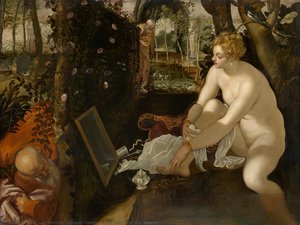
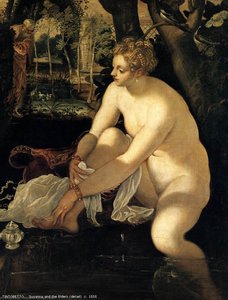
- Susanna und die Älteren
- Geburtsdatum: September/Oktober 1518
- Geburtsort: Venedig, Italien
- Künstlerische Richtung: Manierismus, Venezianische Schule
- Nationalität: Venezianisch
- Todatum: 31. Mai 1594
- Vollständiger Name: Jacopo Tintoretto
- Von Künstlern Beeinflusst:
- Bonifazio Veronese
- Paris Bordone
Ähnliche Artikel

Jacopo Tintoretto: Die 25 Meisterwerke des venezianischen Dramatikers | ArtsDot
Entdecken Sie die 25 Meisterwerke von Jacopo Tintoretto! Tauchen Sie ein in die dramatische Welt der venezianischen Renaissance. Hochwertige Kunst-Reproduktionen & Inspiration für Ihr Zuhause – jetzt auf ArtsDot.com.

Öl auf Leinwand: Eine historische und technische Erkundung eines zeitlosen künstlerischen Mediums
Entdecken Sie die faszinierende Welt der Ölmalerei! Von historischen Techniken bis zur modernen Anwendung – wir bieten Expertenwissen, Restaurierungstipps und hochwertige Reproduktionen. Jetzt informieren!

The Enduring Legacy of Oil on Canvas: Technique, History & Aesthetic Impact
Explore the rich history & techniques of oil painting – from Renaissance masters to Impressionism. Discover pigments, layering methods, and why this timeless medium endures. Expert insights for artists & art enthusiasts.

Das bleibende Erbe der Ölmalerei: Technik, Geschichte und zeitgenössische Praxis
Entdecken Sie die faszinierende Geschichte der Ölmalerei – von den frühen Techniken bis zur modernen Kunst. Expertenwissen, detaillierte Analysen und Inspiration für Sammler & Kunstliebhaber.
Öl auf Leinwand: Die 10 Meisterwerke, die Kunst für immer veränderten |
Entdecken Sie die 10 legendärsten Öl auf Leinwand Meisterwerke! Von Van Gogh bis Monet – erfahren Sie die Geschichten hinter ikonischen Gemälden und lassen Sie sich von Kunstgeschichte inspirieren. Hochwertige Reproduktionen für Ihr Zuhause finden Sie auf .