 Vorschau anzeigen
 Versenden
 Teilen
 Details anzeigen

 Herunterladen
 Ähnliche Objekte
 Röntgenaufnahme
 Diashow
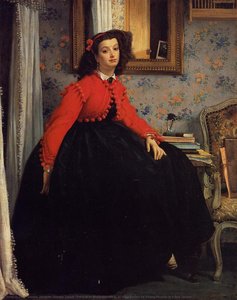
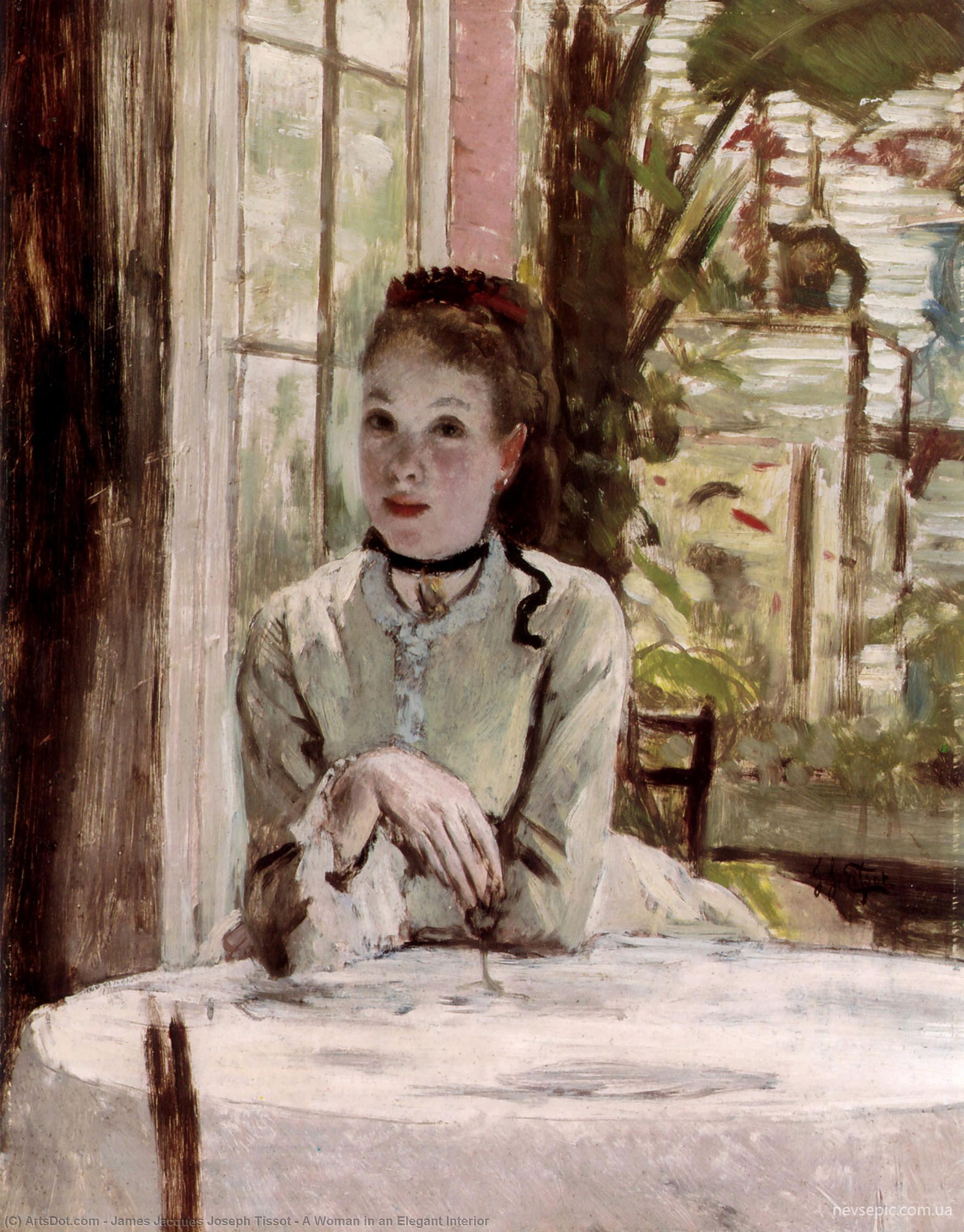
A Woman in an Elegant Interior
 Oil On Canvas
- WallArt
- Impressionism
 19th Century
 31.0 x 40.0 cm
 Weiterlesen
Handgefertigte Ölreproduktion
Handgemaltes Ölgemälde auf Leinwand in Ihrer Wunschgröße und mit Rahmen, auf Bestellung von unseren Künstlern angefertigt. ( Druck bestellen Bild kaufen)




P118B $10

P118H $10

P118W $10

P438Z $10

P508JH $12

P508YH $12

P805H $10

P805Z $10

P919BZ $10

P919G $10

P919XJ $10

P959ZH $10

P968JZ $12

W106C $8

W218G $10

W218JH $8

W218Y $10

W307PJ $10

W316G $10

W316PJ $8

W316Y $10

W398PJ $8

W4111J $10

W500HY $15

W500JH $15

W692G $12

W849H $8

W940BG $15

W953PJ $8




Wählen Sie aus unseren vordefinierten Formaten, die den ursprünglichen Proportionen des Kunstwerks entsprechen.

Sie können Ihre eigenen Maße eingeben, um einen bestimmten Rahmen oder Platz auszufüllen. Wenn die gewählte Größe nicht den Proportionen des Originalbildes entspricht, werden wir das Kunstwerk entweder beschneiden oder das Gemälde durch zusätzliche, handgemalte Elemente erweitern. Ein digitales Mockup wird Ihnen zur Genehmigung zugesandt, bevor die Produktion beginnt.
Bitte beachten Sie, dass die Bildschirmvorschau nicht die tatsächliche Beschneidung oder Erweiterung widerspiegelt. Nur das Mockup zeigt die endgültige Komposition exakt an.
Obwohl Sondermaße verfügbar sind, empfehlen wir, eine Größe aus der vordefinierten Liste zu wählen, um die ursprünglichen Proportionen beizubehalten.
Nach der Bestellung wird das ArtsDot.com-Team dem Kunden Anweisungen per E-Mail zusenden und eine Mockup-Vorschau bereitstellen.
Weltweiter Versand () in nur 3 bis 4 Wochen statt der üblichen 5 Wochen. (22 August). Keine Kompromisse bei der Qualität.

Kostenloser weltweiter Expressversand

Hochwertige Leinenleinwand

Umfassender Versicherungsschutz beim Versand

Zollgebühren-Rückerstattungsgarantie

Garantie für exakte Farbtreue

60 Tage Rückgaberecht (nur bei Mängeln)

100% Geld-zurück-Garantie

Mengenrabatt verfügbar
 Die Glasoption ist nur für Größen unter 110 cm verfügbar.

A Woman in an Elegant Interior
Art der Reproduktion
Format der Reproduktion
-


Gesamtpreis
$ 263
Beschreibung des Kunstwerks
A Moment Frozen in Light
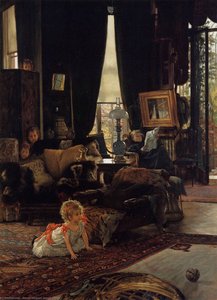
In the quiet corners of nineteenth-century Parisian life, there exist moments of profound stillness that transcend the passage of time. "A Woman in an Elegant Interior" by Jacques Joseph Tissot captures such a moment with unparalleled grace. The painting presents us with a solitary young woman, seated at a table, lost in a state of quiet contemplation. As she occupies the heart of the composition, the viewer is drawn into her private world—a space that feels both intimate and grand. There is an undeniable sense of atmosphere here; the soft, diffused light filtering through an unseen window bathes the scene in a gentle glow, suggesting a late afternoon where time seems to slow down. This is not merely a portrait of a person, but a portrait of a mood, evoking a delicate balance between domestic tranquility and a subtle, lingering sense of boredom or introspection.
The artistry of Tissot shines through his masterful use of the Impressionist style, where the focus shifts from rigid anatomical precision to the evocative power of light and texture. Rather than sharp, clinical lines, the artist employs loose, broken brushstrokes that allow colors to dance and blend upon the canvas. This technique creates a luminous quality, particularly in how the light interacts with the fabrics and the surfaces of the interior. By layering thin washes of oil paint, Tissot achieves a remarkable depth, where the background elements—though secondary to the subject—provide a rich, tonal context that anchors the figure within her elegant surroundings. The texture of the piece is a beautiful contradiction: smooth and glazed in areas of soft light, yet possessing a visible, rhythmic roughness that breathes life into the composition.
The Elegance of the Belle Époque
To understand this masterpiece, one must look to the era from which it emerged. Jacques Joseph Tissot was a premier chronicler of the Belle Époque, a period defined by optimism, fashion, and the flourishing of high society. His upbringing—the son of a draper and a milliner—gifted him with an extraordinary eye for the nuances of textile, lace, and sartorial elegance. In this painting, every brushstroke serves to celebrate the sophisticated domesticity of the age. While the symbolic elements are minimal, the very setting itself speaks volumes about the social strata of the time; the refined interior and the subject's poised demeanor reflect a world of leisure and cultivated taste.
For the discerning collector or the interior designer, this artwork offers more than just visual beauty; it provides an emotional anchor for a room. The painting’s palette, characterized by expressive yet harmonious tones, allows it to integrate seamlessly into various sophisticated decor styles, from classic traditionalism to modern chic. It serves as a window into a bygone era of refinement, making it an ideal centerpiece for those looking to infuse their space with a sense of history, quiet luxury, and timeless romanticism. Owning a high-quality reproduction of this work is an invitation to surround oneself with the enduring charm of Tissot’s vision, bringing the soft light and elegant soul of nineteenth-century France into the contemporary home.
Ähnliche Kunstwerke

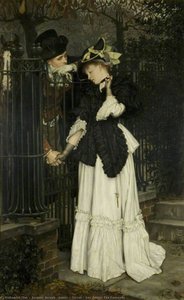
Über den Künstler
Early Life and Artistic Beginnings
Jacques Joseph Tissot, born October 15, 1836, in Nantes, France, was destined for a life steeped in artistic passion from his earliest years. His father, Marcel Théodore Tissot, was a successful drapery merchant. His mother, Marie Durand, assisted her husband in the family business and designed hats. A devout Catholic, Tissot's formative years were marked by a deep appreciation for craftsmanship and detail—qualities that would profoundly shape his artistic vision. Simultaneously, he absorbed influences from Parisian society, exposing him to the vibrant world of fashion and culture. Despite familial responsibilities, Tissot relentlessly pursued his artistic ambitions, enrolling at the École des Beaux-Arts in Paris where he honed his skills under the tutelage of luminaries like Ingres, Flandrin, and Lamothe. This formative period cemented his commitment to painting as a vocation and established him firmly within the influential Parisian art milieu.The Salon Years and Recognition
Tissot’s debut at the Paris Salon in 1861 signaled a pivotal moment—the unveiling of “The Meeting of Faust and Marguerite,” a dramatic tableau that captivated audiences and garnered considerable acclaim from critics. Purchased by the state for inclusion in the Luxembourg Gallery, this ambitious undertaking showcased Tissot's burgeoning reputation as a painter capable of capturing complex narratives and conveying profound emotion. Subsequent Salon exhibitions solidified his position within the artistic establishment, attracting commissions from prominent patrons. His early successes fueled confidence and propelled him toward exploring new subjects and techniques—a trajectory that would ultimately define his illustrious career. The painting’s masterful composition and luminous color palette immediately established Tissot as a rising star among Impressionist painters.Genre Painting and Parisian Society
Tissot’s artistic breakthrough arrived with his series “La Femme à Paris,” a meticulously observed depiction of the demi-mondaine world of late Victorian London. These paintings, characterized by their luminous color palettes and masterful rendering of textures—particularly fabrics—became synonymous with capturing the allure and dynamism of Parisian high society. Tissot's meticulous attention to detail extended beyond mere visual representation; he sought to convey not only appearances but also psychological nuances, reflecting the anxieties and aspirations of his subjects. His work stands as a testament to Impressionistic influences blended with realism, offering an unparalleled glimpse into the social customs and artistic sensibilities of the Belle Époque. He skillfully captured the atmosphere of London’s theaters and cafes, portraying women in elegant gowns and conveying subtle emotions through facial expressions and body language—a remarkable achievement for his time.Biblical Themes and Japonisme
Throughout his prolific output, Tissot embraced diverse artistic inspirations—ranging from medieval narratives to biblical scenes—demonstrating remarkable versatility. His depictions of religious subjects, imbued with spiritual depth and emotional resonance, showcased his ability to elevate visual storytelling into profound contemplation. Simultaneously, he was captivated by Japonisme—the fascination with Japanese art and aesthetics that swept across Europe during the Victorian era—evident in compositions infused with asymmetrical arrangements and subtle color harmonies reminiscent of Japanese prints. This stylistic fusion underscored Tissot’s intellectual curiosity and his willingness to experiment with innovative artistic approaches. He drew inspiration from Japanese woodblock prints, incorporating elements of flatness and bold outlines into his paintings—a distinctive feature that distinguishes him from many of his contemporaries.Later Years and Legacy
Tissot served in the Franco-Prussian War on the side of France and later the Paris Commune—an experience that undoubtedly shaped his worldview. Following the war’s conclusion, he relocated to London where he pursued etching alongside Sir Seymour Haden and honed his artistic skills through portrait commissions and caricatures for Vanity Fair. His relationship with Kathleen Newton blossomed into a passionate companionship, providing him with enduring inspiration for numerous paintings. Tragically, Newton succumbed to tuberculosis in 1882—a profound loss that deeply affected Tissot’s creative output. Despite this sorrowful chapter, he continued to produce exceptional artwork until his death in 1902. Today, Jacques Joseph Tissot's legacy resides in museums across Europe and North America—most notably the Musée National Jean-Jacques Henner in Paris—where his celebrated paintings continue to inspire admiration for their artistic brilliance and evocative portrayal of Victorian life and faith. His enduring influence on genre painting and Impressionism secures his place as one of France’s most distinguished artists of the 19th century.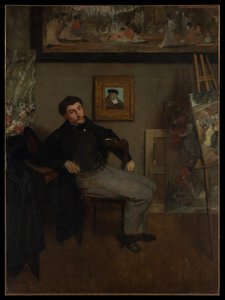
Jacques Joseph Tissot
1836 - 1902 , Frankreich
Kurzinfos
- Artistic Movement Or Style: Genre Painting
- Artists Who Influenced This Artist:
- Jean-Auguste Ingres
- Gustave Courbet
- Date Of Birth: 15. Oktober 1836
- Date Of Death: 8. August 1902
- Full Name: Jacques Joseph Tissot
- Nationality: Französisch
- Notable Artworks:
- Das Treffen von Faust und Marguerite
- La Femme à Paris
- Place Of Birth: Nantes, Frankreich
Ähnliche Artikel
Sir Alfred James Munnings: Die 25 Meisterwerke des Pferdebildes | ArtsDot
Entdecken Sie die 25 Meisterwerke von Sir Alfred James Munnings! Erleben Sie seine beeindruckenden Pferdebilder, geprägt vom Impressionismus und Realismus. Hochwertige Kunstdrucke & Reproduktionen auf ArtsDot.com – für elegante Wandkunst & stilvolles Interieurdesign.
James Abbott McNeill Whistler: Die 25 Meisterwerke für Ihr Zuhause | ArtsDot
Entdecken Sie die 25 Meisterwerke von James Abbott McNeill Whistler! Von den berühmten Nocturnes bis zu ikonischen Porträts – erleben Sie Ästhetizismus, Impressionismus & Tonalismus. Hochwertige Reproduktionen auf ArtsDot.com.
Pierre-Auguste Renoir: Die 25 Meisterwerke des Impressionismus für Ihr Zuhause | ArtsDot
Entdecken Sie die 25 schönsten Meisterwerke von Pierre-Auguste Renoir! Tauchen Sie ein in die Welt des Impressionismus, erleben Sie berühmte Gemälde wie 'Bal au moulin de la Galette' und finden Sie hochwertige Kunstdrucke für Ihr Zuhause. Jetzt auf ArtsDot.com!
Eleganz in der Kunst: Die 10 schönsten Meisterwerke für Ihr Zuhause |
Entdecken Sie die 10 elegantesten Meisterwerke der Kunstgeschichte! Von Renaissance bis Impressionismus – erfahren Sie die Geschichten berühmter Künstler und lassen Sie sich von zeitloser Schönheit inspirieren. Hochwertige Kunstdrucke auf .
Jenseits vergänglicher Trends: Die Kultivierung zeitloser Innenästhetik durch Renaissance-Reverie, Impressionistisches Licht und Pop Art-Vibranz
Entdecken Sie, wie Renaissance-Eleganz, Impressionistisches Licht & Pop Art-Vibranz zeitlose Innenräume schaffen! Expertenrat für Luxus-Inneneinrichtung und individuelle Kunstberatung. Jetzt lesen!