 Vorschau anzeigen
 Versenden
 Teilen
 Details anzeigen

 Herunterladen
 Ähnliche Objekte
 Röntgenaufnahme
 Diashow
The Egyptians Are Destroyed
 Impressionistic Realism
 1902
1902 9.0 x 28.0 cm
 Das Jüdische Museum
 Weiterlesen
Handgefertigte Ölreproduktion
Handgemaltes Ölgemälde auf Leinwand in Ihrer Wunschgröße und mit Rahmen, auf Bestellung von unseren Künstlern angefertigt. ( Druck bestellen Bild kaufen)




P118B $10

P118H $10

P118W $10

P438Z $10

P508JH $12

P508YH $12

P805H $10

P805Z $10

P919BZ $10

P919G $10

P919XJ $10

P959ZH $10

P968JZ $12

W106C $8

W218G $10

W218JH $8

W218Y $10

W307PJ $10

W316G $10

W316PJ $8

W316Y $10

W398PJ $8

W4111J $10

W500HY $15

W500JH $15

W692G $12

W849H $8

W940BG $15

W953PJ $8




Wählen Sie aus unseren vordefinierten Formaten, die den ursprünglichen Proportionen des Kunstwerks entsprechen.

Sie können Ihre eigenen Maße eingeben, um einen bestimmten Rahmen oder Platz auszufüllen. Wenn die gewählte Größe nicht den Proportionen des Originalbildes entspricht, werden wir das Kunstwerk entweder beschneiden oder das Gemälde durch zusätzliche, handgemalte Elemente erweitern. Ein digitales Mockup wird Ihnen zur Genehmigung zugesandt, bevor die Produktion beginnt.
Bitte beachten Sie, dass die Bildschirmvorschau nicht die tatsächliche Beschneidung oder Erweiterung widerspiegelt. Nur das Mockup zeigt die endgültige Komposition exakt an.
Obwohl Sondermaße verfügbar sind, empfehlen wir, eine Größe aus der vordefinierten Liste zu wählen, um die ursprünglichen Proportionen beizubehalten.
Nach der Bestellung wird das ArtsDot.com-Team dem Kunden Anweisungen per E-Mail zusenden und eine Mockup-Vorschau bereitstellen.
Weltweiter Versand () in nur 3 bis 4 Wochen statt der üblichen 5 Wochen. (21 August). Keine Kompromisse bei der Qualität.

Kostenloser weltweiter Expressversand

Hochwertige Leinenleinwand

Umfassender Versicherungsschutz beim Versand

Zollgebühren-Rückerstattungsgarantie

Garantie für exakte Farbtreue

60 Tage Rückgaberecht (nur bei Mängeln)

100% Geld-zurück-Garantie

Mengenrabatt verfügbar
 Die Glasoption ist nur für Größen unter 110 cm verfügbar.

The Egyptians Are Destroyed
Art der Reproduktion
Format der Reproduktion
-


Gesamtpreis
$ 388
Beschreibung des Kunstwerks
A Chronicle of Chaos and Faith: Tissot’s “The Egyptians Are Destroyed”
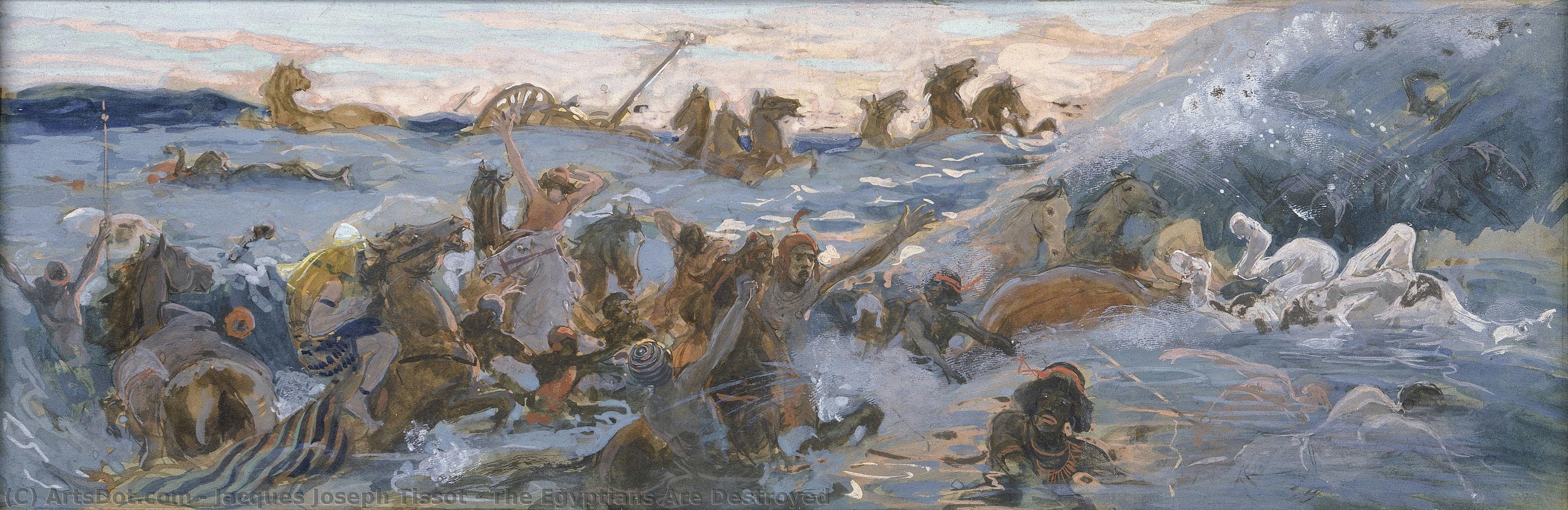
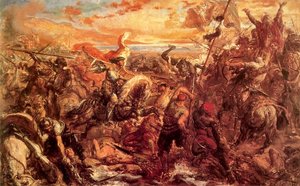
Jacques Joseph Tissot's "The Egyptians Are Destroyed," painted in 1896-1902, isn’t merely a depiction of a biblical event; it’s a visceral plunge into the heart of a dramatic narrative. This monumental watercolor on board captures a pivotal moment from the Exodus story – the relentless flooding of Egypt by torrential rains, an act of divine retribution against Pharaoh's oppression. Tissot, a master of capturing fleeting moments and societal scenes, particularly in his renderings of Parisian life during the Belle Époque, here transforms a foundational tale into a powerfully emotive experience for the viewer.
The painting’s immediate impact is one of overwhelming chaos. A vast, turbulent river dominates the composition, its swirling waters rendered with dynamic, almost violent brushstrokes that convey both the sheer power and unpredictable nature of the flood. Scattered throughout this watery maelstrom are figures – Egyptians, charioteers, soldiers, and even a few animals – caught in varying states of distress: some struggling desperately against the current, others seemingly resigned to their fate. The arrangement isn’t balanced; it feels deliberately unbalanced, mirroring the disruption and devastation unfolding before us. Tissot eschews detailed individual portraits, instead focusing on conveying the collective experience of this catastrophic event through the placement and gestures of his figures.
The Language of Light and Shadow: Technique and Style
Tissot’s technique is a fascinating blend of realism and Impressionism. He meticulously renders the textures of wet clothing, rough stone, and churning water, utilizing layering washes of color to create subtle tonal variations that suggest depth and movement. The monochromatic palette – primarily shades of grey, white, and black – amplifies the drama, lending an almost photographic quality to the scene while simultaneously evoking a sense of solemnity and despair. Notice how he employs atmospheric perspective; distant elements fade into lighter hues, creating a vast, receding landscape that emphasizes the scale of the disaster.
While rooted in realism, Tissot’s brushwork possesses an Impressionistic quality – a fleeting capture of light and atmosphere. The loose application of paint, particularly in depicting the water's surface, suggests movement and dynamism. This stylistic choice contributes to the painting’s overall sense of immediacy, as if we are witnessing this event unfold before our very eyes. The use of hard lines delineating figures contrasts with the softer, blurred lines representing the water, further enhancing the visual impact.
Symbolism and Narrative Resonance
Beyond its literal depiction of a biblical flood, “The Egyptians Are Destroyed” is rich in symbolic meaning. The overwhelming force of the water can be interpreted as a metaphor for divine judgment – a consequence of human wickedness and oppression. The scattered figures represent not just individuals but also an entire civilization crumbling under the weight of its own transgressions. The inclusion of birds, soaring above the chaos, offers a glimmer of hope—perhaps symbolizing freedom or even divine intervention amidst the devastation.
Tissot’s decision to portray this pivotal moment with such stark realism and emotional intensity speaks to his deep understanding of biblical narratives. He doesn't shy away from the brutality of the event, but instead presents it as a powerful testament to faith, justice, and the consequences of defying divine authority. The painting serves as a reminder of the Exodus story’s enduring relevance – a tale of liberation, perseverance, and the triumph of righteousness over oppression.
A Window into Belle Époque Society
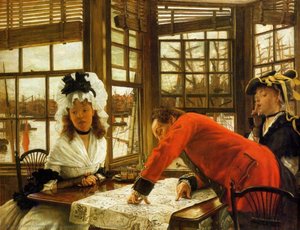
Created during Tissot's prolific career, “The Egyptians Are Destroyed” reflects his broader artistic interests. While he is celebrated for his depictions of Parisian society – elegant balls, fashionable women, and bustling cityscapes – this painting demonstrates his ability to tackle grand historical narratives with the same meticulous detail and emotional depth. It’s a testament to Tissot's versatility as an artist, showcasing his capacity to seamlessly blend historical subject matter with his signature style.
Reproductions of this powerful artwork offer a captivating glimpse into a pivotal moment in history and a profound meditation on themes of faith, justice, and the enduring power of storytelling. Its dramatic composition and evocative use of light and shadow continue to resonate with viewers today, cementing Tissot’s legacy as one of the most accomplished artists of his time.
Ähnliche Kunstwerke
Über den Künstler
Early Life and Artistic Beginnings
Jacques Joseph Tissot, born October 15, 1836, in Nantes, France, was destined for a life steeped in artistic passion from his earliest years. His father, Marcel Théodore Tissot, was a successful drapery merchant. His mother, Marie Durand, assisted her husband in the family business and designed hats. A devout Catholic, Tissot's formative years were marked by a deep appreciation for craftsmanship and detail—qualities that would profoundly shape his artistic vision. Simultaneously, he absorbed influences from Parisian society, exposing him to the vibrant world of fashion and culture. Despite familial responsibilities, Tissot relentlessly pursued his artistic ambitions, enrolling at the École des Beaux-Arts in Paris where he honed his skills under the tutelage of luminaries like Ingres, Flandrin, and Lamothe. This formative period cemented his commitment to painting as a vocation and established him firmly within the influential Parisian art milieu.The Salon Years and Recognition
Tissot’s debut at the Paris Salon in 1861 signaled a pivotal moment—the unveiling of “The Meeting of Faust and Marguerite,” a dramatic tableau that captivated audiences and garnered considerable acclaim from critics. Purchased by the state for inclusion in the Luxembourg Gallery, this ambitious undertaking showcased Tissot's burgeoning reputation as a painter capable of capturing complex narratives and conveying profound emotion. Subsequent Salon exhibitions solidified his position within the artistic establishment, attracting commissions from prominent patrons. His early successes fueled confidence and propelled him toward exploring new subjects and techniques—a trajectory that would ultimately define his illustrious career. The painting’s masterful composition and luminous color palette immediately established Tissot as a rising star among Impressionist painters.Genre Painting and Parisian Society
Tissot’s artistic breakthrough arrived with his series “La Femme à Paris,” a meticulously observed depiction of the demi-mondaine world of late Victorian London. These paintings, characterized by their luminous color palettes and masterful rendering of textures—particularly fabrics—became synonymous with capturing the allure and dynamism of Parisian high society. Tissot's meticulous attention to detail extended beyond mere visual representation; he sought to convey not only appearances but also psychological nuances, reflecting the anxieties and aspirations of his subjects. His work stands as a testament to Impressionistic influences blended with realism, offering an unparalleled glimpse into the social customs and artistic sensibilities of the Belle Époque. He skillfully captured the atmosphere of London’s theaters and cafes, portraying women in elegant gowns and conveying subtle emotions through facial expressions and body language—a remarkable achievement for his time.Biblical Themes and Japonisme
Throughout his prolific output, Tissot embraced diverse artistic inspirations—ranging from medieval narratives to biblical scenes—demonstrating remarkable versatility. His depictions of religious subjects, imbued with spiritual depth and emotional resonance, showcased his ability to elevate visual storytelling into profound contemplation. Simultaneously, he was captivated by Japonisme—the fascination with Japanese art and aesthetics that swept across Europe during the Victorian era—evident in compositions infused with asymmetrical arrangements and subtle color harmonies reminiscent of Japanese prints. This stylistic fusion underscored Tissot’s intellectual curiosity and his willingness to experiment with innovative artistic approaches. He drew inspiration from Japanese woodblock prints, incorporating elements of flatness and bold outlines into his paintings—a distinctive feature that distinguishes him from many of his contemporaries.Later Years and Legacy
Tissot served in the Franco-Prussian War on the side of France and later the Paris Commune—an experience that undoubtedly shaped his worldview. Following the war’s conclusion, he relocated to London where he pursued etching alongside Sir Seymour Haden and honed his artistic skills through portrait commissions and caricatures for Vanity Fair. His relationship with Kathleen Newton blossomed into a passionate companionship, providing him with enduring inspiration for numerous paintings. Tragically, Newton succumbed to tuberculosis in 1882—a profound loss that deeply affected Tissot’s creative output. Despite this sorrowful chapter, he continued to produce exceptional artwork until his death in 1902. Today, Jacques Joseph Tissot's legacy resides in museums across Europe and North America—most notably the Musée National Jean-Jacques Henner in Paris—where his celebrated paintings continue to inspire admiration for their artistic brilliance and evocative portrayal of Victorian life and faith. His enduring influence on genre painting and Impressionism secures his place as one of France’s most distinguished artists of the 19th century.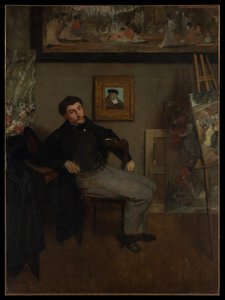
Jacques Joseph Tissot
1836 - 1902 , Frankreich
Kurzinfos
- Artistic Movement Or Style: Genre Painting
- Artists Who Influenced This Artist:
- Jean-Auguste Ingres
- Gustave Courbet
- Date Of Birth: 15. Oktober 1836
- Date Of Death: 8. August 1902
- Full Name: Jacques Joseph Tissot
- Nationality: Französisch
- Notable Artworks:
- Das Treffen von Faust und Marguerite
- La Femme à Paris
- Place Of Birth: Nantes, Frankreich
Ähnliche Artikel
The Power of Visual Narrative: Exploring Dramatic Composition in Art History
Explore the captivating world of dramatic art history! Discover Baroque masters like Caravaggio & Giordano, learn key compositional techniques, and unlock the emotional power within iconic paintings. Enhance your collection with ArtsDot.
The Eloquence of Arrangement: Compositional Strategies in Western Art from the Renaissance to Modernism
Explore the evolution of compositional strategies in Western art! Discover how masters like Raphael & Zurbaran used perspective, proportion, and dynamic arrangement to create timeless masterpieces. Enhance your art appreciation today!
Jacques Joseph Tissot: Chronik eines Pariser Lebens – Narrative Entwicklung und die Ästhetik der Moderne
Entdecken Sie Jacques Joseph Tissots faszinierende Chronik des Pariser Lebens! Analysieren Sie seine narrative Entwicklung, die Ästhetik der Belle Époque und seinen Einfluss auf die Moderne. Expertenwissen & tiefe Einblicke.

Dramatische Kunstwerke: Die Top 10 Meisterwerke für Ihr Zuhause |
Entdecken Sie die Top 10 dramatischsten Kunstwerke der Geschichte! Von Caravaggios Lichtspielen bis zu Munchs emotionalen Farben – erfahren Sie mehr über Künstler, Techniken & Meisterwerke. Hochwertige Reproduktionen auf .
The Power of Narrative Tension: Exploring Dramatic Scenes in Art History
Explore the captivating power of dramatic scenes in art history. Discover Baroque masters like Ribera & Caravaggio, learn about chiaroscuro techniques, and gain insights for building a powerful art collection with ArtsDot.