

 Vorschau anzeigen
 Versenden
 Teilen
 Details anzeigen

 Herunterladen
 Ähnliche Objekte
 Röntgenaufnahme
 Diashow
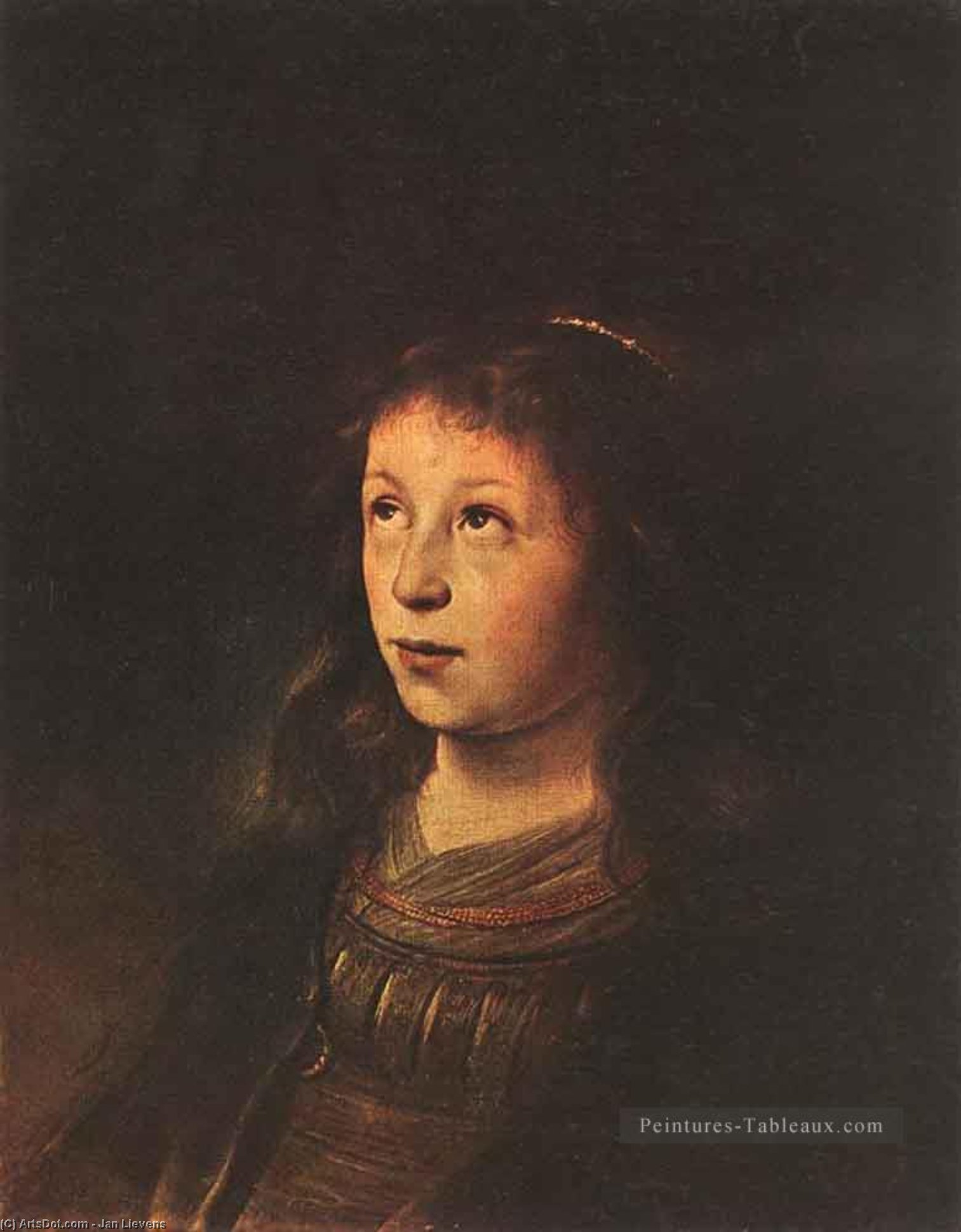
Portrait of a Girl
 Oil
Oil- WallArt
- Baroque
 1630
1630 61.0 x 48.0 cm
 Szépművészeti Múzeum
 Weiterlesen
Erwerben Sie ein hochauflösendes, optimiertes digitales Bild, das der Online-Vorschau weit überlegen ist.
Jede Datei wird von unseren hauseigenen Spezialisten mit modernsten Werkzeugen und fachmännischer manueller Retusche sorgfältig vorbereitet. Wir stellen sicher, dass jedes Bild eine außergewöhnliche Klarheit, präzise Farbgenauigkeit und feinste Details aufweist.
Die endgültige Datei wird innerhalb von 72 Stunden per E-Mail zugestellt und ist für den sofortigen Einsatz in professionellen, redaktionellen und Druckumgebungen optimiert. Es handelt sich um dieselbe Qualität, der führende Designstudios, Verlage und Galerien vertrauen.
Digitales Bild
Laden Sie eine hochauflösende Datei für die persönliche Präsentation, den Druck und kreative Projekte herunter. ( Druck bestellen Handgemalte Reproduktion bestellen)
In jeder Bestellung digitaler Bilder enthalten
Professionelle digitale Bereitstellung, garantiert
Wenn Sie sich für ArtsDot.com entscheiden, erhalten Sie nicht nur ein Bild – Sie erhalten ein professionell aufbereitetes digitales Kunstwerk, das mit höchster Präzision erstellt und durch eine Zufriedenheitsgarantie abgesichert wird. Hier ist alles, was automatisch mit Ihrer Bestellung geliefert wird:

Schnelle E-Mail-Zustellung
Ihre hochauflösende digitale Bilddatei wird Ihnen innerhalb von 72 Stunden nach der Bestellung per E-Mail zugestellt – bereit zur sofortigen Verwendung.

KI-optimierte digitale Datei
Ihre Kunstwerke werden professionell mithilfe fortschrittlicher KI-Tools und manueller Bearbeitung optimiert, um maximale Detailtreue, Klarheit und Farbgenauigkeit zu gewährleisten.

Lebenslanger kostenloser Neudruckservice
Datei versehentlich gelöscht oder verloren? Keine Sorge – wir senden sie Ihnen jederzeit kostenlos erneut zu.

Keine Einfuhrgebühren – jemals
Genießen Sie Ihr Kunstwerk sofort ohne Zollgebühren, Einfuhrabgaben oder Versandkosten – digitale Downloads sind immer steuerfrei.

Garantierte Farbtreue
Wir garantieren, dass Ihr digitales Bild mithilfe professioneller Werkzeuge und Farbmanagement die Originalfarben so präzise wie möglich wiedergibt.

60-Tage-Zufriedenheitsgarantie
Sollten Sie mit Ihrem digitalen Bild nicht zufrieden sein, werden wir es überarbeiten oder Ihnen innerhalb von 60 Tagen 100% erstatten – ohne Wenn und Aber.

100% Geld-zurück-Garantie
Nicht zufrieden? Erhalten Sie innerhalb von 60 Tagen nach Erhalt Ihrer digitalen Datei eine vollständige Rückerstattung – ohne Angabe von Gründen.

Rabatte bei Großbestellungen
3 Bilder kaufen, 10% sparen – 5 Bilder kaufen, 15% sparen – Ab 10 Bildern 20% sparen. Ideal für kreative Projekte, Galerien und Agenturen.
Details zum Sammlerstück
A Timeless Portrait: Unveiling the Beauty of Jan Andrea Lievens’ “Portrait of a Girl”
Jan Andrea Lievens' "Portrait of a Girl," painted in 1630, is more than just a depiction of youth; it’s a window into the burgeoning Baroque era and a testament to the artist’s masterful command of light, shadow, and psychological depth. Born in Leiden during a period of immense artistic innovation – a time when Dutch painting was challenging the conventions of Italy and Spain – Lievens quickly established himself as a key figure within the circle surrounding Rembrandt van Rijn, absorbing influences while forging his own distinctive style. This particular portrait, housed originally in the collection of the Museum of Fine Arts in Budapest, exemplifies this delicate balance between imitation and originality.
The painting immediately draws the eye with its dramatic chiaroscuro – a technique borrowed heavily from Caravaggio but skillfully adapted by Lievens to create an atmosphere of profound introspection. The subject, a young woman of indeterminate age, is positioned against a dark, almost impenetrable background, forcing her features and delicate attire into sharp relief. Her gaze, direct and slightly melancholic, seems to pierce through the canvas, inviting the viewer into her private world. Notice how the artist has used subtle gradations in tone – from the deep shadows behind her head to the luminous highlights on her face – to sculpt her form and imbue it with a sense of volume and presence.
The Baroque Influence: Light, Drama, and Psychological Realism
Lievens’s work is deeply rooted in the principles of the Baroque period. Like many artists of his time, he was fascinated by the interplay of light and shadow, using it not merely to illuminate a subject but also to evoke emotion and create a sense of drama. The composition itself—centered on the young woman—is typical of Baroque portraiture, emphasizing her beauty and status while simultaneously hinting at an underlying complexity. Furthermore, Lievens’s meticulous attention to detail – from the delicate folds of her dress to the subtle texture of her hair – demonstrates his commitment to psychological realism. He wasn't simply rendering a likeness; he was attempting to capture the essence of his subject’s personality and inner life.
The choice of dark background is particularly significant. It serves to isolate the figure, intensifying her presence and drawing attention to her face – the focal point of the composition. The limited palette—primarily consisting of muted browns, grays, and ochres—contributes to the painting’s somber mood, reinforcing the sense of introspection and quiet contemplation. The use of oil paint allows for a smooth blending of colors and a rich texture, adding depth and luminosity to the portrait.
Symbolism and Interpretation: A Gaze into the Soul
While seemingly straightforward, “Portrait of a Girl” is laden with subtle symbolism. Her slightly downcast gaze suggests a contemplative nature, perhaps even a hint of sadness or melancholy. Some art historians have interpreted her posture as indicative of modesty and reserve, while others see it as a sign of quiet strength and resilience. The inclusion of the dark background can be viewed as representing the unknown—the challenges and uncertainties that lie ahead in life. The painting’s overall effect is one of profound emotional resonance, inviting viewers to project their own interpretations onto the subject's face.
A Legacy of Artistic Brilliance: Jan Andrea Lievens and His Contemporaries
Jan Andrea Lievens was a pivotal figure in the Dutch Golden Age, working alongside masters like Rembrandt and contributing significantly to the development of Baroque painting in the Netherlands. His early training under Joris Verschoten and Pieter Lastman provided him with a solid foundation in traditional techniques, while his collaboration with Rembrandt exposed him to new ideas and approaches. Lievens’s legacy extends beyond this single portrait; he produced numerous other works—including self-portraits, portraits of prominent figures, and scenes from biblical narratives—that continue to captivate audiences today. Reproductions of “Portrait of a Girl” offer a remarkable opportunity to experience the beauty and artistry of this exceptional painter.
Ähnliche Kunstwerke

Biografie des Künstlers
Jan Lievens: A Dutch Master Rediscovered
Jan Lievens (1607 – 1674) was a dutch painter from the netherlands, who lived from 1607 to 1674. his work is often associated with that of rembrandt, as both artists worked in similar styles during the dutch golden age. He was born on october 24, 1607, in leiden, the son of lieven hendriksze, an embroiderer (*borduurwerker*), and was trained by joris verschoten. At about the age of 10, he was sent to pieter lastman in amsterdam for a two-year apprenticeship. This formative experience instilled in him a meticulous attention to detail and a profound understanding of artistic technique—qualities that would characterize his entire oeuvre.- Early Career & Rembrandt Collaboration
- Notable Paintings & Artistic Style
- London Years & Patronage
- Later Life & Legacy
Early Career & Rembrandt Collaboration
Jan Lievens’s artistic journey began in leiden, where he quickly gained recognition for his talent. His copy of *Democriet & Herakliet* by cornelis van haarlem—a monumental undertaking that demonstrated his mastery of perspective and composition—immediately drew the eye of maurice of nassau, prince of orange, who commissioned a portrait of him. This patronage secured Lievens’s financial stability and allowed him to pursue his artistic ambitions without constraint. Crucially, he entered into a collaborative partnership with rembrandt van rijn from 1626 to 1631. Their collaboration produced over two dozen paintings, drawings, and etchings—a period marked by intense rivalry and mutual influence. While the attribution of works from this era remains debated among scholars, there is no doubt that Rembrandt’s presence spurred Lievens to experiment with bolder brushstrokes and dramatic lighting—techniques that would become hallmarks of his distinctive style.Notable Paintings & Artistic Style
Lievens' artistic style was profoundly shaped by caravaggisti influences, evident in his use of tenebrism—the stark contrast between light and dark—and his penchant for portraying figures in dynamic poses. He excelled at capturing psychological depth and emotion, particularly in portraits that aimed to convey the inner life of their subjects. His oeuvre encompasses a diverse range of genres, including history paintings, landscapes, genre scenes depicting everyday life, and still lifes—each infused with meticulous observation and expressive artistry. Among his most celebrated works are *Head of an Old Man*, *Bearded Man with a Beret*, and *Boy in a Cape and Turban*, which exemplify Lievens’s ability to render human anatomy with remarkable accuracy while simultaneously conveying profound emotional resonance.London Years & Patronage
Following the dissolution of his partnership with Rembrandt, Lievens embarked on a period of artistic exploration that took him beyond amsterdam to london, antwerp, and berlin. During these years he secured commissions from royalty—including james i—and established himself as a respected artist in cosmopolitan environments. His success was fueled by his keen understanding of the tastes of the era and his willingness to adapt his style to suit diverse patrons. He continued to produce paintings that showcased both technical virtuosity and imaginative vision, cementing his reputation as one of the most versatile and accomplished painters of his generation.Later Life & Legacy
Jan Lievens died in berlin on june 4, 1674, at the age of 66—leaving behind a legacy of approximately 300 paintings and drawings that continue to fascinate art historians today. His work is housed in museums across europe, including the mauritshuis in leiden and the kremer collection in cologne—testaments to his enduring artistic significance. Despite the initial obscurity surrounding his career—particularly after rembrandt’s death—Lievens has experienced a resurgence of scholarly interest in recent decades, thanks largely to new research that sheds light on previously overlooked aspects of his life and work. His paintings stand as powerful reminders of the dutch golden age and offer invaluable insights into the artistic sensibilities of a pivotal period in european history.
Jan Lievens
1607 - 1674 , Niederlande
Kurzinfos
- Artistic Movement Or Style: Dutch Gouden Eeuw
- Artists Or Movements Influenced By This Artist: ['Rembrandt']
- Artists Who Influenced This Artist:
- Pieter Lastman
- Peter Paul Rubens
- Date Of Birth: 24 Oktober 1607
- Date Of Death: 4 Juni 1674
- Full Name: Jan Lievens
- Nationality: Niederländisch
- Notable Artworks:
- Kopf eines alten Mannes
- Porträt von Constantin Huygens
- Junger Mann mit einem Beret
- Place Of Birth: Leiden, Niederlande

