

 Vorschau anzeigen
 Versenden
 Teilen
 Details anzeigen

 Herunterladen
 Ähnliche Objekte
 Röntgenaufnahme
 Diashow
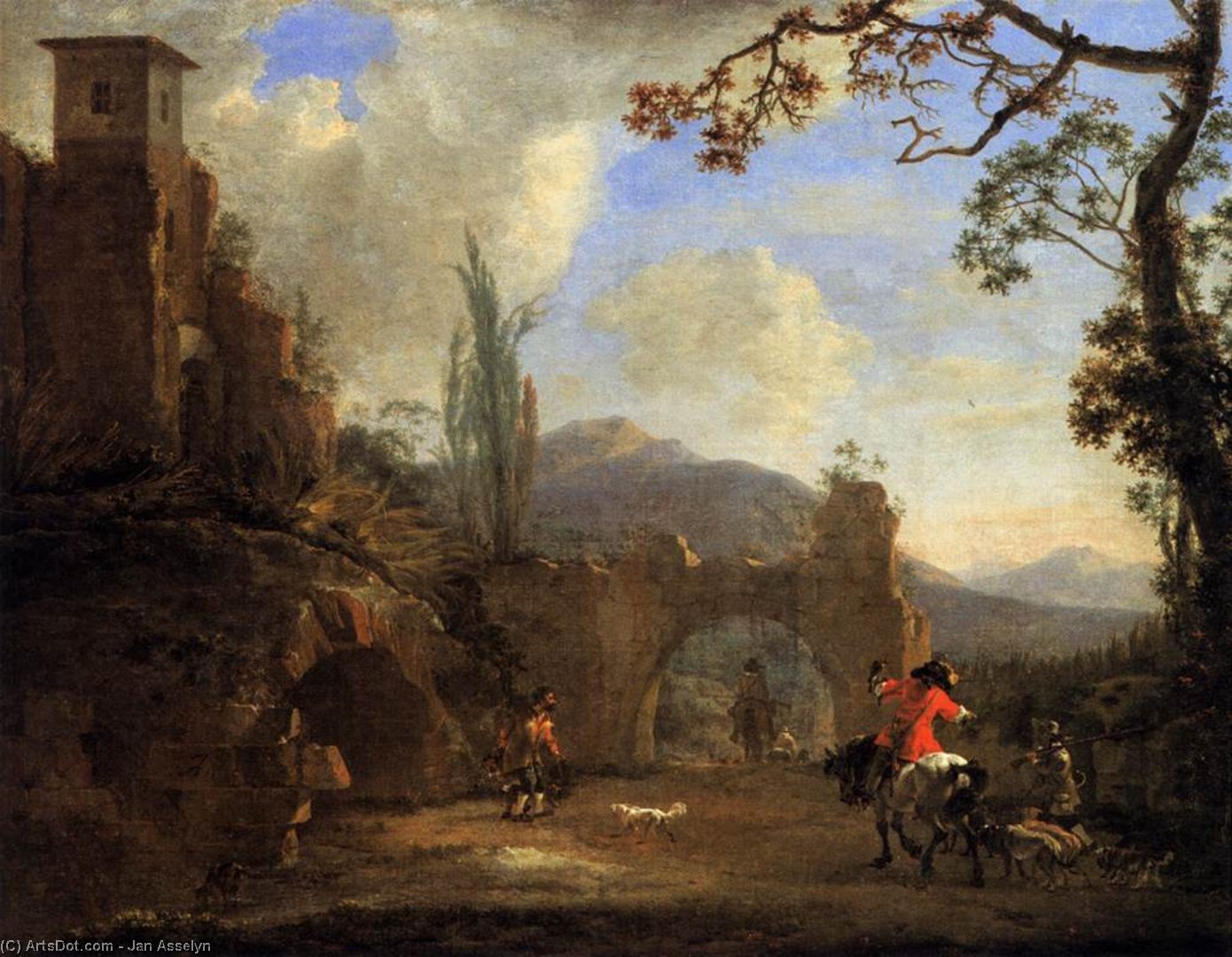
Landscape with Ruins and Hunting Party
 Oil On Canvas
- WallArt
- Baroque
 1645
1645- Early Modern
 47.0 x 61.0 cm
 Akademie der bildenden Künste Wien
 Weiterlesen
Erwerben Sie ein hochauflösendes, optimiertes digitales Bild, das der Online-Vorschau weit überlegen ist.
Jede Datei wird von unseren hauseigenen Spezialisten mit modernsten Werkzeugen und fachmännischer manueller Retusche sorgfältig vorbereitet. Wir stellen sicher, dass jedes Bild eine außergewöhnliche Klarheit, präzise Farbgenauigkeit und feinste Details aufweist.
Die endgültige Datei wird innerhalb von 72 Stunden per E-Mail zugestellt und ist für den sofortigen Einsatz in professionellen, redaktionellen und Druckumgebungen optimiert. Es handelt sich um dieselbe Qualität, der führende Designstudios, Verlage und Galerien vertrauen.
Digitales Bild
Laden Sie eine hochauflösende Datei für die persönliche Präsentation, den Druck und kreative Projekte herunter. ( Druck bestellen Handgemalte Reproduktion bestellen)
In jeder Bestellung digitaler Bilder enthalten
Professionelle digitale Bereitstellung, garantiert
Wenn Sie sich für ArtsDot.com entscheiden, erhalten Sie nicht nur ein Bild – Sie erhalten ein professionell aufbereitetes digitales Kunstwerk, das mit höchster Präzision erstellt und durch eine Zufriedenheitsgarantie abgesichert wird. Hier ist alles, was automatisch mit Ihrer Bestellung geliefert wird:

Schnelle E-Mail-Zustellung
Ihre hochauflösende digitale Bilddatei wird Ihnen innerhalb von 72 Stunden nach der Bestellung per E-Mail zugestellt – bereit zur sofortigen Verwendung.

KI-optimierte digitale Datei
Ihre Kunstwerke werden professionell mithilfe fortschrittlicher KI-Tools und manueller Bearbeitung optimiert, um maximale Detailtreue, Klarheit und Farbgenauigkeit zu gewährleisten.

Lebenslanger kostenloser Neudruckservice
Datei versehentlich gelöscht oder verloren? Keine Sorge – wir senden sie Ihnen jederzeit kostenlos erneut zu.

Keine Einfuhrgebühren – jemals
Genießen Sie Ihr Kunstwerk sofort ohne Zollgebühren, Einfuhrabgaben oder Versandkosten – digitale Downloads sind immer steuerfrei.

Garantierte Farbtreue
Wir garantieren, dass Ihr digitales Bild mithilfe professioneller Werkzeuge und Farbmanagement die Originalfarben so präzise wie möglich wiedergibt.

60-Tage-Zufriedenheitsgarantie
Sollten Sie mit Ihrem digitalen Bild nicht zufrieden sein, werden wir es überarbeiten oder Ihnen innerhalb von 60 Tagen 100% erstatten – ohne Wenn und Aber.

100% Geld-zurück-Garantie
Nicht zufrieden? Erhalten Sie innerhalb von 60 Tagen nach Erhalt Ihrer digitalen Datei eine vollständige Rückerstattung – ohne Angabe von Gründen.

Rabatte bei Großbestellungen
3 Bilder kaufen, 10% sparen – 5 Bilder kaufen, 15% sparen – Ab 10 Bildern 20% sparen. Ideal für kreative Projekte, Galerien und Agenturen.
Details zum Sammlerstück
A Journey Through Dutch Golden Age Grandeur
This captivating scene, titled Landscape with Ruins and Hunting Party, transports the viewer directly into the heart of the 17th century Netherlands. Painted in 1645 by Jan Asselijn, the work is a masterful confluence of naturalism, dramatic action, and evocative historical setting. One can almost hear the rhythmic thud of hooves upon the earth as the figures move through this expansive vista. The composition immediately draws the eye into the foreground where the energy of the hunting party pulses with life. It is not merely a depiction of an outing; it is a carefully orchestrated moment of aristocratic leisure set against the backdrop of time-worn antiquity.
The Drama of Movement and Nature
Asselijn possesses a remarkable gift for capturing kinetic energy. Observe the group riding horses, their forms suggesting purpose and momentum as they traverse the landscape. The inclusion of several dogs—one positioned further left, another near the center—adds layers to this narrative of pursuit. These animals are not mere props; they are integral participants in the drama unfolding before us. Above it all, a single bird takes flight against the sky, serving as a delicate counterpoint to the grounded action below. The artist’s handling of light suggests the bright, yet perhaps slightly diffused, quality of an afternoon day in the Dutch countryside, lending an air of both immediacy and timeless grandeur to the entire tableau.
Echoes of History: Ruins and Symbolism
The presence of ruins anchors the painting within a rich historical context. These crumbling structures speak eloquently of the passage of time—of empires that have risen and fallen, leaving only evocative stone remnants behind. In art history, such ruins often serve as potent memento mori, reminding the viewer of life's transience while simultaneously elevating the scene to something more profound than a simple portrait of an outing. Coupled with the vibrant life of the hunting party, this juxtaposition creates a beautiful tension: the fleeting moment against the eternal decay.
Technique and Artistic Legacy
As a product of the Dutch Golden Age, Asselijn’s technique showcases a sophisticated understanding of atmospheric perspective and detailed rendering. His ability to capture both the texture of the dusty ground beneath the horses and the delicate feathers of the flying bird speaks to his virtuosity. For those considering bringing this piece into their own space, knowing its provenance—a work from an artist who honed his craft amidst the vibrant artistic currents of Amsterdam—adds significant depth. Reproducing such a scene allows one to possess not just a painting, but a tangible connection to the sophisticated tastes and narrative ambitions of 17th-century European elite life.
Ähnliche Kunstwerke
Biografie des Künstlers
A Life Forged in Landscape: The World of Jan Asselijn
Born Jean Asselin in the French port city of Dieppe around 1610, Jan Asselijn’s journey was one shaped by religious upheaval and artistic exploration. His family, Huguenots fleeing persecution, relocated to Amsterdam in 1621, a vibrant hub of commerce and burgeoning artistic talent during the Dutch Golden Age. This relocation proved pivotal, immersing young Jean into a world where landscape painting was rapidly evolving beyond traditional depictions toward more atmospheric and emotionally resonant scenes. He initially trained with Jan Martszen the Younger, honing his skills in battle pieces before discovering his true calling – capturing the beauty and drama of both natural landscapes and animal life. Asselijn’s early exposure to the Dutch light and expansive skies would become a defining characteristic of his work, though it was a sojourn to Italy that truly solidified his artistic vision.The Italianate Embrace & The Bentvueghels
Like many ambitious Northern European painters of the era, Asselijn sought refinement in Italy, likely arriving sometime after 1635. It was there he fully embraced the *Italianate* style – a genre characterized by sun-drenched vistas, classical ruins, and pastoral scenes imbued with a sense of romanticism. He joined the ranks of the *Bentvueghels*, a colorful society of Dutch and Flemish artists working in Rome. These “Birds of a Feather” were known for their unconventional behavior, satirical nicknames, and dedication to painting directly from life – rejecting the constraints of studio work. Within this boisterous community, Asselijn earned the moniker "Krabbetje" (little crab) due to a physical disability affecting his hand, yet he thrived creatively. He absorbed the influence of artists like Pieter van Laer (Bamboccio), whose depictions of Roman peasant life and landscapes resonated deeply with Asselijn’s own developing style. This period was crucial in shaping his ability to convey atmosphere, light, and a sense of narrative within his compositions.Mastering Light & Symbolism: Key Works
Asselijn returned to Amsterdam with a refined technique and a distinctive voice. His paintings are characterized by a clarity of execution and a masterful handling of light – qualities that quickly gained him recognition. While he produced historical and battle scenes, it was his landscapes and animal paintings that truly set him apart. The Threatened Swan, painted in the 1640s, remains his most celebrated work. More than just a depiction of avian defense, this painting became a powerful symbol of Dutch national resistance against external threats. The fiercely protective swan, aggressively warding off intruders near its nest, resonated with contemporary anxieties and was even interpreted as an allegory for Johan de Witt, a prominent Dutch statesman. Intriguingly, later owners added symbolic inscriptions to the canvas – “Holland” on one of the eggs and “Enemy of the state” beside the menacing dog – further cementing its political undertones. Other notable works include Cavalry Attack at Sunset, showcasing his earlier training in battle scenes with dramatic flair, and depictions of rural life like Drovers with Cattle under an Arch of the Colosseum in Rome, which beautifully blend Italianate landscapes with animal studies. The Breach of the Saint Anthony’s Dike near Amsterdam demonstrates his ability to capture a moment of national crisis, reflecting the ever-present threat of water and the ingenuity required for Dutch land reclamation.Influence & Legacy: A Lasting Impression
Jan Asselijn's impact extended beyond his own prolific output. He was admired by contemporaries like Rembrandt, who even created etchings of the artist at work – though notably, these etchings obscure Asselijn’s hands, perhaps a sensitive acknowledgement of his physical challenge. He also served as a mentor to Frederik de Moucheron, another prominent Dutch landscape painter who further popularized the Italianate style. Asselijn's innovative approach to light and atmosphere influenced a generation of artists, paving the way for greater naturalism and emotional depth in landscape painting. His works are now held in prestigious collections such as the Rijksmuseum in Amsterdam, ensuring his legacy endures as a significant figure within the Dutch Golden Age. He died relatively young, in 1652, but left behind a body of work that continues to captivate viewers with its beauty, drama, and subtle layers of meaning.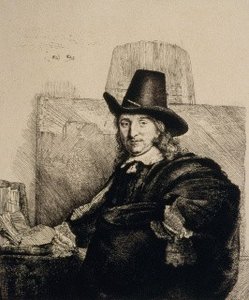
Jan Asselyn
1610 - 1652 , Frankreich
Kurzinfos
- Artistic Movement Or Style: Italienische Landschaftsmalerei
- Artists Or Movements Influenced By This Artist: ['Frederick de Moucheron']
- Artists Who Influenced This Artist:
- Pieter van Laer
- Esaias van de Velde
- Rembrandt
- Date Of Birth: c. 1610
- Date Of Death: c. 1652
- Full Name: Jan Asselin
- Nationality: Niederlande
- Notable Artworks:
- Die Bedrohte Weißhuhn
- Aufenthalt in Italien
- Übernahme der Stadt Rom
- Place Of Birth: Dieppe, Frankreich

