 Vorschau anzeigen
 Versenden
 Teilen
 Details anzeigen

 Herunterladen
 Ähnliche Objekte
 Röntgenaufnahme
 Diashow
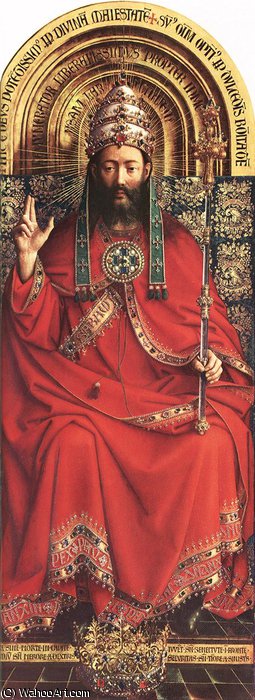
the ghent altarpiece god almighty

 Weiterlesen
Handgefertigte Ölreproduktion
Handgemaltes Ölgemälde auf Leinwand in Ihrer Wunschgröße und mit Rahmen, auf Bestellung von unseren Künstlern angefertigt. ( Druck bestellen Bild kaufen)




P118B $10

P118H $10

P118W $10

P438Z $10

P508JH $12

P508YH $12

P805H $10

P805Z $10

P919BZ $10

P919G $10

P919XJ $10

P959ZH $10

P968JZ $12

W106C $8

W218G $10

W218JH $8

W218Y $10

W307PJ $10

W316G $10

W316PJ $8

W316Y $10

W398PJ $8

W4111J $10

W500HY $15

W500JH $15

W692G $12

W849H $8

W940BG $15

W953PJ $8




Wählen Sie aus unseren vordefinierten Formaten, die den ursprünglichen Proportionen des Kunstwerks entsprechen.

Sie können Ihre eigenen Maße eingeben, um einen bestimmten Rahmen oder Platz auszufüllen. Wenn die gewählte Größe nicht den Proportionen des Originalbildes entspricht, werden wir das Kunstwerk entweder beschneiden oder das Gemälde durch zusätzliche, handgemalte Elemente erweitern. Ein digitales Mockup wird Ihnen zur Genehmigung zugesandt, bevor die Produktion beginnt.
Bitte beachten Sie, dass die Bildschirmvorschau nicht die tatsächliche Beschneidung oder Erweiterung widerspiegelt. Nur das Mockup zeigt die endgültige Komposition exakt an.
Obwohl Sondermaße verfügbar sind, empfehlen wir, eine Größe aus der vordefinierten Liste zu wählen, um die ursprünglichen Proportionen beizubehalten.
Nach der Bestellung wird das ArtsDot.com-Team dem Kunden Anweisungen per E-Mail zusenden und eine Mockup-Vorschau bereitstellen.
Weltweiter Versand () in nur 3 bis 4 Wochen statt der üblichen 5 Wochen. (21 August). Keine Kompromisse bei der Qualität.

Kostenloser weltweiter Expressversand

Hochwertige Leinenleinwand

Umfassender Versicherungsschutz beim Versand

Zollgebühren-Rückerstattungsgarantie

Garantie für exakte Farbtreue

60 Tage Rückgaberecht (nur bei Mängeln)

100% Geld-zurück-Garantie

Mengenrabatt verfügbar
 Die Glasoption ist nur für Größen unter 110 cm verfügbar.

the ghent altarpiece god almighty
Art der Reproduktion
Format der Reproduktion
-


Gesamtpreis
$ 263
Beschreibung des Kunstwerks
The Divine Tapestry: Jan van Eyck’s Ghent Altarpiece
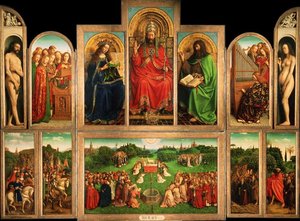
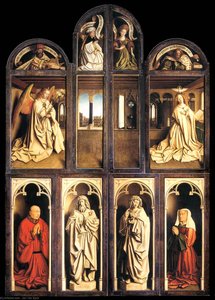
Within the hallowed halls of St Bavo's Cathedral in Ghent resides a masterpiece that transcends mere paint and canvas—the Ghent Altarpiece, or as it’s known in Dutch, “De aanbidding van het Lam Gods.” Completed around 1432 by the visionary brothers Jan and Hubert van Eyck, this monumental polyptych isn’t simply a religious tableau; it's an immersive experience, a testament to early Netherlandish artistry, and a window into the soul of fifteenth-century Europe. More than six centuries after its creation, the altarpiece continues to captivate viewers with its astonishing detail, profound symbolism, and the sheer audacity of its ambition.
The scale alone is breathtaking – nearly 12 feet tall and over 23 feet wide when fully open. This immense size wasn’t merely for show; it was a deliberate choice to envelop the viewer in the scene depicted, transporting them into the heart of the divine narrative. The brothers van Eyck were pioneers, not just in technique but also in concept. They moved beyond the stylized representations of medieval art, striving for an unprecedented level of realism—a commitment to capturing the textures of fabric, the gleam of metal, and the subtle nuances of human expression that would define the Early Netherlandish style. Jan van Eyck’s meticulous approach is particularly evident in the rendering of light; it seems to emanate from within the objects themselves, creating a palpable sense of depth and volume.
A Narrative Unfolding: Scenes from Heaven and Earth
The altarpiece unfolds like a meticulously crafted book, divided into two distinct registers. The outer panels depict scenes from the Old Testament – the adoration of the Magi, the Massacre of the Innocents, and the Killing of Abel—serving as a bridge between the earthly realm and the divine promise of salvation. These narratives are not merely decorative; they establish a theological framework for the central panel, which portrays the Annunciation, the moment when the Archangel Gabriel informs Mary that she will conceive Jesus Christ. The figures themselves are rendered with astonishing precision: Mary’s serene expression, the delicate folds of her robe, and the intricate details of Gabriel's wings all speak to the brothers’ mastery of observation and representation.
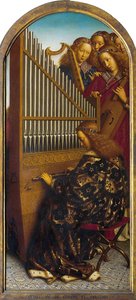
The inner panels, revealed when the altarpiece is opened, depict a heavenly vision. At its heart lies “The Deësis,” a profoundly moving image of God the Father flanked by Mary and John the Baptist. This central panel embodies the concept of intercession—a plea for divine mercy offered through these two figures. The surrounding panels showcase angels playing music, symbolizing the harmony of creation, and on either side, portraits of Adam and Eve, representing humanity’s fallen state and its potential for redemption. The use of gold leaf throughout the altarpiece further elevates the scene, suggesting the glory and majesty of God's realm.
Symbolism Woven into Every Detail
Beyond their narrative function, each element within the Ghent Altarpiece is laden with symbolic meaning. The lilies held by Gabriel represent Mary’s purity and virginity, while the dove hovering above her signifies the Holy Spirit—the divine power that brought about Christ's conception. The use of ultramarine blue, derived from lapis lazuli (a pigment incredibly expensive at the time), is particularly striking, signifying royalty and divinity. Even the architectural details – the columns, arches, and windows – are imbued with symbolic significance, reflecting the medieval understanding of space and order.
The inclusion of donor portraits—the figures of Joost Vijdt and his wife Lysbette Borluut—is a unique feature of the altarpiece. These depictions served as a testament to the patrons’ piety and generosity, ensuring their place within this sacred narrative. Their presence underscores the intimate connection between art and faith in fifteenth-century society.
A Legacy of Innovation
The Ghent Altarpiece stands as a pivotal work in the history of Western art. It represents a radical departure from the conventions of medieval painting, embracing realism, perspective, and meticulous detail to an unprecedented degree. Jan van Eyck’s pioneering use of oil paint—a technique that allowed for greater luminosity and richer colors than tempera—revolutionized artistic practice and paved the way for future generations of painters. The altarpiece's enduring appeal lies not only in its technical brilliance but also in its profound spiritual depth, offering a timeless meditation on faith, humanity, and the divine.
Today, meticulously restored after surviving centuries of turmoil, including being hidden during the Reformation and briefly held as a Nazi trophy, the Ghent Altarpiece continues to inspire awe and wonder. Reproductions offer a glimpse into this extraordinary masterpiece, allowing its beauty and complexity to be appreciated by a wider audience.
Ähnliche Kunstwerke
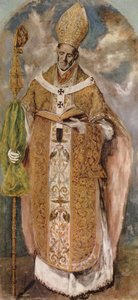
Über den Künstler
frühes Leben und Karriere
Jan van Eyck, eine herausragende Figur der frühen niederländischen Malerei, wurde um 1390 in Maaseik, heutiges Belgien, geboren. Bis 1422 hatte er sich als Meistermaler mit Werkstatt und Assistenten in Brügge etabliert. Er diente John III den Unbarmherzigen und später Philipp dem Guten, Herzog von Burgund, als Hofmaler und genoss hohes Ansehen und war an diplomatischen Bemühungen beteiligt.Künstlerische Beiträge
Van Eycks Werke, die zunächst im Stil der internationalen Gotik verwurzelt waren, überschritten ihre Grenzen durch seinen verstärkten naturalistischen Ansatz und die innovative Verwendung von Ölfarbe. Dies setzte einen neuen Standard in der Kunstwelt und machte ihn zu einem Pionier der frühen niederländischen Malerei. Zu seinen bemerkenswertesten Werken gehören:- Gott Vater (212 x 83 cm, nördliche Renaissance, Öl auf Holzplatte, anschaulich auf ArtsDot.com)
- Portrait eines jungen Mannes (33 x 19 cm, nördliche Renaissance, Öl auf Holzplatte, anschaulich auf ArtsDot.com)
- Dresdener Dreipietà (Jungfrau mit dem Kind mit St. Michael und St. Katharina und einer Darstellerin) (28 x 38 cm, Gemäldegalerie Alte Meister, Dresden, Deutschland, nördliche Renaissance, Holz, anschaulich auf ArtsDot.com)
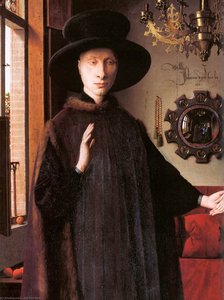
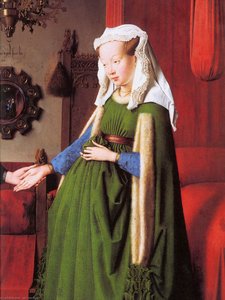
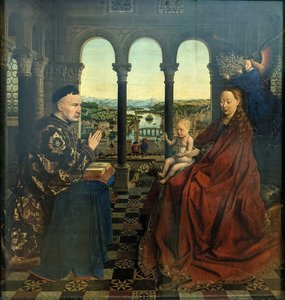
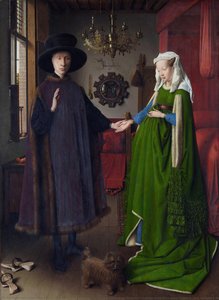
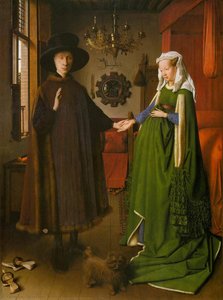
- Portrait von Giovanni Arnolfini und seiner Frau (Detail) (Nationalgalerie, London, Vereinigtes Königreich, Öl, anschaulich auf ArtsDot.com)
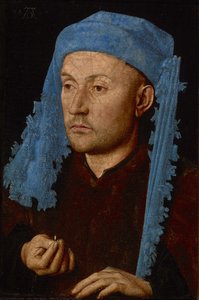
- Mann mit blauer Turban (17 x 23 cm, Nationalmuseum für Kunst in Bukarest, Rumänien, nördliche Renaissance, Holz, anschaulich auf ArtsDot.com)
Vermächtnis und Einfluss
Van Eycks Einfluss war tiefgreifend und legte den Grundstein für das blühende Zeitalter der frühen niederländischen Malerei. Seine innovative Verwendung von Ölfarbe verlieh seinen Werken Tiefe und Realismus, was ihn zu einer **bemerkenswerten Figur in der Kunstwelt** machte. Um mehr über die Werke von Jan van Eyck und die frühe niederländische Malerei zu erfahren, besuchen Sie Jan van Eycks Seite auf ArtsDot.com.Weitere Literatur
* Wikipedia: [Jan van Eyck](https://en.wikipedia.org/wiki/jan_van_eyck) * ArtsDot.com: Nordniederländischer Maler * ArtsDot.com: Die frühe niederländische Kunstbewegung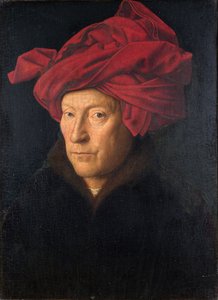
Jan van Eyck
1390 - 1441 , Niederlande
Kurzinfos
- Beeinflusste Künstler: ['Gerard David']
- Bemerkenswerte Werke:
- Genter Altarbild
- Arnolfini-Porträt
- Dresdner Triptychon
- Mann mit blauem Turben
- Geburtsdatum: ca. 1390
- Geburtsort: Maastricht, Niederlande
- Künstlerische Bewegung: Frühflämische Malerei
- Künstlerische Einflüsse:
- Hubert van Eyck
- Manuskriptillumination
- Nationalität: Niederländisch
- Todatum: 1441
- Vollständiger Name: Jan van Eyck
Ähnliche Artikel
Frühniederländische Meisterwerke: 10 Gemälde, die eine Epoche prägten | ArtsDot
Entdecken Sie die 10 prägendsten Meisterwerke der Frühniederländischen Malerei! Von Jan van Eyck bis Rogier van der Weyden – erleben Sie Kunstgeschichte hautnah. Hochwertige Reproduktionen & Inspiration für Ihr Interieur auf ArtsDot.com.
Jan van Eyck: Innovation, Symbolik und die Morgendämmerung der frühniederländischen Malerei
Entdecken Sie die Innovationen und tiefgründige Symbolik von Jan van Eyck! Analysieren Sie mit uns seine Meisterwerke, die Ölmaltechnik und den Einfluss auf die frühniederländische Renaissance. Jetzt lesen!
Frühniederländische Renaissance: 10 Meisterwerke für Ihr Zuhause | ArtsDot
Entdecken Sie die 10 prägendsten Meisterwerke der Frühniederländischen Renaissance! Erfahren Sie mehr über Jan van Eyck, Rogier van der Weyden & Co. und ihre ikonischen Gemälde. Hochwertige Reproduktionen für Ihr Zuhause – jetzt auf ArtsDot.com!
Hugo van der Goes: Andacht, Innovation und die psychologische Tiefe der frühen niederländischen Malerei
Entdecken Sie die revolutionäre Kunst von Hugo van der Goes! Tiefgründige Analyse seiner Werke, bahnbrechende Technik und bleibender Einfluss auf die frühe niederländische Malerei. Für Kunstexperten & Sammler.
Illuminating Realism: A Comprehensive Exploration of the Early Netherlandish Renaissance Movement
Explore the captivating world of Early Netherlandish painting! Discover Jan van Eyck & other Flemish masters, their revolutionary techniques, hidden symbolism, and lasting legacy. A comprehensive guide for art enthusiasts.