 Vorschau anzeigen
 Versenden
 Teilen
 Details anzeigen

 Herunterladen
 Ähnliche Objekte
 Röntgenaufnahme
 Diashow
untitled (1643)


 Weiterlesen
Giclée / Kunstdruck
Giclée- oder Leinwanddruck in Museumsqualität mit schneller Produktion und flexiblen Veredelungsoptionen. ( Handgemalte Reproduktion bestellen Bild kaufen)




P118B $10

P118H $10

P118W $10

P438Z $10

P508JH $12

P508YH $12

P805H $10

P805Z $10

P919BZ $10

P919G $10

P919XJ $10

P959ZH $10

P968JZ $12

W106C $8

W218G $10

W218JH $8

W218Y $10

W307PJ $10

W316G $10

W316PJ $8

W316Y $10

W398PJ $8

W4111J $10

W500HY $15

W500JH $15

W692G $12

W849H $8

W940BG $15

W953PJ $8




Wählen Sie aus unseren vordefinierten Formaten, die den ursprünglichen Proportionen des Kunstwerks entsprechen.

Sie können Ihre eigenen Maße eingeben, um ein bestimmtes Format oder einen speziellen Platz einzupassen. Wenn das von Ihnen gewählte Format nicht den Proportionen des Originalbildes entspricht, werden wir das Kunstwerk entweder beschneiden oder das Bild mit einem gespiegelten oder einfarbigen Rand erweitern. Ein digitaler Entwurf wird Ihnen zur Genehmigung zugesandt, bevor die Produktion beginnt.
Bitte beachten Sie, dass die Vorschau auf dem Bildschirm nicht den tatsächlichen Zuschnitt oder die Erweiterung widerspiegelt. Nur der Entwurf zeigt die endgültige Komposition präzise an.
Obwohl Sondermaße verfügbar sind, empfehlen wir die Auswahl eines Maßes aus der vordefinierten Liste, um die ursprünglichen Proportionen zu bewahren.
Weltweiter Versand () innerhalb von 2 Wochen statt der üblichen 4/5 Wochen. (27 August)

Kostenloser weltweiter Expressversand

Hochwertige Leinenleinwand

Umfassender Versicherungsschutz beim Versand

Zollgebühren-Rückerstattungsgarantie

Garantie für exakte Farbtreue

60 Tage Rückgaberecht (nur bei Mängeln)

100% Geld-zurück-Garantie

Mengenrabatt verfügbar
 Die Glasoption ist nur für Größen unter 110 cm verfügbar.

untitled (1643)
Giclée / Kunstdruck
Format der Reproduktion
-


Gesamtpreis
$ 62
Sammlerstück-Beschreibung
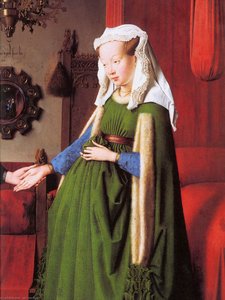
A Sacred Union Captured in Light and Oil
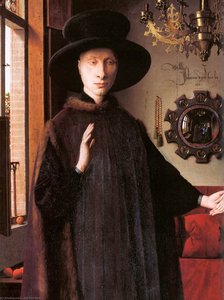
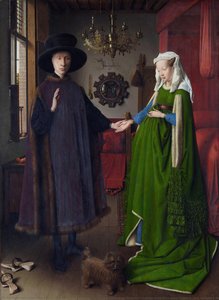
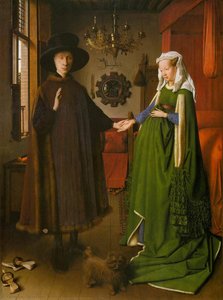
In the quiet, opulent corners of a fifteenth-century Bruges home, Jan van Eyck captures a moment that transcends mere portraiture, offering instead a profound window into the soul of the Early Netherlandish era. His masterpiece, often recognized through its depiction of Giovanni Arnolfini and his wife, serves as a breathtaking testament to the dawn of the Northern Renaissance. The scene is not merely a record of two individuals; it is a meticulously woven tapestry of social prestige and spiritual devotion. As one gazes upon the figures, there is an immediate sense of being present within their private sanctuary, where every fold of heavy, velvet fabric and every glint of light from the chandelier speaks to a world governed by both earthly wealth and divine presence.
The brilliance of Van Eyck’s technique lies in his revolutionary mastery of oil paint. Moving beyond the flat, matte limitations of traditional tempera, he utilized multiple translucent glazes to achieve an unprecedented luminosity. This innovation allows the viewer to experience a palpable texture; one can almost sense the weight of the heavy robes and the soft, atmospheric glow that permeates the room. The lighting is nothing short of dramatic, casting deep, soulful shadows that lend a three-dimensional gravity to the subjects. For the discerning collector or interior designer, this piece offers more than just visual beauty; it provides a focal point of immense depth, where the interplay of light and shadow can breathe life and historical grandeur into any sophisticated space.
The Language of Symbols and Devotion
Beyond the surface realism lies a complex, hidden language of symbolism that invites endless contemplation. Van Eyck was a master of embedding theological meaning within the mundane. Within this domestic setting, every object acts as a silent witness to a sacred vow. The single lit candle flickering in the chandelier is not merely a source of light but a poignant representation of the all-seeing eye of Christ, sanctifying the union. Even the rosy glow and the meticulous rendering of the room's contents serve to elevate the domestic sphere to a level of religious significance. This careful balance between the material and the spiritual creates an emotional resonance that is both humbling and awe-inspiring.
For those seeking to adorn their surroundings with art that inspires reflection, this work offers a unique emotional landscape. It evokes a sense of gravitas, piety, and timelessness. The unflinching accuracy of the facial expressions—capturing subtle gestures and solemn gazes—connects the modern viewer to the humanity of the past. Whether displayed as a high-quality reproduction in a library, a study, or a grand living area, the painting acts as an anchor of culture and intellect. It is a piece that does not merely decorate a wall but tells a story of human connection, faith, and the enduring power of artistic innovation.
Ähnliche Kunstwerke
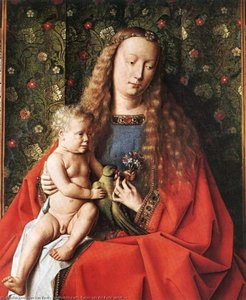
Über den Künstler
frühes Leben und Karriere
Jan van Eyck, eine herausragende Figur der frühen niederländischen Malerei, wurde um 1390 in Maaseik, heutiges Belgien, geboren. Bis 1422 hatte er sich als Meistermaler mit Werkstatt und Assistenten in Brügge etabliert. Er diente John III den Unbarmherzigen und später Philipp dem Guten, Herzog von Burgund, als Hofmaler und genoss hohes Ansehen und war an diplomatischen Bemühungen beteiligt.Künstlerische Beiträge
Van Eycks Werke, die zunächst im Stil der internationalen Gotik verwurzelt waren, überschritten ihre Grenzen durch seinen verstärkten naturalistischen Ansatz und die innovative Verwendung von Ölfarbe. Dies setzte einen neuen Standard in der Kunstwelt und machte ihn zu einem Pionier der frühen niederländischen Malerei. Zu seinen bemerkenswertesten Werken gehören:- Gott Vater (212 x 83 cm, nördliche Renaissance, Öl auf Holzplatte, anschaulich auf ArtsDot.com)
- Portrait eines jungen Mannes (33 x 19 cm, nördliche Renaissance, Öl auf Holzplatte, anschaulich auf ArtsDot.com)
- Dresdener Dreipietà (Jungfrau mit dem Kind mit St. Michael und St. Katharina und einer Darstellerin) (28 x 38 cm, Gemäldegalerie Alte Meister, Dresden, Deutschland, nördliche Renaissance, Holz, anschaulich auf ArtsDot.com)
- Portrait von Giovanni Arnolfini und seiner Frau (Detail) (Nationalgalerie, London, Vereinigtes Königreich, Öl, anschaulich auf ArtsDot.com)
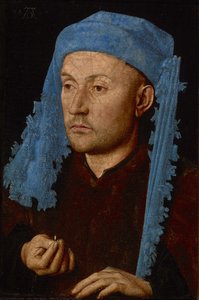
- Mann mit blauer Turban (17 x 23 cm, Nationalmuseum für Kunst in Bukarest, Rumänien, nördliche Renaissance, Holz, anschaulich auf ArtsDot.com)
Vermächtnis und Einfluss
Van Eycks Einfluss war tiefgreifend und legte den Grundstein für das blühende Zeitalter der frühen niederländischen Malerei. Seine innovative Verwendung von Ölfarbe verlieh seinen Werken Tiefe und Realismus, was ihn zu einer **bemerkenswerten Figur in der Kunstwelt** machte. Um mehr über die Werke von Jan van Eyck und die frühe niederländische Malerei zu erfahren, besuchen Sie Jan van Eycks Seite auf ArtsDot.com.Weitere Literatur
* Wikipedia: [Jan van Eyck](https://en.wikipedia.org/wiki/jan_van_eyck) * ArtsDot.com: Nordniederländischer Maler * ArtsDot.com: Die frühe niederländische Kunstbewegung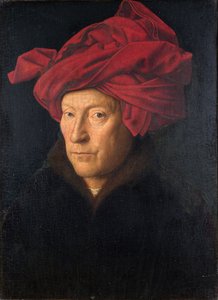
Jan van Eyck
1390 - 1441 , Niederlande
Kurzinfos
- Beeinflusste Künstler: ['Gerard David']
- Bemerkenswerte Werke:
- Genter Altarbild
- Arnolfini-Porträt
- Dresdner Triptychon
- Mann mit blauem Turben
- Geburtsdatum: ca. 1390
- Geburtsort: Maastricht, Niederlande
- Künstlerische Bewegung: Frühflämische Malerei
- Künstlerische Einflüsse:
- Hubert van Eyck
- Manuskriptillumination
- Nationalität: Niederländisch
- Todatum: 1441
- Vollständiger Name: Jan van Eyck
Ähnliche Artikel

Frühniederländische Meisterwerke: 10 Gemälde, die eine Epoche prägten | ArtsDot
Entdecken Sie die 10 prägendsten Meisterwerke der Frühniederländischen Malerei! Von Jan van Eyck bis Rogier van der Weyden – erleben Sie Kunstgeschichte hautnah. Hochwertige Reproduktionen & Inspiration für Ihr Interieur auf ArtsDot.com.
Jan van Eyck: Innovation, Symbolik und die Morgendämmerung der frühniederländischen Malerei
Entdecken Sie die Innovationen und tiefgründige Symbolik von Jan van Eyck! Analysieren Sie mit uns seine Meisterwerke, die Ölmaltechnik und den Einfluss auf die frühniederländische Renaissance. Jetzt lesen!
Öl auf Holz: 10 Meisterwerke, die Kunstgeschichte veränderten |
Entdecken Sie die 10 legendärsten Gemälde auf Holz – von Renaissance bis Impressionismus! Erfahren Sie die Geschichten der Künstler & ihre Meisterwerke. Hochwertige Reproduktionen bei .

Frühniederländische Renaissance: 10 Meisterwerke für Ihr Zuhause | ArtsDot
Entdecken Sie die 10 prägendsten Meisterwerke der Frühniederländischen Renaissance! Erfahren Sie mehr über Jan van Eyck, Rogier van der Weyden & Co. und ihre ikonischen Gemälde. Hochwertige Reproduktionen für Ihr Zuhause – jetzt auf ArtsDot.com!
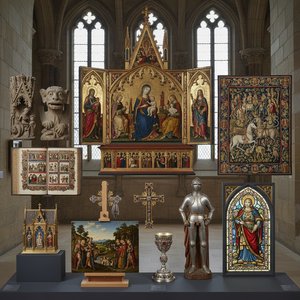
Spätmittelalterliche Meisterwerke: 10 Kunstwerke für Ihr Zuhause | ArtsDot
Entdecken Sie die 10 bedeutendsten Meisterwerke des Spätmittelalters! Erfahren Sie die Geschichten hinter Jan van Eyck, Rogier van der Weyden & mehr. Hochwertige Kunst Reproduktionen für Ihr Zuhause – jetzt auf ArtsDot.com!