 Vorschau anzeigen
 Versenden
 Teilen
 Details anzeigen

 Herunterladen
 Ähnliche Objekte
 Röntgenaufnahme
 Diashow
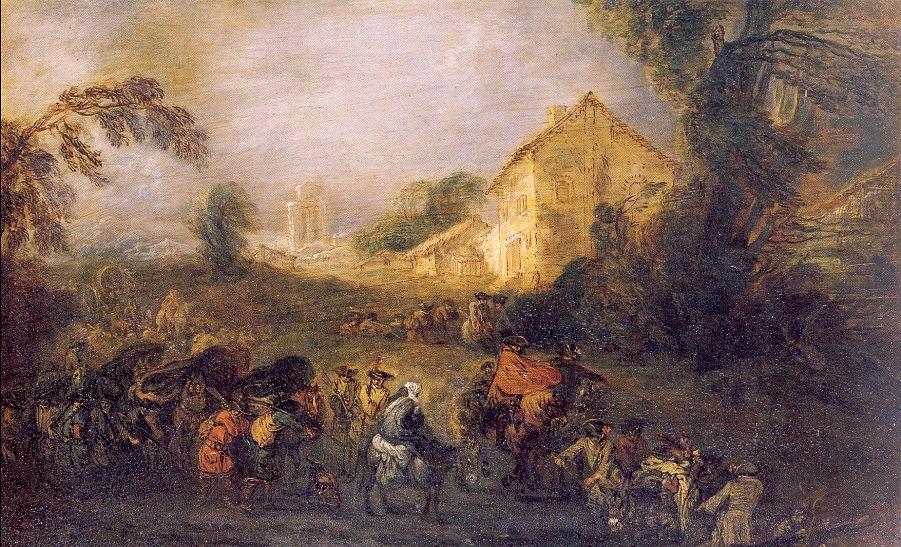
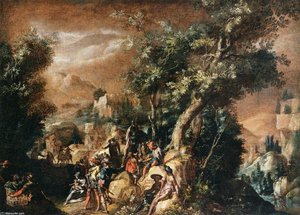
The Burdens of War

 Weiterlesen
Handgefertigte Ölreproduktion
Handgemaltes Ölgemälde auf Leinwand in Ihrer Wunschgröße und mit Rahmen, auf Bestellung von unseren Künstlern angefertigt. ( Druck bestellen Bild kaufen)




P118B $10

P118H $10

P118W $10

P438Z $10

P508JH $12

P508YH $12

P805H $10

P805Z $10

P919BZ $10

P919G $10

P919XJ $10

P959ZH $10

P968JZ $12

W106C $8

W218G $10

W218JH $8

W218Y $10

W307PJ $10

W316G $10

W316PJ $8

W316Y $10

W398PJ $8

W4111J $10

W500HY $15

W500JH $15

W692G $12

W849H $8

W940BG $15

W953PJ $8




Wählen Sie aus unseren vordefinierten Formaten, die den ursprünglichen Proportionen des Kunstwerks entsprechen.

Sie können Ihre eigenen Maße eingeben, um einen bestimmten Rahmen oder Platz auszufüllen. Wenn die gewählte Größe nicht den Proportionen des Originalbildes entspricht, werden wir das Kunstwerk entweder beschneiden oder das Gemälde durch zusätzliche, handgemalte Elemente erweitern. Ein digitales Mockup wird Ihnen zur Genehmigung zugesandt, bevor die Produktion beginnt.
Bitte beachten Sie, dass die Bildschirmvorschau nicht die tatsächliche Beschneidung oder Erweiterung widerspiegelt. Nur das Mockup zeigt die endgültige Komposition exakt an.
Obwohl Sondermaße verfügbar sind, empfehlen wir, eine Größe aus der vordefinierten Liste zu wählen, um die ursprünglichen Proportionen beizubehalten.
Nach der Bestellung wird das ArtsDot.com-Team dem Kunden Anweisungen per E-Mail zusenden und eine Mockup-Vorschau bereitstellen.
Weltweiter Versand () in nur 3 bis 4 Wochen statt der üblichen 5 Wochen. (24 August). Keine Kompromisse bei der Qualität.

Kostenloser weltweiter Expressversand

Hochwertige Leinenleinwand

Umfassender Versicherungsschutz beim Versand

Zollgebühren-Rückerstattungsgarantie

Garantie für exakte Farbtreue

60 Tage Rückgaberecht (nur bei Mängeln)

100% Geld-zurück-Garantie

Mengenrabatt verfügbar
 Die Glasoption ist nur für Größen unter 110 cm verfügbar.

The Burdens of War
Art der Reproduktion
Format der Reproduktion
-


Gesamtpreis
$ 263
Beschreibung des Kunstwerks
Jean-Antoine Watteau: A Delicate Brushstroke – The Life and Art of Jean-Antoine Watteau
Jean-Antoine Watteau (1684–1721), a name that resonates with the ethereal beauty of Rococo, irrevocably transformed the artistic landscape of eighteenth-century France. Born in Valenciennes, amidst the understated grandeur of Northern Burgundy, Watteau’s trajectory defied conventional expectations for artists of his time—a rejection of the bombastic Baroque favored by Louis XIV—embracing instead a vision steeped in intimacy, leisure, and nuanced emotion.
Unlike many contemporaries who adhered to rigidly defined artistic paths, Watteau's life was characterized by perseverance. Initial struggles for recognition within Parisian art institutions fueled his ambition, shaping him into the artist he would become. His early training under local painters instilled in him a profound appreciation for observation and an unwavering fascination with everyday life—themes that would consistently reappear throughout his oeuvre.
- Early Influences: Watteau’s formative years were marked by exposure to Flemish and Dutch artistic traditions, notably the works of Rubens and Rembrandt. These masters championed color and movement, rejecting the formal constraints of Baroque sculpture and architecture—a stylistic rebellion that would profoundly influence Watteau's own artistic sensibilities.
- The Parisian Atelier: His apprenticeship under Claude Gillot solidified his understanding of Rococo aesthetics, fostering connections with artists who sought to liberate art from rigid conventions. Gillot’s studio served as a crucible for innovation, exposing Watteau to the vibrant theatricality of Commedia dell'arte and inspiring him to explore new expressive possibilities.
- A Patron’s Embrace: Pierre Crozat, a wealthy banker and avid collector, recognized Watteau’s talent and became his influential benefactor—providing him with access to masterpieces by Venetian artists like Titian and Tintoretto. This patronage nurtured Watteau's artistic development and allowed him to immerse himself in the intellectual currents of Parisian society.
The Birth of Fêtes Galantes
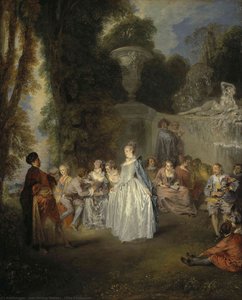
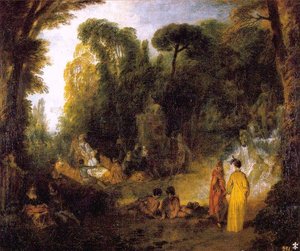
Watteau’s singular contribution to art history lies in his invention of ‘fêtes galantes,’ a genre that captured the spirit of aristocratic leisure and idealized pastoral romance. Unlike grand historical paintings or religious commissions, fêtes galantes depicted scenes of carefree gatherings—elegant picnics, masked balls, and romantic promenades—characterized by delicate color palettes, graceful poses, and subtle theatricality.
These canvases weren’t merely decorative; they conveyed a complex tapestry of emotions—joyful exuberance mingled with melancholy longing—reflecting the anxieties and aspirations of the Enlightenment era. Watteau skillfully employed chiaroscuro—the interplay of light and shadow—to heighten dramatic effect, creating an atmosphere of ethereal beauty that captivated audiences.
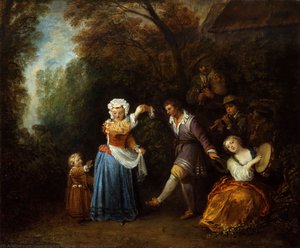
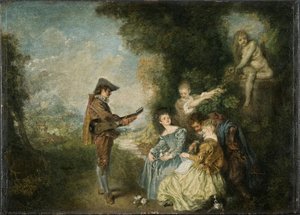
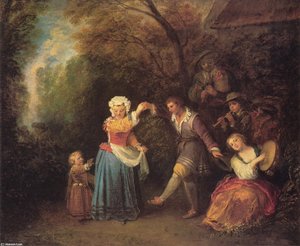
“The Country Dance,” exemplifies this masterful technique, transporting viewers to a realm where art transcends mere representation, becoming a conduit for profound psychological insight. Watteau’s meticulous attention to detail—from the embroidered costumes to the expressive faces of his figures—elevated fêtes galantes to an unparalleled level of artistic sophistication.Symbolism and Emotional Resonance
Watteau's paintings are laden with symbolic references, reflecting the humanist ideals prevalent during his time. Recurring motifs—such as doves symbolizing peace, flowers representing fertility and beauty, and musical instruments conveying elegance and refinement—underscore Watteau’s preoccupation with themes of love, desire, and spiritual contemplation.
More than just aesthetically pleasing reproductions, Watteau's works evoke a powerful emotional response. They invite viewers to contemplate the fleeting nature of pleasure, the bittersweet beauty of human relationships, and the yearning for transcendence—themes that continue to resonate with audiences today. His art speaks to our deepest sensibilities, reminding us of the importance of savoring life’s joys while acknowledging its inevitable sorrows.
Legacy and Influence
Jean-Antoine Watteau's influence extended far beyond his own lifetime, shaping the artistic tastes of subsequent generations. Artists like François Boucher and Jean Honoré Fragonard embraced Watteau’s aesthetic principles—particularly his use of color and movement—creating masterpieces that solidified Rococo as the dominant style of the era.
Today, reproductions of Watteau's paintings adorn homes and galleries worldwide—testament to their enduring beauty and artistic significance. They serve as a reminder of a bygone age—a time when art celebrated elegance, grace, and emotional depth—inspiring viewers to appreciate the transformative power of visual expression.
Ähnliche Kunstwerke

Über den Künstler
frühes Leben und Ausbildung
Jean Antoine Watteau, ein französischer Maler, wurde in Valenciennes, Frankreich, im Jahr 1684 geboren. Wenig ist über sein frühes Leben bekannt, aber es wird angenommen, dass er eine Ausbildung beim Künstler Julien in Valenciennes erhielt, bevor er 1702 nach Paris zog.Aufstieg zur Bedeutung
Watteaus einzigartiger Stil, der Elemente des Barock- und des aufkommenden Rokoko-Stils vereinte, gewann schnell an Popularität. Seine Werke waren durch ihre leuchtende, traumhafte Qualität gekennzeichnet und zeigten oft Szenen aus dem Alltag und Theateraufführungen. Zu den bemerkenswerten Werken dieser Zeit gehören:- Der Landtanze (1718-1721), ein Gemälde, das seine Meisterschaft bei der Darstellung des Wesens sorgloser, rustikaler Lebensweise zeigt.
- Zeres (Sommer) (1705), ein Beispiel für seine Fähigkeit, die Schönheit der Natur und das menschliche Erleben darzustellen.
- Das Eheversprechen (1710), ein Werk, das seine Fähigkeit hervorhebt, die Intimität häuslicher Szenen mit der Formalität von Verträgen in Einklang zu bringen.
Einfluss und Vermächtnis
Watteaus Einfluss auf die Kunstwelt war erheblich und beeinflusste die Entwicklung des Rokoko-Stils. Seine Werke befinden sich in verschiedenen Museen, darunter die Nationalgalerie der Künste (Washington, Vereinigte Staaten) und das Museo del Prado (Spanien). Trotz seines unerwarteten Todes im Alter von 37 Jahren hinterließ Watteau einen unauslöschlichen Eindruck in der Kunstgeschichte.Erfahren Sie mehr
Um sich tiefer mit Watteaus Welt vertraut zu machen, besuchen Sie [https://ArtsDot.com/@/jean-antoine-watteau](https://ArtsDot.com/@/jean-antoine-watteau) und entdecken Sie die umfangreiche Sammlung seiner Werke, darunter:- Kopf einer jungen Frau mit Kapuze (1715-1720), der seine Fähigkeit zeigt, die Feinheiten des menschlichen Ausdrucks einzufangen.
- Studie einer sich drehenden Frau und fünf Studien von Händen (1708-1712), die seine Hingabe zur Beherrschung der Feinheiten der menschlichen Form hervorhebt.
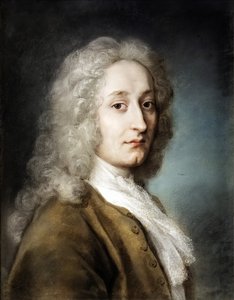
Jean-Antoine Watteau
1684 - 1721 , Frankreich
Kurzinfos
- Beeinflusste Künstler:
- Fragonard
- Boucher
- Bemerkenswerte Werke:
- Der Landtanze
- Ceres (Sommer)
- Das Eheversprechen
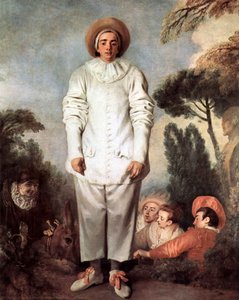
- Gilles
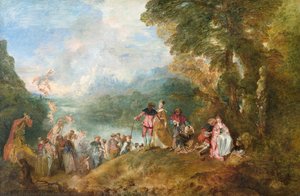
- Die Verabschiedung nach Kythera
- Geburtsdatum: 1684
- Geburtsort: Valenciennes, Frankreich
- Künstlerische Bewegung: Rokoko
- Künstlerische Einflüsse:
- Titian
- Veronese
- Rubens
- Nationalität: Französisch
- Todatum: 1721
- Vollständiger Name: Jean-Antoine Watteau
Ähnliche Artikel

Rococo Meisterwerke: Die Top 10, die eine Epoche prägten |
Entdecken Sie die Top 10 Rokoko Meisterwerke von Watteau, Boucher & Fragonard! Erfahren Sie die Geschichten hinter diesen ikonischen Gemälden und lassen Sie sich für Ihre Inneneinrichtung inspirieren. Hochwertige Kunstdrucke auf .

The Rococo Aesthetic: Opulence, Rebellion & the Pursuit of Pleasure in 18th-Century Art
Explore the opulent world of Rococo art! Discover its origins, key artists like Watteau & Boucher, and lasting influence on design. Expert insights for collectors & enthusiasts.
The Allure of Elegance in Art: A Historical & Aesthetic Exploration of Refinement & Grace
Explore the exquisite world of Rococo art! Discover its history, masters (Watteau, Boucher & more), and defining elegance. Expert insights for collectors seeking museum-quality reproductions & custom portraits.
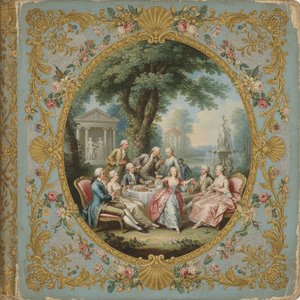
The Rococo Style: Aristocratic Leisure & the Pursuit of Delight in 18th-Century Art
Explore the opulent world of Rococo art! Discover Watteau, Boucher & Nattier's masterpieces. Expert insights for collectors seeking museum-quality reproductions and custom portraits at ArtsDot.
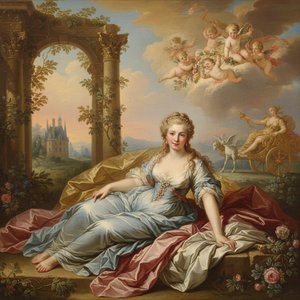
François Boucher: Rokoko-Meister von Mythos, Sinnlichkeit und dem französischen Hofleben
Entdecken Sie François Boucher, den Meister des Rokoko! Erfahren Sie mehr über sein Leben, seine sinnlichen Gemälde und seinen Einfluss auf die französische Hofkunst. Jetzt lesen!