 Vorschau anzeigen
 Versenden
 Teilen
 Details anzeigen

 Herunterladen
 Ähnliche Objekte
 Röntgenaufnahme
 Diashow
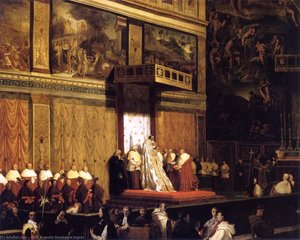
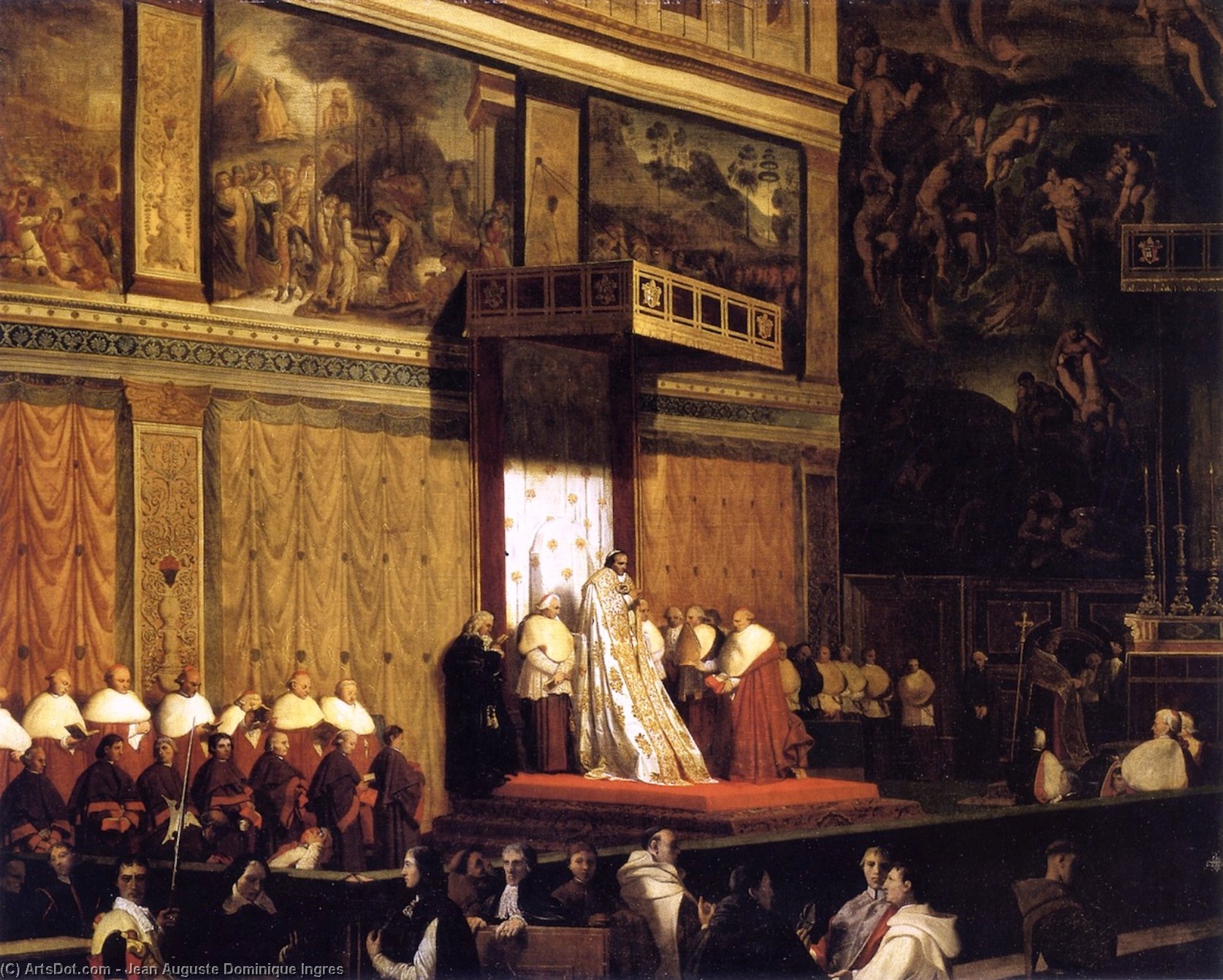
Papst Pius VII in der Sixtinischen Kapelle


 Weiterlesen
Handgefertigte Ölreproduktion
Handgemaltes Ölgemälde auf Leinwand in Ihrer Wunschgröße und mit Rahmen, auf Bestellung von unseren Künstlern angefertigt. ( Druck bestellen Bild kaufen)




P118B $10

P118H $10

P118W $10

P438Z $10

P508JH $12

P508YH $12

P805H $10

P805Z $10

P919BZ $10

P919G $10

P919XJ $10

P959ZH $10

P968JZ $12

W106C $8

W218G $10

W218JH $8

W218Y $10

W307PJ $10

W316G $10

W316PJ $8

W316Y $10

W398PJ $8

W4111J $10

W500HY $15

W500JH $15

W692G $12

W849H $8

W940BG $15

W953PJ $8




Wählen Sie aus unseren vordefinierten Formaten, die den ursprünglichen Proportionen des Kunstwerks entsprechen.

Sie können Ihre eigenen Maße eingeben, um einen bestimmten Rahmen oder Platz auszufüllen. Wenn die gewählte Größe nicht den Proportionen des Originalbildes entspricht, werden wir das Kunstwerk entweder beschneiden oder das Gemälde durch zusätzliche, handgemalte Elemente erweitern. Ein digitales Mockup wird Ihnen zur Genehmigung zugesandt, bevor die Produktion beginnt.
Bitte beachten Sie, dass die Bildschirmvorschau nicht die tatsächliche Beschneidung oder Erweiterung widerspiegelt. Nur das Mockup zeigt die endgültige Komposition exakt an.
Obwohl Sondermaße verfügbar sind, empfehlen wir, eine Größe aus der vordefinierten Liste zu wählen, um die ursprünglichen Proportionen beizubehalten.
Nach der Bestellung wird das ArtsDot.com-Team dem Kunden Anweisungen per E-Mail zusenden und eine Mockup-Vorschau bereitstellen.
Weltweiter Versand () in nur 3 bis 4 Wochen statt der üblichen 5 Wochen. (25 August). Keine Kompromisse bei der Qualität.

Kostenloser weltweiter Expressversand

Hochwertige Leinenleinwand

Umfassender Versicherungsschutz beim Versand

Zollgebühren-Rückerstattungsgarantie

Garantie für exakte Farbtreue

60 Tage Rückgaberecht (nur bei Mängeln)

100% Geld-zurück-Garantie

Mengenrabatt verfügbar
 Die Glasoption ist nur für Größen unter 110 cm verfügbar.

Papst Pius VII in der Sixtinischen Kapelle
Art der Reproduktion
Format der Reproduktion
-


Gesamtpreis
$ 263
Beschreibung des Kunstwerks
Jean-Auguste-Dominique Ingres’s “Pope Pius VII im Sixtinischen Kapelle” – A Masterpiece of Neoclassical Grandeur
Jean-Auguste-Dominique Ingres's "Pope Pius VII im Sixtinischen Kapelle," painted in 1814, is more than simply a portrait; it’s a carefully constructed tableau vivant, a frozen moment imbued with the weight of history and the quiet dignity of religious authority. The painting, now residing within the National Gallery of Art in Washington D.C., offers a profound glimpse into a pivotal era – the tumultuous years following the Napoleonic Wars and the subsequent restoration of the Papal States under Pius VII himself. Ingres, a staunch defender of classical ideals, meticulously renders this scene with an almost sculptural precision, prioritizing form and line above all else, creating an image that feels both timeless and deeply rooted in its historical context.
The Composition: A Symphony of Light and Form
The composition immediately draws the eye to Pope Pius VII, positioned centrally on a vibrant red carpet – a color historically associated with royalty and power. He stands as an imposing figure, his posture radiating authority and solemnity. Surrounding him are cardinals, each rendered in exquisite detail, their robes shimmering with rich fabrics and intricate embroidery. The arrangement isn’t haphazard; it's deliberately balanced, reflecting Ingres’s deep understanding of classical principles of harmony and proportion. Note the careful use of light – a diffused illumination that highlights the textures of the clothing and the folds of the drapery, creating a sense of depth and realism. The backdrop, an opulent room with a large window offering a glimpse of the Roman sky, further enhances the grandeur of the scene. Two angels, subtly integrated into the upper corners, serve as silent witnesses to this momentous occasion, adding a layer of spiritual significance.
Technique and Style: The Ingres Touch
Ingres’s mastery lies in his meticulous technique – a hallmark of his Neoclassical style. The painting is executed in oil on canvas, allowing for an astonishing level of detail and tonal variation. He employed a layering technique, building up the image through numerous thin glazes, achieving a remarkable luminosity and depth. The smooth, polished surfaces of the robes contrast sharply with the subtly textured background, demonstrating Ingres’s ability to control light and shadow with unparalleled skill. His line work is particularly noteworthy – precise, confident, and imbued with an almost architectural quality. It's this dedication to line that gives the figures a sense of solidity and permanence, as if they are carved from stone rather than painted.
Historical Context and Symbolism: Faith Amidst Turmoil
“Pope Pius VII im Sixtinischen Kapelle” captures a specific moment in European history – the aftermath of Napoleon’s invasion of Rome and the subsequent restoration of papal authority. Pius VII, having been briefly held captive by the French, emerged as a symbol of resistance and religious resilience. The painting isn't merely a portrait; it’s a statement about the return to order and stability following years of chaos. The cardinals represent the Church hierarchy, reinforcing Pius VII’s position as their leader. The red carpet symbolizes his elevation and authority, while the angels subtly suggest divine protection and guidance. Consider also the deliberate choice of setting – the Sistine Chapel itself, a space synonymous with artistic achievement and religious devotion, elevates the scene to an almost sacred level.
Emotional Impact and Artistic Legacy
Despite its formal rigor, “Pope Pius VII im Sixtinischen Kapelle” possesses a powerful emotional resonance. The Pope’s expression is one of quiet dignity and resolve, conveying a sense of strength in the face of adversity. The painting invites contemplation on themes of faith, power, and the enduring legacy of the Church. Ingres's work remains a testament to his artistic genius and a valuable historical document, offering a captivating window into a transformative period in European history. A reproduction of this masterpiece offers an opportunity to bring this scene of grandeur and solemnity into any space, serving as both a decorative element and a poignant reminder of the past.
Ähnliche Kunstwerke


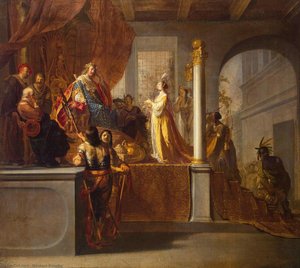
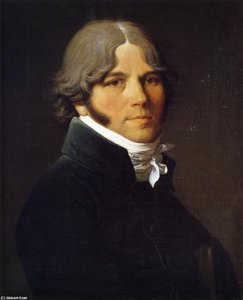
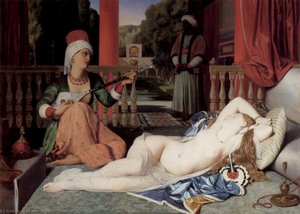
Über den Künstler
Jean-Auguste-Dominique Ingres: Ein Meister des Neoklassizismus
- Geboren: 29. August 1780, Montauban, Frankreich
- Gestorben: 14. Januar 1867, Paris
Frühes Leben und Ausbildung
Jean-Auguste-Dominique Ingres wurde in eine bescheidene Familie in Montauban geboren. Sein Vater, Jean-Marie-Joseph Ingres, war Maler und Bildhauer und vermittelte ihm so ein frühes künstlerisches Fundament. Ingres erhielt zunächst Unterricht von seinem Vater, bevor er an der Académie Royale de Peinture, Sculpture et Architecture in Toulouse unter Guillaume-Joseph Roques eingeschrieben wurde. 1797 zog er nach Paris, um bei Jacques-Louis David zu studieren, einer führenden Figur des Neoklassizismus. Diese Mentorschaft erwies sich als entscheidend für Ingres' künstlerische Entwicklung.
Künstlerische Entwicklung und Einflüsse
Ingres’ Stil war tief in den Traditionen der italienischen Renaissance und flämischer Meister wie Raffael und Nicolas Poussin verwurzelt. Er studierte ihre Werke akribisch und bemühte sich, deren Klarheit, Eleganz und idealisierte Formen nachzuahmen. Der Einfluss von Jacques-Louis David zeigt sich auch in Ingres' anfänglicher Einhaltung neoklassizistischer Prinzipien – einem Fokus auf Linie, Form und historische oder mythologische Themen. Allerdings entwickelte Ingres allmählich seinen eigenen unverwechselbaren Stil, der durch eine einzigartige Mischung aus Präzision und Sinnlichkeit gekennzeichnet ist.
Wichtige Werke und Stil
Ingres erlangte bedeutende Anerkennung durch mehrere bemerkenswerte Werke:
- Die Boten des Agamemnon in Achills Zelt (1801): Dieses Gemälde brachte ihm den Prix de Rome ein, was einen Wendepunkt in seiner Karriere markierte.
- Der Eid Ludwigs XIII. (1827): Ein Werk, das seinen raffaelesken Stil demonstriert und ihm weitreichenden Ruhm einbrachte.
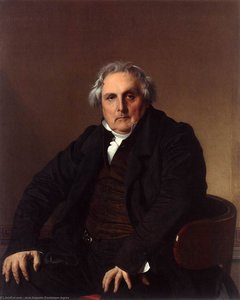
- Porträt von Monsieur Bertin (1833-1834): Dieses Porträt markierte eine Zeit des großen Erfolgs und zeigte seine Fähigkeit, den individuellen Charakter einzufangen.
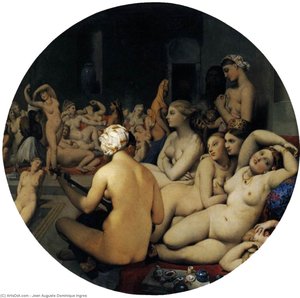
- Das türkische Bad (1862): Eines seiner späteren Werke und ein Beispiel für seine Orientalistenmalerei mit Aktendarstellungen, fertiggestellt als er 83 Jahre alt war.
Ingres' Porträts werden besonders für ihre ausdrucksstarke Verzerrung von Form und Raum gefeiert – eine Abweichung von streng neoklassizistischen Konventionen, die moderne Kunstrichtungen vorwegnahm. Er verwendete einen linearen Stil mit präzisen Konturen und lebendigen Farben und erzeugte oft eine Illusion der Tiefe durch subtile Schattierungen.
Vermächtnis und historische Bedeutung
Ingres’ Vermächtnis reicht weit über seine eigene umfangreiche Produktion hinaus. Er hatte einen tiefgreifenden Einfluss auf nachfolgende Generationen von Künstlern, darunter Henri Matisse und Pablo Picasso, die seinen innovativen Ansatz in Bezug auf Form und Komposition bewunderten. Sein Engagement für klassische Ideale bei gleichzeitiger Überschreitung der Grenzen künstlerischen Ausdrucks festigte seine Position als Brücke zwischen Neoklassizismus und Moderne. Ingres’ Werke werden weiterhin in wichtigen Museen weltweit ausgestellt, was Zeugnis von ihrer bleibenden Schönheit und historischen Bedeutung ist.
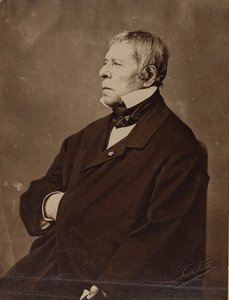
Jean-Auguste-Dominique Ingres
1780 - 1867 , Frankreich
Kurzinfos
- Beeinflusste Künstler:
- Raphael
- Nicolas Poussin
- Jacques-Louis David
- Bemerkenswerte Werke:
- Die Botschafter Agamemnons
- Der Eid Ludwigs XIII.
- Porträt von Monsieur Bertin
- Das türkische Bad
- Geburtsdatum: 29. August 1780
- Geburtsort: Montauban, Frankreich
- Künstlerische Richtung: Neoklassizismus
- Nationalität: Französisch
- Sterbedatum: 14. Januar 1867
- Vollständiger Name: Jean-Auguste-Dominique Ingres
- Von Ihm Beeinflusste Künstler:
- Henri Matisse
- Pablo Picasso
Ähnliche Artikel
Michelangelo Buonarroti: Die 25 Meisterwerke des Renaissance-Genies | ArtsDot
Entdecken Sie die 25 Meisterwerke von Michelangelo Buonarroti! Von David bis zur Sixtinischen Kapelle – erleben Sie Renaissance Kunst in ihrer ganzen Pracht. Hochwertige Kunstdrucke & Inspiration für Ihr Zuhause auf ArtsDot.com.

Giotto di Bondone: Die 25 Meisterwerke des Frührenaissance – Kunst für Ihr Zuhause
Entdecken Sie die 25 Meisterwerke von Giotto di Bondone! Erleben Sie die Frührenaissance, religiöse Kunst & ikonische Fresken wie in der Scrovegni Kapelle. Hochwertige Kunstdrucke online bei ArtsDot.com – für zeitlose Eleganz in Ihrem Zuhause.
Pietro Perugino: Umbrian Master of Serenity & Precursor to Raphael's High Renaissance
Explore the life & art of Pietro Perugino, a pivotal Renaissance master and Raphael’s influential teacher. Discover his serene compositions, Sistine Chapel frescoes, and lasting legacy with ArtsDot.
Neoklassizismus: Die 10 Meisterwerke, die eine Epoche prägten – Kunst für Ihr Zuhause
Entdecken Sie die 10 prägendsten Meisterwerke des Neoklassizismus! Von David bis Canova – erfahren Sie die Geschichten hinter ikonischen Gemälden & Skulpturen. Finden Sie hochwertige Reproduktionen für Ihr Zuhause auf

The Enduring Legacy of Fresco Painting: Techniques, History & Contemporary Relevance
Explore the rich history & enduring artistry of fresco painting – from Giotto to Michelangelo! Discover techniques, conservation efforts, & modern applications. Learn how ArtsDot brings this timeless art form to your home.