 Vorschau anzeigen
 Versenden
 Teilen
 Details anzeigen

 Herunterladen
 Ähnliche Objekte
 Röntgenaufnahme
 Diashow
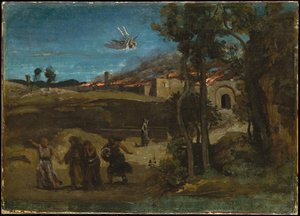
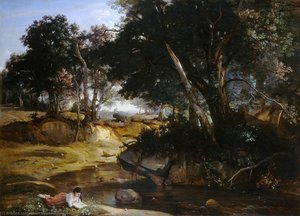
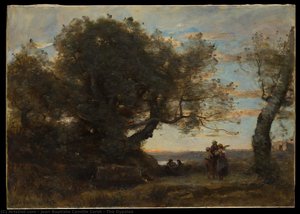
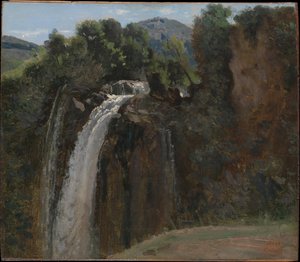
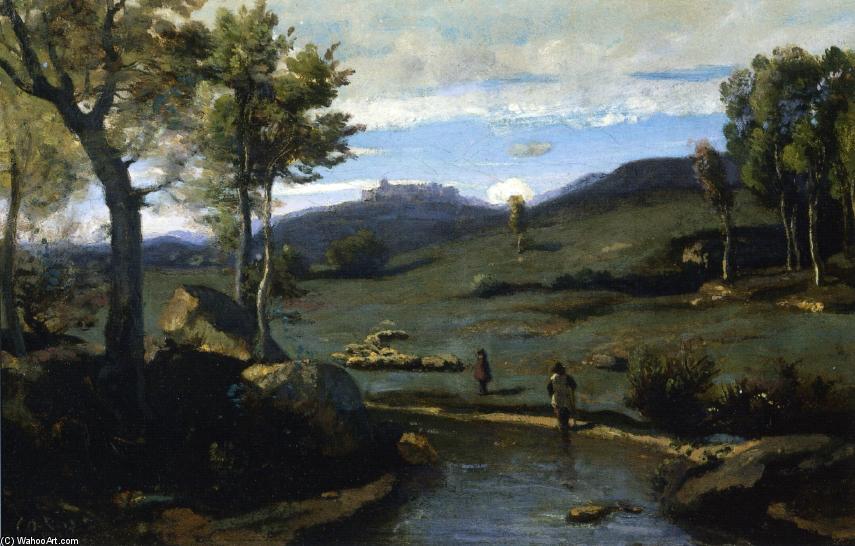
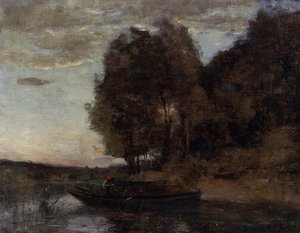
Roman Campagne - Rocky Valley with a Herd of Pigs
 Oil On Canvas
- WallArt
- Barbizon School
 1827
1827- 19th Century
 96.0 x 135.0 cm
 Weiterlesen
Giclée / Kunstdruck
Giclée- oder Leinwanddruck in Museumsqualität mit schneller Produktion und flexiblen Veredelungsoptionen. ( Handgemalte Reproduktion bestellen Bild kaufen)




P118B $10

P118H $10

P118W $10

P438Z $10

P508JH $12

P508YH $12

P805H $10

P805Z $10

P919BZ $10

P919G $10

P919XJ $10

P959ZH $10

P968JZ $12

W106C $8

W218G $10

W218JH $8

W218Y $10

W307PJ $10

W316G $10

W316PJ $8

W316Y $10

W398PJ $8

W4111J $10

W500HY $15

W500JH $15

W692G $12

W849H $8

W940BG $15

W953PJ $8




Wählen Sie aus unseren vordefinierten Formaten, die den ursprünglichen Proportionen des Kunstwerks entsprechen.

Sie können Ihre eigenen Maße eingeben, um ein bestimmtes Format oder einen speziellen Platz einzupassen. Wenn das von Ihnen gewählte Format nicht den Proportionen des Originalbildes entspricht, werden wir das Kunstwerk entweder beschneiden oder das Bild mit einem gespiegelten oder einfarbigen Rand erweitern. Ein digitaler Entwurf wird Ihnen zur Genehmigung zugesandt, bevor die Produktion beginnt.
Bitte beachten Sie, dass die Vorschau auf dem Bildschirm nicht den tatsächlichen Zuschnitt oder die Erweiterung widerspiegelt. Nur der Entwurf zeigt die endgültige Komposition präzise an.
Obwohl Sondermaße verfügbar sind, empfehlen wir die Auswahl eines Maßes aus der vordefinierten Liste, um die ursprünglichen Proportionen zu bewahren.
Weltweiter Versand () innerhalb von 2 Wochen statt der üblichen 4/5 Wochen. (5 September)

Kostenloser weltweiter Expressversand

Hochwertige Leinenleinwand

Umfassender Versicherungsschutz beim Versand

Zollgebühren-Rückerstattungsgarantie

Garantie für exakte Farbtreue

60 Tage Rückgaberecht (nur bei Mängeln)

100% Geld-zurück-Garantie

Mengenrabatt verfügbar
 Die Glasoption ist nur für Größen unter 110 cm verfügbar.

Roman Campagne - Rocky Valley with a Herd of Pigs
Giclée / Kunstdruck
Format der Reproduktion
-


Gesamtpreis
$ 62
A Moment of Rural Tranquility: Corot’s ‘Roman Campagne’
Jean-Baptiste-Camille Corot's “Roman Campagne” – a depiction of a rocky valley with a herd of pigs – isn’t merely a landscape painting; it’s a profound meditation on the relationship between humanity and nature. Painted in 1843, this work exemplifies the core tenets of the Barbizon school, a movement that prioritized direct observation and honest representation over idealized academic styles. Corot, deeply influenced by the Romantic sensibility, sought to capture not just the visual appearance of the French countryside but also its inherent mood – a quiet, contemplative stillness that invites the viewer into its serene embrace.
The scene unfolds with remarkable simplicity. A solitary path winds through the valley floor, leading the eye towards distant trees and a hazy horizon. The pigs themselves are rendered with an almost hesitant touch, their forms subtly blended into the surrounding terrain. This deliberate lack of sharp detail is crucial to Corot’s technique – he wasn't interested in precise topographical accuracy but rather in conveying the *impression* of space and light. Notice how the muted palette of browns, ochres, and greens creates a sense of atmospheric depth, drawing us into the heart of the valley.
The Barbizon School: A Revolution in Landscape Painting
Corot’s work is inextricably linked to the rise of the Barbizon school. Emerging in the mid-19th century, these artists rejected the prevailing trends in French art – particularly the grand historical and mythological subjects favored by the Academy. Instead, they focused exclusively on painting landscapes, often outdoors (en plein air), directly from nature. This commitment to direct observation was revolutionary, challenging the established norms of artistic training and paving the way for Impressionism.
The Barbizon painters were not simply copying what they saw; they were actively interpreting it through their own emotional responses. Corot’s “Roman Campagne” embodies this spirit – it's a deeply felt expression of his connection to the French countryside, imbued with a sense of peace and solitude. The lack of dramatic narrative or heroic figures allows the viewer to project their own emotions onto the scene, fostering a personal connection with the artwork.
Technique and Light: Corot’s Masterful Approach
Corot's mastery lies in his handling of light and atmosphere. He employed a broken brushstroke technique – applying paint in short, irregular strokes – to create a shimmering effect that mimics the way sunlight plays across the landscape. Observe how he uses subtle gradations of tone to suggest volume and form, rather than relying on strong outlines or chiaroscuro (the dramatic contrast between light and dark). This delicate approach is particularly evident in the rendering of the distant trees, which appear almost ethereal due to the atmospheric haze.
Furthermore, Corot’s meticulous study of geological formations – he spent considerable time sketching rocks and hillsides – informed his understanding of how light interacts with different surfaces. This knowledge is subtly reflected in the careful placement of shadows and highlights within the painting, adding to its realism and depth. The composition itself—a simple path leading into a hazy distance—is a classic example of Corot’s ability to create a sense of infinite space.
Symbolism and Emotional Resonance
"Roman Campagne" transcends a mere depiction of a rural scene; it carries symbolic weight. The pigs, often associated with fertility and abundance, subtly reinforce the theme of natural prosperity. The solitary path suggests a journey – perhaps one of introspection or spiritual renewal. The overall mood is one of quiet contemplation, inviting the viewer to slow down, appreciate the beauty of the natural world, and find solace in its simplicity.
This painting’s enduring appeal lies not just in its technical brilliance but also in its ability to evoke a powerful emotional response. It's a reminder that amidst the complexities of modern life, there are still places where we can reconnect with our primal instincts and find peace in the embrace of nature – a sentiment powerfully captured by Corot’s masterful brushstrokes.
Ähnliche Kunstwerke
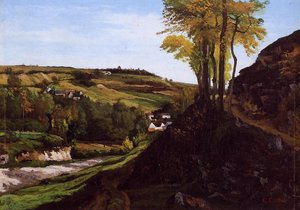
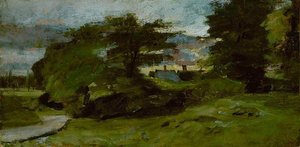
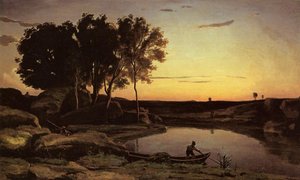
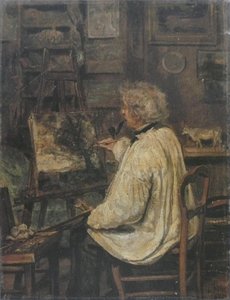

Über den Künstler
Frühe Jahre und Ausbildung
Jean-Baptiste-Camille Corot, ein renommierter französischer Landschafts- und Porträtmaler, wurde am 16. Juli 1796 in Paris geboren. Seine Familie, die zum Bürgertum gehörte, bot ihm eine Umgebung, die seine künstlerischen Neigungen förderte. Anfänglich lagen Corots Interessen woanders, doch er entdeckte um 1821 seine Leidenschaft für das Malen. Dies markierte den Beginn seiner produktiven Karriere, die später die Entwicklung des Impressionismus beeinflussen sollte.Künstlerische Laufbahn und bedeutende Werke
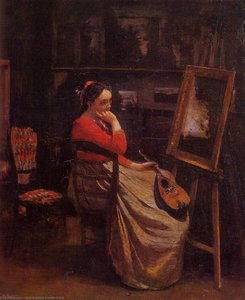
Corots künstlerischer Weg ist geprägt von einer Mischung aus neoklassischer Tradition und plein-air Innovationen. Er kombinierte sorgfältige Kompositionen mit der direkten Beobachtung der Natur im Freien, was zu einer einzigartigen Atmosphäre in seinen Werken führte. Zu seinen bemerkenswertesten Arbeiten zählen:- Die Ruhe (La Repose) (Öl auf Leinwand, ca. 1860er Jahre), ein fesselndes Werk, das Corots Meisterschaft in der Darstellung von Gelassenheit zeigt.
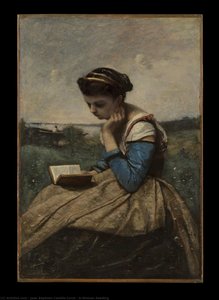
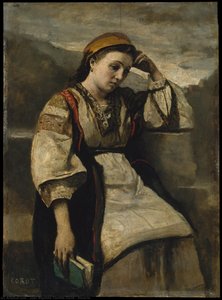
- Unterbrochenes Lesen (Lecture Interrompue) (Realismus, Öl, ca. 1850er Jahre), ein ergreifendes Beispiel für Corots Fähigkeit, den Alltag mit Tiefe und Emotion darzustellen.
- Agostina (Realismus, Öl, ca. 1860er Jahre), ein beeindruckendes Porträt, das Corots Geschicklichkeit in der Darstellung des Wesens seiner Motive veranschaulicht.
Einflüsse und Entwicklung
Corots künstlerische Entwicklung wurde von verschiedenen Einflüssen geprägt. Er studierte zunächst bei den neoklassizistischen Malern Jacques-Louis David und Jean-Antoine Houdon, was seine frühen Werke beeinflusste. Später fand er Inspiration in der Landschaftsmalerei des 17. Jahrhunderts, insbesondere bei Meistern wie Claude Lorrain und Nicolas Poussin. Corot entwickelte jedoch seinen eigenen Stil, indem er die klassische Komposition mit den direkten Beobachtungen der Natur im Freien verband. Er gilt als Brücke zwischen dem Klassizismus und dem Impressionismus. Seine Plein-Air-Malerei war revolutionär für seine Zeit und ebnete den Weg für zukünftige Generationen von Künstlern, darunter die Impressionisten.Vermächtnis und Bedeutung
Corots umfangreicher Output hatte einen nachhaltigen Einfluss auf die Entwicklung der Landschaftsmalerei. Sein innovativer Ansatz, traditionelle Techniken mit plein-air Innovationen zu verbinden, ebnete den Weg für zukünftige Generationen von Künstlern. Obwohl er zu Lebzeiten nicht immer Anerkennung fand, wurde Corot nach seinem Tod als einer der wichtigsten französischen Maler des 19. Jahrhunderts anerkannt. Seine Werke werden heute in bedeutenden Museen auf der ganzen Welt ausgestellt und seine Bedeutung für die Kunstgeschichte ist unbestreitbar. Entdecken Sie mehr über Jean-Baptiste-Camille Corots Gemälde auf ArtsDot.com: https://ArtsDot.com/@/jean-baptiste-camille-corot Erfahren Sie mehr über das Musée Courbet auf Wikipedia: https://en.wikipedia.org/wiki/mus%c3%a9e_courbet_(ornans,_france)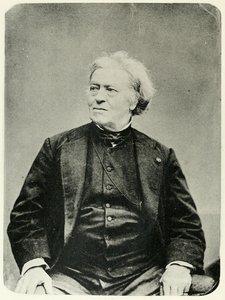
Jean-Baptiste-Camille Corot
1796 - 1875 , Frankreich
Kurzinfos
- Beeinflusste Künstler: ['Gustave Courbet']
- Bemerkenswerte Werke:
- Die Ruhe
- Unterbrochenes Lesen
- Agostina
- Geburtsdatum: 16. Juli 1796
- Geburtsort: Paris, Frankreich
- Künstlerische Richtung: Neoklassizismus, Pleinair
- Nationalität: Französisch
- Sterbedatum: 1875
- Vollständiger Name: Jean-Baptiste-Camille Corot
- Von Künstlern Beeinflusst: ['Keine Angaben']
Ähnliche Artikel
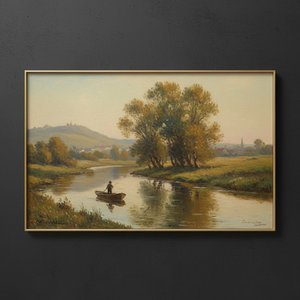
Jean-Baptiste-Camille Corot: Poetische Realität und der Übergang zum Impressionismus
Entdecken Sie das Werk von Camille Corot und die Schule von Barbizon! Erfahren Sie mehr über den Übergang zum Impressionismus, seine poetische Realität und seinen Einfluss auf die Kunstgeschichte. Expertenwissen & detaillierte Analysen.

Evocations of Place: A Historical Journey Through Landscape Art
Explore the rich history of landscape art with ArtsDot. Discover renowned artists, movements like Impressionism & Romanticism, and expert guidance for collecting timeless pieces. Find your perfect serene escape today!
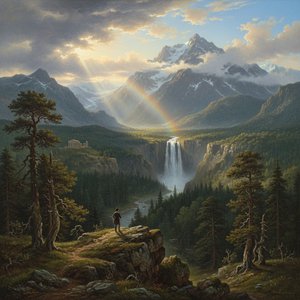
Evoking Nature's Sublime: A Comprehensive Exploration of 19th-Century Landscape Painting
Explore the captivating world of 19th-century landscape painting! Discover renowned artists like Friedrich & Monet, key movements, and find the perfect artwork to bring nature's serenity into your home. Expert insights at ArtsDot.

John Constable: Die 25 Meisterwerke des englischen Landschaftsgenies – ArtsDot
Entdecken Sie die 25 Meisterwerke von John Constable! Erleben Sie englische Landschaftsmalerei vom Hay Wain bis zur Stour Valley. Hochwertige Reproduktionen & Kunst für Ihr Zuhause auf ArtsDot.com.

Romantische Landschaften: Die 10 Meisterwerke, die eine Epoche prägten | ArtsDot
Entdecken Sie die 10 Meisterwerke der Romantischen Landschaftsmalerei! Von Caspar David Friedrich bis Turner – erleben Sie die Kunst, Emotion & Natur. Hochwertige Reproduktionen auf ArtsDot.com