

 Vorschau anzeigen
 Versenden
 Teilen
 Details anzeigen

 Herunterladen
 Ähnliche Objekte
 Röntgenaufnahme
 Diashow
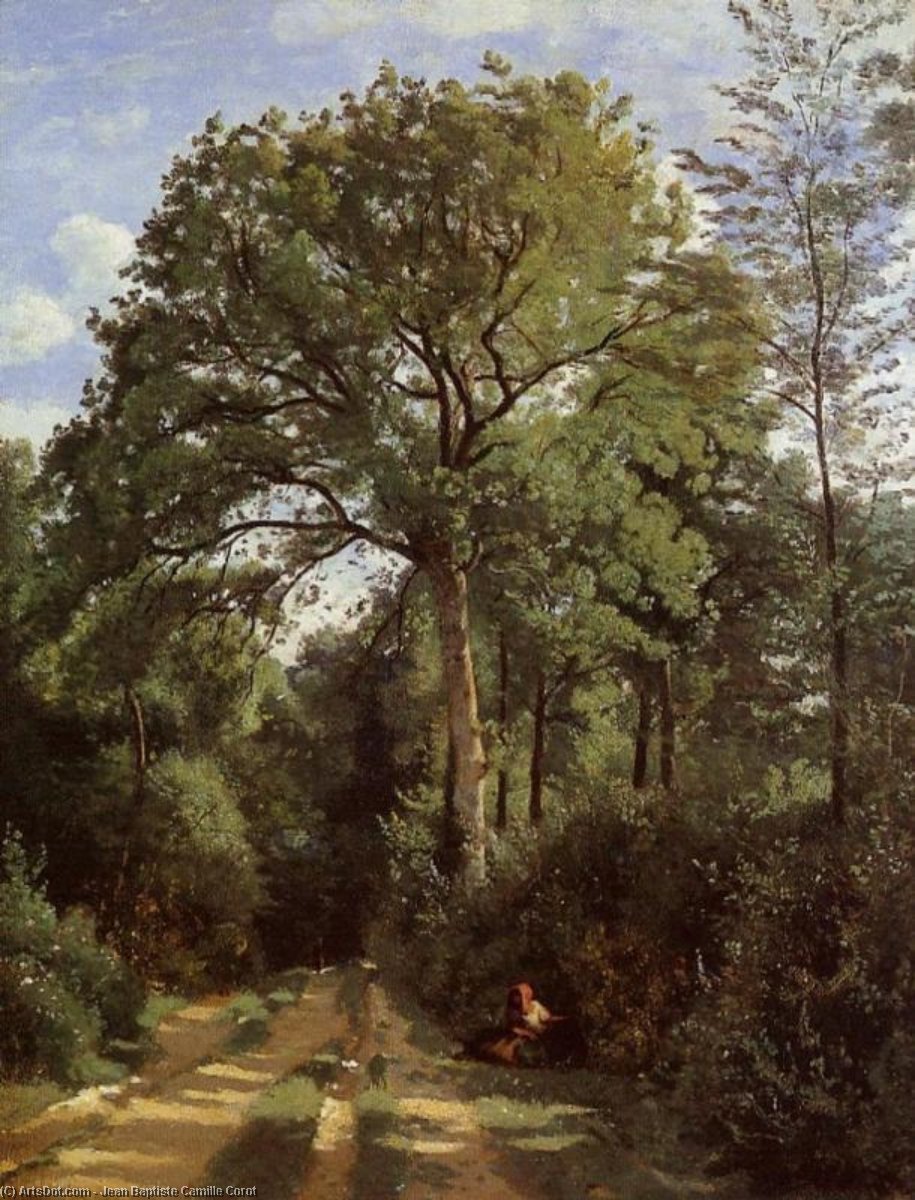
Ville d'Avray - Edge of the Woods with a Female Cowherd


 Weiterlesen
Erwerben Sie ein hochauflösendes, optimiertes digitales Bild, das der Online-Vorschau weit überlegen ist.
Jede Datei wird von unseren hauseigenen Spezialisten mit modernsten Werkzeugen und fachmännischer manueller Retusche sorgfältig vorbereitet. Wir stellen sicher, dass jedes Bild eine außergewöhnliche Klarheit, präzise Farbgenauigkeit und feinste Details aufweist.
Die endgültige Datei wird innerhalb von 72 Stunden per E-Mail zugestellt und ist für den sofortigen Einsatz in professionellen, redaktionellen und Druckumgebungen optimiert. Es handelt sich um dieselbe Qualität, der führende Designstudios, Verlage und Galerien vertrauen.
Digitales Bild
Laden Sie eine hochauflösende Datei für die persönliche Präsentation, den Druck und kreative Projekte herunter. ( Druck bestellen Handgemalte Reproduktion bestellen)
In jeder Bestellung digitaler Bilder enthalten
Professionelle digitale Bereitstellung, garantiert
Wenn Sie sich für ArtsDot.com entscheiden, erhalten Sie nicht nur ein Bild – Sie erhalten ein professionell aufbereitetes digitales Kunstwerk, das mit höchster Präzision erstellt und durch eine Zufriedenheitsgarantie abgesichert wird. Hier ist alles, was automatisch mit Ihrer Bestellung geliefert wird:

Schnelle E-Mail-Zustellung
Ihre hochauflösende digitale Bilddatei wird Ihnen innerhalb von 72 Stunden nach der Bestellung per E-Mail zugestellt – bereit zur sofortigen Verwendung.

KI-optimierte digitale Datei
Ihre Kunstwerke werden professionell mithilfe fortschrittlicher KI-Tools und manueller Bearbeitung optimiert, um maximale Detailtreue, Klarheit und Farbgenauigkeit zu gewährleisten.

Lebenslanger kostenloser Neudruckservice
Datei versehentlich gelöscht oder verloren? Keine Sorge – wir senden sie Ihnen jederzeit kostenlos erneut zu.

Keine Einfuhrgebühren – jemals
Genießen Sie Ihr Kunstwerk sofort ohne Zollgebühren, Einfuhrabgaben oder Versandkosten – digitale Downloads sind immer steuerfrei.

Garantierte Farbtreue
Wir garantieren, dass Ihr digitales Bild mithilfe professioneller Werkzeuge und Farbmanagement die Originalfarben so präzise wie möglich wiedergibt.

60-Tage-Zufriedenheitsgarantie
Sollten Sie mit Ihrem digitalen Bild nicht zufrieden sein, werden wir es überarbeiten oder Ihnen innerhalb von 60 Tagen 100% erstatten – ohne Wenn und Aber.

100% Geld-zurück-Garantie
Nicht zufrieden? Erhalten Sie innerhalb von 60 Tagen nach Erhalt Ihrer digitalen Datei eine vollständige Rückerstattung – ohne Angabe von Gründen.

Rabatte bei Großbestellungen
3 Bilder kaufen, 10% sparen – 5 Bilder kaufen, 15% sparen – Ab 10 Bildern 20% sparen. Ideal für kreative Projekte, Galerien und Agenturen.
Jean-Baptiste-Camille Corot: Capturing Tranquility in Ville d’Avray
Jean-Baptiste-Camille Corot (1796-1875) stands as an undeniable cornerstone of 19th-century French landscape painting, a figure whose artistic legacy continues to inspire awe and admiration. Born into Parisian bourgeois comfort, his formative years were profoundly shaped by an upbringing immersed in rural tranquility – entrusted to the care of a nurse near L’Isle-Adam until age four – fostering an enduring fascination with the natural world that would permeate every facet of his oeuvre. This early exposure instilled within him not merely observation but a deep empathy for the rhythms and subtleties of pastoral life, informing his unwavering dedication to portraying landscapes imbued with palpable emotion. His artistic journey began with unsuccessful ventures into commerce, yet Corot’s passion for painting persisted, fueled by an innate talent and supported by familial resources. This liberation allowed him to pursue his craft with uncompromising fervor, establishing himself as a master of Barbizon realism – a movement characterized by its commitment to depicting nature without idealization, prioritizing accuracy and atmospheric perspective. Unlike Impressionists who sought to capture fleeting moments of light, Corot aimed for a more contemplative engagement with the landscape, striving to convey not just what he saw but how it *felt*.The Scene: Ville d’Avray – Edge of the Woods With A Female Cowherd
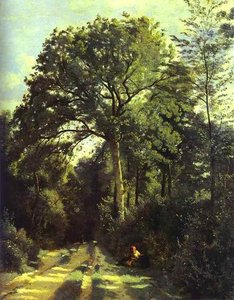
Corot's “Ville d’Avray – Edge of the Woods With A Female Cowherd,” painted in 1825, exemplifies this distinctive approach. The canvas depicts a serene woodland scene bathed in soft, diffused light—a hallmark of Barbizon aesthetics—where a meandering path winds through dense foliage beneath a partially cloudy sky. Compositionally masterful, the painting utilizes a pyramidal structure, anchoring its visual weight in the dominant presence of a colossal beech tree at the apex, drawing the viewer’s gaze upwards towards the heavens. This deliberate arrangement lends stability to the scene while simultaneously conveying a sense of grandeur and inviting contemplation. Foreground wildflowers punctuate the path's edge, subtly juxtaposed with a solitary figure seated upon a weathered rock—a human element that grounds the landscape in relatable experience. Lines dominate the composition: horizontal strokes delineate the path and tree trunks, reinforcing stability; vertical lines accentuate the trunk’s strength and upward movement. Shapes are predominantly organic – leaves, branches, rocks, and the figure itself – mirroring Corot's reverence for natural forms. Texture is achieved through loose brushstrokes that convincingly simulate foliage, bark, and the uneven surface of the rock, enriching the visual experience and conveying a palpable sense of materiality.Technique & Style: Barbizon Realism Illuminated
Corot’s technique embodies the essence of Barbizon realism. He employed oil paints on canvas with meticulous attention to detail, utilizing visible brushstrokes—a conscious rejection of Impressionistic blending—to capture the nuances of light and texture. The artist eschewed idealized representations, prioritizing truthful depiction of natural phenomena. Corot's palette leans heavily towards greens – ranging from muted olive tones to vibrant emerald hues – complemented by blues and browns that evoke the coolness of shade and the earthiness of woodland soil. This restrained color scheme contributes significantly to the painting’s tranquil atmosphere and reinforces its connection to the natural world. The stylistic influence of Romanticism is discernible in Corot's work, particularly evident in his expressive handling of light and his portrayal of solitude—themes central to the Romantic sensibility. However, unlike Romantic painters who sought dramatic grandeur, Corot prioritized subtlety and nuance, aiming for a more contemplative response from the viewer. He skillfully employs perspective to create a receding landscape, diminishing objects as they recede into the distance – a technique that enhances depth and reinforces the sense of atmospheric haze.Symbolism & Emotional Resonance
Beyond its aesthetic beauty, “Ville d’Avray” resonates with profound symbolic significance. The path represents a journey—both physical and metaphorical—inviting viewers to explore the mysteries of nature and contemplate their place within it. The forest symbolizes tranquility, contemplation, and perhaps even spiritual renewal – concepts deeply valued during Corot's time. The female cowherd figure embodies simplicity and connection to rural life, serving as a reminder of humanity’s harmonious relationship with the natural environment. Ultimately, Corot’s masterpiece transcends mere visual representation; it communicates an emotional experience—a feeling of serenity and wonder—that continues to captivate audiences today.Ähnliche Kunstwerke

Biografie des Künstlers
Frühe Jahre und Ausbildung
Jean-Baptiste-Camille Corot, ein renommierter französischer Landschafts- und Porträtmaler, wurde am 16. Juli 1796 in Paris geboren. Seine Familie, die zum Bürgertum gehörte, bot ihm eine Umgebung, die seine künstlerischen Neigungen förderte. Anfänglich lagen Corots Interessen woanders, doch er entdeckte um 1821 seine Leidenschaft für das Malen. Dies markierte den Beginn seiner produktiven Karriere, die später die Entwicklung des Impressionismus beeinflussen sollte.Künstlerische Laufbahn und bedeutende Werke
Corots künstlerischer Weg ist geprägt von einer Mischung aus neoklassischer Tradition und plein-air Innovationen. Er kombinierte sorgfältige Kompositionen mit der direkten Beobachtung der Natur im Freien, was zu einer einzigartigen Atmosphäre in seinen Werken führte. Zu seinen bemerkenswertesten Arbeiten zählen:- Die Ruhe (La Repose) (Öl auf Leinwand, ca. 1860er Jahre), ein fesselndes Werk, das Corots Meisterschaft in der Darstellung von Gelassenheit zeigt.
- Unterbrochenes Lesen (Lecture Interrompue) (Realismus, Öl, ca. 1850er Jahre), ein ergreifendes Beispiel für Corots Fähigkeit, den Alltag mit Tiefe und Emotion darzustellen.
- Agostina (Realismus, Öl, ca. 1860er Jahre), ein beeindruckendes Porträt, das Corots Geschicklichkeit in der Darstellung des Wesens seiner Motive veranschaulicht.
Einflüsse und Entwicklung
Corots künstlerische Entwicklung wurde von verschiedenen Einflüssen geprägt. Er studierte zunächst bei den neoklassizistischen Malern Jacques-Louis David und Jean-Antoine Houdon, was seine frühen Werke beeinflusste. Später fand er Inspiration in der Landschaftsmalerei des 17. Jahrhunderts, insbesondere bei Meistern wie Claude Lorrain und Nicolas Poussin. Corot entwickelte jedoch seinen eigenen Stil, indem er die klassische Komposition mit den direkten Beobachtungen der Natur im Freien verband. Er gilt als Brücke zwischen dem Klassizismus und dem Impressionismus. Seine Plein-Air-Malerei war revolutionär für seine Zeit und ebnete den Weg für zukünftige Generationen von Künstlern, darunter die Impressionisten.Vermächtnis und Bedeutung
Corots umfangreicher Output hatte einen nachhaltigen Einfluss auf die Entwicklung der Landschaftsmalerei. Sein innovativer Ansatz, traditionelle Techniken mit plein-air Innovationen zu verbinden, ebnete den Weg für zukünftige Generationen von Künstlern. Obwohl er zu Lebzeiten nicht immer Anerkennung fand, wurde Corot nach seinem Tod als einer der wichtigsten französischen Maler des 19. Jahrhunderts anerkannt. Seine Werke werden heute in bedeutenden Museen auf der ganzen Welt ausgestellt und seine Bedeutung für die Kunstgeschichte ist unbestreitbar. Entdecken Sie mehr über Jean-Baptiste-Camille Corots Gemälde auf ArtsDot.com: https://ArtsDot.com/@/jean-baptiste-camille-corot Erfahren Sie mehr über das Musée Courbet auf Wikipedia: https://en.wikipedia.org/wiki/mus%c3%a9e_courbet_(ornans,_france)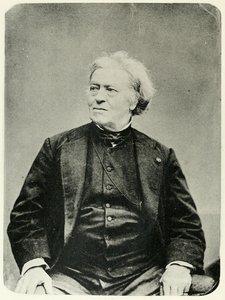
Jean-Baptiste-Camille Corot
1796 - 1875 , Frankreich
Kurzinfos
- Beeinflusste Künstler: ['Gustave Courbet']
- Bemerkenswerte Werke:
- Die Ruhe
- Unterbrochenes Lesen
- Agostina
- Geburtsdatum: 16. Juli 1796
- Geburtsort: Paris, Frankreich
- Künstlerische Richtung: Neoklassizismus, Pleinair
- Nationalität: Französisch
- Sterbedatum: 1875
- Vollständiger Name: Jean-Baptiste-Camille Corot
- Von Künstlern Beeinflusst: ['Keine Angaben']

