 Vorschau anzeigen
 Versenden
 Teilen
 Details anzeigen

 Herunterladen
 Ähnliche Objekte
 Röntgenaufnahme
 Diashow
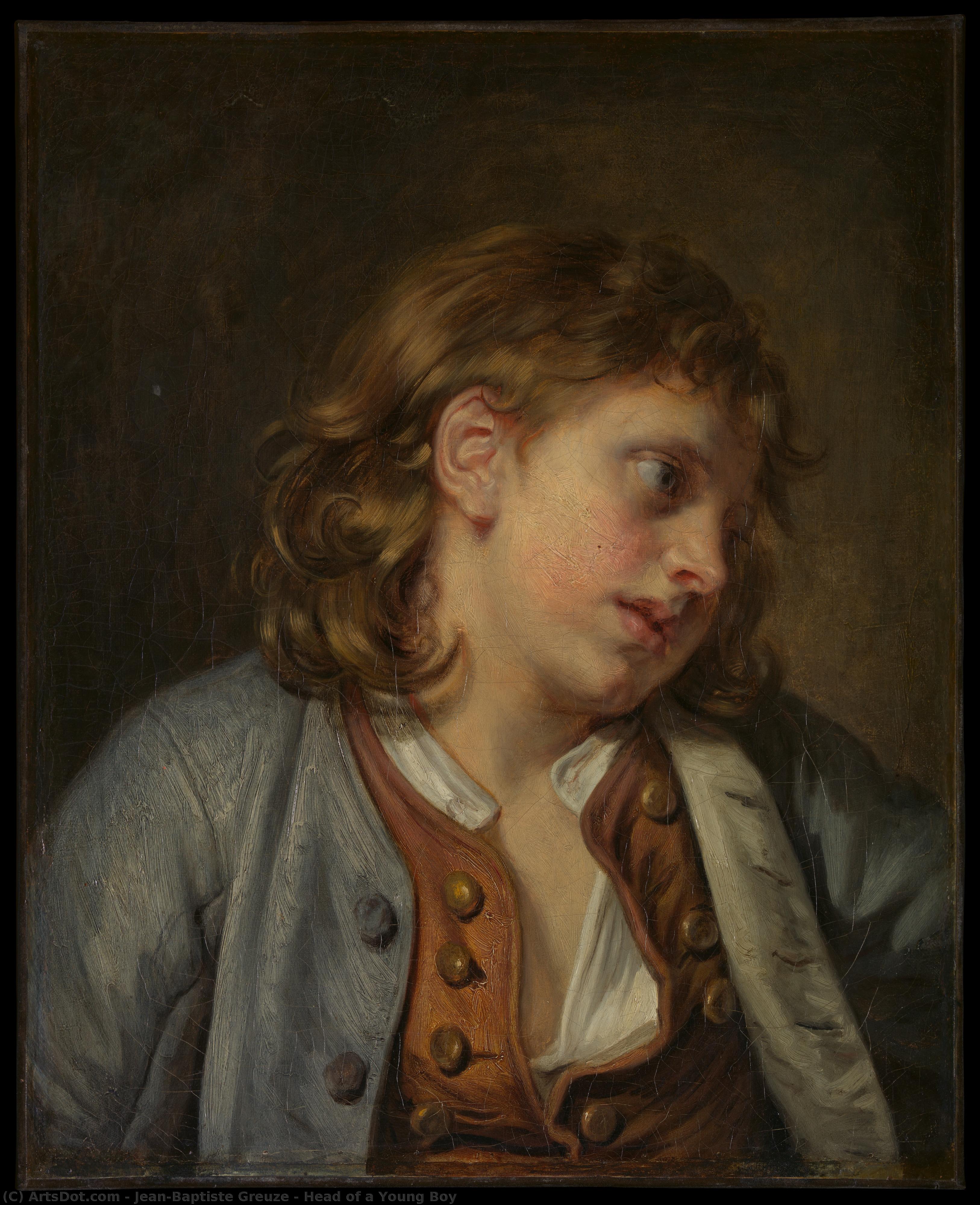
Head of a Young Boy
 Oil On Canvas
- WallArt
- Sentimental Genre Painting
 1763
1763 48.0 x 39.0 cm
 Metropolitan Museum of Art
 Weiterlesen
Handgefertigte Ölreproduktion
Handgemaltes Ölgemälde auf Leinwand in Ihrer Wunschgröße und mit Rahmen, auf Bestellung von unseren Künstlern angefertigt. ( Druck bestellen Bild kaufen)




P118B $10

P118H $10

P118W $10

P438Z $10

P508JH $12

P508YH $12

P805H $10

P805Z $10

P919BZ $10

P919G $10

P919XJ $10

P959ZH $10

P968JZ $12

W106C $8

W218G $10

W218JH $8

W218Y $10

W307PJ $10

W316G $10

W316PJ $8

W316Y $10

W398PJ $8

W4111J $10

W500HY $15

W500JH $15

W692G $12

W849H $8

W940BG $15

W953PJ $8




Wählen Sie aus unseren vordefinierten Formaten, die den ursprünglichen Proportionen des Kunstwerks entsprechen.

Sie können Ihre eigenen Maße eingeben, um einen bestimmten Rahmen oder Platz auszufüllen. Wenn die gewählte Größe nicht den Proportionen des Originalbildes entspricht, werden wir das Kunstwerk entweder beschneiden oder das Gemälde durch zusätzliche, handgemalte Elemente erweitern. Ein digitales Mockup wird Ihnen zur Genehmigung zugesandt, bevor die Produktion beginnt.
Bitte beachten Sie, dass die Bildschirmvorschau nicht die tatsächliche Beschneidung oder Erweiterung widerspiegelt. Nur das Mockup zeigt die endgültige Komposition exakt an.
Obwohl Sondermaße verfügbar sind, empfehlen wir, eine Größe aus der vordefinierten Liste zu wählen, um die ursprünglichen Proportionen beizubehalten.
Nach der Bestellung wird das ArtsDot.com-Team dem Kunden Anweisungen per E-Mail zusenden und eine Mockup-Vorschau bereitstellen.
Weltweiter Versand () in nur 3 bis 4 Wochen statt der üblichen 5 Wochen. (20 August). Keine Kompromisse bei der Qualität.

Kostenloser weltweiter Expressversand

Hochwertige Leinenleinwand

Umfassender Versicherungsschutz beim Versand

Zollgebühren-Rückerstattungsgarantie

Garantie für exakte Farbtreue

60 Tage Rückgaberecht (nur bei Mängeln)

100% Geld-zurück-Garantie

Mengenrabatt verfügbar
 Die Glasoption ist nur für Größen unter 110 cm verfügbar.

Head of a Young Boy
Art der Reproduktion
Format der Reproduktion
-


Gesamtpreis
$ 263
Beschreibung des Kunstwerks
A Portrait of Quietude: Jean-Baptiste Greuze’s ‘Head of a Young Boy’
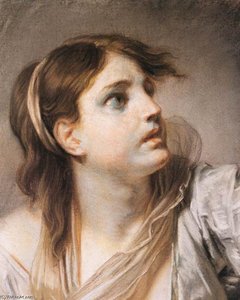
Jean-Baptiste Greuze's “Head of a Young Boy,” painted in 1763, is not merely a portrait; it’s a distilled essence of melancholy and introspection. This intimate oil on canvas, measuring just 48 x 39 cm, resides within the hallowed halls of The Metropolitan Museum of Art in New York, yet its impact transcends its physical location, resonating with viewers across centuries. Greuze, a pivotal figure in the transition from Rococo to Romanticism, masterfully captures a moment suspended between childhood and the burdens of experience – a poignant observation rendered with remarkable sensitivity.
The painting immediately draws the eye to the young boy himself, his brown hair framing a face etched with a subtle sadness. His gaze, directed outwards yet seemingly lost in thought, speaks volumes without uttering a single word. Greuze’s deliberate choice of a blurry background is crucial; it's not an accidental oversight but a carefully considered technique designed to isolate the subject and amplify his emotional state. The lack of extraneous detail forces the viewer to confront the boy’s quiet contemplation, creating a powerful sense of intimacy and vulnerability.
The Language of Rough Brushwork
Greuze's artistic approach is immediately apparent in the painting’s textured surface. Unlike the smooth, polished finishes favored by many of his contemporaries, Greuze employs a deliberately rough brushstroke – each stroke visible, unmasked, and contributing to the overall feeling of immediacy. This technique, characteristic of his studies made directly from models rather than commissioned portraits, imbues the work with a sense of spontaneity and raw emotion. It’s as if we are witnessing a fleeting moment captured in time, unfiltered and unidealized.
The brushwork isn't haphazard; it’s meticulously controlled to emphasize certain features – particularly the boy’s brow and mouth, subtly conveying his sadness. This deliberate roughness is a hallmark of Greuze’s style, distinguishing him from the more formal portraiture of the era and reflecting his focus on capturing genuine human feeling.
A Window into 18th-Century France
“Head of a Young Boy” emerged during a period of significant social and artistic change in France. The mid-1760s witnessed a growing interest in portraying the emotions and experiences of ordinary people – a shift away from the grand narratives and mythological subjects that dominated much of earlier art. Greuze’s work exemplifies this trend, offering a glimpse into the lives of children and the quiet sorrows they might experience. This painting was exhibited at the Salon of 1763, gaining recognition through its association with Pierre Jean Mariette, a prominent collector of drawings.
The subject matter itself – a young boy lost in thought – speaks to the anxieties and uncertainties of the time. It’s a reflection of the burgeoning sentimentalism that was gaining traction in French society, an emphasis on empathy, compassion, and the emotional lives of individuals. The painting subtly critiques societal expectations placed upon youth, hinting at the potential for loneliness and disillusionment.
Symbolism and Emotional Resonance
While seemingly simple, “Head of a Young Boy” is rich in symbolic meaning. The boy’s sadness isn't explicitly explained; it’s left to the viewer to interpret his emotions. This ambiguity invites contemplation and encourages a deeper engagement with the artwork. The muted color palette – dominated by blues and browns – further reinforces the painting’s somber mood, creating an atmosphere of quiet melancholy.
Greuze's ability to evoke such profound emotion through such a restrained composition is a testament to his artistic skill and sensitivity. “Head of a Young Boy” remains a powerful reminder of the enduring capacity of art to capture the complexities of human experience – a poignant meditation on childhood, sadness, and the quiet beauty of introspection.
Ähnliche Kunstwerke

Über den Künstler
Frühe Jahre und Ausbildung
Jean-Baptiste Greuze, ein französischer Maler, wurde am 21. August 1725 in Tournus, Burgund, geboren. Sein Vater, ein Dachdeckermeister, ermutigte seinen Sohn zunächst nicht zu künstlerischen Neigungen, aber schließlich förderte Grandon, ein lyonesischer Künstler, Greuze, seine Leidenschaft zu verfolgen. Im Jahr 1750 zog Greuze nach Paris, um unter Charles-Joseph Natoire an der Königlichen Akademie für Malerei und Bildhauerei zu studieren.Aufstieg zum Ruhm
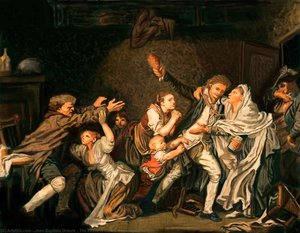
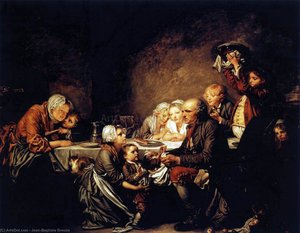
Greuzes Durchbruch kam 1755 mit seinem Gemälde „Le Père de famille expliquant la bible à ses enfants“, das von einem wohlhabenden Kunstliebhaber, Ange-Laurent Lalive de Jully, erworben wurde. Dies führte zu Greuzes Anerkennung in der philosophischen und Kunstgemeinschaft. Er reiste daraufhin mit Abbé Gougenot nach Italien, wo er etwa ein Jahr verbrachte und seine zukünftigen Werke inspirierte.Künstlerischer Stil und bemerkenswerte Werke
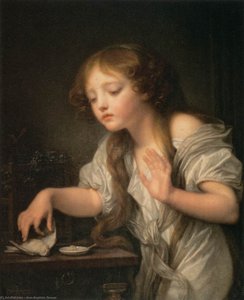
Greuzes Stil ist durch seinen Fokus auf Genreszenen gekennzeichnet, die das Wesen des täglichen Lebens einfangen. Einige bemerkenswerte Werke sind:- „A Girl with a Dead Canary“ (Scottish National Gallery, Edinburgh), das Greuzes Fähigkeit zeigt, Emotionen hervorzurufen.
- „Savoyard with a Dancing Doll“ (Albertina, Wien), das seine Fähigkeit hervorhebt, den Geist seiner Sujets einzufangen.
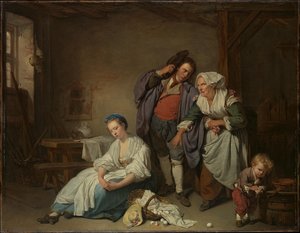
- „Boy with a Broken Egg“, um 1756 (Albertina, Wien), das Greuzes frühes Können in der Genresmalerei demonstriert.
Vermächtnis und spätere Jahre
Greuzes Erfolg gipfelte 1765 mit dreizehn Werken, die im Salon ausgestellt wurden, darunter „La jeune fille qui pleure son oiseau mort“, „La bonne mère“ und „Le mauvais fils puni“ (Louvre). Sein Versuch, in die historische Malerei überzugehen, wurde jedoch kritisiert. Greuze verstarb am 4. März 1805 im Louvre, nach einem Leben, das von sowohl künstlerischen Triumphen als auch finanziellen Schwierigkeiten geprägt war.Einflüsse und Entwicklung
Greuzes Werk zeigt Einflüsse der niederländischen Genresmalerei des 17. Jahrhunderts, insbesondere in seiner Darstellung alltäglicher Szenen und seinem Fokus auf Details. Er kombinierte Elemente des Rokoko-Stils mit realistischen Elementen, was zu einem einzigartigen Stil führte, der sowohl sentimental als auch moralisierend war. Seine frühen Werke wie „Boy with a Broken Egg“ zeigen bereits seine Fähigkeit, Emotionen durch subtile Gesichtsausdrücke und Gesten darzustellen. Im Laufe seiner Karriere versuchte Greuze sich auch historischen Themen zuzuwenden, was jedoch weniger erfolgreich war und von Kritik begleitet wurde. Trotzdem bleibt er als einer der bedeutendsten Vertreter der Genresmalerei des 18. Jahrhunderts in Frankreich anerkannt.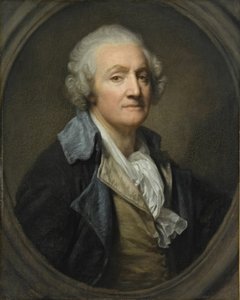
Jean-Baptiste Greuze
1725 - 1805 , Frankreich
Kurzinfos
- Bemerkenswerte Werke:
- Le Père de Famille expliquant la Bible
- A Girl with a Dead Canary
- Savoyard mit einer Tanzpuppe
- Boy with a Broken Egg
- Einflussreiche Künstler: ['Charles-Joseph Natoire']
- Geburtsdatum: 21. August 1725
- Geburtsort: Tournus, Frankreich
- Künstlerische Bewegung: Rokoko
- Nationalität: Französisch
- Sterbedatum: 4. März 1805
- Vollständiger Name: Jean-Baptiste Greuze
Ähnliche Artikel
Jean-Baptiste Greuze: Moral, Gefühl und der Aufstieg der Genremalerei
Entdecken Sie das Werk von Jean-Baptiste Greuze – dem Meister der Genremalerei! Erfahren Sie mehr über seine moralischen Botschaften, den Einfluss der Aufklärung und sein bleibendes Vermächtnis in der Kunstgeschichte.
Die 25 Meisterwerke der Eremitage: Kunst für Ihr Zuhause | ArtsDot
Entdecken Sie die 25 berühmtesten Kunstwerke der Eremitage! Von Rembrandt bis Leonardo da Vinci – erfahren Sie die Geschichten hinter Meisterwerken, Techniken & Farben. Hochwertige Kunstdrucke für Ihr Zuhause auf ArtsDot.com.
Édouard Manet: Die 25 Meisterwerke des Impressionismus für Ihr Zuhause | ArtsDot
Entdecken Sie die 25 Meisterwerke von Édouard Manet! Tauchen Sie ein in Impressionismus, Pariser Leben & revolutionäre Kunst. Hochwertige Reproduktionen für Ihr Zuhause – jetzt auf ArtsDot.com!
Nostalgie in Farbe: Die 10 ikonischsten Kunstwerke für Ihr Zuhause |
Entdecken Sie die 10 ikonischsten Kunstwerke, die Nostalgie und Sehnsucht widerspiegeln! Von Van Gogh bis Monet – erfahren Sie die Geschichten hinter berühmten Gemälden & finden Sie hochwertige Reproduktionen für Ihr Zuhause. Jetzt bei entdecken!
John George Brown: Die einfühlsame Darstellung amerikanischer Lebenswelt und Sentiment in der Genremalerei des 19. Jahrhunderts
Entdecken Sie die einfühlsame Genremalerei von John George Brown! Erfahren Sie mehr über seine Darstellung des amerikanischen Lebens im 19. Jahrhundert, seinen Stil und sein Vermächtnis. Hochwertige Kunstdrucke bei ArtsDot.