 Vorschau anzeigen
 Versenden
 Teilen
 Details anzeigen

 Herunterladen
 Ähnliche Objekte
 Röntgenaufnahme
 Diashow
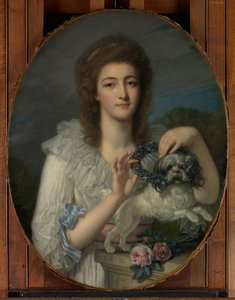
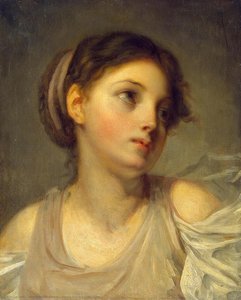
Votive Offering to Cupid
 Acrylic On Canvas
- WallArt
- Rococo Sentimentality
 1767
1767 146.0 x 113.0 cm
 Wallace Collection
 Weiterlesen
Handgefertigte Ölreproduktion
Handgemaltes Ölgemälde auf Leinwand in Ihrer Wunschgröße und mit Rahmen, auf Bestellung von unseren Künstlern angefertigt. ( Druck bestellen Bild kaufen)




P118B $10

P118H $10

P118W $10

P438Z $10

P508JH $12

P508YH $12

P805H $10

P805Z $10

P919BZ $10

P919G $10

P919XJ $10

P959ZH $10

P968JZ $12

W106C $8

W218G $10

W218JH $8

W218Y $10

W307PJ $10

W316G $10

W316PJ $8

W316Y $10

W398PJ $8

W4111J $10

W500HY $15

W500JH $15

W692G $12

W849H $8

W940BG $15

W953PJ $8




Wählen Sie aus unseren vordefinierten Formaten, die den ursprünglichen Proportionen des Kunstwerks entsprechen.

Sie können Ihre eigenen Maße eingeben, um einen bestimmten Rahmen oder Platz auszufüllen. Wenn die gewählte Größe nicht den Proportionen des Originalbildes entspricht, werden wir das Kunstwerk entweder beschneiden oder das Gemälde durch zusätzliche, handgemalte Elemente erweitern. Ein digitales Mockup wird Ihnen zur Genehmigung zugesandt, bevor die Produktion beginnt.
Bitte beachten Sie, dass die Bildschirmvorschau nicht die tatsächliche Beschneidung oder Erweiterung widerspiegelt. Nur das Mockup zeigt die endgültige Komposition exakt an.
Obwohl Sondermaße verfügbar sind, empfehlen wir, eine Größe aus der vordefinierten Liste zu wählen, um die ursprünglichen Proportionen beizubehalten.
Nach der Bestellung wird das ArtsDot.com-Team dem Kunden Anweisungen per E-Mail zusenden und eine Mockup-Vorschau bereitstellen.
Weltweiter Versand () in nur 3 bis 4 Wochen statt der üblichen 5 Wochen. (24 August). Keine Kompromisse bei der Qualität.

Kostenloser weltweiter Expressversand

Hochwertige Leinenleinwand

Umfassender Versicherungsschutz beim Versand

Zollgebühren-Rückerstattungsgarantie

Garantie für exakte Farbtreue

60 Tage Rückgaberecht (nur bei Mängeln)

100% Geld-zurück-Garantie

Mengenrabatt verfügbar
 Die Glasoption ist nur für Größen unter 110 cm verfügbar.

Votive Offering to Cupid
Art der Reproduktion
Format der Reproduktion
-


Gesamtpreis
$ 263
Beschreibung des Kunstwerks
A Window into Sentiment: Unveiling Greuze's "Votive Offering to Cupid"
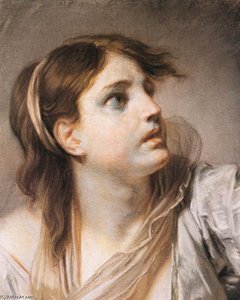
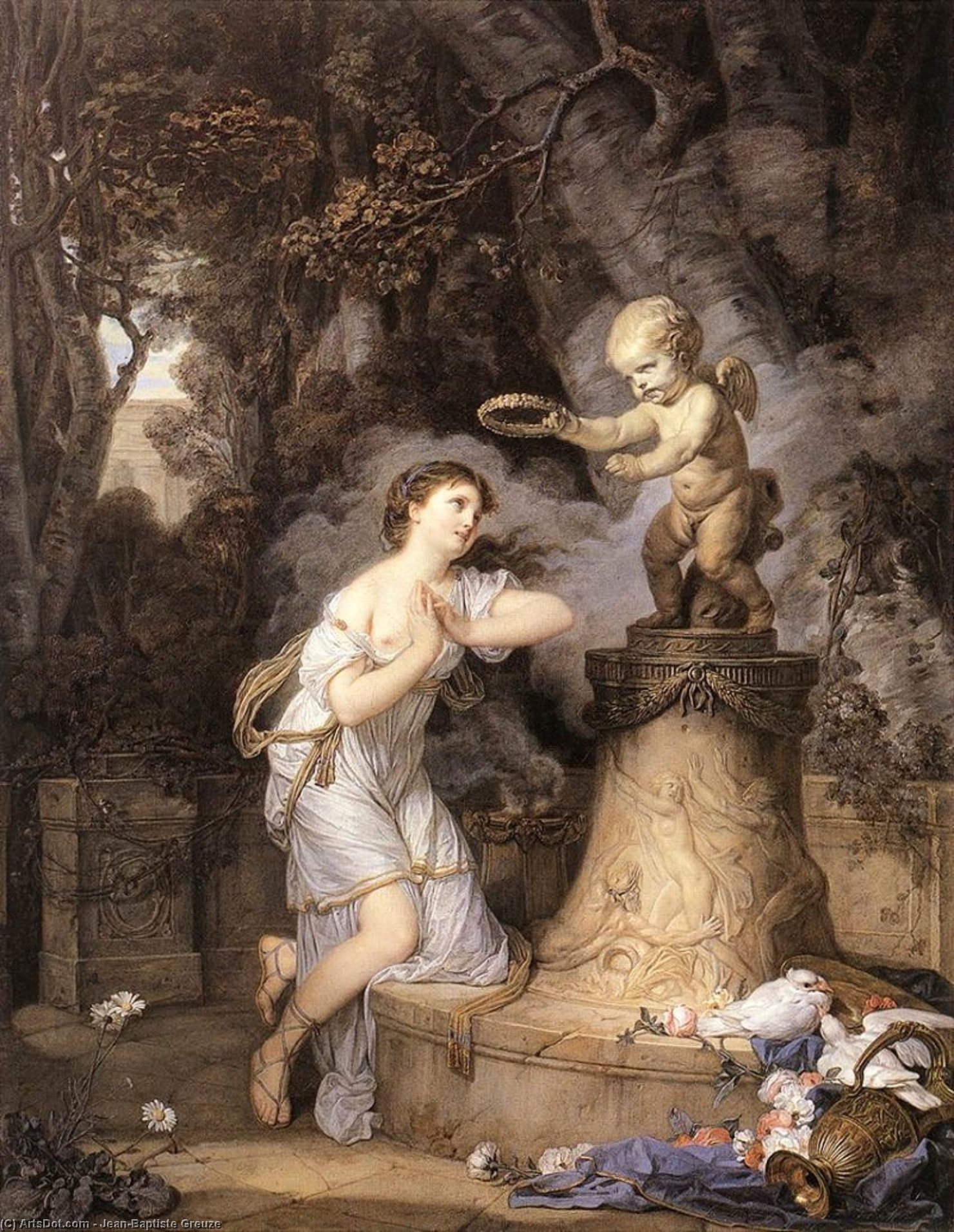
Jean-Baptiste Greuze’s 1767 painting, “Votive Offering to Cupid,” isn’t merely a depiction of a young girl presenting a flower; it’s a profound exploration of innocence, sacrifice, and the burgeoning power of sentimental emotion within 18th-century France. Painted during a period when artists were increasingly moving away from the grand narratives of classical mythology towards capturing the nuances of everyday life and human feeling, Greuze's work stands as a pivotal example of this shift. The scene unfolds in a softly lit interior, bathed in a warm, diffused light that immediately draws the viewer into its intimate atmosphere. The composition is carefully balanced – the girl’s youthful vulnerability contrasts with the stoic dignity of the Cupid statue before her, creating a dynamic tension that speaks volumes about the themes at play.
- Subject Matter: The painting centers on a young woman, likely a peasant girl, offering a single flower – traditionally a rose – to a marble statue of Cupid. This act is not one of grand devotion but rather a quiet, almost hesitant gesture of affection and perhaps even sacrifice.
- Setting: The setting is a modest interior, suggesting a humble home or shrine. The architectural details—the simple wooden frame surrounding the statue, the muted colors—contribute to the painting’s sense of intimacy and restraint.
- Symbolism: The flower itself carries significant symbolic weight. Roses have long been associated with love, beauty, and innocence. The act of offering it represents a heartfelt expression of emotion, a desire for connection, and perhaps even a yearning for something beyond the confines of her circumstances.
The Rococo Heart: Greuze’s Style and Technique
Greuze masterfully employed the techniques characteristic of the Rococo style – a movement known for its elegance, delicacy, and emphasis on emotional expression. His brushwork is remarkably smooth and refined, creating an almost porcelain-like quality to the surfaces. He utilized a technique called “pointillé,” applying tiny dots of paint to build up color and texture, lending a luminous sheen to the figures and drapery. Notably, Greuze eschewed the dramatic chiaroscuro (strong contrasts between light and dark) favored by his predecessors, opting instead for a softer, more diffused lighting that enhances the painting’s intimate mood. The colors are muted – predominantly pinks, blues, and creams – contributing to the overall sense of serenity and restraint.
Key Techniques:- Pointillé: Greuze's signature technique for creating luminous surfaces.
- Soft Lighting: Avoiding dramatic contrasts to emphasize intimacy.
- Muted Palette: Restrained colors contributing to the painting’s serene atmosphere.
A Reflection of an Era: Context and Influence
“Votive Offering to Cupid” emerged during a period of profound social and cultural change in France. The Enlightenment had challenged traditional hierarchies, while simultaneously fostering a growing interest in sentimentality – the ability to evoke strong emotions through art. Greuze’s work resonated deeply with this sensibility, capturing the everyday experiences and moral dilemmas of ordinary people. His focus on domestic scenes, religious devotion, and themes of charity and compassion reflected the values of the time, aligning him with the burgeoning movement of “moral painting.” The painting also draws upon classical mythology, specifically the story of Cupid and Psyche, but reinterprets it through a distinctly humanistic lens – emphasizing the emotional connection between the figures rather than the mythological narrative itself. The choice to depict a humble peasant girl offering to a statue is deliberate, elevating her simple act of devotion to one of profound significance.
Emotional Resonance and Lasting Legacy
More than two centuries after its creation, “Votive Offering to Cupid” continues to captivate viewers with its poignant beauty and emotional depth. Greuze’s ability to convey a complex range of emotions – innocence, vulnerability, hope, and perhaps even a touch of melancholy – through such subtle means is truly remarkable. The painting serves as a powerful reminder of the enduring power of human connection and the importance of cherishing simple acts of kindness and devotion. Reproductions of this evocative work offer a glimpse into a bygone era, inviting us to contemplate the timeless themes it explores and appreciate Greuze’s masterful command of sentimentality.
Ähnliche Kunstwerke
Über den Künstler
Frühe Jahre und Ausbildung
Jean-Baptiste Greuze, ein französischer Maler, wurde am 21. August 1725 in Tournus, Burgund, geboren. Sein Vater, ein Dachdeckermeister, ermutigte seinen Sohn zunächst nicht zu künstlerischen Neigungen, aber schließlich förderte Grandon, ein lyonesischer Künstler, Greuze, seine Leidenschaft zu verfolgen. Im Jahr 1750 zog Greuze nach Paris, um unter Charles-Joseph Natoire an der Königlichen Akademie für Malerei und Bildhauerei zu studieren.Aufstieg zum Ruhm
Greuzes Durchbruch kam 1755 mit seinem Gemälde „Le Père de famille expliquant la bible à ses enfants“, das von einem wohlhabenden Kunstliebhaber, Ange-Laurent Lalive de Jully, erworben wurde. Dies führte zu Greuzes Anerkennung in der philosophischen und Kunstgemeinschaft. Er reiste daraufhin mit Abbé Gougenot nach Italien, wo er etwa ein Jahr verbrachte und seine zukünftigen Werke inspirierte.Künstlerischer Stil und bemerkenswerte Werke
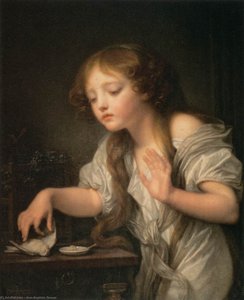
Greuzes Stil ist durch seinen Fokus auf Genreszenen gekennzeichnet, die das Wesen des täglichen Lebens einfangen. Einige bemerkenswerte Werke sind:- „A Girl with a Dead Canary“ (Scottish National Gallery, Edinburgh), das Greuzes Fähigkeit zeigt, Emotionen hervorzurufen.
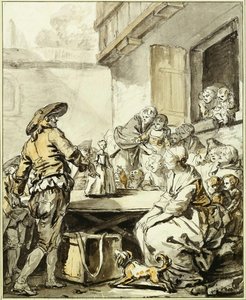
- „Savoyard with a Dancing Doll“ (Albertina, Wien), das seine Fähigkeit hervorhebt, den Geist seiner Sujets einzufangen.
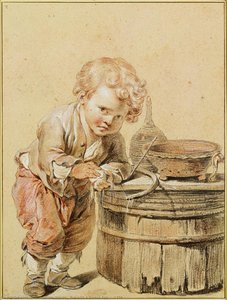
- „Boy with a Broken Egg“, um 1756 (Albertina, Wien), das Greuzes frühes Können in der Genresmalerei demonstriert.
Vermächtnis und spätere Jahre
Greuzes Erfolg gipfelte 1765 mit dreizehn Werken, die im Salon ausgestellt wurden, darunter „La jeune fille qui pleure son oiseau mort“, „La bonne mère“ und „Le mauvais fils puni“ (Louvre). Sein Versuch, in die historische Malerei überzugehen, wurde jedoch kritisiert. Greuze verstarb am 4. März 1805 im Louvre, nach einem Leben, das von sowohl künstlerischen Triumphen als auch finanziellen Schwierigkeiten geprägt war.Einflüsse und Entwicklung
Greuzes Werk zeigt Einflüsse der niederländischen Genresmalerei des 17. Jahrhunderts, insbesondere in seiner Darstellung alltäglicher Szenen und seinem Fokus auf Details. Er kombinierte Elemente des Rokoko-Stils mit realistischen Elementen, was zu einem einzigartigen Stil führte, der sowohl sentimental als auch moralisierend war. Seine frühen Werke wie „Boy with a Broken Egg“ zeigen bereits seine Fähigkeit, Emotionen durch subtile Gesichtsausdrücke und Gesten darzustellen. Im Laufe seiner Karriere versuchte Greuze sich auch historischen Themen zuzuwenden, was jedoch weniger erfolgreich war und von Kritik begleitet wurde. Trotzdem bleibt er als einer der bedeutendsten Vertreter der Genresmalerei des 18. Jahrhunderts in Frankreich anerkannt.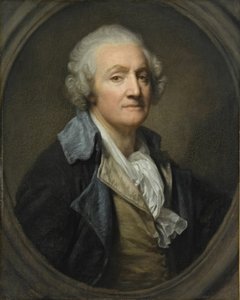
Jean-Baptiste Greuze
1725 - 1805 , Frankreich
Kurzinfos
- Bemerkenswerte Werke:
- Le Père de Famille expliquant la Bible
- A Girl with a Dead Canary
- Savoyard mit einer Tanzpuppe
- Boy with a Broken Egg
- Einflussreiche Künstler: ['Charles-Joseph Natoire']
- Geburtsdatum: 21. August 1725
- Geburtsort: Tournus, Frankreich
- Künstlerische Bewegung: Rokoko
- Nationalität: Französisch
- Sterbedatum: 4. März 1805
- Vollständiger Name: Jean-Baptiste Greuze
Ähnliche Artikel
Jean-Baptiste Greuze: Moral, Gefühl und der Aufstieg der Genremalerei
Entdecken Sie das Werk von Jean-Baptiste Greuze – dem Meister der Genremalerei! Erfahren Sie mehr über seine moralischen Botschaften, den Einfluss der Aufklärung und sein bleibendes Vermächtnis in der Kunstgeschichte.

Rococo Meisterwerke: Die Top 10, die eine Epoche prägten |
Entdecken Sie die Top 10 Rokoko Meisterwerke von Watteau, Boucher & Fragonard! Erfahren Sie die Geschichten hinter diesen ikonischen Gemälden und lassen Sie sich für Ihre Inneneinrichtung inspirieren. Hochwertige Kunstdrucke auf .

The Rococo Aesthetic: Opulence, Rebellion & the Pursuit of Pleasure in 18th-Century Art
Explore the opulent world of Rococo art! Discover its origins, key artists like Watteau & Boucher, and lasting influence on design. Expert insights for collectors & enthusiasts.
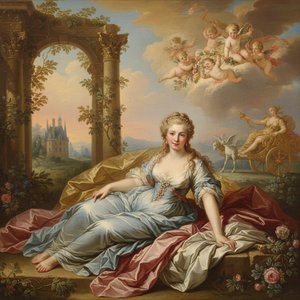
François Boucher: Rokoko-Meister von Mythos, Sinnlichkeit und dem französischen Hofleben
Entdecken Sie François Boucher, den Meister des Rokoko! Erfahren Sie mehr über sein Leben, seine sinnlichen Gemälde und seinen Einfluss auf die französische Hofkunst. Jetzt lesen!
The Allure of Elegance in Art: A Historical & Aesthetic Exploration of Refinement & Grace
Explore the exquisite world of Rococo art! Discover its history, masters (Watteau, Boucher & more), and defining elegance. Expert insights for collectors seeking museum-quality reproductions & custom portraits.