 Vorschau anzeigen
 Versenden
 Teilen
 Details anzeigen

 Herunterladen
 Ähnliche Objekte
 Röntgenaufnahme
 Diashow
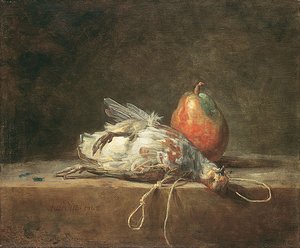
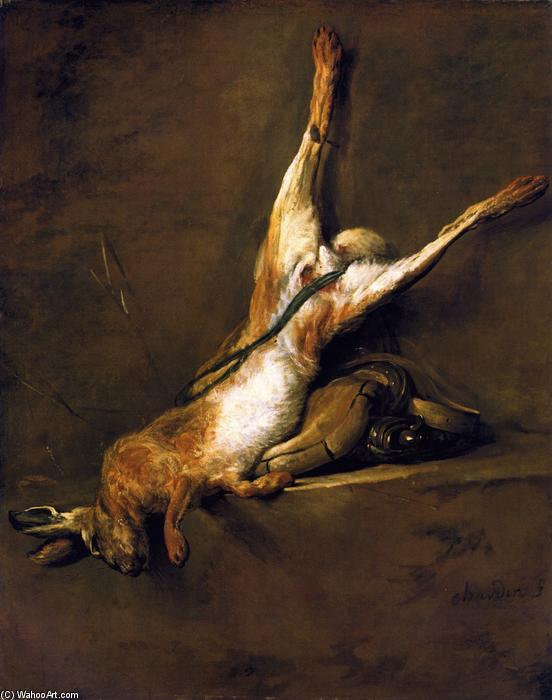
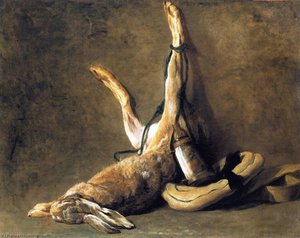
Hasen mit Pfefferkörnern und Jagdtasche
 Öl auf Leinwand
- Wandkunst
- Neoclassical Realism
 1728
1728 98.0 x 76.0 cm
 Louvre
 Weiterlesen
Giclée / Kunstdruck
Giclée- oder Leinwanddruck in Museumsqualität mit schneller Produktion und flexiblen Veredelungsoptionen. ( Handgemalte Reproduktion bestellen Bild kaufen)




P118B $10

P118H $10

P118W $10

P438Z $10

P508JH $12

P508YH $12

P805H $10

P805Z $10

P919BZ $10

P919G $10

P919XJ $10

P959ZH $10

P968JZ $12

W106C $8

W218G $10

W218JH $8

W218Y $10

W307PJ $10

W316G $10

W316PJ $8

W316Y $10

W398PJ $8

W4111J $10

W500HY $15

W500JH $15

W692G $12

W849H $8

W940BG $15

W953PJ $8




Wählen Sie aus unseren vordefinierten Formaten, die den ursprünglichen Proportionen des Kunstwerks entsprechen.

Sie können Ihre eigenen Maße eingeben, um ein bestimmtes Format oder einen speziellen Platz einzupassen. Wenn das von Ihnen gewählte Format nicht den Proportionen des Originalbildes entspricht, werden wir das Kunstwerk entweder beschneiden oder das Bild mit einem gespiegelten oder einfarbigen Rand erweitern. Ein digitaler Entwurf wird Ihnen zur Genehmigung zugesandt, bevor die Produktion beginnt.
Bitte beachten Sie, dass die Vorschau auf dem Bildschirm nicht den tatsächlichen Zuschnitt oder die Erweiterung widerspiegelt. Nur der Entwurf zeigt die endgültige Komposition präzise an.
Obwohl Sondermaße verfügbar sind, empfehlen wir die Auswahl eines Maßes aus der vordefinierten Liste, um die ursprünglichen Proportionen zu bewahren.
Weltweiter Versand () innerhalb von 2 Wochen statt der üblichen 4/5 Wochen. (24 August)

Kostenloser weltweiter Expressversand

Hochwertige Leinenleinwand

Umfassender Versicherungsschutz beim Versand

Zollgebühren-Rückerstattungsgarantie

Garantie für exakte Farbtreue

60 Tage Rückgaberecht (nur bei Mängeln)

100% Geld-zurück-Garantie

Mengenrabatt verfügbar
 Die Glasoption ist nur für Größen unter 110 cm verfügbar.

Hasen mit Pfefferkörnern und Jagdtasche
Giclée / Kunstdruck
Format der Reproduktion
-


Gesamtpreis
$ 62
Sammlerstück-Beschreibung
Jean-Baptiste Simeon Chardin’s ‘Hare with Powder Flask and Game Bag’: A Moment of Quiet Contemplation
Jean-Baptiste Simeon Chardin's 'Hare with Powder Flask and Game Bag', painted in 1728, is more than simply a still life; it’s a profound meditation on mortality, the cycle of nature, and the subtle beauty found within the everyday. Housed within the hallowed halls of the Louvre Museum in Paris, this oil-on-canvas masterpiece invites us into a world of quiet observation – a world that reflects Chardin's unique artistic philosophy. The painting immediately establishes a sense of serene melancholy; a hare, seemingly at rest, lies upon the ground, its fate subtly hinted at by the attentive posture of a dog positioned above it. This isn’t a dramatic scene of hunting triumph, but rather a poignant tableau capturing a fleeting moment in the natural order.
The Language of Texture and Light: Chardin's Masterful Technique
Chardin’s genius lies not in grand gestures or flamboyant displays of color, but in his meticulous attention to detail and his masterful manipulation of light. He employs a technique known as *chiaroscuro*, creating dramatic contrasts between illumination and shadow that imbue the scene with remarkable depth and volume. The soft, diffused light gently caresses the hare’s fur, highlighting its delicate texture, while the shadows subtly suggest the animal's vulnerability. Notice how he renders the rough bark of the nearby tree trunk, the smooth curve of the powder flask, and the worn leather of the game bag – each element imbued with a tactile quality that draws us into the painting. The subtle gradations of tone are achieved through layers of thin paint, building up the image slowly and deliberately, a testament to Chardin’s painstaking process.
Symbolism Woven into the Everyday
Beyond its aesthetic qualities, ‘Hare with Powder Flask and Game Bag’ is rich in symbolic meaning. The hare itself has long been associated with fertility, abundance, and even death – a potent symbol of the cyclical nature of life and renewal. Juxtaposed against this are the tools of the hunt: the powder flask and game bag, reminders of human ambition and the pursuit of sustenance. This deliberate pairing creates a tension between the natural world and the actions of humankind, prompting reflection on our relationship with both. The dog’s presence adds another layer to this symbolism; it represents not just the hunter but also loyalty, companionship, and perhaps even a quiet acceptance of fate.
A Window into the 18th Century: Context and Legacy
To fully appreciate Chardin's work, we must understand its historical context. The painting emerged during the flourishing of French art in the 18th century, a period marked by a shift away from the grand narratives of the Baroque era towards a greater emphasis on realism and emotional depth. Chardin’s paintings often depicted scenes of everyday life – kitchen interiors, portraits of peasants, still lifes – offering intimate glimpses into the lives of ordinary people. His work was highly regarded for its ability to capture not just the outward appearance of subjects but also their inner character. ‘Hare with Powder Flask and Game Bag’ exemplifies this approach, inviting us to contemplate the quiet dignity of a simple creature in a world shaped by both beauty and sorrow.
Bringing Chardin's Vision Home: Reproductions for Today
ArtsDot offers meticulously crafted hand-painted reproductions of ‘Hare with Powder Flask and Game Bag’, allowing you to bring this timeless masterpiece into your own home or office. Our skilled artists faithfully recreate Chardin’s delicate brushstrokes, nuanced color palette, and masterful use of light, ensuring that the painting's emotional impact is preserved in every detail. Whether you are an art collector, a design enthusiast, or simply someone seeking to infuse their space with beauty and contemplation, a ArtsDot reproduction offers a stunning and authentic representation of this iconic work. Experience the quiet power of Chardin’s vision – a timeless testament to the enduring appeal of simple elegance and profound observation.
Ähnliche Kunstwerke
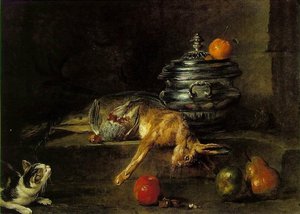
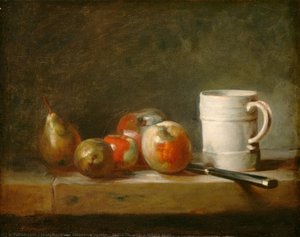
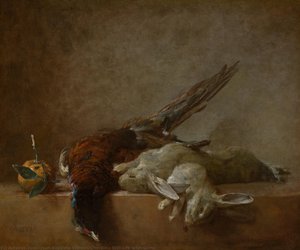
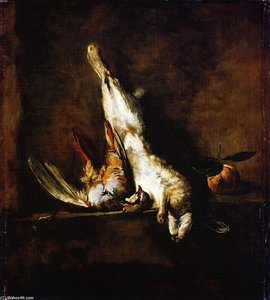
Über den Künstler
Frühes Leben und Ausbildung
Jean-Baptiste Siméon Chardin, ein französischer Maler, wurde am 2. November 1699 in Paris geboren. Er gilt als einer der größten Meister des Stilllebens und der Genremalerei. Chardins frühes Leben war geprägt von seiner Geburt als Sohn eines Schrankmachers, was wahrscheinlich sein Interesse an der Kunst beeinflusste. Er verließ Paris selten und lebte bis 1757 auf der linken Seine in der Nähe von Saint-Sulpice.Künstlerische Karriere
Chardin schloss 1723 einen Heiratsvertrag mit Marguerite Saintard, heiratete sie jedoch erst 1731. Er absolvierte Lehrzeiten bei den Historienmalern Pierre-Jacques Cazes und Noël-Nicolas Coypel und wurde 1724 Meister der Académie de Saint-Luc.- Chardins erster Erfolg kam durch die Ausstellung eines Gemäldes am 'Small Corpus Christi' auf dem Place Dauphine, das von Van Loo gekauft wurde, der den jungen Maler später unterstützte.
- Im Jahr 1728 präsentierte er "Der Rochen" und "Das Buffet", was zu seiner Aufnahme in die Académie Royale de Peinture et de Sculpture führte.
Wichtige Werke und Ausstellungen
Chardins Werk erlangte durch reproduktive Stiche Popularität, was ihm Einnahmen in Form von Tantiemen einbrachte. Zu den bemerkenswerten Werken gehören:- Der Rochen, ein Meisterwerk, das seine Fähigkeiten im Stillleben demonstriert.
- Stillleben mit Äpfeln und einem Krug, das seine Verwendung einer weichen Lichtdiffusion und körnigen Impasto zeigt.
Entwicklung und Vermächtnis
Chardins künstlerische Entwicklung lässt sich in drei Phasen unterteilen: zunächst konzentrierte er sich auf Stillleben, dann auf Genreszenen mit einzelnen oder wenigen Figuren, die ohne Sentimentalität dargestellt sind. Später wandte er sich wieder dem Stillleben zu, wobei er teurere Objekte malte. In seinen letzten Jahren wechselte er zur Pastellmalerei und porträtierte erfolgreich Personen, darunter auch Selbstporträts. Chardins Vermächtnis als Meister des Stilllebens und der Genremalerei inspiriert weiterhin Künstler und Kunstliebhaber. Seine Werke, die durch sorgfältig ausgewogene Kompositionen, weiche Lichteffekte und eine körnige Impasto gekennzeichnet sind, zeugen von seinem Können und seiner Hingabe an das Handwerk. Sein Einfluss auf nachfolgende Generationen von Künstlern ist unbestreitbar, insbesondere im Bereich der realistischen Darstellung des Alltagslebens. Er wird als einer der bedeutendsten französischen Maler des 18. Jahrhunderts angesehen.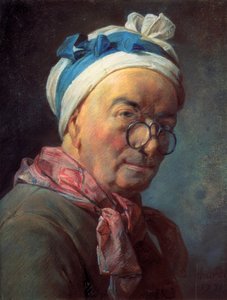
Jean-Baptiste-Siméon Chardin
1699 - 1779 , Frankreich
Kurzinfos
- Bemerkenswerte Werke:
- Der Steinbrecher
- Obstschale mit Krug
- Oh! Wenn er nur so treu wäre
- Einflussreiche Künstler:
- Pierre-Jacques Cazes
- Noël-Nicolas Coypel
- Geburtsdatum: 2. November 1699
- Geburtsort: Paris, Frankreich
- Künstlerische Richtung: Stillleben, Genremalerei
- Nationalität: Französisch
- Sterbedatum: 1779
- Vollständiger Name: Jean-Baptiste-Siméon Chardin
Ähnliche Artikel
Pixelierte Prestige: Erkundung von Knappheit, Wert und kultureller Wirkung limitierter Gaming-Gemälde
Entdecken Sie die Welt limitierter Gaming-Gemälde! Expertenwissen zu Wert, Knappheit & Sammlerkultur. Hochwertige Kunst für Kenner und leidenschaftliche Gamer – jetzt informieren!
Jenseits von Pixeln und Spieltrieb: Ästhetische und identitätsstiftende Bedeutung von Gaming-Art für den modernen Sammler
Entdecken Sie die faszinierende Welt der Gaming-Art! Expertenwissen über Sammlerstücke, Trends & Investitionen. Hochwertige Reproduktionen und individuelle Kunstberatung bei ArtsDot.
Pinselstriche und Endgegner: Die Künstler hinter den handgemalten Spielwelten – Inspirationen, Prozesse und persönliche Gaming-Erfahrungen
Entdecken Sie die faszinierende Welt handgemalter Spielwelten! Expertenwissen über Künstler, Techniken & den Einfluss der Kunstgeschichte auf moderne Videospiele. Jetzt lesen!
Jean-Baptiste-Siméon Chardin: Meister des Stilllebens und der alltäglichen Eleganz
Entdecken Sie das Werk von Jean-Baptiste Simeon Chardin – Meister des Stilllebens und der alltäglichen Eleganz. Erfahren Sie mehr über seinen Stil, seine Technik und sein Vermächtnis. Hochwertige Reproduktionen bei ArtsDot!

Von Pixeln zu Pflastersteinen: Wie Gaming-Ästhetik die Popkultur prägt
Entdecken Sie, wie Gaming-Ästhetik die Popkultur revolutioniert! Von Retro-Pixelkunst bis zu neuen Trends – wir analysieren den Einfluss von Videospielen auf Kunst, Mode und mehr. Expertenwissen für Kulturliebhaber.