 Vorschau anzeigen
 Versenden
 Teilen
 Details anzeigen

 Herunterladen
 Ähnliche Objekte
 Röntgenaufnahme
 Diashow
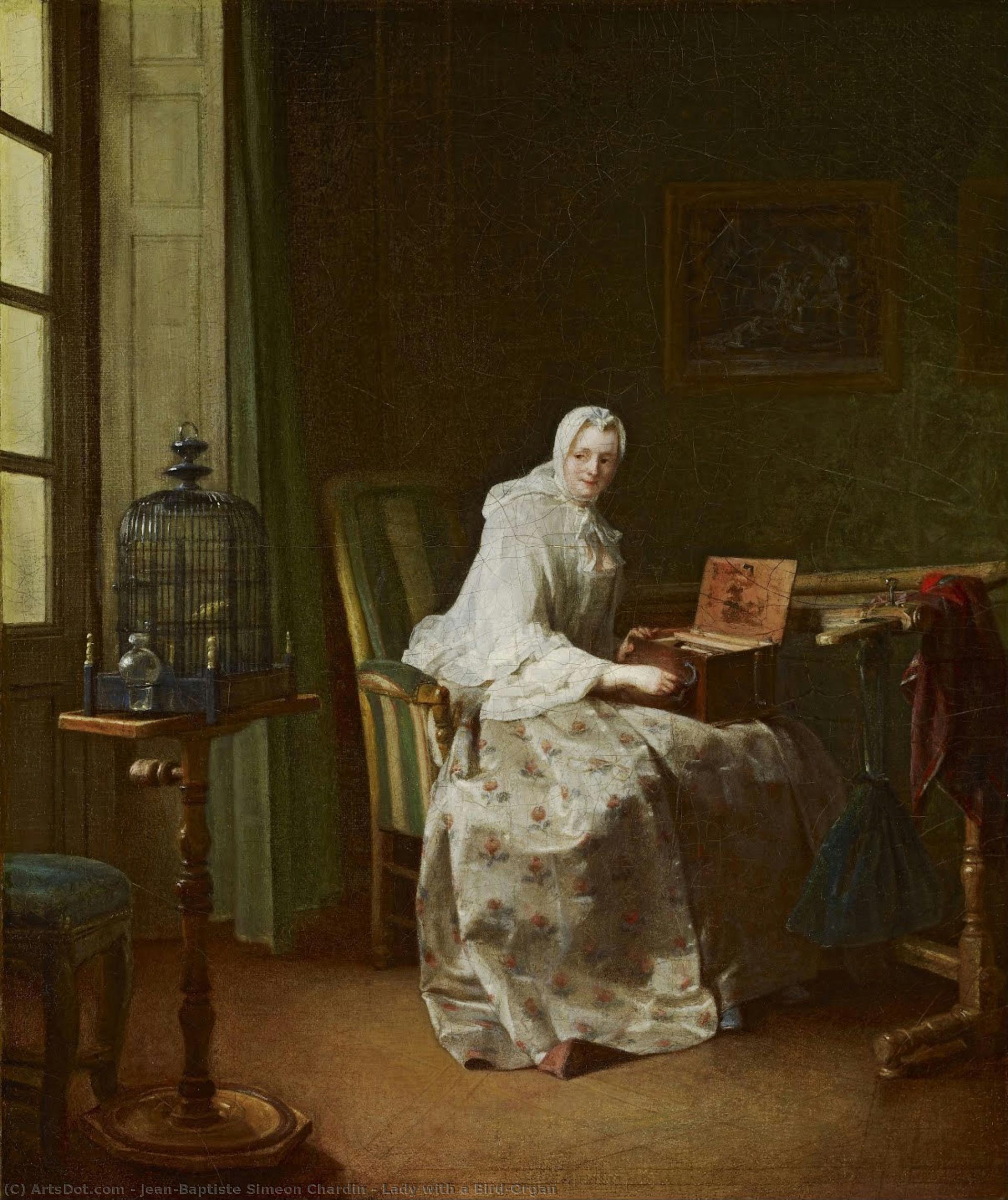
Lady with a Bird-Organ
 Oil On Canvas
- WallArt
- Seventeenth-century Dutch
 1753
1753- Early Modern
 50.0 x 43.0 cm
 The Frick Collection
 Weiterlesen
Handgefertigte Ölreproduktion
Handgemaltes Ölgemälde auf Leinwand in Ihrer Wunschgröße und mit Rahmen, auf Bestellung von unseren Künstlern angefertigt. ( Druck bestellen Bild kaufen)




P118B $10

P118H $10

P118W $10

P438Z $10

P508JH $12

P508YH $12

P805H $10

P805Z $10

P919BZ $10

P919G $10

P919XJ $10

P959ZH $10

P968JZ $12

W106C $8

W218G $10

W218JH $8

W218Y $10

W307PJ $10

W316G $10

W316PJ $8

W316Y $10

W398PJ $8

W4111J $10

W500HY $15

W500JH $15

W692G $12

W849H $8

W940BG $15

W953PJ $8




Wählen Sie aus unseren vordefinierten Formaten, die den ursprünglichen Proportionen des Kunstwerks entsprechen.

Sie können Ihre eigenen Maße eingeben, um einen bestimmten Rahmen oder Platz auszufüllen. Wenn die gewählte Größe nicht den Proportionen des Originalbildes entspricht, werden wir das Kunstwerk entweder beschneiden oder das Gemälde durch zusätzliche, handgemalte Elemente erweitern. Ein digitales Mockup wird Ihnen zur Genehmigung zugesandt, bevor die Produktion beginnt.
Bitte beachten Sie, dass die Bildschirmvorschau nicht die tatsächliche Beschneidung oder Erweiterung widerspiegelt. Nur das Mockup zeigt die endgültige Komposition exakt an.
Obwohl Sondermaße verfügbar sind, empfehlen wir, eine Größe aus der vordefinierten Liste zu wählen, um die ursprünglichen Proportionen beizubehalten.
Nach der Bestellung wird das ArtsDot.com-Team dem Kunden Anweisungen per E-Mail zusenden und eine Mockup-Vorschau bereitstellen.
Weltweiter Versand () in nur 3 bis 4 Wochen statt der üblichen 5 Wochen. (27 August). Keine Kompromisse bei der Qualität.

Kostenloser weltweiter Expressversand

Hochwertige Leinenleinwand

Umfassender Versicherungsschutz beim Versand

Zollgebühren-Rückerstattungsgarantie

Garantie für exakte Farbtreue

60 Tage Rückgaberecht (nur bei Mängeln)

100% Geld-zurück-Garantie

Mengenrabatt verfügbar
 Die Glasoption ist nur für Größen unter 110 cm verfügbar.

Lady with a Bird-Organ
Art der Reproduktion
Format der Reproduktion
-


Gesamtpreis
$ 263
A Moment of Quiet Contemplation: Jean-Baptiste-Siméon Chardin’s “Lady with a Bird-Organ”
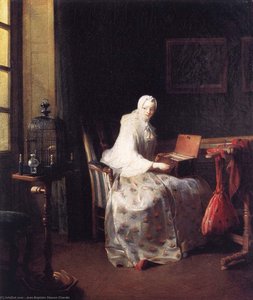
Jean-Baptiste-Siméon Chardin's "Lady with a Bird-Organ," painted in 1753, is more than just a portrait; it’s a carefully constructed tableau of domestic tranquility and subtle observation—a hallmark of the artist’s unique approach to depicting everyday life. This exquisite canvas, currently residing within The Frick Collection in New York City, offers a rare glimpse into the private world of a mid-18th century French bourgeois woman, a figure rendered with an intimacy and psychological depth rarely seen in portraiture of that era. It’s a piece that invites us to pause, to consider not just what she is doing, but *why*, and to appreciate the quiet elegance of her moment.
The painting immediately draws the eye to its subject: a woman seated comfortably in an upholstered chair, her legs crossed with graceful ease. She’s absorbed in the task of entertaining a small canary within a delicate cage positioned on the left side of the composition. Her attention isn't directed outward, but inward, as she gently operates a “bird-organ”—a fascinating precursor to modern recording technology—its intricate mechanism designed to coax forth the bird’s song. The artist masterfully uses muted silvery tones and a porcelain-like finish, a deliberate choice that echoes the refined aesthetics of 17th-century Dutch masters – artists Chardin deeply admired and sought to emulate. This subtle nod to the past elevates the work beyond a simple depiction of domesticity, suggesting a conscious effort to connect with artistic traditions while forging his own distinct style.
The Language of Gesture and Symbolism
Chardin’s genius lies in his ability to convey emotion through gesture and detail. The lady's posture is relaxed yet attentive; her hand delicately poised over the bird-organ, suggesting a gentle patience and a genuine appreciation for the music produced. The placement of the chair, with its back slightly turned towards the viewer, creates an immediate sense of intimacy, as if we’ve been granted privileged access to this private moment. The inclusion of a clock on the wall above – a detail often overlooked – subtly reinforces the passage of time and the fleeting nature of pleasure, adding another layer of contemplative depth.
The bird itself is laden with symbolic weight. In 18th-century France, songbirds were associated with joy, beauty, and even divine inspiration. The act of training the bird to sing through the mechanical device represents a desire for control over nature, a yearning for artistic creation, and perhaps even a subtle commentary on the burgeoning fascination with new technologies. It’s a delicate balance between natural instinct and human ingenuity.
A Window into an Era
“Lady with a Bird-Organ” provides invaluable insight into the social customs and leisure activities of the French upper class in the mid-18th century. The painting reflects a shift away from the formal, often ostentatious portraiture favored by earlier generations. Chardin’s focus is not on displaying wealth or status, but rather on capturing a genuine moment of human connection—a quiet pastime enjoyed within the confines of a comfortable home. The inclusion of the vase and other decorative elements further establishes this setting as a space of refined taste and understated elegance.
Interestingly, this work represents one of Chardin’s final depictions of figures in interiors. Following its commission for Louis XV, he largely abandoned portraiture and still life, choosing instead to explore the beauty of inanimate objects. This shift suggests a growing desire to distill his artistic vision into simpler forms, focusing on the inherent qualities of materials themselves. The Lady with a Bird-Organ stands as a poignant reminder of Chardin’s remarkable ability to capture the essence of human experience through subtle observation and masterful technique.
Bringing “Lady with a Bird-Organ” Home
ArtsDot offers exquisite, hand-painted reproductions of Jean-Baptiste-Siméon Chardin's "Lady with a Bird-Organ," allowing you to bring this captivating masterpiece into your own home or office. Our meticulous artisans replicate the artist’s signature soft style and delicate color palette with unparalleled accuracy, ensuring that every detail – from the porcelain-like finish to the subtle nuances of expression – is faithfully reproduced. Whether you're an art enthusiast, a collector, or simply seeking a touch of timeless elegance for your interior space, our high-quality reproductions provide a beautiful and authentic representation of this iconic work.
Explore more about Chardin’s life and artistry on our website: Jean-Baptiste-Siméon Chardin. And discover the full artwork details here: Lady with a Bird-Organ.
Ähnliche Kunstwerke

Über den Künstler
Frühes Leben und Ausbildung
Jean-Baptiste Siméon Chardin, ein französischer Maler, wurde am 2. November 1699 in Paris geboren. Er gilt als einer der größten Meister des Stilllebens und der Genremalerei. Chardins frühes Leben war geprägt von seiner Geburt als Sohn eines Schrankmachers, was wahrscheinlich sein Interesse an der Kunst beeinflusste. Er verließ Paris selten und lebte bis 1757 auf der linken Seine in der Nähe von Saint-Sulpice.Künstlerische Karriere
Chardin schloss 1723 einen Heiratsvertrag mit Marguerite Saintard, heiratete sie jedoch erst 1731. Er absolvierte Lehrzeiten bei den Historienmalern Pierre-Jacques Cazes und Noël-Nicolas Coypel und wurde 1724 Meister der Académie de Saint-Luc.- Chardins erster Erfolg kam durch die Ausstellung eines Gemäldes am 'Small Corpus Christi' auf dem Place Dauphine, das von Van Loo gekauft wurde, der den jungen Maler später unterstützte.
- Im Jahr 1728 präsentierte er "Der Rochen" und "Das Buffet", was zu seiner Aufnahme in die Académie Royale de Peinture et de Sculpture führte.
Wichtige Werke und Ausstellungen
Chardins Werk erlangte durch reproduktive Stiche Popularität, was ihm Einnahmen in Form von Tantiemen einbrachte. Zu den bemerkenswerten Werken gehören:- Der Rochen, ein Meisterwerk, das seine Fähigkeiten im Stillleben demonstriert.
- Stillleben mit Äpfeln und einem Krug, das seine Verwendung einer weichen Lichtdiffusion und körnigen Impasto zeigt.
Entwicklung und Vermächtnis
Chardins künstlerische Entwicklung lässt sich in drei Phasen unterteilen: zunächst konzentrierte er sich auf Stillleben, dann auf Genreszenen mit einzelnen oder wenigen Figuren, die ohne Sentimentalität dargestellt sind. Später wandte er sich wieder dem Stillleben zu, wobei er teurere Objekte malte. In seinen letzten Jahren wechselte er zur Pastellmalerei und porträtierte erfolgreich Personen, darunter auch Selbstporträts. Chardins Vermächtnis als Meister des Stilllebens und der Genremalerei inspiriert weiterhin Künstler und Kunstliebhaber. Seine Werke, die durch sorgfältig ausgewogene Kompositionen, weiche Lichteffekte und eine körnige Impasto gekennzeichnet sind, zeugen von seinem Können und seiner Hingabe an das Handwerk. Sein Einfluss auf nachfolgende Generationen von Künstlern ist unbestreitbar, insbesondere im Bereich der realistischen Darstellung des Alltagslebens. Er wird als einer der bedeutendsten französischen Maler des 18. Jahrhunderts angesehen.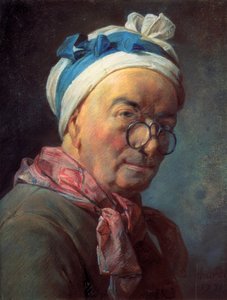
Jean-Baptiste-Siméon Chardin
1699 - 1779 , Frankreich
Kurzinfos
- Bemerkenswerte Werke:
- Der Steinbrecher
- Obstschale mit Krug
- Oh! Wenn er nur so treu wäre
- Einflussreiche Künstler:
- Pierre-Jacques Cazes
- Noël-Nicolas Coypel
- Geburtsdatum: 2. November 1699
- Geburtsort: Paris, Frankreich
- Künstlerische Richtung: Stillleben, Genremalerei
- Nationalität: Französisch
- Sterbedatum: 1779
- Vollständiger Name: Jean-Baptiste-Siméon Chardin
Ähnliche Artikel
Jean-Baptiste-Siméon Chardin: Meister des Stilllebens und der alltäglichen Eleganz
Entdecken Sie das Werk von Jean-Baptiste Simeon Chardin – Meister des Stilllebens und der alltäglichen Eleganz. Erfahren Sie mehr über seinen Stil, seine Technik und sein Vermächtnis. Hochwertige Reproduktionen bei ArtsDot!
Silent Narratives: Exploring the Enduring Appeal of Still Life Painting Across Centuries
Explore the rich history of still life painting with ArtsDot. Discover Dutch Masters, decode vanitas symbolism & learn about collecting timeless art. Expert insights and museum-quality reproductions.
Feathered Visions: A Historical & Artistic Exploration of Birds in Painting
Explore the rich history of birds in painting! Discover symbolism, artistic movements & master artists like Audubon. High-quality reproductions available at ArtsDot.
Bernard Cathelin: A Poetic Realist's Exploration of Still Life and the French Landscape
Explore the captivating world of Bernard Cathelin, a master of French Poetic Realism. Discover his stunning still lifes & landscapes, and learn about his legacy with ArtsDot.
The Enduring Appeal of Still Life: A Historical & Contemporary Exploration
Explore the rich history & symbolism of still life painting with ArtsDot. Discover masterpieces from the Dutch Golden Age, learn about vanitas art, and find expert guidance for collecting timeless artworks.