 Vorschau anzeigen
 Versenden
 Teilen
 Details anzeigen

 Herunterladen
 Ähnliche Objekte
 Röntgenaufnahme
 Diashow
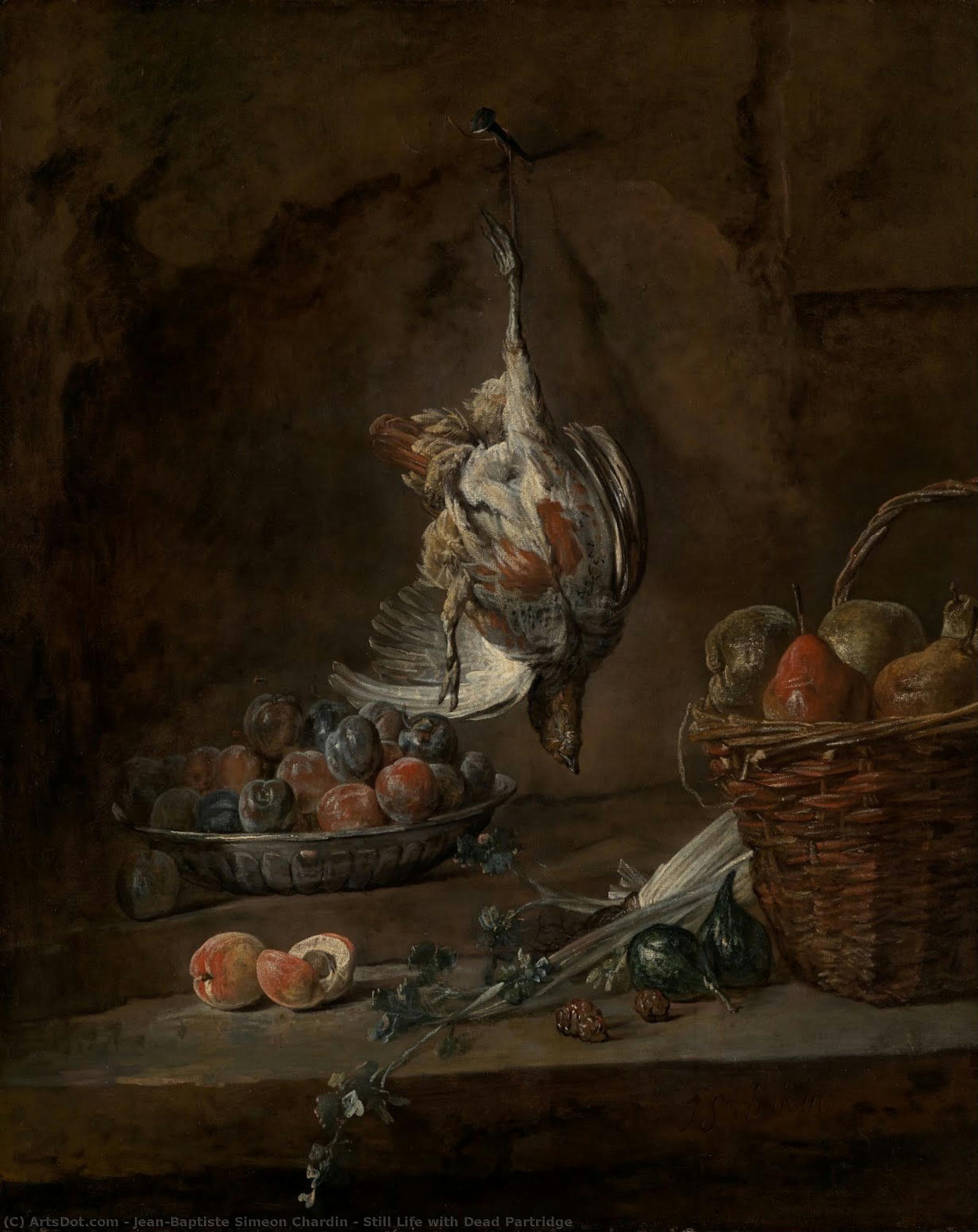
Still Life with Dead Partridge
 Oil On Canvas
- WallArt
- 17th Century Dutch
 1728
1728 92.0 x 74.0 cm
 Staatliche Kunsthalle Karlsruhe
 Weiterlesen
Giclée / Kunstdruck
Giclée- oder Leinwanddruck in Museumsqualität mit schneller Produktion und flexiblen Veredelungsoptionen. ( Handgemalte Reproduktion bestellen Bild kaufen)




P118B $10

P118H $10

P118W $10

P438Z $10

P508JH $12

P508YH $12

P805H $10

P805Z $10

P919BZ $10

P919G $10

P919XJ $10

P959ZH $10

P968JZ $12

W106C $8

W218G $10

W218JH $8

W218Y $10

W307PJ $10

W316G $10

W316PJ $8

W316Y $10

W398PJ $8

W4111J $10

W500HY $15

W500JH $15

W692G $12

W849H $8

W940BG $15

W953PJ $8




Wählen Sie aus unseren vordefinierten Formaten, die den ursprünglichen Proportionen des Kunstwerks entsprechen.

Sie können Ihre eigenen Maße eingeben, um ein bestimmtes Format oder einen speziellen Platz einzupassen. Wenn das von Ihnen gewählte Format nicht den Proportionen des Originalbildes entspricht, werden wir das Kunstwerk entweder beschneiden oder das Bild mit einem gespiegelten oder einfarbigen Rand erweitern. Ein digitaler Entwurf wird Ihnen zur Genehmigung zugesandt, bevor die Produktion beginnt.
Bitte beachten Sie, dass die Vorschau auf dem Bildschirm nicht den tatsächlichen Zuschnitt oder die Erweiterung widerspiegelt. Nur der Entwurf zeigt die endgültige Komposition präzise an.
Obwohl Sondermaße verfügbar sind, empfehlen wir die Auswahl eines Maßes aus der vordefinierten Liste, um die ursprünglichen Proportionen zu bewahren.
Weltweiter Versand () innerhalb von 2 Wochen statt der üblichen 4/5 Wochen. (22 August)

Kostenloser weltweiter Expressversand

Hochwertige Leinenleinwand

Umfassender Versicherungsschutz beim Versand

Zollgebühren-Rückerstattungsgarantie

Garantie für exakte Farbtreue

60 Tage Rückgaberecht (nur bei Mängeln)

100% Geld-zurück-Garantie

Mengenrabatt verfügbar
 Die Glasoption ist nur für Größen unter 110 cm verfügbar.

Still Life with Dead Partridge
Giclée / Kunstdruck
Format der Reproduktion
-


Gesamtpreis
$ 62
Sammlerstück-Beschreibung
Jean-Baptiste-Siméon Chardin’s Still Life with Dead Partridge: A Study in Quietude
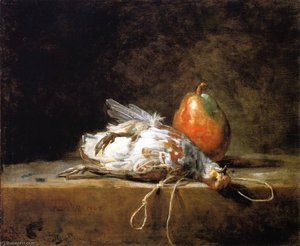
Jean-Baptiste-Siméon Chardin's "Still Life with Dead Partridge," painted in 1728, is not merely a depiction of objects; it’s an intimate meditation on mortality, domesticity, and the subtle beauty found within the commonplace. This remarkable work, housed today in prestigious collections worldwide, offers a profound glimpse into the artist’s unique vision – one characterized by a deliberate restraint, a masterful understanding of light and shadow, and a deep empathy for the subjects he chose to immortalize on canvas.
Chardin, a pivotal figure in 18th-century French art, deliberately eschewed the grand narratives favored by his contemporaries. Instead, he focused on capturing the quiet dignity of everyday life – kitchen utensils, domestic animals, and simple objects arranged with meticulous care. “Still Life with Dead Partridge” exemplifies this approach perfectly. The composition is deceptively straightforward: a dead partridge hangs suspended from a nail in a rough-hewn wall, its plumage rendered with astonishing detail against a dimly lit background. A pewter dish holds plums, a basket overflows with pears, and a solitary celery stalk adds to the still life’s understated elegance.
The Language of Still Life: Symbolism and Technique
Chardin's mastery lies not just in his observational skills but also in his ability to imbue these seemingly mundane subjects with profound meaning. The dead partridge, a symbol of vulnerability and the transient nature of life, immediately draws the viewer’s attention. Its lifelessness is rendered with remarkable sensitivity – the drooping wings, the slightly parted beak – conveying a poignant sense of loss without resorting to overt sentimentality. The arrangement itself speaks volumes; the placement of the bird, the fruits, and the dish creates a carefully balanced composition that suggests harmony and order amidst inevitable decay.
Technically, Chardin’s approach is revolutionary for his time. He employs a technique known as “impasto,” applying thick layers of paint to create a tactile surface that captures the texture and weight of each object. The brushstrokes are visible, lending a sense of immediacy and spontaneity to the work. Light plays a crucial role, subtly illuminating the scene and casting deep shadows that enhance the drama and depth. Chardin’s use of chiaroscuro – the contrast between light and dark – creates a powerful emotional effect, drawing the viewer into the heart of the composition.
Historical Context: Dutch Influences and Artistic Innovation
Chardin's work is deeply rooted in the artistic traditions of the Netherlands, particularly the still life paintings of artists like Willem van Nieukerk and Pieter Claesz. These masters pioneered a genre that emphasized realism, meticulous detail, and a fascination with everyday objects. Chardin absorbed these influences while imbuing them with his own distinctive style – characterized by a profound sense of quiet contemplation and an unwavering focus on the beauty of the ordinary.
However, Chardin’s work transcends mere imitation. He elevates the still life genre to new heights, transforming it into a vehicle for exploring complex themes such as mortality, loss, and the passage of time. His innovative use of light, color, and texture, combined with his profound understanding of human emotion, established him as one of the most important artists of the 18th century.
A Timeless Masterpiece: Reproduction and Appreciation
"Still Life with Dead Partridge" is a testament to Chardin’s artistic genius – a work that continues to resonate with viewers centuries after its creation. Today, high-quality reproductions offer an accessible way to experience the beauty and depth of this remarkable painting. When selecting a reproduction, consider the artist's skill in capturing Chardin's nuanced techniques—the delicate brushwork, the subtle variations in color, and the masterful use of light and shadow. A well-executed reproduction can bring the quiet contemplation of this masterpiece into your home, serving as a constant reminder of the beauty that can be found in the simplest of things.
Ähnliche Kunstwerke
Über den Künstler
Frühes Leben und Ausbildung
Jean-Baptiste Siméon Chardin, ein französischer Maler, wurde am 2. November 1699 in Paris geboren. Er gilt als einer der größten Meister des Stilllebens und der Genremalerei. Chardins frühes Leben war geprägt von seiner Geburt als Sohn eines Schrankmachers, was wahrscheinlich sein Interesse an der Kunst beeinflusste. Er verließ Paris selten und lebte bis 1757 auf der linken Seine in der Nähe von Saint-Sulpice.Künstlerische Karriere
Chardin schloss 1723 einen Heiratsvertrag mit Marguerite Saintard, heiratete sie jedoch erst 1731. Er absolvierte Lehrzeiten bei den Historienmalern Pierre-Jacques Cazes und Noël-Nicolas Coypel und wurde 1724 Meister der Académie de Saint-Luc.- Chardins erster Erfolg kam durch die Ausstellung eines Gemäldes am 'Small Corpus Christi' auf dem Place Dauphine, das von Van Loo gekauft wurde, der den jungen Maler später unterstützte.
- Im Jahr 1728 präsentierte er "Der Rochen" und "Das Buffet", was zu seiner Aufnahme in die Académie Royale de Peinture et de Sculpture führte.
Wichtige Werke und Ausstellungen
Chardins Werk erlangte durch reproduktive Stiche Popularität, was ihm Einnahmen in Form von Tantiemen einbrachte. Zu den bemerkenswerten Werken gehören:- Der Rochen, ein Meisterwerk, das seine Fähigkeiten im Stillleben demonstriert.
- Stillleben mit Äpfeln und einem Krug, das seine Verwendung einer weichen Lichtdiffusion und körnigen Impasto zeigt.
Entwicklung und Vermächtnis
Chardins künstlerische Entwicklung lässt sich in drei Phasen unterteilen: zunächst konzentrierte er sich auf Stillleben, dann auf Genreszenen mit einzelnen oder wenigen Figuren, die ohne Sentimentalität dargestellt sind. Später wandte er sich wieder dem Stillleben zu, wobei er teurere Objekte malte. In seinen letzten Jahren wechselte er zur Pastellmalerei und porträtierte erfolgreich Personen, darunter auch Selbstporträts. Chardins Vermächtnis als Meister des Stilllebens und der Genremalerei inspiriert weiterhin Künstler und Kunstliebhaber. Seine Werke, die durch sorgfältig ausgewogene Kompositionen, weiche Lichteffekte und eine körnige Impasto gekennzeichnet sind, zeugen von seinem Können und seiner Hingabe an das Handwerk. Sein Einfluss auf nachfolgende Generationen von Künstlern ist unbestreitbar, insbesondere im Bereich der realistischen Darstellung des Alltagslebens. Er wird als einer der bedeutendsten französischen Maler des 18. Jahrhunderts angesehen.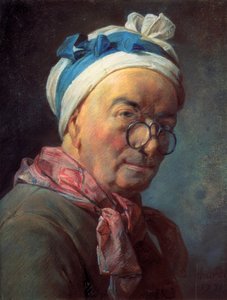
Jean-Baptiste-Siméon Chardin
1699 - 1779 , Frankreich
Kurzinfos
- Bemerkenswerte Werke:
- Der Steinbrecher
- Obstschale mit Krug
- Oh! Wenn er nur so treu wäre
- Einflussreiche Künstler:
- Pierre-Jacques Cazes
- Noël-Nicolas Coypel
- Geburtsdatum: 2. November 1699
- Geburtsort: Paris, Frankreich
- Künstlerische Richtung: Stillleben, Genremalerei
- Nationalität: Französisch
- Sterbedatum: 1779
- Vollständiger Name: Jean-Baptiste-Siméon Chardin
Ähnliche Artikel

Die 10 Meisterwerke der niederländischen Barockmalerei – Kunst für Ihr Zuhause | ArtsDot
Entdecken Sie die 10 prägendsten Meisterwerke der niederländischen Barockmalerei! Von Rembrandt bis Vermeer – erleben Sie Kunstgeschichte, Techniken & Emotionen. Hochwertige Reproduktionen für Ihr Zuhause auf ArtsDot.com.

Golden Age Reflections: Dutch Baroque Painting & Cultural Innovation
Explore the Dutch Golden Age of painting! Discover key artists like Vermeer & ter Borch, their innovative techniques, and the rich cultural context behind these Baroque masterpieces. Learn about collecting & appreciating this iconic art period.
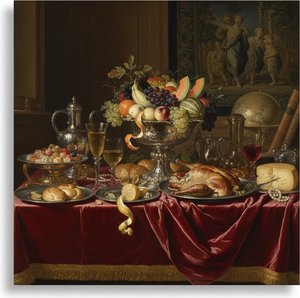
Abraham Hendricksz van Beyeren: Pioneering Dutch Still Life & the Banquet Tradition
Explore the captivating world of Dutch Golden Age still life with Abraham van Beyeren. Discover his innovative techniques, symbolic banquet scenes & lasting influence on art history. Learn about collecting these masterpieces.
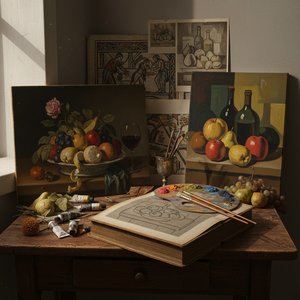
Silent Narratives: Exploring the Enduring Appeal of Still Life Painting Across Centuries
Explore the rich history of still life painting with ArtsDot. Discover Dutch Masters, decode vanitas symbolism & learn about collecting timeless art. Expert insights and museum-quality reproductions.
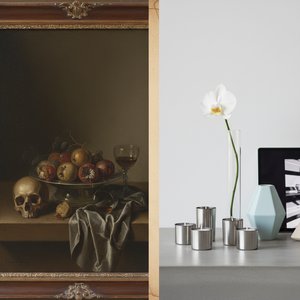
The Enduring Appeal of Still Life: A Historical & Contemporary Exploration
Explore the rich history & symbolism of still life painting with ArtsDot. Discover masterpieces from the Dutch Golden Age, learn about vanitas art, and find expert guidance for collecting timeless artworks.