

 Vorschau anzeigen
 Versenden
 Teilen
 Details anzeigen

 Herunterladen
 Ähnliche Objekte
 Röntgenaufnahme
 Diashow
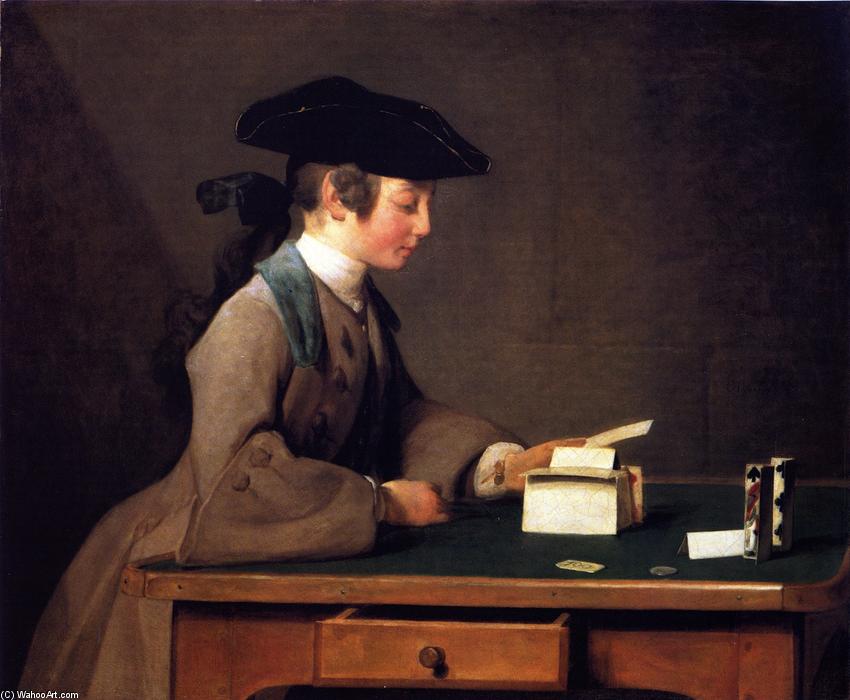
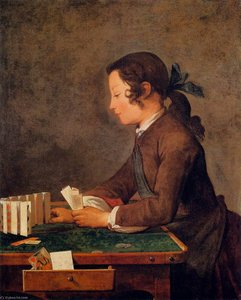
The House of Cards (also known as The Sone of M. Le Noir Amusing Himself by Making a House of Cards)
 Oil On Canvas
- WallArt
- Neoclassical Realism
 1737
1737 60.0 x 72.0 cm
 National Gallery
 Weiterlesen
Erwerben Sie ein hochauflösendes, optimiertes digitales Bild, das der Online-Vorschau weit überlegen ist.
Jede Datei wird von unseren hauseigenen Spezialisten mit modernsten Werkzeugen und fachmännischer manueller Retusche sorgfältig vorbereitet. Wir stellen sicher, dass jedes Bild eine außergewöhnliche Klarheit, präzise Farbgenauigkeit und feinste Details aufweist.
Die endgültige Datei wird innerhalb von 72 Stunden per E-Mail zugestellt und ist für den sofortigen Einsatz in professionellen, redaktionellen und Druckumgebungen optimiert. Es handelt sich um dieselbe Qualität, der führende Designstudios, Verlage und Galerien vertrauen.
Digitales Bild
Laden Sie eine hochauflösende Datei für die persönliche Präsentation, den Druck und kreative Projekte herunter. ( Druck bestellen Handgemalte Reproduktion bestellen)
In jeder Bestellung digitaler Bilder enthalten
Professionelle digitale Bereitstellung, garantiert
Wenn Sie sich für ArtsDot.com entscheiden, erhalten Sie nicht nur ein Bild – Sie erhalten ein professionell aufbereitetes digitales Kunstwerk, das mit höchster Präzision erstellt und durch eine Zufriedenheitsgarantie abgesichert wird. Hier ist alles, was automatisch mit Ihrer Bestellung geliefert wird:

Schnelle E-Mail-Zustellung
Ihre hochauflösende digitale Bilddatei wird Ihnen innerhalb von 72 Stunden nach der Bestellung per E-Mail zugestellt – bereit zur sofortigen Verwendung.

KI-optimierte digitale Datei
Ihre Kunstwerke werden professionell mithilfe fortschrittlicher KI-Tools und manueller Bearbeitung optimiert, um maximale Detailtreue, Klarheit und Farbgenauigkeit zu gewährleisten.

Lebenslanger kostenloser Neudruckservice
Datei versehentlich gelöscht oder verloren? Keine Sorge – wir senden sie Ihnen jederzeit kostenlos erneut zu.

Keine Einfuhrgebühren – jemals
Genießen Sie Ihr Kunstwerk sofort ohne Zollgebühren, Einfuhrabgaben oder Versandkosten – digitale Downloads sind immer steuerfrei.

Garantierte Farbtreue
Wir garantieren, dass Ihr digitales Bild mithilfe professioneller Werkzeuge und Farbmanagement die Originalfarben so präzise wie möglich wiedergibt.

100-Tage-Zufriedenheitsgarantie
Wenn Sie mit Ihrem digitalen Bild nicht zufrieden sind, werden wir es überarbeiten oder 100% innerhalb von 100 Tagen erstatten – ohne Wenn und Aber.

100% Geld-zurück-Garantie
Nicht zufrieden? Erhalten Sie innerhalb von 100 Tagen nach Erhalt Ihrer digitalen Datei eine vollständige Rückerstattung – ohne Wenn und Aber.

Rabatte bei Großbestellungen
3 Bilder kaufen, 10% sparen – 5 Bilder kaufen, 15% sparen – Ab 10 Bildern 20% sparen. Ideal für kreative Projekte, Galerien und Agenturen.
A Moment of Quietude: Jean-Baptiste Chardin’s “The House of Cards”
Jean-Baptiste-Siméon Chardin's "The House of Cards," painted in 1737, isn’t a grand statement of power or dramatic narrative; instead, it offers a profound glimpse into the heart of everyday life – a quiet tableau of domesticity and contemplation. Housed within the National Gallery in London, this deceptively simple scene captures a woman lost in the absorption of reading, surrounded by the familiar comforts of her home. It’s a painting that speaks volumes through its restraint, inviting us to slow down and appreciate the beauty found in the ordinary.
Chardin's genius lies not in grand gestures but in his meticulous observation and ability to imbue even the most commonplace subjects with an extraordinary sense of presence. He was deeply influenced by his father’s profession as a cabinetmaker, inheriting a keen eye for detail, texture, and the inherent elegance of materials. This is evident in the painting's incredibly realistic depiction of the table, the worn fabric of the chair, and the delicate arrangement of objects – each element rendered with painstaking precision.
The Language of Light and Texture
Technically, “The House of Cards” exemplifies Chardin’s signature style: a masterful blend of diffused light and granular impasto. The artist employs a soft, almost ethereal illumination that gently washes over the scene, creating an atmosphere of serenity and intimacy. Notice how the light catches on the table's surface, highlighting its texture and casting subtle shadows – these aren’t dramatic contrasts but rather delicate gradations that contribute to the painting’s overall sense of realism. The impasto technique, where paint is applied thickly in small strokes, adds a remarkable tactile quality to the work. You can almost feel the roughness of the table, the softness of the fabric, and the weight of the objects on display.
- Soft Diffusion: Chardin masterfully avoids harsh contrasts, creating a sense of peacefulness.
- Granular Impasto: The textured paint application adds depth and realism to the scene.
A Window into 18th-Century Parisian Life
“The House of Cards” is deeply rooted in its historical context. Building precarious structures with cards was a popular pastime among children – and adults – during the 18th century, representing both ingenuity and the fleeting nature of pleasure. Chardin’s painting reflects this cultural phenomenon, offering a glimpse into the leisure activities of Parisian society. It's important to note that similar depictions of children building card houses appear in other works by Chardin, as well as at the National Gallery of Art, Uffizi, and Waddesdon Manor, suggesting a widespread fascination with this simple yet captivating activity.
Furthermore, the painting’s appeal transcended social classes. Chardin's ability to portray everyday life with such sensitivity and grace made his genre paintings highly sought after by patrons from all walks of life – a testament to his artistic versatility and profound understanding of human nature.
Capturing an Emotional Resonance
Beyond its technical brilliance and historical significance, “The House of Cards” possesses a remarkable emotional resonance. The woman’s absorption in her book suggests a moment of quiet contemplation, a refuge from the demands of daily life. There's no overt drama or narrative tension; instead, we are invited to share in her peaceful solitude. Chardin doesn’t simply depict a scene; he evokes a feeling – a sense of calm, contentment, and the simple pleasures of domesticity. This enduring quality is what makes “The House of Cards” such a captivating work of art, one that continues to resonate with viewers centuries after its creation.
Ähnliche Kunstwerke



Biografie des Künstlers
Frühes Leben und Ausbildung
Jean-Baptiste Siméon Chardin, ein französischer Maler, wurde am 2. November 1699 in Paris geboren. Er gilt als einer der größten Meister des Stilllebens und der Genremalerei. Chardins frühes Leben war geprägt von seiner Geburt als Sohn eines Schrankmachers, was wahrscheinlich sein Interesse an der Kunst beeinflusste. Er verließ Paris selten und lebte bis 1757 auf der linken Seine in der Nähe von Saint-Sulpice.Künstlerische Karriere
Chardin schloss 1723 einen Heiratsvertrag mit Marguerite Saintard, heiratete sie jedoch erst 1731. Er absolvierte Lehrzeiten bei den Historienmalern Pierre-Jacques Cazes und Noël-Nicolas Coypel und wurde 1724 Meister der Académie de Saint-Luc.- Chardins erster Erfolg kam durch die Ausstellung eines Gemäldes am 'Small Corpus Christi' auf dem Place Dauphine, das von Van Loo gekauft wurde, der den jungen Maler später unterstützte.
- Im Jahr 1728 präsentierte er "Der Rochen" und "Das Buffet", was zu seiner Aufnahme in die Académie Royale de Peinture et de Sculpture führte.
Wichtige Werke und Ausstellungen
Chardins Werk erlangte durch reproduktive Stiche Popularität, was ihm Einnahmen in Form von Tantiemen einbrachte. Zu den bemerkenswerten Werken gehören:- Der Rochen, ein Meisterwerk, das seine Fähigkeiten im Stillleben demonstriert.
- Stillleben mit Äpfeln und einem Krug, das seine Verwendung einer weichen Lichtdiffusion und körnigen Impasto zeigt.
Entwicklung und Vermächtnis
Chardins künstlerische Entwicklung lässt sich in drei Phasen unterteilen: zunächst konzentrierte er sich auf Stillleben, dann auf Genreszenen mit einzelnen oder wenigen Figuren, die ohne Sentimentalität dargestellt sind. Später wandte er sich wieder dem Stillleben zu, wobei er teurere Objekte malte. In seinen letzten Jahren wechselte er zur Pastellmalerei und porträtierte erfolgreich Personen, darunter auch Selbstporträts. Chardins Vermächtnis als Meister des Stilllebens und der Genremalerei inspiriert weiterhin Künstler und Kunstliebhaber. Seine Werke, die durch sorgfältig ausgewogene Kompositionen, weiche Lichteffekte und eine körnige Impasto gekennzeichnet sind, zeugen von seinem Können und seiner Hingabe an das Handwerk. Sein Einfluss auf nachfolgende Generationen von Künstlern ist unbestreitbar, insbesondere im Bereich der realistischen Darstellung des Alltagslebens. Er wird als einer der bedeutendsten französischen Maler des 18. Jahrhunderts angesehen.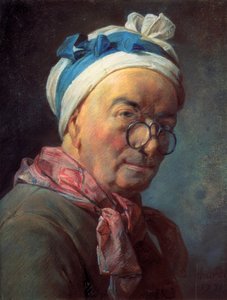
Jean-Baptiste-Siméon Chardin
1699 - 1779 , Frankreich
Kurzinfos
- Bemerkenswerte Werke:
- Der Steinbrecher
- Obstschale mit Krug
- Oh! Wenn er nur so treu wäre
- Einflussreiche Künstler:
- Pierre-Jacques Cazes
- Noël-Nicolas Coypel
- Geburtsdatum: 2. November 1699
- Geburtsort: Paris, Frankreich
- Künstlerische Richtung: Stillleben, Genremalerei
- Nationalität: Französisch
- Sterbedatum: 1779
- Vollständiger Name: Jean-Baptiste-Siméon Chardin