 Vorschau anzeigen
 Versenden
 Teilen
 Details anzeigen

 Herunterladen
 Ähnliche Objekte
 Röntgenaufnahme
 Diashow
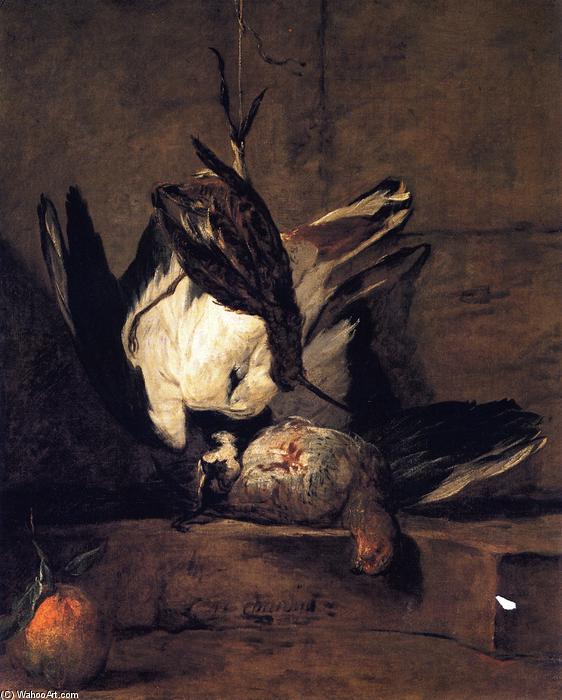
Tufted Lapwing, Grey Partridge, Snipe and Seville Orange


 Weiterlesen
Handgefertigte Ölreproduktion
Handgemaltes Ölgemälde auf Leinwand in Ihrer Wunschgröße und mit Rahmen, auf Bestellung von unseren Künstlern angefertigt. ( Druck bestellen Bild kaufen)




P118B $10

P118H $10

P118W $10

P438Z $10

P508JH $12

P508YH $12

P805H $10

P805Z $10

P919BZ $10

P919G $10

P919XJ $10

P959ZH $10

P968JZ $12

W106C $8

W218G $10

W218JH $8

W218Y $10

W307PJ $10

W316G $10

W316PJ $8

W316Y $10

W398PJ $8

W4111J $10

W500HY $15

W500JH $15

W692G $12

W849H $8

W940BG $15

W953PJ $8




Wählen Sie aus unseren vordefinierten Formaten, die den ursprünglichen Proportionen des Kunstwerks entsprechen.

Sie können Ihre eigenen Maße eingeben, um einen bestimmten Rahmen oder Platz auszufüllen. Wenn die gewählte Größe nicht den Proportionen des Originalbildes entspricht, werden wir das Kunstwerk entweder beschneiden oder das Gemälde durch zusätzliche, handgemalte Elemente erweitern. Ein digitales Mockup wird Ihnen zur Genehmigung zugesandt, bevor die Produktion beginnt.
Bitte beachten Sie, dass die Bildschirmvorschau nicht die tatsächliche Beschneidung oder Erweiterung widerspiegelt. Nur das Mockup zeigt die endgültige Komposition exakt an.
Obwohl Sondermaße verfügbar sind, empfehlen wir, eine Größe aus der vordefinierten Liste zu wählen, um die ursprünglichen Proportionen beizubehalten.
Nach der Bestellung wird das ArtsDot.com-Team dem Kunden Anweisungen per E-Mail zusenden und eine Mockup-Vorschau bereitstellen.
Weltweiter Versand () in nur 3 bis 4 Wochen statt der üblichen 5 Wochen. (27 August). Keine Kompromisse bei der Qualität.

Kostenloser weltweiter Expressversand

Hochwertige Leinenleinwand

Umfassender Versicherungsschutz beim Versand

Zollgebühren-Rückerstattungsgarantie

Garantie für exakte Farbtreue

60 Tage Rückgaberecht (nur bei Mängeln)

100% Geld-zurück-Garantie

Mengenrabatt verfügbar
 Die Glasoption ist nur für Größen unter 110 cm verfügbar.

Tufted Lapwing, Grey Partridge, Snipe and Seville Orange
Art der Reproduktion
Format der Reproduktion
-


Gesamtpreis
$ 263
A Moment Frozen in Time: Chardin’s Masterpiece
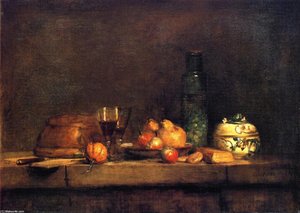
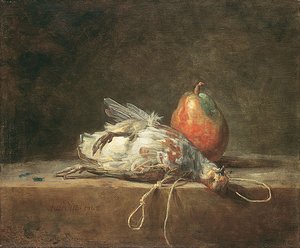
Jean-Baptiste-Siméon Chardin's “Tufted Lapwing, Grey Partridge, Snipe and Seville Orange” isn’t merely a painting; it’s a carefully constructed tableau of quiet observation, a testament to the beauty found within the mundane. Completed in 1732, this oil on canvas work resides within the Musée de la Chartreuse in Douai, France, a location that speaks volumes about its enduring artistic merit. Chardin, a painter largely devoted to capturing the essence of everyday life—a skill remarkably rare for his time—doesn’t offer grand narratives or dramatic scenes. Instead, he presents us with a meticulously arranged still life, a study in texture, light, and the subtle poetry of domesticity. The painting immediately draws the eye into its intimate space, inviting contemplation on the simple pleasures of nature and the artistry of observation.

The Anatomy of a Still Life: Composition and Technique
Chardin’s genius lies not in flamboyant execution but in the precise control he wields over his medium. The arrangement of the birds—a tufted lapwing, a grey partridge, and a snipe—alongside the vibrant orange, is remarkably balanced, creating a sense of harmony that transcends mere representation. Each element is rendered with exquisite detail: the ruffled feathers of the birds, the delicate curve of the orange peel, the subtle variations in texture – all contribute to a palpable sense of realism. The artist masterfully employs *sfumato*, a technique borrowed from Leonardo da Vinci, softening edges and creating an atmospheric haze that lends the scene a dreamlike quality. Notice how light gently illuminates the subjects, highlighting their forms and casting delicate shadows, adding depth and volume to the composition. The use of oil paint allows for rich, layered colors and textures, capturing the subtle nuances of form and surface.
A Window into 18th-Century France
“Tufted Lapwing, Grey Partridge, Snipe and Seville Orange” offers a fascinating glimpse into the world of 18th-century France. Chardin’s work reflects the aristocratic tastes of the time, which favored elegant still lifes depicting luxurious objects and animals—a celebration of wealth and refinement. However, unlike many artists of his era who catered solely to the wealthy elite, Chardin's focus on humble subjects – birds and fruit – suggests a deeper appreciation for the natural world and the simple pleasures of life. The painting’s presence in the Musée de la Chartreuse, a museum renowned for its collection of French art from this period, underscores its significance within the artistic landscape of France.
Symbolism and Emotional Resonance
Beyond its technical brilliance, “Tufted Lapwing, Grey Partridge, Snipe and Seville Orange” resonates with profound emotional depth. The birds, symbols of nature’s bounty and fleeting beauty, evoke a sense of tranquility and contemplation. The orange, a prized commodity in 18th-century France, represents wealth, abundance, and the pleasures of the table. The painting's quiet stillness invites us to pause, reflect, and appreciate the simple joys of life—a sentiment that continues to resonate with viewers today. It’s a reminder that beauty can be found not in grand gestures or dramatic displays, but in the subtle details of our everyday surroundings. The image speaks to a sense of serenity, a quiet appreciation for the natural world, and a connection to the past.
Ähnliche Kunstwerke
Über den Künstler
Frühes Leben und Ausbildung
Jean-Baptiste Siméon Chardin, ein französischer Maler, wurde am 2. November 1699 in Paris geboren. Er gilt als einer der größten Meister des Stilllebens und der Genremalerei. Chardins frühes Leben war geprägt von seiner Geburt als Sohn eines Schrankmachers, was wahrscheinlich sein Interesse an der Kunst beeinflusste. Er verließ Paris selten und lebte bis 1757 auf der linken Seine in der Nähe von Saint-Sulpice.Künstlerische Karriere
Chardin schloss 1723 einen Heiratsvertrag mit Marguerite Saintard, heiratete sie jedoch erst 1731. Er absolvierte Lehrzeiten bei den Historienmalern Pierre-Jacques Cazes und Noël-Nicolas Coypel und wurde 1724 Meister der Académie de Saint-Luc.- Chardins erster Erfolg kam durch die Ausstellung eines Gemäldes am 'Small Corpus Christi' auf dem Place Dauphine, das von Van Loo gekauft wurde, der den jungen Maler später unterstützte.
- Im Jahr 1728 präsentierte er "Der Rochen" und "Das Buffet", was zu seiner Aufnahme in die Académie Royale de Peinture et de Sculpture führte.
Wichtige Werke und Ausstellungen
Chardins Werk erlangte durch reproduktive Stiche Popularität, was ihm Einnahmen in Form von Tantiemen einbrachte. Zu den bemerkenswerten Werken gehören:- Der Rochen, ein Meisterwerk, das seine Fähigkeiten im Stillleben demonstriert.
- Stillleben mit Äpfeln und einem Krug, das seine Verwendung einer weichen Lichtdiffusion und körnigen Impasto zeigt.
Entwicklung und Vermächtnis
Chardins künstlerische Entwicklung lässt sich in drei Phasen unterteilen: zunächst konzentrierte er sich auf Stillleben, dann auf Genreszenen mit einzelnen oder wenigen Figuren, die ohne Sentimentalität dargestellt sind. Später wandte er sich wieder dem Stillleben zu, wobei er teurere Objekte malte. In seinen letzten Jahren wechselte er zur Pastellmalerei und porträtierte erfolgreich Personen, darunter auch Selbstporträts. Chardins Vermächtnis als Meister des Stilllebens und der Genremalerei inspiriert weiterhin Künstler und Kunstliebhaber. Seine Werke, die durch sorgfältig ausgewogene Kompositionen, weiche Lichteffekte und eine körnige Impasto gekennzeichnet sind, zeugen von seinem Können und seiner Hingabe an das Handwerk. Sein Einfluss auf nachfolgende Generationen von Künstlern ist unbestreitbar, insbesondere im Bereich der realistischen Darstellung des Alltagslebens. Er wird als einer der bedeutendsten französischen Maler des 18. Jahrhunderts angesehen.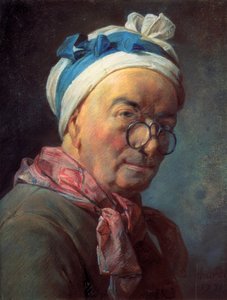
Jean-Baptiste-Siméon Chardin
1699 - 1779 , Frankreich
Kurzinfos
- Bemerkenswerte Werke:
- Der Steinbrecher
- Obstschale mit Krug
- Oh! Wenn er nur so treu wäre
- Einflussreiche Künstler:
- Pierre-Jacques Cazes
- Noël-Nicolas Coypel
- Geburtsdatum: 2. November 1699
- Geburtsort: Paris, Frankreich
- Künstlerische Richtung: Stillleben, Genremalerei
- Nationalität: Französisch
- Sterbedatum: 1779
- Vollständiger Name: Jean-Baptiste-Siméon Chardin
Ähnliche Artikel
Jean-Baptiste-Siméon Chardin: Meister des Stilllebens und der alltäglichen Eleganz
Entdecken Sie das Werk von Jean-Baptiste Simeon Chardin – Meister des Stilllebens und der alltäglichen Eleganz. Erfahren Sie mehr über seinen Stil, seine Technik und sein Vermächtnis. Hochwertige Reproduktionen bei ArtsDot!
Silent Narratives: Exploring the Enduring Appeal of Still Life Painting Across Centuries
Explore the rich history of still life painting with ArtsDot. Discover Dutch Masters, decode vanitas symbolism & learn about collecting timeless art. Expert insights and museum-quality reproductions.
Feathered Visions: A Historical & Artistic Exploration of Birds in Painting
Explore the rich history of birds in painting! Discover symbolism, artistic movements & master artists like Audubon. High-quality reproductions available at ArtsDot.
The Enduring Appeal of Still Life: A Historical & Contemporary Exploration
Explore the rich history & symbolism of still life painting with ArtsDot. Discover masterpieces from the Dutch Golden Age, learn about vanitas art, and find expert guidance for collecting timeless artworks.
Clyfford Still's Abstract Expressionism: A Study of Color, Form & the Existential Landscape
Explore the profound world of Clyfford Still's Abstract Expressionism with ArtsDot. Discover his unique style, existential themes & investment potential. Expert analysis for discerning collectors.