 Vorschau anzeigen
 Versenden
 Teilen
 Details anzeigen

 Herunterladen
 Ähnliche Objekte
 Röntgenaufnahme
 Diashow
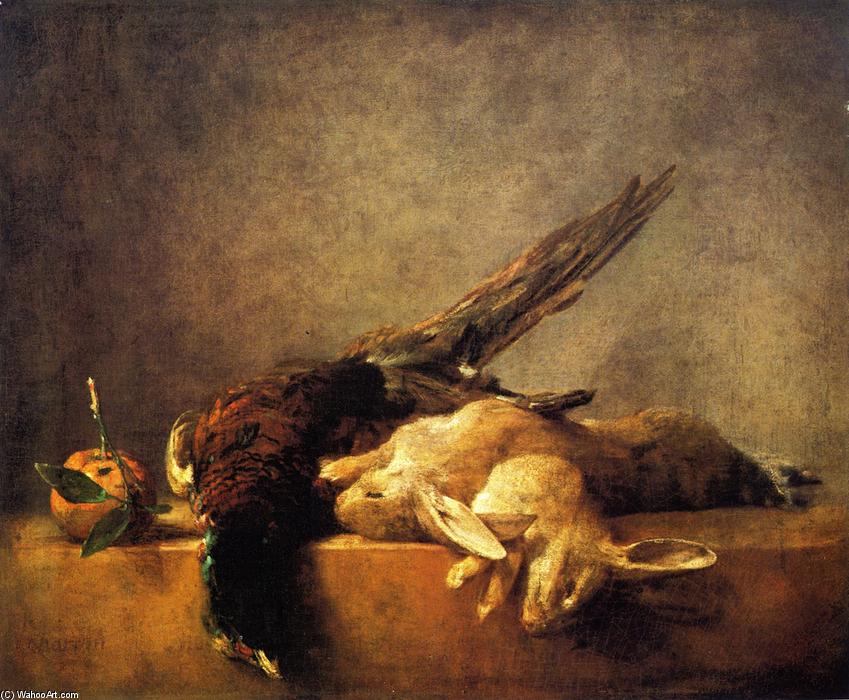
Zwei Kaninchen, eine Fasan und eine Zitronenorange auf einem Steinbrett


 Weiterlesen
Giclée / Kunstdruck
Giclée- oder Leinwanddruck in Museumsqualität mit schneller Produktion und flexiblen Veredelungsoptionen. ( Handgemalte Reproduktion bestellen Bild kaufen)




P118B $10

P118H $10

P118W $10

P438Z $10

P508JH $12

P508YH $12

P805H $10

P805Z $10

P919BZ $10

P919G $10

P919XJ $10

P959ZH $10

P968JZ $12

W106C $8

W218G $10

W218JH $8

W218Y $10

W307PJ $10

W316G $10

W316PJ $8

W316Y $10

W398PJ $8

W4111J $10

W500HY $15

W500JH $15

W692G $12

W849H $8

W940BG $15

W953PJ $8




Wählen Sie aus unseren vordefinierten Formaten, die den ursprünglichen Proportionen des Kunstwerks entsprechen.

Sie können Ihre eigenen Maße eingeben, um ein bestimmtes Format oder einen speziellen Platz einzupassen. Wenn das von Ihnen gewählte Format nicht den Proportionen des Originalbildes entspricht, werden wir das Kunstwerk entweder beschneiden oder das Bild mit einem gespiegelten oder einfarbigen Rand erweitern. Ein digitaler Entwurf wird Ihnen zur Genehmigung zugesandt, bevor die Produktion beginnt.
Bitte beachten Sie, dass die Vorschau auf dem Bildschirm nicht den tatsächlichen Zuschnitt oder die Erweiterung widerspiegelt. Nur der Entwurf zeigt die endgültige Komposition präzise an.
Obwohl Sondermaße verfügbar sind, empfehlen wir die Auswahl eines Maßes aus der vordefinierten Liste, um die ursprünglichen Proportionen zu bewahren.
Weltweiter Versand () innerhalb von 2 Wochen statt der üblichen 4/5 Wochen. (1 September)

Kostenloser weltweiter Expressversand

Hochwertige Leinenleinwand

Umfassender Versicherungsschutz beim Versand

Zollgebühren-Rückerstattungsgarantie

Garantie für exakte Farbtreue

60 Tage Rückgaberecht (nur bei Mängeln)

100% Geld-zurück-Garantie

Mengenrabatt verfügbar
 Die Glasoption ist nur für Größen unter 110 cm verfügbar.

Zwei Kaninchen, eine Fasan und eine Zitronenorange auf einem Steinbrett
Giclée / Kunstdruck
Format der Reproduktion
-


Gesamtpreis
$ 62
Jean-Baptiste Chardin’s Serene Still Life: A Study in Light, Texture, and Quiet Observation
The painting “Two Rabbits, a Pheasant and a Seville Orange on a Stone Ledge” by Jean-Baptiste-Siméon Chardin, created in 1755, is more than simply a depiction of fruit and animals; it’s an intimate meditation on the beauty of the everyday. Chardin, a master of capturing fleeting moments and subtle emotions, eschewed grand historical themes or dramatic narratives, choosing instead to find profound artistic expression within the quiet simplicity of domestic life. This particular work, now residing in the National Gallery of Art in Washington D.C., exemplifies his signature style – an art deeply rooted in observation and imbued with a gentle empathy for the human experience.
The scene unfolds on a weathered stone ledge, bathed in a soft, diffused light that seems to emanate from nowhere specific. Two rabbits dominate the composition: one, alert and alive, gazing directly at the viewer, while its companion lies still, suggesting mortality and the passage of time. A magnificent pheasant, rendered with exquisite detail, adds a touch of luxurious elegance, a symbol often associated with wealth and status in 18th-century France. A single, vibrant Seville orange – a rare and expensive import at the time – rests amongst the other elements, its smooth skin reflecting the light and hinting at both abundance and the ephemeral nature of beauty. The inclusion of two apples further reinforces this theme of earthly delights.
The Language of Symbolism: Unpacking Chardin’s Deliberate Choices
Chardin's still lifes are renowned for their layered symbolism, inviting viewers to contemplate deeper meanings beyond the surface appearance. The rabbits themselves hold significant weight; they traditionally represent fertility, prosperity, and even resurrection – a potent symbol considering one is alive and one deceased. The pheasant, with its proud bearing and rich plumage, speaks of luxury and refinement, reflecting the tastes of the aristocratic patrons who often commissioned Chardin’s work. However, it's important to note that Chardin rarely offers explicit interpretations; instead, he allows the symbolism to unfold organically within the arrangement, inviting the viewer to engage in a personal dialogue with the artwork.
The Seville orange, arriving from distant lands, represents not just material wealth but also exoticism and the allure of the unknown. Its inclusion subtly underscores the artist’s interest in capturing the fleeting beauty of perishable objects – a poignant reminder of life's transient nature. The stone ledge itself, worn and textured by time, provides an anchor for the scene, grounding the composition and suggesting a connection to the natural world.
A Masterclass in Technique: Light, Texture, and the Art of Observation
Chardin’s technical skill is immediately apparent in “Two Rabbits…” His masterful use of oil paint allows him to create an astonishingly realistic depiction of texture – from the soft fur of the rabbits to the delicate skin of the orange. The artist employs a technique known as *sfumato*, subtly blurring edges and creating a hazy, atmospheric effect that softens the forms and enhances their sense of volume. He achieves this through careful layering of thin glazes, building up color gradually to create depth and luminosity.
Crucially, Chardin’s brushstrokes are remarkably understated – almost invisible. He avoids dramatic gestures or bold contrasts, instead favoring a delicate, nuanced approach that captures the subtle play of light and shadow. This restraint is key to the painting's overall sense of serenity and quiet contemplation. The artist’s meticulous attention to detail, combined with his masterful control of color and texture, results in an artwork that feels both incredibly detailed and remarkably effortless.
A Timeless Appeal: Reproduction and Artistic Legacy
“Two Rabbits, a Pheasant and a Seville Orange on a Stone Ledge” remains a powerfully evocative work of art, captivating viewers with its quiet beauty and profound symbolism. ArtsDot offers meticulously crafted hand-painted reproductions that faithfully capture the essence of Chardin’s original masterpiece, allowing you to experience this timeless artwork in your own home or office. Whether you are an art enthusiast, a collector seeking to expand your collection, or simply someone looking for a touch of understated elegance, a reproduction of this remarkable painting is sure to bring a sense of tranquility and contemplation to any space.
For those interested in exploring more works by Chardin or similar still life paintings from the 18th century, we invite you to browse our extensive collection. You might also find inspiration in the work of artists like Felix Vallotton and Pieter Aertsen – each offering a unique perspective on the beauty of everyday objects.
Ähnliche Kunstwerke
Über den Künstler
Frühes Leben und Ausbildung
Jean-Baptiste Siméon Chardin, ein französischer Maler, wurde am 2. November 1699 in Paris geboren. Er gilt als einer der größten Meister des Stilllebens und der Genremalerei. Chardins frühes Leben war geprägt von seiner Geburt als Sohn eines Schrankmachers, was wahrscheinlich sein Interesse an der Kunst beeinflusste. Er verließ Paris selten und lebte bis 1757 auf der linken Seine in der Nähe von Saint-Sulpice.Künstlerische Karriere
Chardin schloss 1723 einen Heiratsvertrag mit Marguerite Saintard, heiratete sie jedoch erst 1731. Er absolvierte Lehrzeiten bei den Historienmalern Pierre-Jacques Cazes und Noël-Nicolas Coypel und wurde 1724 Meister der Académie de Saint-Luc.- Chardins erster Erfolg kam durch die Ausstellung eines Gemäldes am 'Small Corpus Christi' auf dem Place Dauphine, das von Van Loo gekauft wurde, der den jungen Maler später unterstützte.
- Im Jahr 1728 präsentierte er "Der Rochen" und "Das Buffet", was zu seiner Aufnahme in die Académie Royale de Peinture et de Sculpture führte.
Wichtige Werke und Ausstellungen
Chardins Werk erlangte durch reproduktive Stiche Popularität, was ihm Einnahmen in Form von Tantiemen einbrachte. Zu den bemerkenswerten Werken gehören:- Der Rochen, ein Meisterwerk, das seine Fähigkeiten im Stillleben demonstriert.
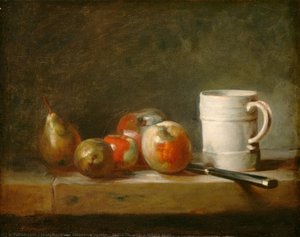
- Stillleben mit Äpfeln und einem Krug, das seine Verwendung einer weichen Lichtdiffusion und körnigen Impasto zeigt.
Entwicklung und Vermächtnis
Chardins künstlerische Entwicklung lässt sich in drei Phasen unterteilen: zunächst konzentrierte er sich auf Stillleben, dann auf Genreszenen mit einzelnen oder wenigen Figuren, die ohne Sentimentalität dargestellt sind. Später wandte er sich wieder dem Stillleben zu, wobei er teurere Objekte malte. In seinen letzten Jahren wechselte er zur Pastellmalerei und porträtierte erfolgreich Personen, darunter auch Selbstporträts. Chardins Vermächtnis als Meister des Stilllebens und der Genremalerei inspiriert weiterhin Künstler und Kunstliebhaber. Seine Werke, die durch sorgfältig ausgewogene Kompositionen, weiche Lichteffekte und eine körnige Impasto gekennzeichnet sind, zeugen von seinem Können und seiner Hingabe an das Handwerk. Sein Einfluss auf nachfolgende Generationen von Künstlern ist unbestreitbar, insbesondere im Bereich der realistischen Darstellung des Alltagslebens. Er wird als einer der bedeutendsten französischen Maler des 18. Jahrhunderts angesehen.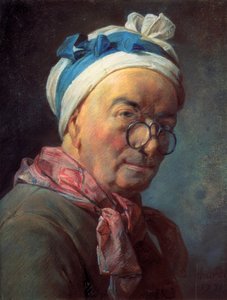
Jean-Baptiste-Siméon Chardin
1699 - 1779 , Frankreich
Kurzinfos
- Bemerkenswerte Werke:
- Der Steinbrecher
- Obstschale mit Krug
- Oh! Wenn er nur so treu wäre
- Einflussreiche Künstler:
- Pierre-Jacques Cazes
- Noël-Nicolas Coypel
- Geburtsdatum: 2. November 1699
- Geburtsort: Paris, Frankreich
- Künstlerische Richtung: Stillleben, Genremalerei
- Nationalität: Französisch
- Sterbedatum: 1779
- Vollständiger Name: Jean-Baptiste-Siméon Chardin
Ähnliche Artikel
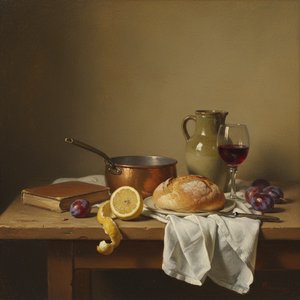
Jean-Baptiste-Siméon Chardin: Meister des Stilllebens und der alltäglichen Eleganz
Entdecken Sie das Werk von Jean-Baptiste Simeon Chardin – Meister des Stilllebens und der alltäglichen Eleganz. Erfahren Sie mehr über seinen Stil, seine Technik und sein Vermächtnis. Hochwertige Reproduktionen bei ArtsDot!
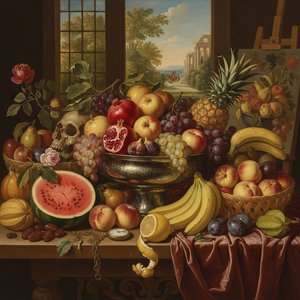
The Bountiful Still Life: Symbolism & Artistic Representation of Fruit Across Art History
Explore the rich history of still life painting & the symbolism of fruit across art movements. Discover masterpieces from Caravaggio to Cézanne with ArtsDot – expert guidance & museum-quality reproductions.
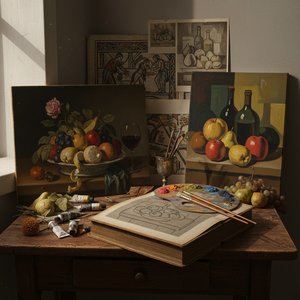
Silent Narratives: Exploring the Enduring Appeal of Still Life Painting Across Centuries
Explore the rich history of still life painting with ArtsDot. Discover Dutch Masters, decode vanitas symbolism & learn about collecting timeless art. Expert insights and museum-quality reproductions.
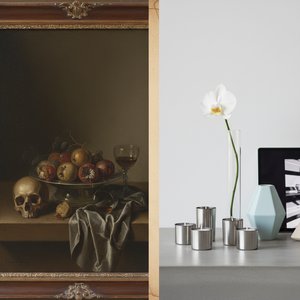
The Enduring Appeal of Still Life: A Historical & Contemporary Exploration
Explore the rich history & symbolism of still life painting with ArtsDot. Discover masterpieces from the Dutch Golden Age, learn about vanitas art, and find expert guidance for collecting timeless artworks.
Severin Roesen: Evoking National Identity Through American Still Life Painting
Explore the captivating world of Severin Roesen, a major American still life painter influenced by Dutch masters. Discover his lush compositions and the symbolism within his art – a window into 19th-century America.