

 Vorschau anzeigen
 Versenden
 Teilen
 Details anzeigen

 Herunterladen
 Ähnliche Objekte
 Röntgenaufnahme
 Diashow
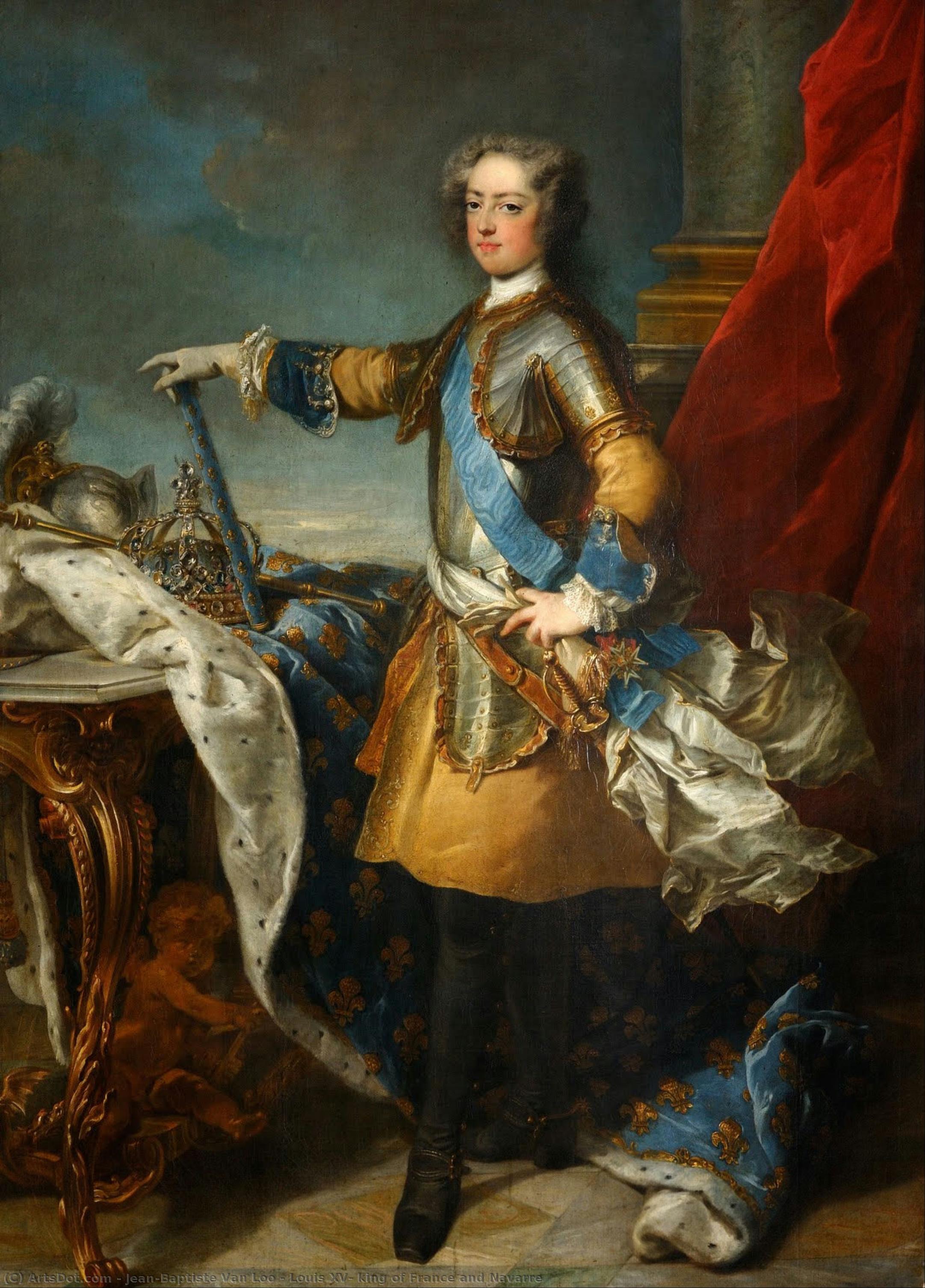
Louis XV, king of France and Navarre
 Oil On Canvas
- WallArt
- Rococo
 1723
1723 171.0 x 205.0 cm
 Schloss Versailles
 Weiterlesen
Erwerben Sie ein hochauflösendes, optimiertes digitales Bild, das der Online-Vorschau weit überlegen ist.
Jede Datei wird von unseren hauseigenen Spezialisten mit modernsten Werkzeugen und fachmännischer manueller Retusche sorgfältig vorbereitet. Wir stellen sicher, dass jedes Bild eine außergewöhnliche Klarheit, präzise Farbgenauigkeit und feinste Details aufweist.
Die endgültige Datei wird innerhalb von 72 Stunden per E-Mail zugestellt und ist für den sofortigen Einsatz in professionellen, redaktionellen und Druckumgebungen optimiert. Es handelt sich um dieselbe Qualität, der führende Designstudios, Verlage und Galerien vertrauen.
Digitales Bild
Laden Sie eine hochauflösende Datei für die persönliche Präsentation, den Druck und kreative Projekte herunter. ( Druck bestellen Handgemalte Reproduktion bestellen)
In jeder Bestellung digitaler Bilder enthalten
Professionelle digitale Bereitstellung, garantiert
Wenn Sie sich für ArtsDot.com entscheiden, erhalten Sie nicht nur ein Bild – Sie erhalten ein professionell aufbereitetes digitales Kunstwerk, das mit höchster Präzision erstellt und durch eine Zufriedenheitsgarantie abgesichert wird. Hier ist alles, was automatisch mit Ihrer Bestellung geliefert wird:

Schnelle E-Mail-Zustellung
Ihre hochauflösende digitale Bilddatei wird Ihnen innerhalb von 72 Stunden nach der Bestellung per E-Mail zugestellt – bereit zur sofortigen Verwendung.

KI-optimierte digitale Datei
Ihre Kunstwerke werden professionell mithilfe fortschrittlicher KI-Tools und manueller Bearbeitung optimiert, um maximale Detailtreue, Klarheit und Farbgenauigkeit zu gewährleisten.

Lebenslanger kostenloser Neudruckservice
Datei versehentlich gelöscht oder verloren? Keine Sorge – wir senden sie Ihnen jederzeit kostenlos erneut zu.

Keine Einfuhrgebühren – jemals
Genießen Sie Ihr Kunstwerk sofort ohne Zollgebühren, Einfuhrabgaben oder Versandkosten – digitale Downloads sind immer steuerfrei.

Garantierte Farbtreue
Wir garantieren, dass Ihr digitales Bild mithilfe professioneller Werkzeuge und Farbmanagement die Originalfarben so präzise wie möglich wiedergibt.

60-Tage-Zufriedenheitsgarantie
Sollten Sie mit Ihrem digitalen Bild nicht zufrieden sein, werden wir es überarbeiten oder Ihnen innerhalb von 60 Tagen 100% erstatten – ohne Wenn und Aber.

100% Geld-zurück-Garantie
Nicht zufrieden? Erhalten Sie innerhalb von 60 Tagen nach Erhalt Ihrer digitalen Datei eine vollständige Rückerstattung – ohne Angabe von Gründen.

Rabatte bei Großbestellungen
3 Bilder kaufen, 10% sparen – 5 Bilder kaufen, 15% sparen – Ab 10 Bildern 20% sparen. Ideal für kreative Projekte, Galerien und Agenturen.
The Regal Presence: Jean-Baptiste van Loo’s Masterpiece
Jean-Baptiste van Loo's 1723 portrait of Louis XV, King of France and Navarre, is more than just a likeness; it’s a carefully constructed tableau of power, diplomacy, and the burgeoning grandeur of the French court. The painting immediately commands attention with its scale – a commanding 171 x 205 cm – inviting viewers to lose themselves in the details of this pivotal moment in royal history. Van Loo, a master of his craft who spent much of his career in Paris and England, expertly blends classical formality with a subtle dynamism that captures the essence of Louis XV’s reign.
The subject himself is presented in three-quarter pose, seated against a richly textured backdrop suggesting the opulence of Versailles. He wears the elaborate attire characteristic of the era: a breastplate over a deep blue coat adorned with intricate embroidery, a fur-lined mantle echoing the royal colors, and a sash bearing the emblem of the Order of the Holy Spirit – a potent symbol of his authority and status. The careful placement of the baton resting on his right hand further emphasizes this command, while the subtle turn of his head and gaze imbue the portrait with an air of quiet confidence.
A Window into the Age of Louis XV
To truly appreciate this painting, one must understand the context in which it was created. Louis XV ascended to the throne at the tender age of five, inheriting a kingdom grappling with debt and political instability following the reign of his flamboyant predecessor, Louis XIV. His early years were marked by regency, but he quickly asserted himself as a shrewd and ambitious ruler, skillfully navigating the complex web of European alliances and initiating significant reforms within France. This portrait, painted in 1723 during this formative period, reflects both the weight of his position and the promise of his reign – a time of lavish court life, artistic flourishing, and ultimately, growing tensions that would contribute to the French Revolution.
The painting’s creation coincided with a shift in European art towards a more restrained and idealized style. Van Loo, influenced by Italian masters like Guido Reni and Andrea Sacchi, employed a meticulous technique characterized by smooth brushstrokes, precise detailing, and a masterful use of light and shadow. The composition is carefully balanced, drawing the eye to Louis XV while subtly incorporating elements that speak to his role as king – the fleur-de-lis embroidered on his mantle, the symbols of royal authority, and the grandeur of the setting.
Symbolism and Emotional Resonance
Beyond its technical brilliance, the portrait is rich in symbolism. The elaborate clothing and regalia are not merely decorative; they represent Louis XV’s power, wealth, and connection to tradition. The careful attention to detail – from the embroidery on his garments to the placement of his hands – speaks volumes about the importance placed on appearances and protocol within the French court. Yet, despite this formality, there's a subtle warmth in the king’s expression, suggesting intelligence and perhaps even a hint of vulnerability.
Van Loo’s portraits were often commissioned by European royalty and nobility, serving as both diplomatic tools and personal statements. This particular portrait likely served to reinforce Louis XV’s image as a capable and benevolent ruler – a man dedicated to the prosperity and well-being of his kingdom. The painting's enduring appeal lies in its ability to capture not just a physical likeness but also the spirit and ambition of a king at the height of his power, offering a captivating glimpse into a bygone era.
A Legacy of Likeness: Jean-Baptiste van Loo
Jean-Baptiste van Loo (1684–1745) was a prominent figure in 18th-century French art. Born in Aix-en-Provence, he honed his skills under his father, Louis-Abraham van Loo, and later studied in Rome with Benedetto Luti. He became a member of the Académie royale de peinture et de sculpture in Paris, where he produced numerous portraits for European royalty and nobility. His style is characterized by its elegance, precision, and ability to capture the likenesses of his subjects with remarkable accuracy. His legacy extends through his family – his brothers, Louis-Michel and Charles-Amédée-Philippe, also became accomplished painters, continuing the tradition of portraiture that began with their father.
Ähnliche Kunstwerke
Biografie des Künstlers
Frühes Leben und Ausbildung
Jean-Baptiste van Loo, ein renommierter französischer Maler, wurde 1684 in Aix-en-Provence geboren. Er erhielt seine künstlerische Ausbildung von seinem Vater, Louis-Abraham van Loo, der ebenfalls Künstler war und der Sohn von Jacob van Loo war. Diese Künstlerdynastie legte den Grundstein für van Loos zukünftigen Erfolg.Förderung und bedeutende Werke
Van Loos Talent erregte die Aufmerksamkeit des Prinzen von Carignan, der seine Reise nach Rom sponserte. Dort studierte er unter Benedetto Luti und verfeinerte so seine Fähigkeiten weiter. In Rom wurde van Loo häufig beauftragt, Gemälde für Kirchen anzufertigen, insbesondere schuf er ein hochgelobtes "Geißelung Christi" für die Kirche Santa Maria in Monticelli.- Bedeutende Werke:
- Die Geißelung Christi (Kirche Santa Maria in Monticelli, Rom)
- Porträt von Charles Emmanuel II, Herzog von Savoyen (Turin)
- Porträts von Aristokraten, darunter ein junger William Murray (später 1. Lord Mansfield), in Paris
- Porträt von Colley Cibber und Owen McSwiny (England)
- Porträt von Sir Robert Walpole in seinen Gewändern als Schatzkanzler (National Portrait Gallery, London)
Karrierehöhepunkte und späteres Leben
Van Loos Karriere war geprägt von seiner Wahl zum Mitglied der Académie Royale de peinture et de sculpture in Paris. Er fertigte verschiedene Altarbilder an und restaurierte Werke von Francesco Primaticcio im Schloss Fontainebleau. Seine Zeit in England, obwohl kurz aufgrund gesundheitlicher Probleme, führte zu bemerkenswerten Porträts.- Museen mit Werken von van Loo:
- National Portrait Gallery, London
- Musée des Beaux-Arts Valence, Frankreich (obwohl nicht explizit erwähnt, dass es seine Werke beherbergt, ist es ein relevantes französisches Kunstmuseum)
Vermächtnis und Verfügbarkeit seiner Kunst
Van Loos Vermächtnis ist geprägt von seinen markanten und treuen Likenessen, die jedoch oft nicht schmeichelhaft sind. Seine Köpfe zeichnen sich durch kräftige Farbgebung aus. Um mehr über van Loos Werke zu erfahren oder eine Reproduktion zu bestellen, besuchen Sie ArtsDot.com, wo Sie detaillierte Informationen über seine Kunstwerke und sogar museumsgerechte Reproduktionen finden können.- Van Loos Kunst betrachten:
- Besuchen Sie ArtsDot.com für eine umfassende Sammlung.
- Erkunden Sie die Website des Musée des Beaux-Arts Valence auf potenzielle Ausstellungen oder Erwähnungen von van Loos Werk.
Schlussfolgerung
Jean-Baptiste van Loo hinterließ mit seiner Förderung und Ausbildung einen bleibenden Eindruck in der Welt der Porträtmalerei. Seine kurze, aber wirkungsvolle Karriere in England und seine Restaurierungsarbeiten in Frankreich festigen seinen Platz in der Kunstgeschichte. Um tiefer in seine Kunst einzutauchen oder Ihre Wände mit einem Meisterwerk zu schmücken, ist ArtsDot.com Ihr Tor zum bleibenden Erbe von van Loo.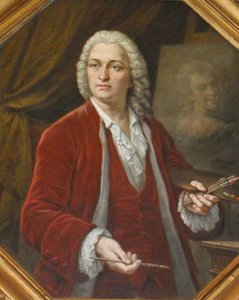
Jean-Baptiste van Loo
1684 - 1745 , Frankreich
Kurzinfos
- Beeinflusste Künstler: ['Benedetto Luti']
- Bemerkenswerte Werke:
- Die Geißelung Christi
- Porträt Karls Emanuels II.
- Porträt von Walpole
- Triumph der Galatea
- Geburtsdatum: 1684
- Geburtsort: Aix-en-Provence, Frankreich
- Künstlerische Richtung: Barock, Rokoko
- Nationalität: Französisch
- Vollständiger Name: Jean-Baptiste van Loo

