 Vorschau anzeigen
 Versenden
 Teilen
 Details anzeigen

 Herunterladen
 Ähnliche Objekte
 Röntgenaufnahme
 Diashow
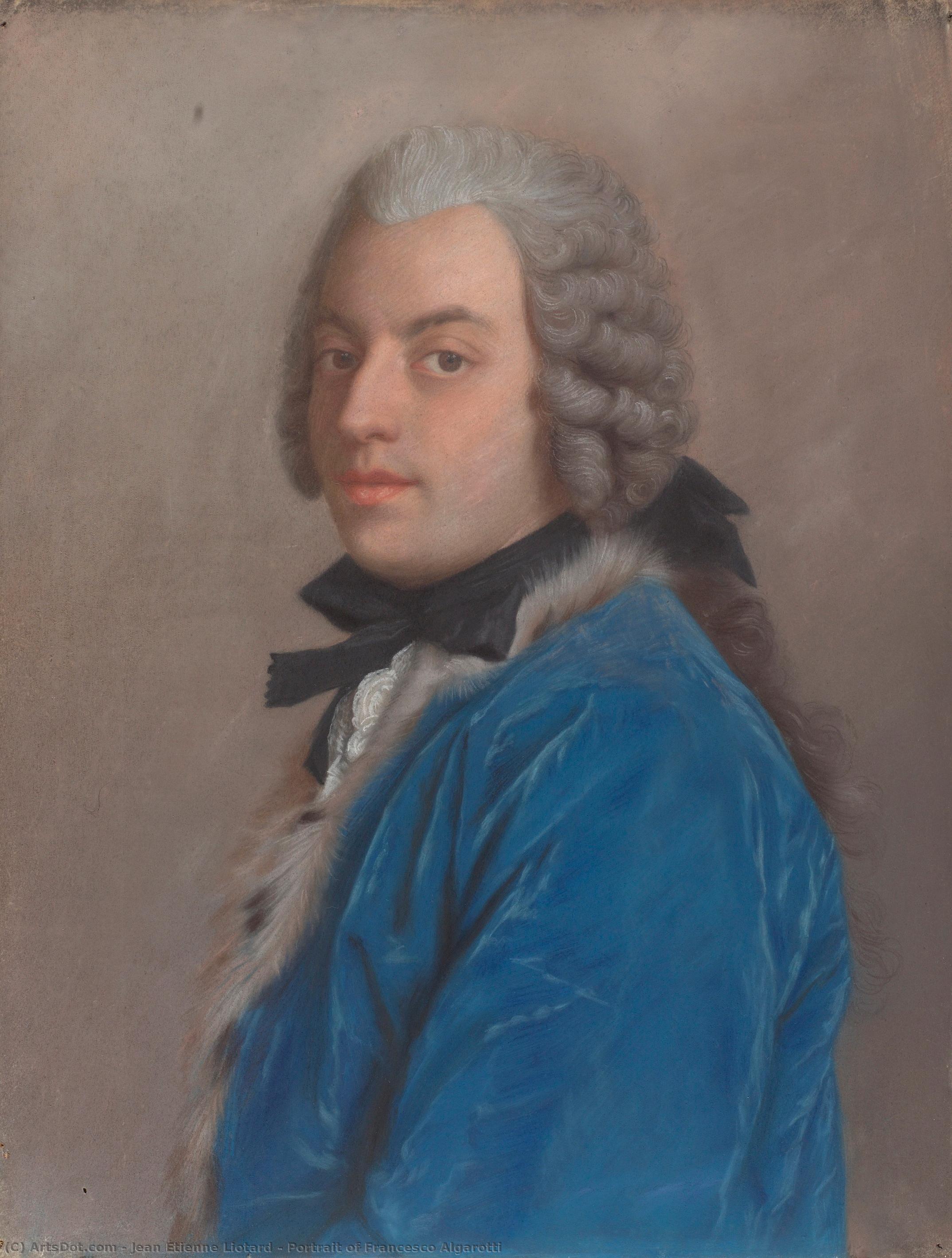
Portrait of Francesco Algarotti


 Weiterlesen
Handgefertigte Ölreproduktion
Handgemaltes Ölgemälde auf Leinwand in Ihrer Wunschgröße und mit Rahmen, auf Bestellung von unseren Künstlern angefertigt. ( Druck bestellen Bild kaufen)




P118B $10

P118H $10

P118W $10

P438Z $10

P508JH $12

P508YH $12

P805H $10

P805Z $10

P919BZ $10

P919G $10

P919XJ $10

P959ZH $10

P968JZ $12

W106C $8

W218G $10

W218JH $8

W218Y $10

W307PJ $10

W316G $10

W316PJ $8

W316Y $10

W398PJ $8

W4111J $10

W500HY $15

W500JH $15

W692G $12

W849H $8

W940BG $15

W953PJ $8




Wählen Sie aus unseren vordefinierten Formaten, die den ursprünglichen Proportionen des Kunstwerks entsprechen.

Sie können Ihre eigenen Maße eingeben, um einen bestimmten Rahmen oder Platz auszufüllen. Wenn die gewählte Größe nicht den Proportionen des Originalbildes entspricht, werden wir das Kunstwerk entweder beschneiden oder das Gemälde durch zusätzliche, handgemalte Elemente erweitern. Ein digitales Mockup wird Ihnen zur Genehmigung zugesandt, bevor die Produktion beginnt.
Bitte beachten Sie, dass die Bildschirmvorschau nicht die tatsächliche Beschneidung oder Erweiterung widerspiegelt. Nur das Mockup zeigt die endgültige Komposition exakt an.
Obwohl Sondermaße verfügbar sind, empfehlen wir, eine Größe aus der vordefinierten Liste zu wählen, um die ursprünglichen Proportionen beizubehalten.
Nach der Bestellung wird das ArtsDot.com-Team dem Kunden Anweisungen per E-Mail zusenden und eine Mockup-Vorschau bereitstellen.
Weltweiter Versand () in nur 3 bis 4 Wochen statt der üblichen 5 Wochen. (27 August). Keine Kompromisse bei der Qualität.

Kostenloser weltweiter Expressversand

Hochwertige Leinenleinwand

Umfassender Versicherungsschutz beim Versand

Zollgebühren-Rückerstattungsgarantie

Garantie für exakte Farbtreue

60 Tage Rückgaberecht (nur bei Mängeln)

100% Geld-zurück-Garantie

Mengenrabatt verfügbar
 Die Glasoption ist nur für Größen unter 110 cm verfügbar.

Portrait of Francesco Algarotti
Art der Reproduktion
Format der Reproduktion
-


Gesamtpreis
$ 263
Beschreibung des Kunstwerks
Portrait of Francesco Algarotti – A Window into Enlightenment
Jean-Étienne Liotard’s “Portrait of Francesco Algarotti” is more than just a likeness; it's a meticulously crafted window into the vibrant intellectual and artistic landscape of 18th-century Europe. Completed in 1745, this pastel masterpiece transcends mere portraiture, offering a glimpse into the world of a leading art critic, philosopher, and literary celebrity – a man who embodied the spirit of the Enlightenment itself. The painting captures Algarotti not as a static subject, but as an animated presence, radiating intelligence and charm from his slightly raised eyebrow and engaging gaze.
Liotard’s genius lies in his masterful manipulation of pastel, a medium he elevated to unprecedented heights. Unlike the often-stiff formality of oil portraits prevalent at the time, Liotard employs a remarkably fluid and luminous technique. The colors are applied with delicate layers, creating an astonishing sense of depth and texture – one can almost feel the softness of Algarotti’s coat and the sheen of his hair. The subtle gradations of tone, achieved through countless overlapping strokes, give the portrait an ethereal quality, as if illuminated from within. This technique was influenced by his time in Constantinople where he studied the works of oriental artists.
A Man of Letters and a Patron of Art
Francesco Algarotti’s significance extends far beyond his captivating appearance. He was a pivotal figure in the European intellectual scene, a renowned art critic whose discerning eye shaped artistic tastes and influenced generations of artists. His salon in Venice became a gathering place for leading thinkers – Voltaire, Diderot, and others – where ideas were debated, and new artistic trends were explored. The portrait itself reflects this role; it’s not simply a representation of Algarotti, but an invitation to engage with his mind and intellect.
The painting's context is crucial to understanding its full impact. Created during the Rococo period, “Portrait of Francesco Algarotti” embodies the era’s fascination with elegance, wit, and refined sensibility. However, Liotard departs from the typical Rococo conventions by presenting a subject who appears remarkably thoughtful and engaged – a departure from the often-frivolous depictions favored at the time. The inclusion of a book subtly reinforces Algarotti's intellectual pursuits, suggesting that his beauty is matched by his erudition.
Symbolism and the Pursuit of Naturalism
Beyond its technical brilliance, the portrait is rich in symbolic detail. The carefully chosen attire – a blue coat with a black bow tie – speaks to Algarotti’s status as a cultured gentleman. The lighting, diffused and soft, creates an atmosphere of intimacy and invites the viewer into the scene. Liotard's deliberate use of light and shadow not only enhances the portrait's visual appeal but also serves to emphasize Algarotti's features and create a sense of depth and volume.
Notably, Liotard’s approach aligns with his broader philosophical beliefs, as articulated in his “Treatise on the Principles and Rules of Painting.” He championed the idea that art should accurately reflect nature, rejecting the stylized conventions of earlier artistic traditions. “Portrait of Francesco Algarotti” exemplifies this commitment to naturalism – it is a remarkably realistic depiction of a man, capturing not just his physical appearance but also his personality and intellect. The painting resides in the Rijksmuseum in Amsterdam, a testament to its enduring value and historical significance.
A Timeless Masterpiece for Today
“Portrait of Francesco Algarotti” remains a captivating work of art, offering viewers a glimpse into a fascinating era and a remarkable individual. Its exquisite detail, luminous colors, and subtle symbolism combine to create an image that is both visually stunning and intellectually stimulating. Whether admired as a historical document or simply appreciated for its artistic merit, this pastel portrait continues to resonate with audiences today – a timeless reminder of the power of art to capture beauty, intellect, and the human spirit.
Ähnliche Kunstwerke
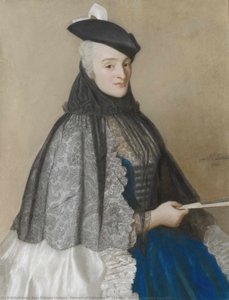
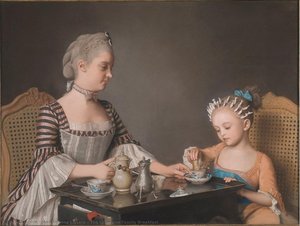
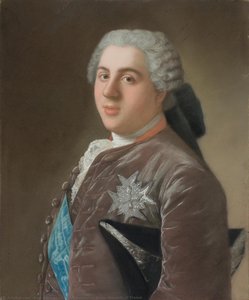

Über den Künstler
Frühes Leben und Ausbildung
Jean-Étienne Liotard, ein renommierter Genfer Maler, Kunstkenner und Händler, wurde am 22. Dezember 1702 in Genf, Schweiz, geboren. Seine Eltern, französische Protestanten, waren nach 1685 nach Genf geflohen. Liotards künstlerische Reise begann unter der Anleitung der Professoren Daniel Gardelle und Petitot, deren Emailarbeiten und Miniaturen er mit meisterhafter Geschicklichkeit nachahmte.Künstlerische Karriere
Liotards Reisen führten ihn in verschiedene europäische Hauptstädte, darunter Paris, Rom, Istanbul und Wien, wo seine Porträts äußerst begehrt waren. Im Jahr 1725 studierte er in Paris bei Jean-Baptiste Massé und François Lemoyne. Seine Zeit in Konstantinopel (1738–1742) beeinflusste sein Werk maßgeblich, was in seinen zahlreichen Pasteldarstellungen türkischer häuslicher Szenen deutlich wird.Bemerkenswerte Werke und Stil
Liotards Meisterschaft des Pastells zeigt sich in Werken wie:- Dutch Girl at Breakfast (ca. 1756, Öl auf Leinwand, Rijksmuseum), das seine Vielseitigkeit demonstriert.
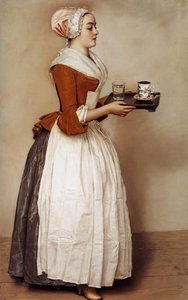
- La Liseuse, The Chocolate Girl und La Belle Lyonnaise in der Dresdner Galerie, die seine zarten Pastellzeichnungen beispielhaft darstellen.
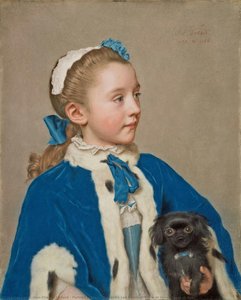
- Maria Frederike van Reede-Athlone at Seven (J. Paul Getty Museum), ein Zeugnis seiner naturalistischen Porträtkunst.
Vermächtnis und spätes Leben
Liotards spätere Jahre waren geprägt von der Veröffentlichung seiner Abhandlung, dem Traité des principes et des règles de la peinture (1781). Er malte weiterhin Stillleben und Landschaften bis zu seinem Tod am 12. Juni 1789 in Genf. Wichtige Links:- Jean-Étienne Liotard | ArtsDot.com (Künstlerseite)
- Jean-Étienne Liotard | Wikipedia
- A Woman in Turkish Dress | ArtsDot.com (Gemälde)
Museen und Sammlungen:
- The Museum Private Collection (Genf, Schweiz), die eine beeindruckende Auswahl an Liotards Werken umfasst.
- Musée d'Art et d'Histoire (Genf, Schweiz), das eine bedeutende Sammlung von Liotards Pastellen und Zeichnungen beherbergt.
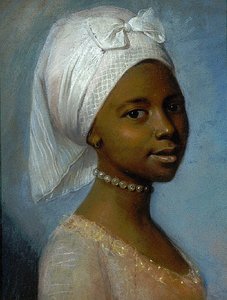
Jean-Étienne Liotard
1702 - 1789 , Schweiz
Kurzinfos
- Artistic Movement Or Style: Pastoralismus
- Artists Or Movements Influenced By This Artist:
- Jean Baptiste Massé
- François Lemoyne
- Artists Who Influenced This Artist:
- Daniel Gardelle
- Petitot
- Date Of Birth: December 22, 1702
- Date Of Death: June 12, 1789
- Full Name: Jean-Étienne Liotard
- Nationality: Schweizerisch
- Notable Artworks:
- Dutch Girl at Breakfast
- La Liseuse, Das Schokoladenmädchen
- Maria Frederike van Reede-Athlone at Seven
- Place Of Birth: Geneva, Switzerland
Ähnliche Artikel
The Subdued Radiance of Pastel: Exploring Nuance & Emotion in Art
Explore the nuanced world of pastel art! Discover its history, techniques & emotional power with expert insights from ArtsDot.com. Find museum-quality reproductions and learn about collecting this delicate medium.

Rococo Meisterwerke: Die Top 10, die eine Epoche prägten |
Entdecken Sie die Top 10 Rokoko Meisterwerke von Watteau, Boucher & Fragonard! Erfahren Sie die Geschichten hinter diesen ikonischen Gemälden und lassen Sie sich für Ihre Inneneinrichtung inspirieren. Hochwertige Kunstdrucke auf .

The Rococo Aesthetic: Opulence, Rebellion & the Pursuit of Pleasure in 18th-Century Art
Explore the opulent world of Rococo art! Discover its origins, key artists like Watteau & Boucher, and lasting influence on design. Expert insights for collectors & enthusiasts.
Jean-Étienne Liotard: Rococo Portraiture & the Pursuit of Naturalism
Explore the exquisite Rococo portraits of Jean-Étienne Liotard, a master of pastel and enamel. Discover his innovative techniques, captivating Turkish scenes, and lasting influence on art history. Learn more at ArtsDot.
Die Subtilität der Pastelltechnik: Geschichte, Anwendung und emotionale Resonanz
Entdecken Sie die faszinierende Welt der Pastellmalerei! Erfahren Sie mehr über Technik, Geschichte und berühmte Künstler. Hochwertige Reproduktionen bei ArtsDot.