

 Vorschau anzeigen
 Versenden
 Teilen
 Details anzeigen

 Herunterladen
 Ähnliche Objekte
 Röntgenaufnahme
 Diashow
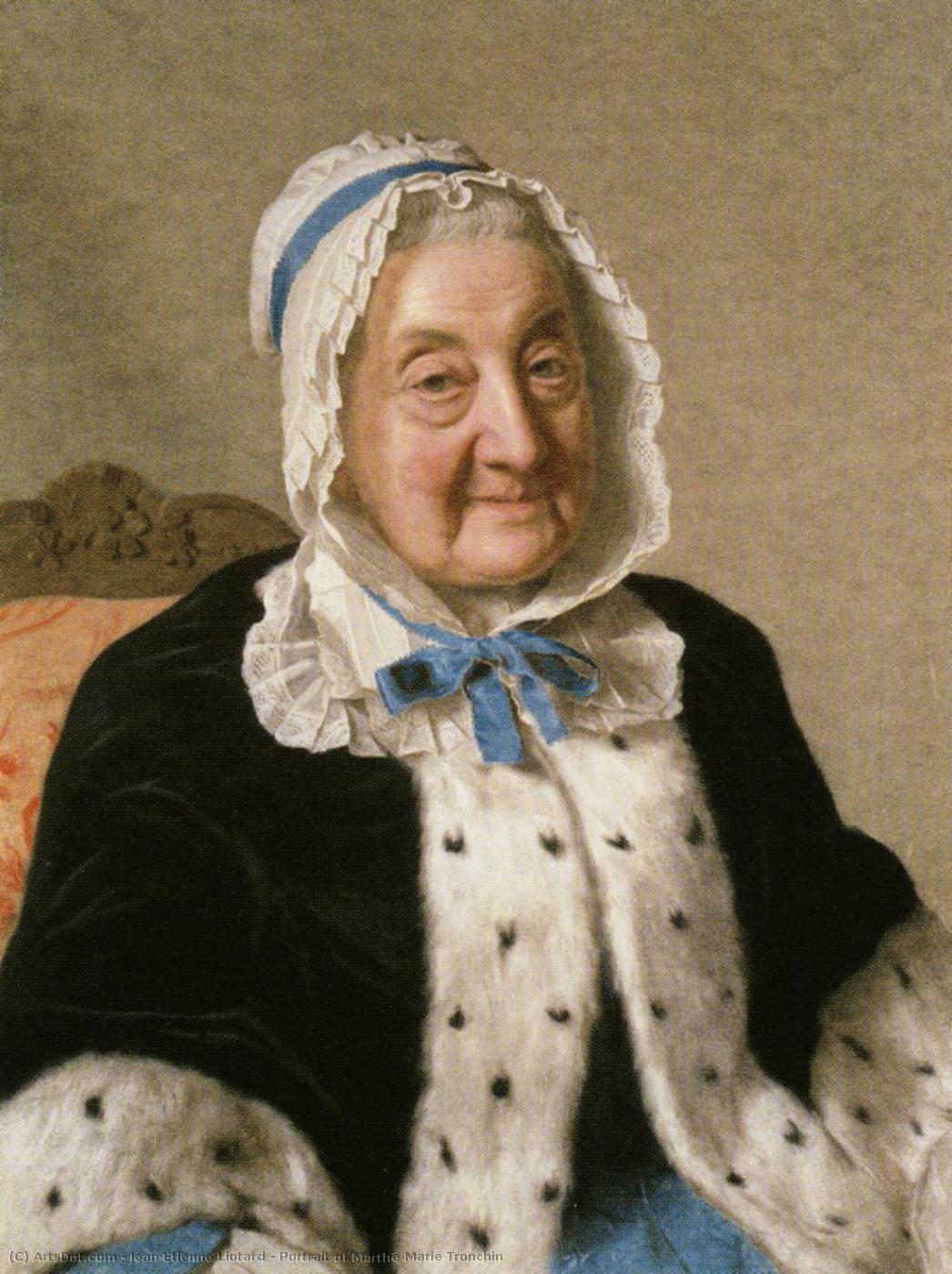
Portrait of Marthe Marie Tronchin


 Weiterlesen
Erwerben Sie ein hochauflösendes, optimiertes digitales Bild, das der Online-Vorschau weit überlegen ist.
Jede Datei wird von unseren hauseigenen Spezialisten mit modernsten Werkzeugen und fachmännischer manueller Retusche sorgfältig vorbereitet. Wir stellen sicher, dass jedes Bild eine außergewöhnliche Klarheit, präzise Farbgenauigkeit und feinste Details aufweist.
Die endgültige Datei wird innerhalb von 72 Stunden per E-Mail zugestellt und ist für den sofortigen Einsatz in professionellen, redaktionellen und Druckumgebungen optimiert. Es handelt sich um dieselbe Qualität, der führende Designstudios, Verlage und Galerien vertrauen.
Digitales Bild
Laden Sie eine hochauflösende Datei für die persönliche Präsentation, den Druck und kreative Projekte herunter. ( Druck bestellen Handgemalte Reproduktion bestellen)
In jeder Bestellung digitaler Bilder enthalten
Professionelle digitale Bereitstellung, garantiert
Wenn Sie sich für ArtsDot.com entscheiden, erhalten Sie nicht nur ein Bild – Sie erhalten ein professionell aufbereitetes digitales Kunstwerk, das mit höchster Präzision erstellt und durch eine Zufriedenheitsgarantie abgesichert wird. Hier ist alles, was automatisch mit Ihrer Bestellung geliefert wird:

Schnelle E-Mail-Zustellung
Ihre hochauflösende digitale Bilddatei wird Ihnen innerhalb von 72 Stunden nach der Bestellung per E-Mail zugestellt – bereit zur sofortigen Verwendung.

KI-optimierte digitale Datei
Ihre Kunstwerke werden professionell mithilfe fortschrittlicher KI-Tools und manueller Bearbeitung optimiert, um maximale Detailtreue, Klarheit und Farbgenauigkeit zu gewährleisten.

Lebenslanger kostenloser Neudruckservice
Datei versehentlich gelöscht oder verloren? Keine Sorge – wir senden sie Ihnen jederzeit kostenlos erneut zu.

Keine Einfuhrgebühren – jemals
Genießen Sie Ihr Kunstwerk sofort ohne Zollgebühren, Einfuhrabgaben oder Versandkosten – digitale Downloads sind immer steuerfrei.

Garantierte Farbtreue
Wir garantieren, dass Ihr digitales Bild mithilfe professioneller Werkzeuge und Farbmanagement die Originalfarben so präzise wie möglich wiedergibt.

60-Tage-Zufriedenheitsgarantie
Sollten Sie mit Ihrem digitalen Bild nicht zufrieden sein, werden wir es überarbeiten oder Ihnen innerhalb von 60 Tagen 100% erstatten – ohne Wenn und Aber.

100% Geld-zurück-Garantie
Nicht zufrieden? Erhalten Sie innerhalb von 60 Tagen nach Erhalt Ihrer digitalen Datei eine vollständige Rückerstattung – ohne Angabe von Gründen.

Rabatte bei Großbestellungen
3 Bilder kaufen, 10% sparen – 5 Bilder kaufen, 15% sparen – Ab 10 Bildern 20% sparen. Ideal für kreative Projekte, Galerien und Agenturen.
Jean-Étienne Liotard: A Delicate Dance Between Observation and Imagination
Jean-Étienne Liotard (1702–1789), a Genevan painter, art connoisseur, and dealer, stands as an enigmatic figure in the Rococo landscape—a master of pastel and enamel whose work defies easy categorization. Unlike his contemporaries who embraced grand theatricality and opulent ornamentation, Liotard pursued a path of profound introspection, prioritizing meticulous detail and subtle tonal gradations to capture the essence of his subjects with remarkable accuracy. His artistic vision was deeply rooted in humanist ideals, reflecting an unwavering fascination for the human form and its interaction with the natural world—a dichotomy that defines much of his oeuvre.- Early Training & Influences: Liotard’s formative years were spent under the tutelage of Daniel Gardelle and Petitot, whose enamel techniques he painstakingly replicated, establishing a foundational understanding of surface texture and color manipulation. This meticulous approach would later permeate his pastel drawings, where he achieved unparalleled levels of realism through painstaking layering and blending.
- Travels & Artistic Transformation: Liotard’s wanderings across Europe—Paris, Rome, Istanbul, Vienna—were pivotal in shaping his artistic sensibilities. The vibrant atmosphere of Constantinople profoundly impacted his palette and compositional choices, evident in numerous pastel depictions of Turkish domestic scenes brimming with exotic flora and fauna.
- Technique & Style: Liotard’s signature technique involved applying pastel pigment onto vellum or paper using a stylus—a method that allowed for unparalleled control over tonal nuance and texture. He eschewed bold brushstrokes, favoring instead delicate strokes that captured the ephemeral qualities of light and shadow. This meticulous attention to detail resulted in portraits imbued with an uncanny sense of presence and psychological depth.
- Notable Works & Legacy: Among Liotard’s celebrated masterpieces are “Dutch Girl at Breakfast” (circa 1756), a masterful study of naturalism that exemplifies his commitment to portraying the human figure with unflinching honesty, and “La Liseuse,” depicting a young woman absorbed in contemplation—a testament to Liotard's ability to convey inner emotion through subtle visual cues.
- A Singular Vision: Despite facing resistance from the Académie Française, Liotard’s artistic independence secured him recognition within England, Holland, and Geneva. His enduring legacy lies not merely in his technical prowess but also in his unwavering belief that art should serve as a conduit for profound contemplation—a conviction that continues to inspire artists today.
The Pastel Medium: Precision & Illusion
Liotard’s mastery of pastel distinguishes him from many of his contemporaries, elevating it beyond mere decorative embellishment into a vehicle for conveying nuanced emotion and capturing the subtleties of light and atmosphere. Unlike oil paints, which rely on opaque pigments to build up layers of color, pastel employs powdered pigment mixed with binder—typically gum arabic—to create translucent washes that shimmer with luminosity. This technique demanded extraordinary patience and precision from the artist, who painstakingly applied pigment onto vellum or paper using a stylus, achieving remarkable tonal gradations and textural effects. The resulting images possess an ethereal quality, capturing fleeting moments of beauty and conveying psychological depth with unparalleled subtlety.Symbolism & Narrative Depth: Exploring Inner Landscapes
Liotard’s portraits transcend mere likeness, delving into the complexities of human psychology and embodying philosophical ideas. He meticulously crafted compositions that reflected not only physical appearance but also inner states—capturing expressions of contemplation, melancholy, or serene repose. Recurring motifs—such as flowers symbolizing beauty and fragility—served as visual metaphors for conveying intangible concepts—like virtue and intellect. Through his masterful use of color and light, Liotard invited viewers to engage in a dialogue with the subject’s psyche, prompting reflection on themes of human experience and spiritual aspiration.Influence & Artistic Significance: A Quiet Revolution
Jean-Étienne Liotard's artistic approach represents a significant departure from prevailing trends in Rococo art—a rejection of theatrical grandeur in favor of quiet observation and psychological insight. His unwavering commitment to naturalism challenged the conventions of his time, asserting that beauty could be found not only in opulent ornamentation but also in the faithful representation of human form and its relationship with nature. Liotard’s legacy extends beyond his individual artworks; he established a precedent for artistic exploration rooted in humanist values—a tradition that continues to resonate within contemporary art practice.Ähnliche Kunstwerke
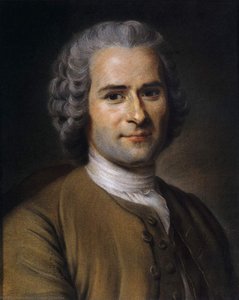
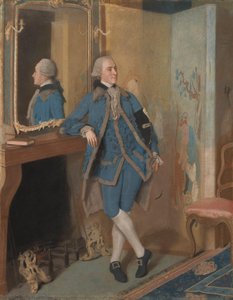
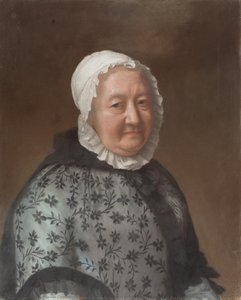
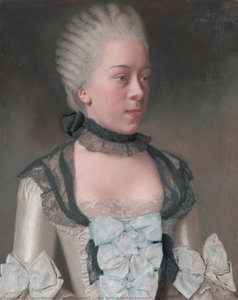
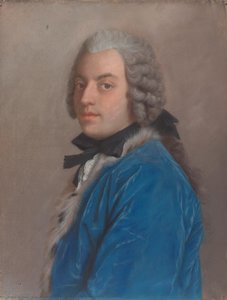
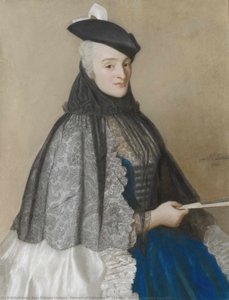
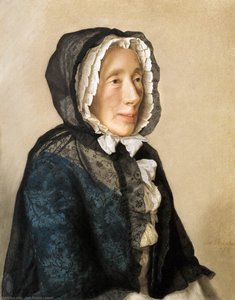
Biografie des Künstlers
Frühes Leben und Ausbildung
Jean-Étienne Liotard, ein renommierter Genfer Maler, Kunstkenner und Händler, wurde am 22. Dezember 1702 in Genf, Schweiz, geboren. Seine Eltern, französische Protestanten, waren nach 1685 nach Genf geflohen. Liotards künstlerische Reise begann unter der Anleitung der Professoren Daniel Gardelle und Petitot, deren Emailarbeiten und Miniaturen er mit meisterhafter Geschicklichkeit nachahmte.Künstlerische Karriere
Liotards Reisen führten ihn in verschiedene europäische Hauptstädte, darunter Paris, Rom, Istanbul und Wien, wo seine Porträts äußerst begehrt waren. Im Jahr 1725 studierte er in Paris bei Jean-Baptiste Massé und François Lemoyne. Seine Zeit in Konstantinopel (1738–1742) beeinflusste sein Werk maßgeblich, was in seinen zahlreichen Pasteldarstellungen türkischer häuslicher Szenen deutlich wird.Bemerkenswerte Werke und Stil
Liotards Meisterschaft des Pastells zeigt sich in Werken wie:- Dutch Girl at Breakfast (ca. 1756, Öl auf Leinwand, Rijksmuseum), das seine Vielseitigkeit demonstriert.
- La Liseuse, The Chocolate Girl und La Belle Lyonnaise in der Dresdner Galerie, die seine zarten Pastellzeichnungen beispielhaft darstellen.
- Maria Frederike van Reede-Athlone at Seven (J. Paul Getty Museum), ein Zeugnis seiner naturalistischen Porträtkunst.
Vermächtnis und spätes Leben
Liotards spätere Jahre waren geprägt von der Veröffentlichung seiner Abhandlung, dem Traité des principes et des règles de la peinture (1781). Er malte weiterhin Stillleben und Landschaften bis zu seinem Tod am 12. Juni 1789 in Genf. Wichtige Links:- Jean-Étienne Liotard | ArtsDot.com (Künstlerseite)
- Jean-Étienne Liotard | Wikipedia
- A Woman in Turkish Dress | ArtsDot.com (Gemälde)
Museen und Sammlungen:
- The Museum Private Collection (Genf, Schweiz), die eine beeindruckende Auswahl an Liotards Werken umfasst.
- Musée d'Art et d'Histoire (Genf, Schweiz), das eine bedeutende Sammlung von Liotards Pastellen und Zeichnungen beherbergt.
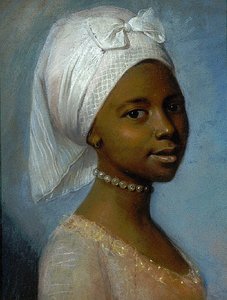
Jean-Étienne Liotard
1702 - 1789 , Schweiz
Kurzinfos
- Artistic Movement Or Style: Pastoralismus
- Artists Or Movements Influenced By This Artist:
- Jean Baptiste Massé
- François Lemoyne
- Artists Who Influenced This Artist:
- Daniel Gardelle
- Petitot
- Date Of Birth: December 22, 1702
- Date Of Death: June 12, 1789
- Full Name: Jean-Étienne Liotard
- Nationality: Schweizerisch
- Notable Artworks:
- Dutch Girl at Breakfast
- La Liseuse, Das Schokoladenmädchen
- Maria Frederike van Reede-Athlone at Seven
- Place Of Birth: Geneva, Switzerland

