

 Vorschau anzeigen
 Versenden
 Teilen
 Details anzeigen

 Herunterladen
 Ähnliche Objekte
 Röntgenaufnahme
 Diashow
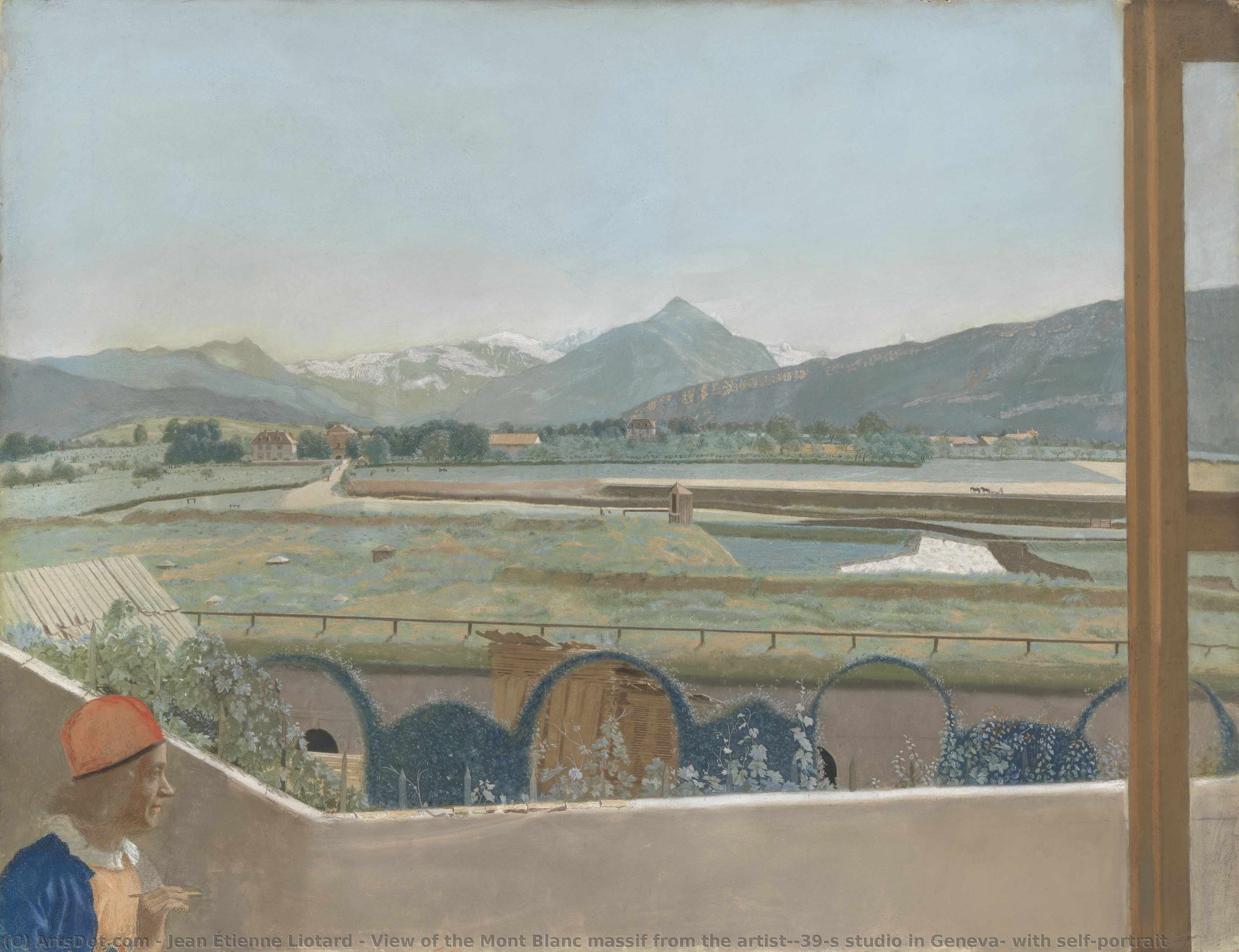
View of the Mont Blanc massif from the artist's studio in Geneva, with self-portrait


 Weiterlesen
Erwerben Sie ein hochauflösendes, optimiertes digitales Bild, das der Online-Vorschau weit überlegen ist.
Jede Datei wird von unseren hauseigenen Spezialisten mit modernsten Werkzeugen und fachmännischer manueller Retusche sorgfältig vorbereitet. Wir stellen sicher, dass jedes Bild eine außergewöhnliche Klarheit, präzise Farbgenauigkeit und feinste Details aufweist.
Die endgültige Datei wird innerhalb von 72 Stunden per E-Mail zugestellt und ist für den sofortigen Einsatz in professionellen, redaktionellen und Druckumgebungen optimiert. Es handelt sich um dieselbe Qualität, der führende Designstudios, Verlage und Galerien vertrauen.
Digitales Bild
Laden Sie eine hochauflösende Datei für die persönliche Präsentation, den Druck und kreative Projekte herunter. ( Druck bestellen Handgemalte Reproduktion bestellen)
In jeder Bestellung digitaler Bilder enthalten
Professionelle digitale Bereitstellung, garantiert
Wenn Sie sich für ArtsDot.com entscheiden, erhalten Sie nicht nur ein Bild – Sie erhalten ein professionell aufbereitetes digitales Kunstwerk, das mit höchster Präzision erstellt und durch eine Zufriedenheitsgarantie abgesichert wird. Hier ist alles, was automatisch mit Ihrer Bestellung geliefert wird:

Schnelle E-Mail-Zustellung
Ihre hochauflösende digitale Bilddatei wird Ihnen innerhalb von 72 Stunden nach der Bestellung per E-Mail zugestellt – bereit zur sofortigen Verwendung.

KI-optimierte digitale Datei
Ihre Kunstwerke werden professionell mithilfe fortschrittlicher KI-Tools und manueller Bearbeitung optimiert, um maximale Detailtreue, Klarheit und Farbgenauigkeit zu gewährleisten.

Lebenslanger kostenloser Neudruckservice
Datei versehentlich gelöscht oder verloren? Keine Sorge – wir senden sie Ihnen jederzeit kostenlos erneut zu.

Keine Einfuhrgebühren – jemals
Genießen Sie Ihr Kunstwerk sofort ohne Zollgebühren, Einfuhrabgaben oder Versandkosten – digitale Downloads sind immer steuerfrei.

Garantierte Farbtreue
Wir garantieren, dass Ihr digitales Bild mithilfe professioneller Werkzeuge und Farbmanagement die Originalfarben so präzise wie möglich wiedergibt.

60-Tage-Zufriedenheitsgarantie
Sollten Sie mit Ihrem digitalen Bild nicht zufrieden sein, werden wir es überarbeiten oder Ihnen innerhalb von 60 Tagen 100% erstatten – ohne Wenn und Aber.

100% Geld-zurück-Garantie
Nicht zufrieden? Erhalten Sie innerhalb von 60 Tagen nach Erhalt Ihrer digitalen Datei eine vollständige Rückerstattung – ohne Angabe von Gründen.

Rabatte bei Großbestellungen
3 Bilder kaufen, 10% sparen – 5 Bilder kaufen, 15% sparen – Ab 10 Bildern 20% sparen. Ideal für kreative Projekte, Galerien und Agenturen.
A Serene Vista: Jean-Étienne Liotard’s Alpine Masterpiece
Jean-Étienne Liotard’s “View of the Mont Blanc Massif from the Artist’s Studio in Geneva, with Self-Portrait” is more than just a landscape; it's an intimate invitation into the artist’s world. Painted in 1770, this oil on canvas work transcends mere representation, capturing not only the grandeur of the Swiss Alps but also the quiet contemplation of its creator. The scene unfolds through a large window, framing a breathtaking vista dominated by the imposing Mont Blanc massif – a symbol of strength and majesty – partially obscured by a delicate haze that lends an ethereal quality to the entire composition.
Liotard’s genius lies in his ability to fuse realism with impressionistic techniques. The mountains themselves are rendered with soft, almost blurred brushstrokes, creating a sense of atmospheric depth and distance. The foreground is anchored by a weathered building, its arched windows hinting at the artist's studio – a deliberate inclusion that subtly merges the external world with the internal space of creation. A winding path, barely discernible, suggests a journey into the heart of the landscape, inviting the viewer to share in Liotard’s perspective.
The Artist as Observer: Symbolism and Intimacy
Perhaps the most striking element of this painting is the inclusion of Liotard himself within the scene. He stands at the window, a small figure dwarfed by the immensity of nature, yet radiating an air of quiet confidence and observation. This self-portrait isn’t merely decorative; it's a profound statement about the artist’s role – not as a detached recorder of reality, but as an active participant in its interpretation. The gesture, slightly turned towards the viewer, creates a direct connection, suggesting that Liotard is sharing his experience with us.
The inclusion of the self-portrait also speaks to the burgeoning interest in individualism during the Enlightenment era. It reflects a shift away from purely religious or allegorical subjects and toward a celebration of human experience and personal perspective. The painting embodies this trend, elevating the artist’s own presence within the landscape to a position of significance.
Technique and Palette: A Delicate Balance
Liotard's mastery is evident in his nuanced use of color and texture. He employs a muted palette dominated by cool blues, greens, and grays – colors that evoke the misty atmosphere of the Alps. The subtle variations in tone create a remarkable sense of depth and volume, while delicate highlights capture the play of light on the mountainsides. The artist’s brushwork is loose and expressive, contributing to the painting's overall atmospheric quality.
He skillfully utilizes glazing techniques, layering thin washes of color over each other to build up rich textures and luminous effects. This approach allows him to capture the fleeting qualities of light and shadow, creating a sense of movement and vitality within the scene. The building’s weathered facade is rendered with remarkable detail, showcasing Liotard's meticulous observation skills.
A Legacy of Beauty: Historical Context and Artistic Influence
Jean-Étienne Liotard was a pivotal figure in 18th-century art, renowned for his pastel portraits and orientalist scenes. His work reflects the cosmopolitan influences of his travels throughout Europe and beyond. He spent considerable time in Istanbul, where he developed a deep appreciation for Eastern aesthetics and incorporated elements of Turkish culture into his paintings. This exposure to diverse artistic traditions enriched his style and broadened his subject matter.
Liotard’s “View of the Mont Blanc Massif” stands as a testament to his exceptional talent and artistic vision. It is a captivating blend of realism, impressionism, and personal reflection – a timeless masterpiece that continues to resonate with viewers today. Reproductions of this work offer a beautiful window into the artist's world, capturing the serenity and majesty of the Swiss Alps while simultaneously revealing the quiet contemplation of its creator.
Ähnliche Kunstwerke
Biografie des Künstlers
Frühes Leben und Ausbildung
Jean-Étienne Liotard, ein renommierter Genfer Maler, Kunstkenner und Händler, wurde am 22. Dezember 1702 in Genf, Schweiz, geboren. Seine Eltern, französische Protestanten, waren nach 1685 nach Genf geflohen. Liotards künstlerische Reise begann unter der Anleitung der Professoren Daniel Gardelle und Petitot, deren Emailarbeiten und Miniaturen er mit meisterhafter Geschicklichkeit nachahmte.Künstlerische Karriere
Liotards Reisen führten ihn in verschiedene europäische Hauptstädte, darunter Paris, Rom, Istanbul und Wien, wo seine Porträts äußerst begehrt waren. Im Jahr 1725 studierte er in Paris bei Jean-Baptiste Massé und François Lemoyne. Seine Zeit in Konstantinopel (1738–1742) beeinflusste sein Werk maßgeblich, was in seinen zahlreichen Pasteldarstellungen türkischer häuslicher Szenen deutlich wird.Bemerkenswerte Werke und Stil
Liotards Meisterschaft des Pastells zeigt sich in Werken wie:- Dutch Girl at Breakfast (ca. 1756, Öl auf Leinwand, Rijksmuseum), das seine Vielseitigkeit demonstriert.
- La Liseuse, The Chocolate Girl und La Belle Lyonnaise in der Dresdner Galerie, die seine zarten Pastellzeichnungen beispielhaft darstellen.
- Maria Frederike van Reede-Athlone at Seven (J. Paul Getty Museum), ein Zeugnis seiner naturalistischen Porträtkunst.
Vermächtnis und spätes Leben
Liotards spätere Jahre waren geprägt von der Veröffentlichung seiner Abhandlung, dem Traité des principes et des règles de la peinture (1781). Er malte weiterhin Stillleben und Landschaften bis zu seinem Tod am 12. Juni 1789 in Genf. Wichtige Links:- Jean-Étienne Liotard | ArtsDot.com (Künstlerseite)
- Jean-Étienne Liotard | Wikipedia
- A Woman in Turkish Dress | ArtsDot.com (Gemälde)
Museen und Sammlungen:
- The Museum Private Collection (Genf, Schweiz), die eine beeindruckende Auswahl an Liotards Werken umfasst.
- Musée d'Art et d'Histoire (Genf, Schweiz), das eine bedeutende Sammlung von Liotards Pastellen und Zeichnungen beherbergt.
Jean-Étienne Liotard
1702 - 1789 , Schweiz
Kurzinfos
- Artistic Movement Or Style: Pastoralismus
- Artists Or Movements Influenced By This Artist:
- Jean Baptiste Massé
- François Lemoyne
- Artists Who Influenced This Artist:
- Daniel Gardelle
- Petitot
- Date Of Birth: December 22, 1702
- Date Of Death: June 12, 1789
- Full Name: Jean-Étienne Liotard
- Nationality: Schweizerisch
- Notable Artworks:
- Dutch Girl at Breakfast
- La Liseuse, Das Schokoladenmädchen
- Maria Frederike van Reede-Athlone at Seven
- Place Of Birth: Geneva, Switzerland

