 Vorschau anzeigen
 Versenden
 Teilen
 Details anzeigen

 Herunterladen
 Ähnliche Objekte
 Röntgenaufnahme
 Diashow
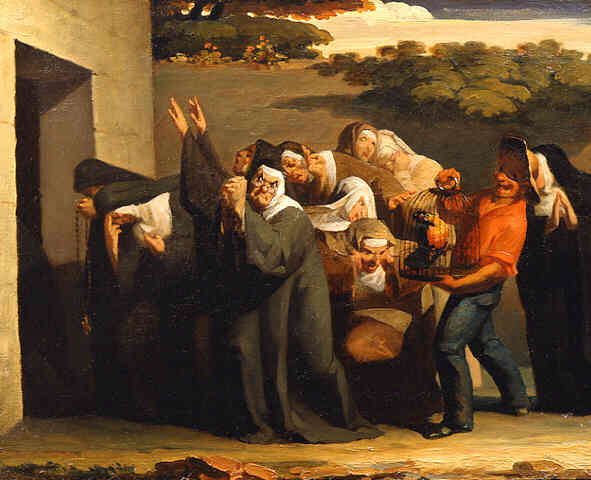
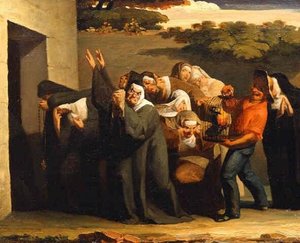
vert vert the nuns parrot

 Weiterlesen
Handgefertigte Ölreproduktion
Handgemaltes Ölgemälde auf Leinwand in Ihrer Wunschgröße und mit Rahmen, auf Bestellung von unseren Künstlern angefertigt. ( Druck bestellen Bild kaufen)




P118B $10

P118H $10

P118W $10

P438Z $10

P508JH $12

P508YH $12

P805H $10

P805Z $10

P919BZ $10

P919G $10

P919XJ $10

P959ZH $10

P968JZ $12

W106C $8

W218G $10

W218JH $8

W218Y $10

W307PJ $10

W316G $10

W316PJ $8

W316Y $10

W398PJ $8

W4111J $10

W500HY $15

W500JH $15

W692G $12

W849H $8

W940BG $15

W953PJ $8




Wählen Sie aus unseren vordefinierten Formaten, die den ursprünglichen Proportionen des Kunstwerks entsprechen.

Sie können Ihre eigenen Maße eingeben, um einen bestimmten Rahmen oder Platz auszufüllen. Wenn die gewählte Größe nicht den Proportionen des Originalbildes entspricht, werden wir das Kunstwerk entweder beschneiden oder das Gemälde durch zusätzliche, handgemalte Elemente erweitern. Ein digitales Mockup wird Ihnen zur Genehmigung zugesandt, bevor die Produktion beginnt.
Bitte beachten Sie, dass die Bildschirmvorschau nicht die tatsächliche Beschneidung oder Erweiterung widerspiegelt. Nur das Mockup zeigt die endgültige Komposition exakt an.
Obwohl Sondermaße verfügbar sind, empfehlen wir, eine Größe aus der vordefinierten Liste zu wählen, um die ursprünglichen Proportionen beizubehalten.
Nach der Bestellung wird das ArtsDot.com-Team dem Kunden Anweisungen per E-Mail zusenden und eine Mockup-Vorschau bereitstellen.
Weltweiter Versand () in nur 3 bis 4 Wochen statt der üblichen 5 Wochen. (21 August). Keine Kompromisse bei der Qualität.

Kostenloser weltweiter Expressversand

Hochwertige Leinenleinwand

Umfassender Versicherungsschutz beim Versand

Zollgebühren-Rückerstattungsgarantie

Garantie für exakte Farbtreue

60 Tage Rückgaberecht (nur bei Mängeln)

100% Geld-zurück-Garantie

Mengenrabatt verfügbar
 Die Glasoption ist nur für Größen unter 110 cm verfügbar.

vert vert the nuns parrot
Art der Reproduktion
Format der Reproduktion
-


Gesamtpreis
$ 263
Beschreibung des Kunstwerks
A Glimpse into Rural Life and Religious Doubt
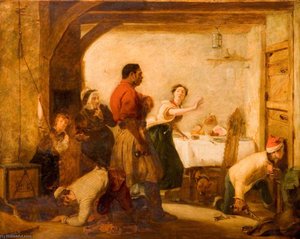
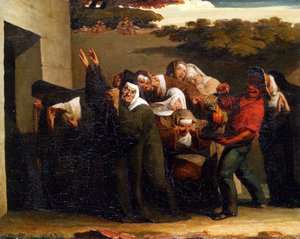
Jean-François Millet's “Vert Vert, the Nun’s Parrot” (1839-1840) isn’t merely a depiction of a bird in a religious setting; it’s a poignant meditation on faith, isolation, and the subtle tensions within a small, tightly-knit community. Painted during a period of significant social and artistic upheaval – the rise of Realism challenging academic traditions – Millet masterfully captures a moment of quiet observation, inviting us to contemplate the lives and anxieties of those living on the fringes of society. The painting’s power lies not in grand gestures or dramatic narratives, but in its carefully rendered details and the unspoken emotions that permeate the scene.

The Realist Vision: Millet's Roots in the Soil
Born in 1814 into a family of farmers in Gruchy, Normandy, Millet’s artistic vision was inextricably linked to his upbringing. He didn’t enter the art world through formal training or Parisian salons; instead, he learned to observe and represent the world around him – the rhythms of rural life, the hardships faced by peasant laborers, and the enduring connection between humanity and the land. This grounding in reality is evident in “Vert Vert,” where Millet eschews idealized depictions in favor of a brutally honest portrayal of a nun’s parlor, complete with a parrot perched on her shoulder. The figures are rendered with an earthy palette – browns, ochres, and muted greens – reflecting the textures of the setting and emphasizing the subjects' humble existence.
- Technique: Millet employed a technique characteristic of Realism—precise observation, detailed rendering of textures (the rough fabric of the nun’s habit, the parrot’s plumage), and a focus on everyday details.
- Composition: The painting's composition is deliberately understated, drawing our attention to the central figures and creating a sense of intimacy within the confined space.
Symbolism and Narrative Intrigue
The presence of the parrot itself is laden with symbolic weight. In 18th-century France, parrots were status symbols, often owned by wealthy families and considered exotic pets. The nun’s possession of a parrot – a luxury item in her austere environment – immediately raises questions about her life and circumstances. Is she a devout woman struggling to maintain faith amidst worldly temptations? Or is the parrot a symbol of vanity or perhaps even a distraction from her religious duties? Millet deliberately leaves these interpretations open, allowing viewers to project their own thoughts and feelings onto the scene.
The painting’s title, “Vert Vert,” refers to the parrot's name – a playful nod to its vocalizations and its role as a conversationalist within the nun’s household. It also subtly suggests a sense of mischief or irreverence, hinting at the potential for disruption within the rigid confines of religious life.A Window into 19th-Century France
“Vert Vert” offers a valuable glimpse into the social and cultural landscape of 19th-century France. Millet’s work reflects the growing interest in depicting the lives of ordinary people – particularly rural laborers – during a period of rapid industrialization and urbanization. The painting also speaks to the tensions between tradition and modernity, faith and doubt, as it explores the complexities of human relationships within a specific religious context. Reproductions of this evocative artwork offer a chance to bring Millet’s insightful observations into your home or office, fostering contemplation on themes of faith, community, and the enduring beauty of rural life.
Ähnliche Kunstwerke
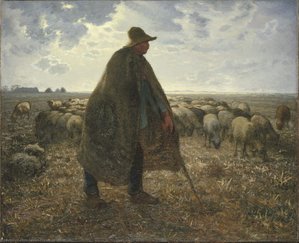
Über den Künstler
frühes Leben und Ausbildung
Jean-François Millet, geboren am 4. Oktober 1814 in der Normandie, Frankreich, etablierte sich als eine Schlüsselgestalt der Barbizon-Schule und war ein Verfechter des Realismus. Er wuchs in einer Bauerngemeinschaft auf, und sein frühes Leben war von ländlichen Erfahrungen geprägt, die seine künstlerischen Themen maßgeblich beeinflussten.Künstlerische Reise
Millets formale Kunstausbildung begann 1833 unter der Anleitung des Porträtmalers Bon du Mouchel in Cherbourg. Später studierte er bei Théophile Langlois de Chèvreville, einem Schüler von Baron Gros. Mit einer Stipendiumunterstützung zog er 1837 nach Paris, um an der École des Beaux-Arts zu studieren und unter Paul Delaroche zu lernen. Seine Reise war jedoch nicht ohne Rückschläge; 1839 verlor er sein Stipendium und wurde von der Salon-Ausstellung abgelehnt.Bekannte Werke und Realismusbewegung
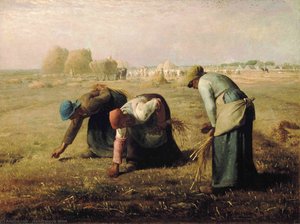
Millets künstlerische Reise spiegelt seine tiefe Verbindung zu seinen ländlichen Wurzeln und seine Hingabe wider, das Leben der Bauern mit Würde und Realismus darzustellen. Zu seinen bekanntesten Werken gehören:- Die Ernte (1855), eine eindringliche Darstellung von Bauernernnten, die Millets Meisterschaft des Realismus demonstriert.
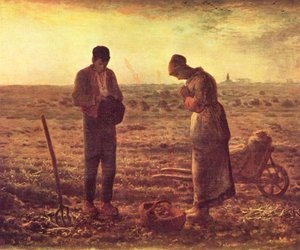
- Das Angelus (1850-1861), eine Reihe von Gemälden, die die täglichen Kämpfe des ländlichen Lebens hervorheben.
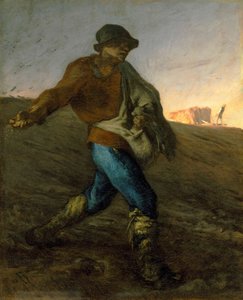
- Der Sämaschine (1850), eine ikonische Darstellung der Schwierigkeiten, mit denen Bauern konfrontiert sind, und die heute im Musée d'Orsay in Paris ausgestellt ist.
Vermächtnis und Einfluss
Millets Vermächtnis als Begründer der Barbizon-Schule macht ihn zu einer zentralen Figur bei der Übergangsbewegung zum Realismus in der Kunst. Sein Einfluss ist in den Werken nachfolgender Künstler wie Correa Benito Rebolledo erkennbar, die die Grenzen des Realismus weiter verschoben haben. Erfahren Sie mehr über Millets Werke und die Realismusbewegung auf ArtsDot: Jean François Millet der Ältere | ArtsDot Die Nouvelle Réalisme Kunstbewegung | ArtsDot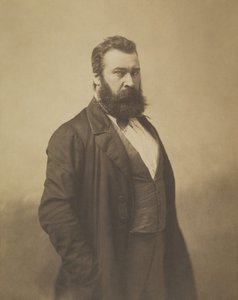
Jean-François Millet
1814 - 1875 , Frankreich
Kurzinfos
- Artistic Movement Or Style: Realismus, Barbizon-Schule
- Artists Or Movements Influenced By This Artist: ['Correa Benito Rebolledo']
- Artists Who Influenced This Artist:
- Bon du Mouchel
- Théophile Langlois
- Paul Delaroche
- Date Of Birth: 4. Oktober 1814
- Date Of Death: 1875
- Full Name: Jean-François Millet
- Nationality: Französisch
- Notable Artworks:
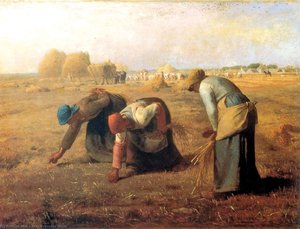
- Die Erntehelfer
- Das Angelus
- Der Sämann
- Place Of Birth (City And Country): Gruchy, Frankreich
Ähnliche Artikel
Jean-François Millet: Realismus, ländliche Poesie und die Würde der Arbeit
Entdecken Sie das Werk von Jean-François Millet! Erfahren Sie mehr über den Realismus, seine bahnbrechende Darstellung des bäuerlichen Lebens und seinen Einfluss auf die Kunstgeschichte. Jetzt bei ArtsDot!
Romantic Realism's Finest: 10 Masterpieces for Your Home | ArtsDot
Explore 10 defining masterpieces of Romantic Realism! Discover Courbet, Millet & Daumier's powerful paintings—capturing emotion and social realities. Find museum-quality reproductions for your home at ArtsDot.com.

Echoes of Rural Life: Art's Enduring Representations of the Countryside
Explore the rich history of rural life in art! Discover masterpieces from Millet to Mauve & beyond. Learn about Realism, Barbizon School & find inspiration for your home with ArtsDot.
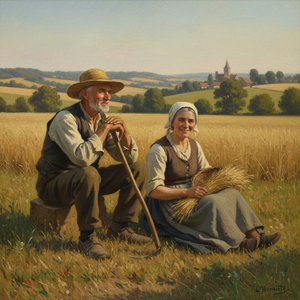
Léon Augustin L'Hermitte: Capturing the Soul of French Rural Life
Discover the captivating realist paintings of Léon Augustin L'Hermitte, masterfully depicting French rural life. Explore his technique, influences & legacy – a cornerstone of 19th-century art.
Realismus in der Kunst: Die 10 Meisterwerke, die eine Ära prägten |
Entdecken Sie die 10 Meisterwerke des Realismus! Courbet, Millet & Daumier prägten eine Ära. Erfahren Sie die Geschichten hinter ikonischen Gemälden und finden Sie hochwertige Art Reproduktionen für Ihr Zuhause auf