

 Vorschau anzeigen
 Versenden
 Teilen
 Details anzeigen

 Herunterladen
 Ähnliche Objekte
 Röntgenaufnahme
 Diashow
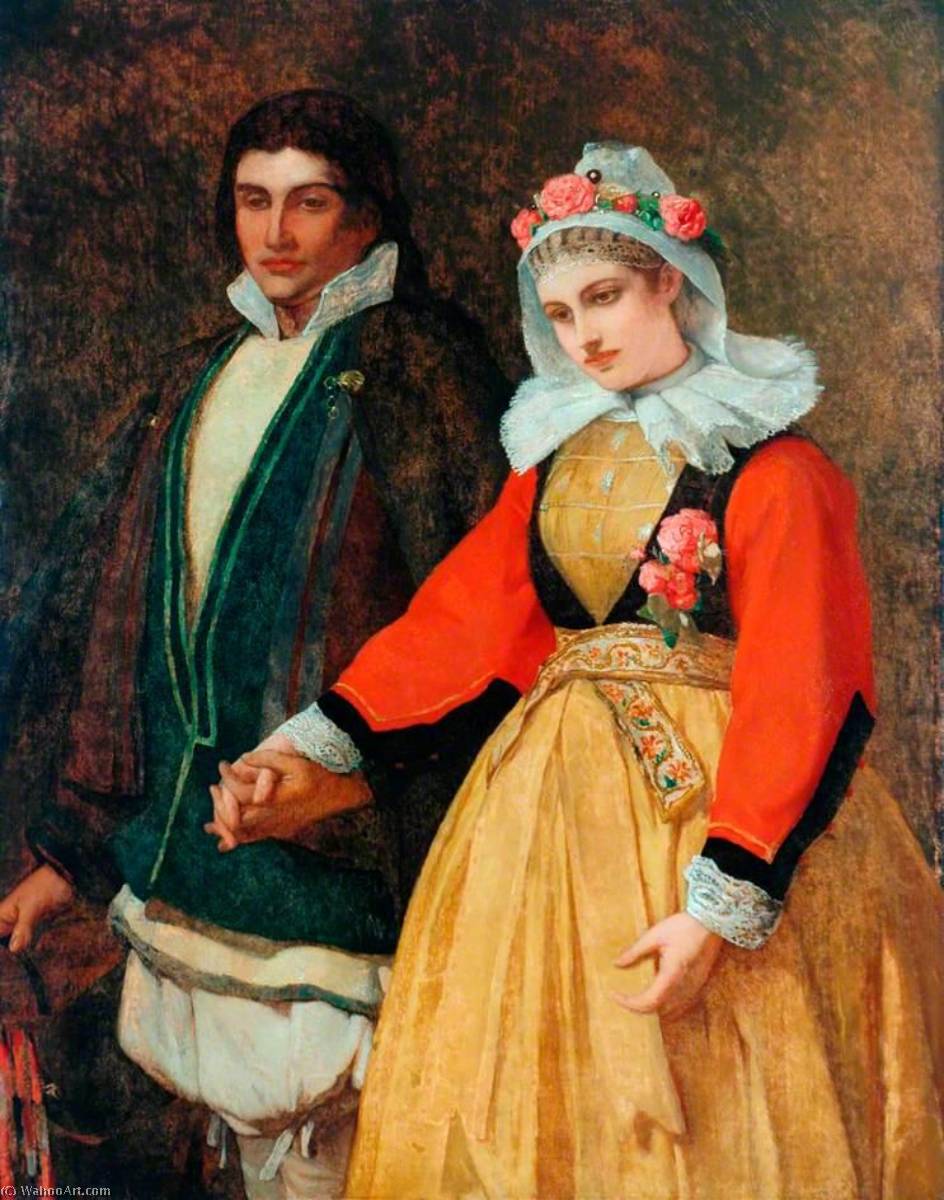
Double Portrait, the Betrothed

 Weiterlesen
Giclée / Kunstdruck
Giclée- oder Leinwanddruck in Museumsqualität mit schneller Produktion und flexiblen Veredelungsoptionen. ( Handgemalte Reproduktion bestellen Bild kaufen)




































Wählen Sie aus unseren vordefinierten Formaten, die den ursprünglichen Proportionen des Kunstwerks entsprechen.

Sie können Ihre eigenen Maße eingeben, um ein bestimmtes Format oder einen speziellen Platz einzupassen. Wenn das von Ihnen gewählte Format nicht den Proportionen des Originalbildes entspricht, werden wir das Kunstwerk entweder beschneiden oder das Bild mit einem gespiegelten oder einfarbigen Rand erweitern. Ein digitaler Entwurf wird Ihnen zur Genehmigung zugesandt, bevor die Produktion beginnt.
Bitte beachten Sie, dass die Vorschau auf dem Bildschirm nicht den tatsächlichen Zuschnitt oder die Erweiterung widerspiegelt. Nur der Entwurf zeigt die endgültige Komposition präzise an.
Obwohl Sondermaße verfügbar sind, empfehlen wir die Auswahl eines Maßes aus der vordefinierten Liste, um die ursprünglichen Proportionen zu bewahren.
Weltweiter Versand () innerhalb von 2 Wochen statt der üblichen 4/5 Wochen. (27 August)

Kostenloser weltweiter Expressversand

Hochwertige Leinenleinwand

Umfassender Versicherungsschutz beim Versand

Zollgebühren-Rückerstattungsgarantie

Garantie für exakte Farbtreue

60 Tage Rückgaberecht (nur bei Mängeln)

100% Geld-zurück-Garantie

Mengenrabatt verfügbar
 Die Glasoption ist nur für Größen unter 110 cm verfügbar.

Double Portrait, the Betrothed
Giclée / Kunstdruck
Format der Reproduktion
-


Gesamtpreis
$ 62
Ähnliche Kunstwerke



Über den Künstler
Thomas Prichard Rossiter: Bridging Romanticism and American Identity
Born in New Haven, Connecticut, in 1818, Thomas Prichard Rossiter’s artistic journey was one of constant evolution, marked by a deep engagement with both European artistic traditions and the burgeoning landscape painting scene within America. Initially trained under John Boyd and Nathaniel Jocelyn, his early work reflected a classical sensibility, honed through study at Hopkins School. However, it was his sojourn in Europe, particularly during the years 1840-1846, that fundamentally shaped his style and vision, laying the groundwork for his later contributions to the Hudson River School.
Rossiter’s European travels were not merely a period of artistic observation; they represented a deliberate immersion in the artistic currents of Rome and Paris. He studied alongside figures like Asher B. Durand and John Kensett, absorbing the techniques and philosophies of the Italian masters while simultaneously encountering the Romantic ideals gaining traction across the continent. This exposure to both classical restraint and burgeoning emotionalism proved crucial in his subsequent development. His decision to settle in Italy, a period of intense artistic exploration and personal reflection, allowed him to refine his skills and develop a unique approach to landscape painting – one that balanced meticulous detail with an underlying sense of drama and atmosphere.
- Early Influences: Boyd and Jocelyn instilled a foundational understanding of academic techniques.
- European Sojourn (1840-1846): Exposure to Roman art and the Romantic movement profoundly impacted his style.
- Return to America & Hudson River School Connection: Marked a shift towards capturing the essence of American landscapes with a heightened sense of narrative and emotion.
The Narrative Landscape: Themes and Symbolism
Rossiter’s paintings are not simply depictions of scenery; they are carefully constructed narratives, imbued with symbolic meaning and reflecting broader themes of human experience and the relationship between humanity and nature. His work frequently draws upon historical subjects – Washington and Lafayette at Mount Vernon, scenes from early American history – but elevates them beyond mere documentation. He sought to capture a sense of grandeur and significance, often employing dramatic lighting and carefully arranged compositions to evoke powerful emotions.
The “Course of Empire,” a series of monumental paintings begun in the 1840s, exemplifies this approach. These works explore the cyclical nature of civilization – its rise, its flourishing, and ultimately, its decline – using landscapes as metaphors for human progress. Similarly, his depictions of Washington and his cabinet are not merely portraits but rather allegorical representations of leadership and governance. Rossiter’s ability to infuse historical subjects with emotional resonance and symbolic depth distinguished him from many of his contemporaries.
Technique and Style: A Synthesis of Realism and Romanticism
Rossiter's artistic style represents a fascinating synthesis of realism and Romanticism. He possessed a remarkable technical skill, evident in the meticulous detail he applied to capturing the textures of trees, rocks, and water. However, his paintings are not characterized by cold objectivity; rather, they are infused with a palpable sense of atmosphere and emotion. He skillfully employed techniques such as atmospheric perspective – creating a sense of depth through variations in color and tone – and dramatic lighting to heighten the emotional impact of his scenes.
Key Characteristics:- Precise Detail
- Atmospheric Perspective
- Dramatic Lighting
- Symbolic Composition
Later Years and Legacy
In 1857, Rossiter embarked on a series of ambitious paintings depicting scenes from early American history, fueled by a desire to document and celebrate the nation’s founding. His visit to Mount Vernon in 1858, documented through writing and subsequent paintings, underscored his commitment to preserving historical memory. He moved to Cold Spring, New York, in 1860, where he continued to paint until his death in 1871.
While Rossiter’s work never achieved the widespread fame of artists like Cole or Church, he remains a significant figure in American landscape painting. His paintings offer valuable insights into the evolving artistic landscape of mid-19th century America and demonstrate the complex interplay between European influences and uniquely American themes. His legacy lies not only in his individual works but also in his contribution to the development of the Hudson River School, shaping the visual language of American art for generations to come.
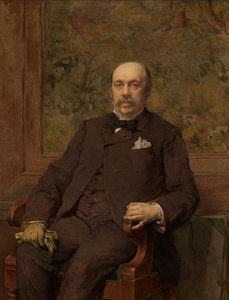
jean françois portaels
1818 - 1895
Kurzinfos
- Artistic Movement Or Style: Hudson River School
- Artists Or Movements Influenced By This Artist: ['Thomas Cole']
- Artists Who Influenced This Artist:
- John Boyd
- Nathaniel Jocelyn
- Date Of Birth: 1818 New Haven, CT
- Date Of Death: 1871 Cold Spring, NY
- Full Name: Thomas Prichard Rossiter
- Nationality: American
- Notable Artworks:
- Washington and Lafayette
- Washington's Cabinet
- Mount Vernon Portrait
- Place Of Birth: New Haven, Connecticut

